Mollah Amzad Hossain with Afroza Akther Pervin from Antalya, Türkiye
ANTALYA, November 19, 2026: The COP31 Presidency released a revised nine-page draft of its proposed political Cover Decision on Thursday, seeking to build consensus on a package of climate actions ahead of Friday’s scheduled conclusion. However, the new text has triggered criticism from environmental groups after removing explicit references to transitioning away from fossil fuels, while also dropping several proposals on deforestation, clean energy transition and climate finance.
The second draft, issued at 2:10pm local time as an unedited text prepared through Presidency consultations, retains references to the Paris Agreement’s 1.5°C temperature goal, adaptation finance, electrification and international cooperation. But it is not a final or agreed decision. Negotiations continued throughout Thursday, with the Presidency seeking to narrow differences among negotiating groups and individual countries.
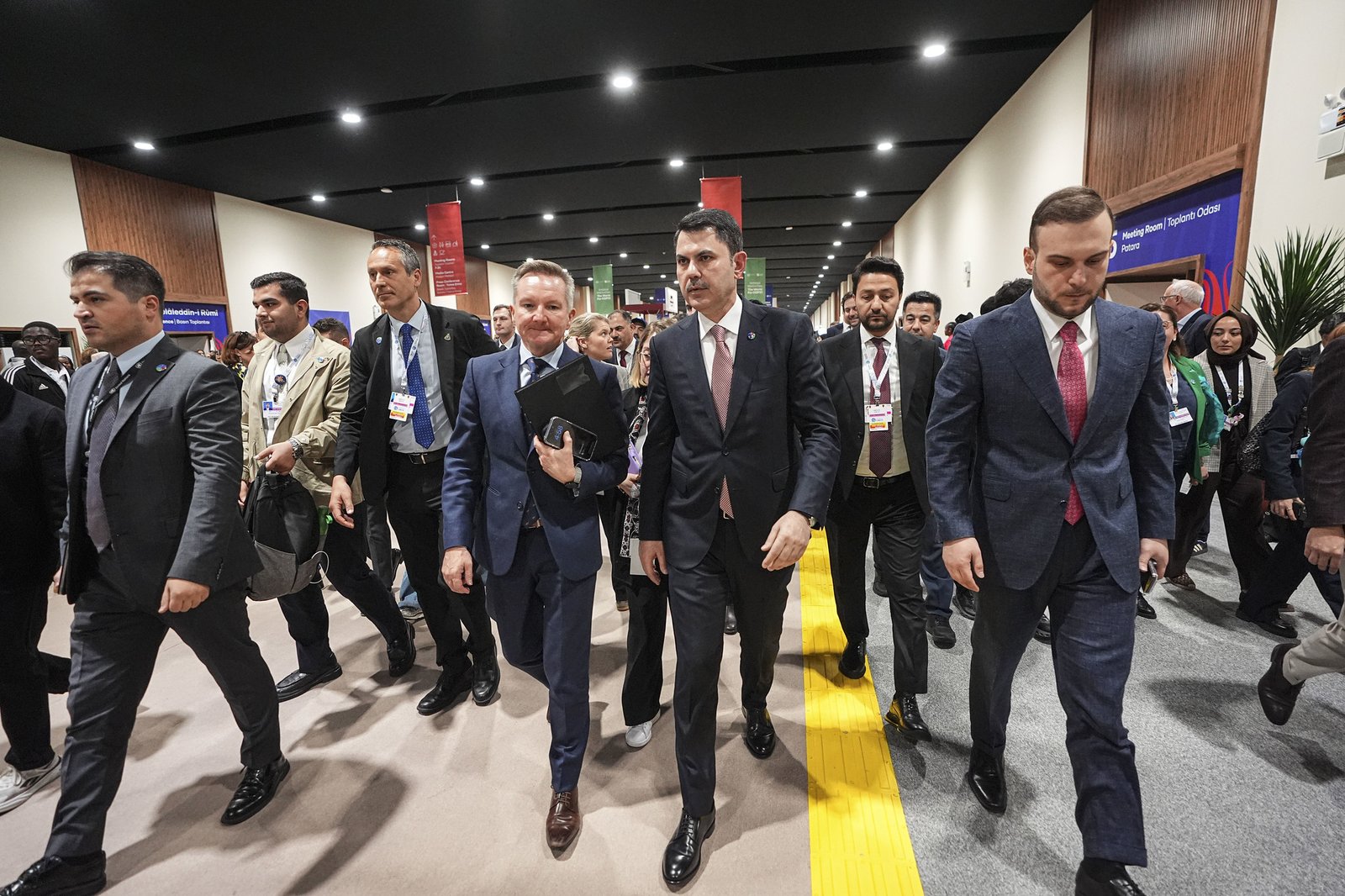
At a press conference, COP31 President Murat Kurum said the revised text aimed to turn climate commitments into practical action. He highlighted the importance of protecting the 1.5°C goal, saying, “Protecting the 1.5-degree target also means protecting life.”
Kurum also promoted Türkiye’s proposed “35-by-35” initiative, which seeks to increase electricity’s share of global final energy consumption to 35% by 2035. The proposal is linked to expanding renewable energy, improving energy efficiency, modernising electricity grids and developing storage systems.
On climate finance, Kurum said, “Climate finance is solidarity translated into figures and investments.” He emphasised easier access to funding, shorter approval and disbursement procedures, and increased grant-based and concessional financing for vulnerable countries.
The draft retains a call to at least triple adaptation finance by 2035 and proposes an “Antalya-to-Addis Ababa Roadmap on Adaptation and Resilience Finance”. The roadmap is intended to identify predictable and scaled-up sources of funding, including innovative financing mechanisms, and improve access for developing countries. However, it does not establish a specific dollar baseline or a clear quantified annual target.
Fossil fuel language becomes a major controversy
The most significant change is the removal of all explicit references to fossil fuels and the transition away from them that appeared in the first draft released on November 16. References to the Brazil-led roadmaps on fossil fuel transition and ending deforestation have also disappeared.
Instead, the revised text calls for accelerated deployment of renewable energy and other zero- and low-carbon technologies, alongside a 35% global electrification target. It also welcomes efforts to scale up carbon capture, utilisation and storage (CCUS), while stating that carbon removal should complement rather than replace deep emissions reductions.
The omission has drawn sharp criticism from climate campaigners, who argue that electrification without an explicit commitment to phase out fossil fuels could weaken the signal to governments and investors.
Stela Herschmann, international policy lead at Brazil’s Climate Observatory, described the revised text as a lowest-common-denominator outcome. “Seeking the lowest common denominator, the text left out, or weakened, everything that would make a difference in the real world,” she said.
Claudio Angelo, the organisation’s international policy coordinator, called the draft insufficiently ambitious, warning that it omitted any reference to fossil fuels while leaving the door open to carbon capture and storage technologies.
Oil Change International also urged governments to retain a clear fossil fuel phaseout commitment. Its Global Industry Lead, David Tong, said: “Credible roadmaps, renewable-powered electrification, and the public finance needed for a fast and fair transition must go hand in hand. Rich countries cannot champion a fossil fuel phaseout while blocking the finance needed to make it happen.”
Adaptation finance and implementation remain contested
The adaptation finance provisions have received a more mixed response. Sandra Guzman, director of the Climate Finance Group for Latin America and the Caribbean, welcomed the inclusion of the proposal to triple adaptation finance but questioned how it would be implemented.
“Tripling adaptation finance, a key outcome of this COP31, is now there, but with little clarity in its implementation. Unfortunately, we are running out of time,” she said.
The 19 November draft retains the call to triple adaptation finance by 2035 and proposes an implementation roadmap, but it does not specify the US$120 billion annual target that appeared in the earlier draft. The report therefore avoids describing that figure as part of the new text.
The draft also recognises the growing gap between climate finance flows and developing countries’ needs. It calls for predictable, public, grant-based and highly concessional finance, particularly for least developed countries and small island developing states. It further notes the funding shortfall facing the Fund for Responding to Loss and Damage.