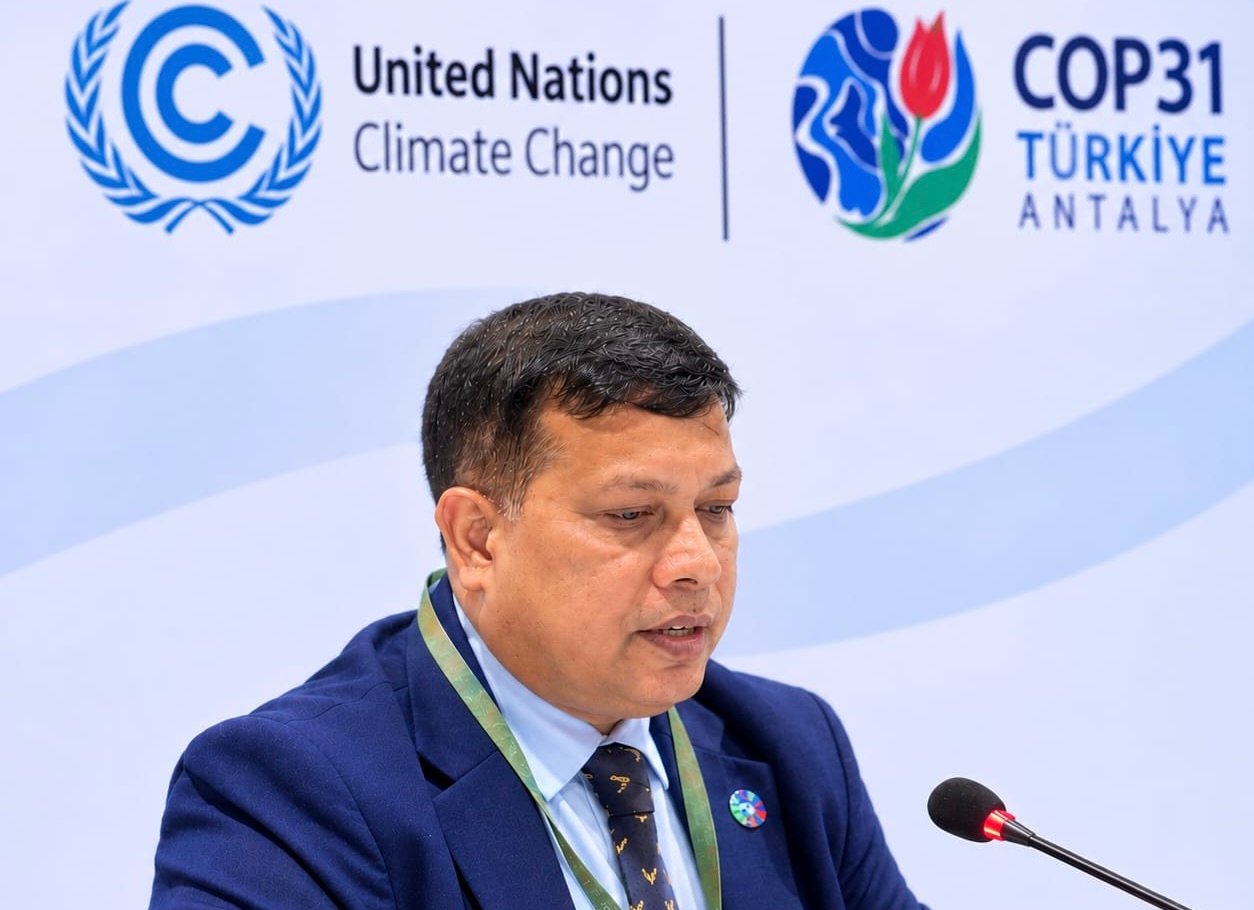
ANTALYA, November 19, 2026: Bangladesh has emphasised the need for effective national frameworks to address climate-induced loss and damage, stronger South-South cooperation and an equitable, inclusive process for assessing global progress on climate action at the 31st UN Climate Change Conference (COP31) in Antalya, Türkiye.
The country’s positions were presented by Mohammad Navid Shafiullah, Additional Secretary of the Ministry of Environment, Forest and Climate Change, at two important international events held during the conference.
Speaking at the UNFCCC official side event, “From National Frameworks to Global Action,” on November 17, Shafiullah said climate-induced loss and damage had become a harsh reality for millions of people in Bangladesh.
He noted that the adverse impacts of climate change extend beyond damage to homes, assets and livelihoods, also affecting social bonds, community relationships and people’s mental well-being.
He called for a clear and effective national framework to address loss and damage, stronger coordination among relevant ministries, meaningful participation of local communities and proper integration of loss and damage considerations into national development plans and budgets.
Shafiullah also highlighted the importance of strengthening South-South cooperation through the exchange of knowledge, experience and expertise among developing countries facing common climate challenges.
He said South-South cooperation should not remain merely a policy commitment but serve as an important means of achieving practical progress through collective initiatives.
On November 18, Shafiullah delivered Bangladesh’s national statement at a ministerial-level event organised under the leadership of the COP31 Presidency to mark the launch of the Second Global Stocktake (GST-2) process.
He underscored the importance of international cooperation, mutual understanding and experience-sharing in assessing global progress on climate action and strengthening ambition and implementation towards climate goals.
He also highlighted the need for an effective and inclusive GST-2 process that ensures the participation of all countries while taking their respective national circumstances into account.
Bangladesh stressed that a fair and inclusive assessment of global climate action is essential to identifying implementation gaps and strengthening collective efforts to address the growing impacts of climate change.