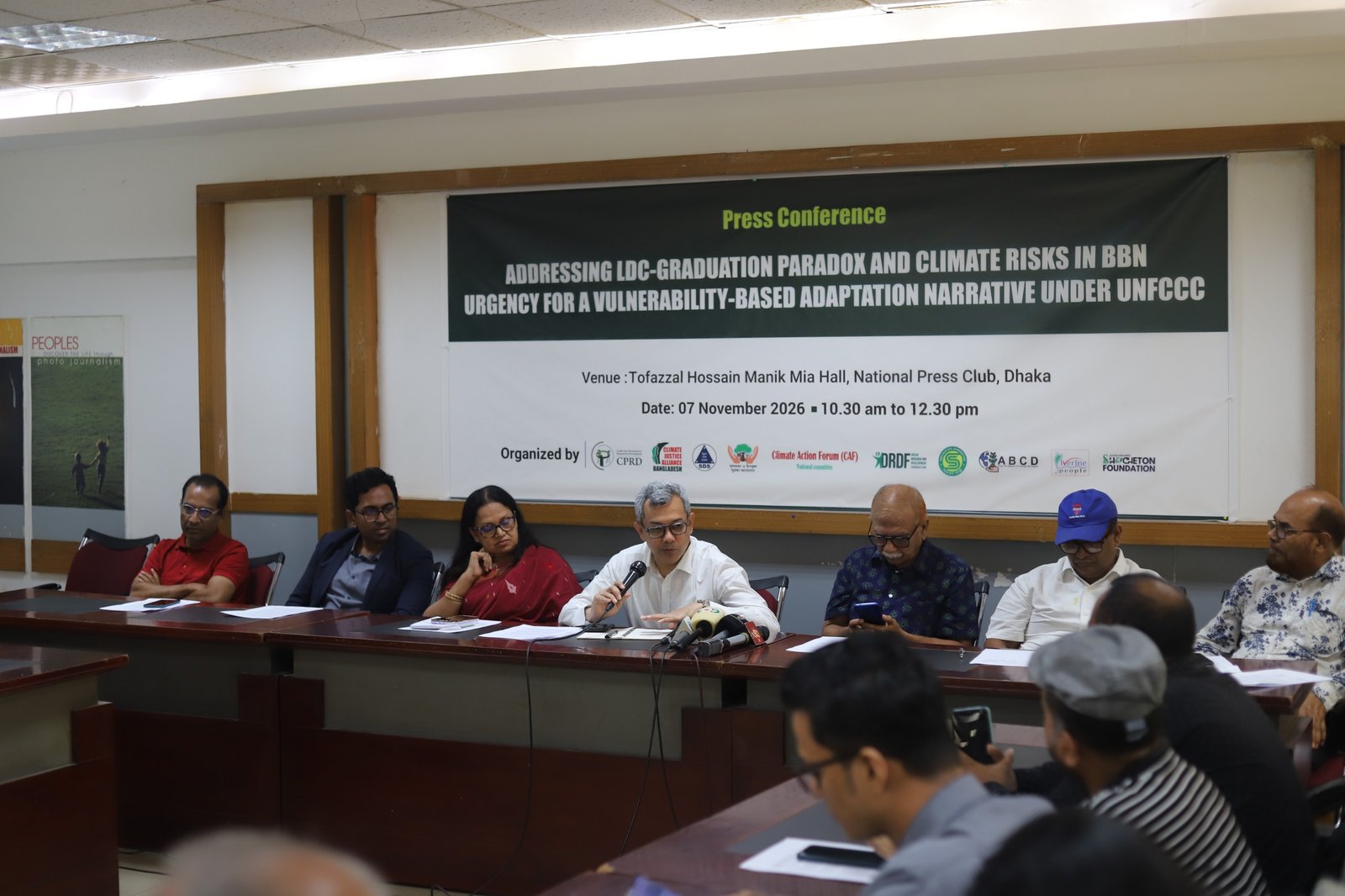
DHAKA, November 7, 2026: Bangladeshi civil society organisations (CSOs) have called for a coordinated regional position among Bangladesh, Bhutan and Nepal (BBN) to secure equitable, predictable and grant-based climate finance beyond Least Developed Country (LDC) graduation.
The call came at a press conference organised by the Center for Participatory Research and Development (CPRD), in collaboration with the Climate Justice Alliance–Bangladesh and several other civil society and development organisations, at the National Press Club in Dhaka on Saturday. The event was held ahead of the UN Climate Change Conference (COP31), scheduled for November 9–20 in Antalya, Türkiye.
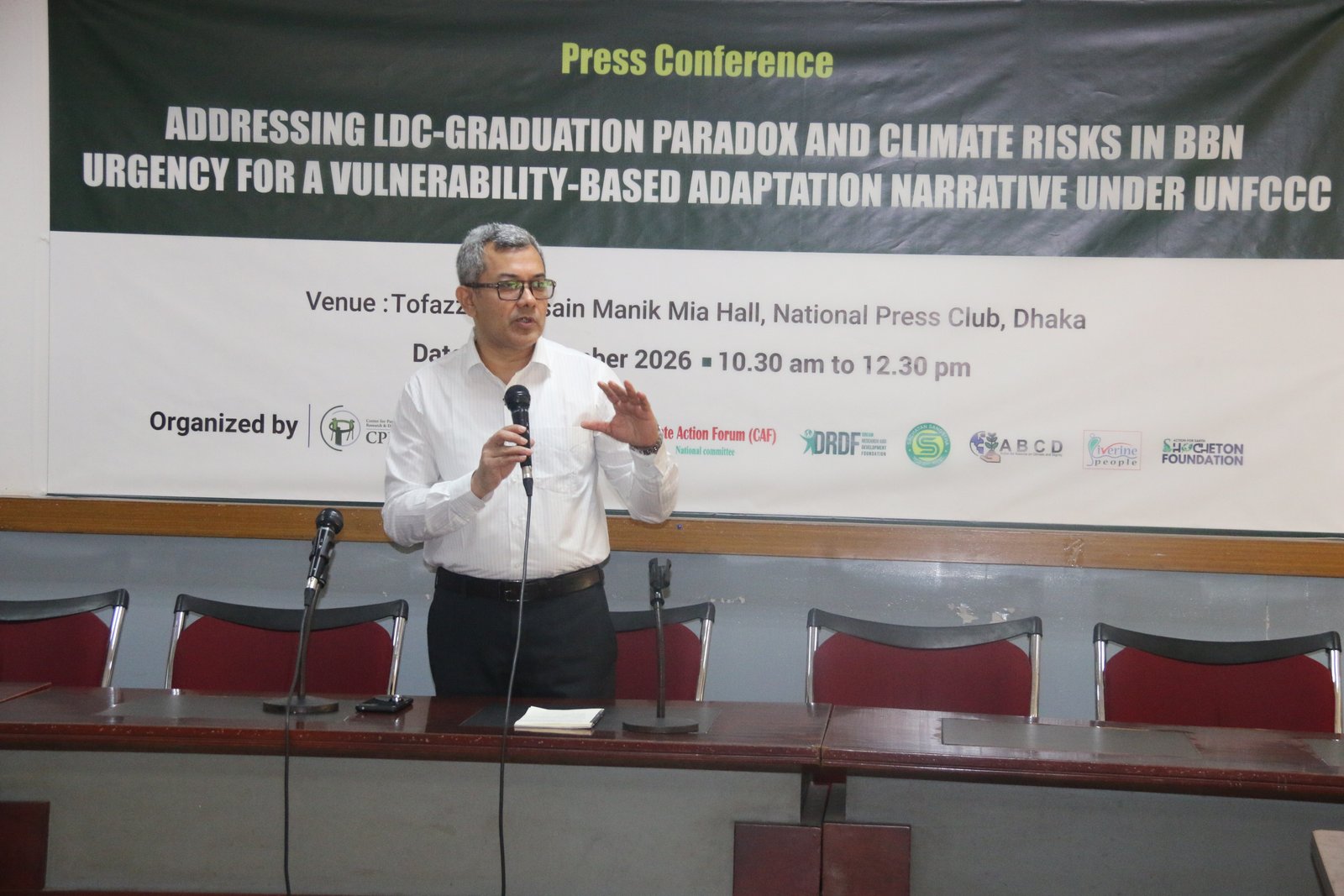
Titled “Addressing LDC-graduation Paradox and Climate Risks in BBN: Urgency for a Vulnerability-based Adaptation Narrative under UNFCCC,” the event highlighted shared climate threats facing the three countries, including Himalayan glacier retreat, changing monsoon patterns, river-flow disruptions, extreme rainfall and heat, sea-level rise and salinity intrusion.
Chairing the event, CPRD Chief Executive and CJA-B Coordinator Md. Shamsuddoha said economic progress and graduation from LDC status did not necessarily reduce climate vulnerability or strengthen countries’ capacity to withstand recurring climate shocks. He called for coordinated adaptation action and joint advocacy by BBN governments and civil society groups.
Presenting the keynote paper, Sumaiya Binte Anwar, Programme Manager for Research and Advocacy at CPRD, called for international climate-finance frameworks to recognise countries’ continuing and future vulnerabilities rather than relying solely on conventional development classifications.
Other speakers stressed that LDC graduation should not mean graduation from climate vulnerability. They called on developed countries and multilateral climate-finance institutions to maintain adaptation support, prioritise the survival needs of vulnerable communities and provide finance reflecting historical responsibility.
The participants identified three major demands for COP31 and subsequent climate negotiations:
• Prioritising adaptation: Keep adaptation central to climate negotiations, guided by vulnerability, equity and human rights, while recognising transboundary climate risks.
• Securing finance beyond LDC graduation: Ensure predictable, accessible, grant-based and highly concessional adaptation finance regardless of LDC status.
• Strengthening regional cooperation: Develop a common BBN advocacy and negotiating agenda to address shared climate risks and improve transparent and accountable delivery of climate finance.
The speakers said stronger government–civil society cooperation and a unified regional position would be essential for Bangladesh, Bhutan and Nepal to secure equitable adaptation support at COP31 and beyond.