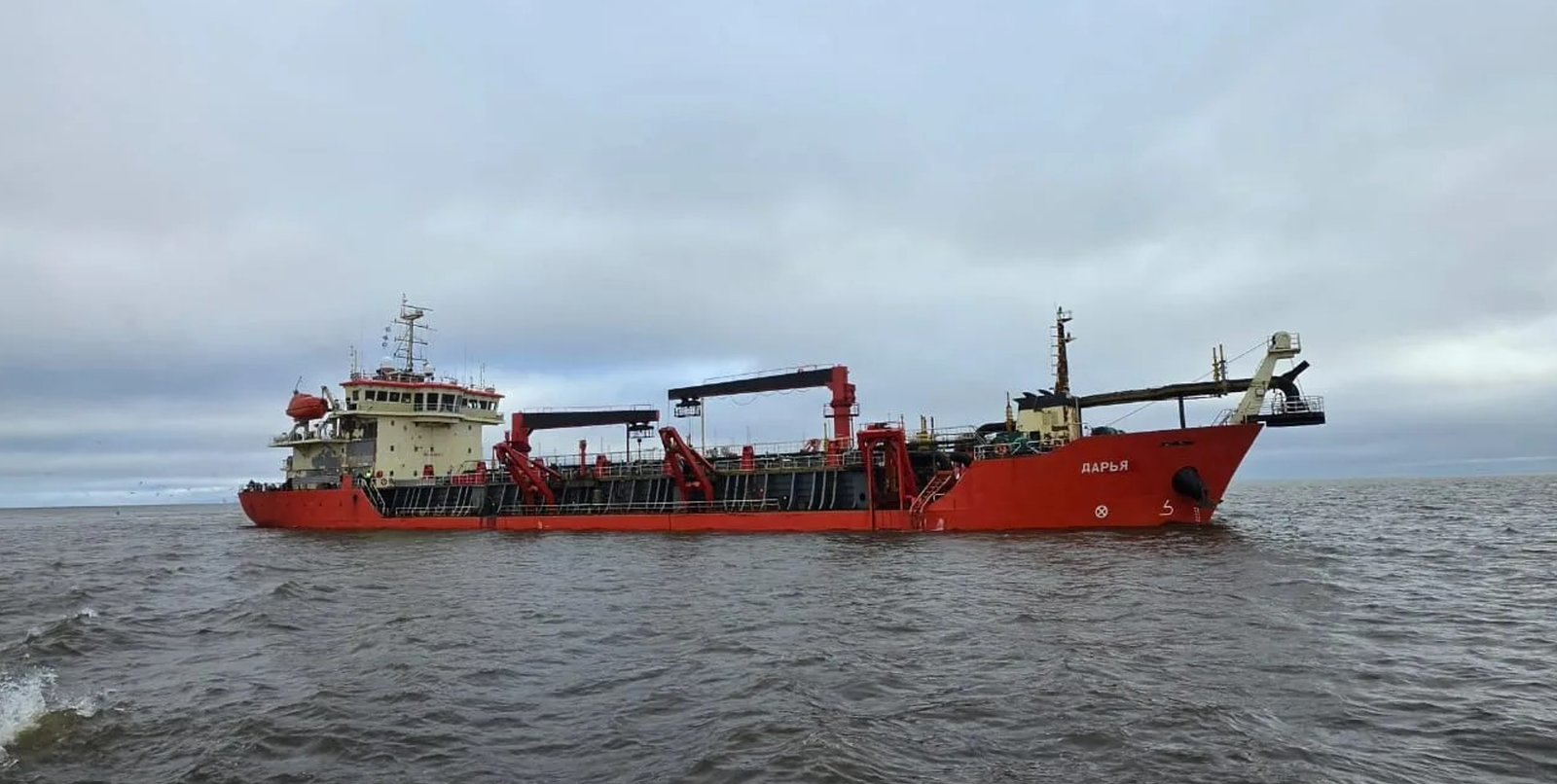
The hopper dredger ‘Darya,’ acquired by Hydrographic Enterprise, a Rosatom-managed company, has begun operations at Sabetta, Russia’s first LNG seaport. The vessel is tasked with maintaining the approach channel’s design dimensions and required depth to ensure safe navigation and support the port’s planned cargo throughput.
‘Darya’ is Rosatom’s first vessel of this type and marks a step toward developing its own specialized dredging fleet. The company plans to acquire nine more high-performance dredging units, enabling it to conduct repair dredging in the Ob Bay and approaches to shippers’ terminals using its own resources.
Heavy traffic by large-capacity gas carriers causes natural seabed silting in the port’s waters. Over the past five years, more than 70 million cubic meters of material has been dredged at Sabetta. From next year, around 5 million cubic meters of sediment will need to be removed annually to maintain the required depths, according to Dmitry Ageev, Acting Director of Hydrographic Enterprise.
The dredging work at Sabetta is particularly challenging because it is a freezing port, leaving a dredging window of only about three months each year.
Dredging is an important part of ensuring safe navigation along the Northern Sea Route (NSR), alongside navigational and hydrographic support. Hydrographic Enterprise surveys more than 40,000 linear kilometers annually, providing updated information on water depths and helping optimize shipping routes and reduce grounding risks.
Rosatom has served as the infrastructure operator of the NSR since 2018. The approximately 5,600-km Arctic route links Europe and the Asia-Pacific region and is being developed through expanded cargo traffic, new nuclear-powered icebreakers and infrastructure upgrades.