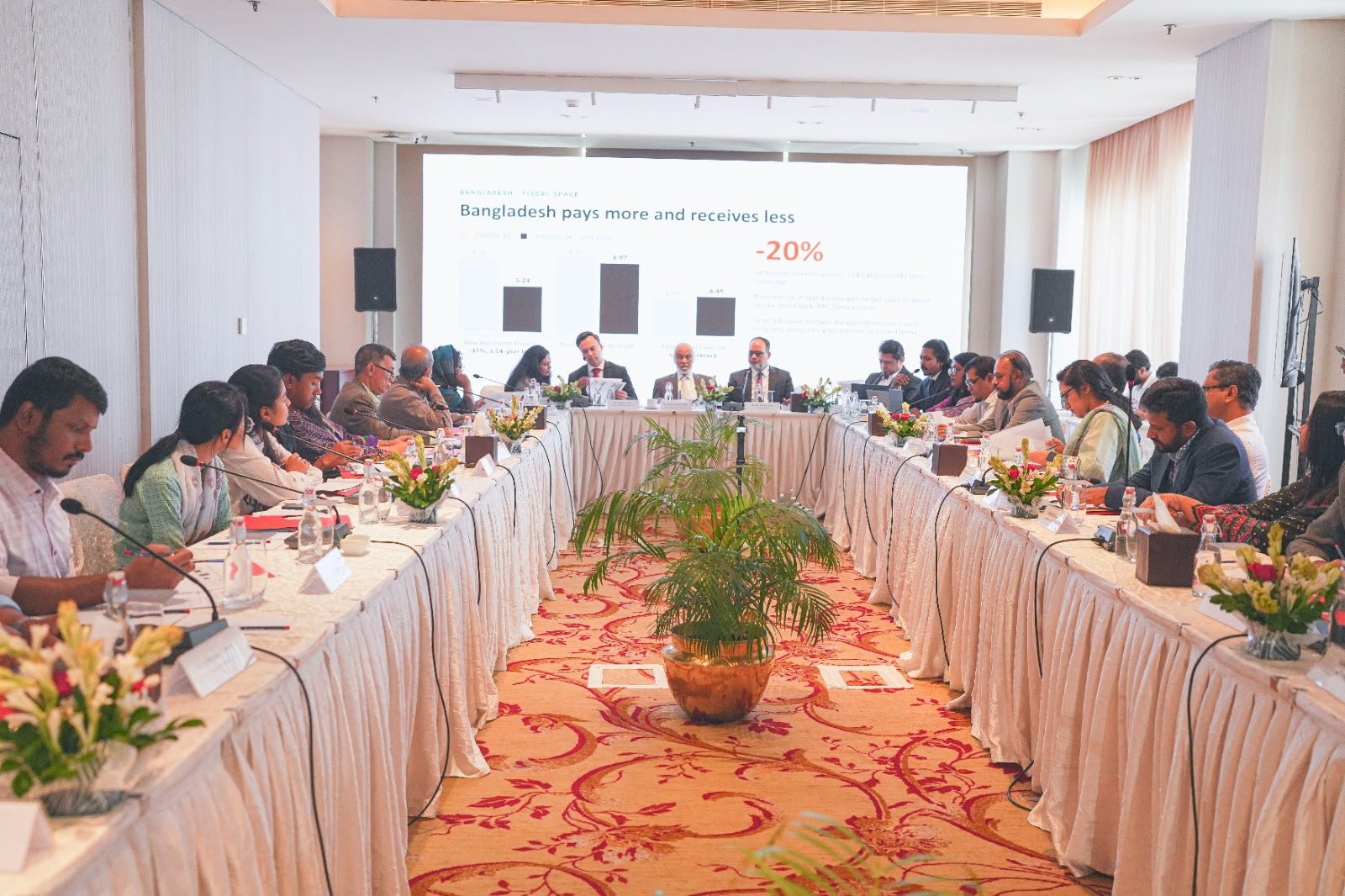
Dhaka, October 15, 2026: Change Initiative has launched the Nature and Governance Policy Platform (NGPP), an independent advisory platform aimed at strengthening evidence-based policies on climate finance, nature conservation and governance in Bangladesh.
The platform was launched at a national dialogue titled “From Paris to Antalya: A Reflection on Finance for Climate and Nature”, organised by Change Initiative in collaboration with WaterAid Bangladesh and with support from the Swiss Agency for Development and Cooperation (SDC). The event brought together policymakers, development partners, researchers, civil society representatives, youth and media ahead of COP31 in Antalya, Türkiye.
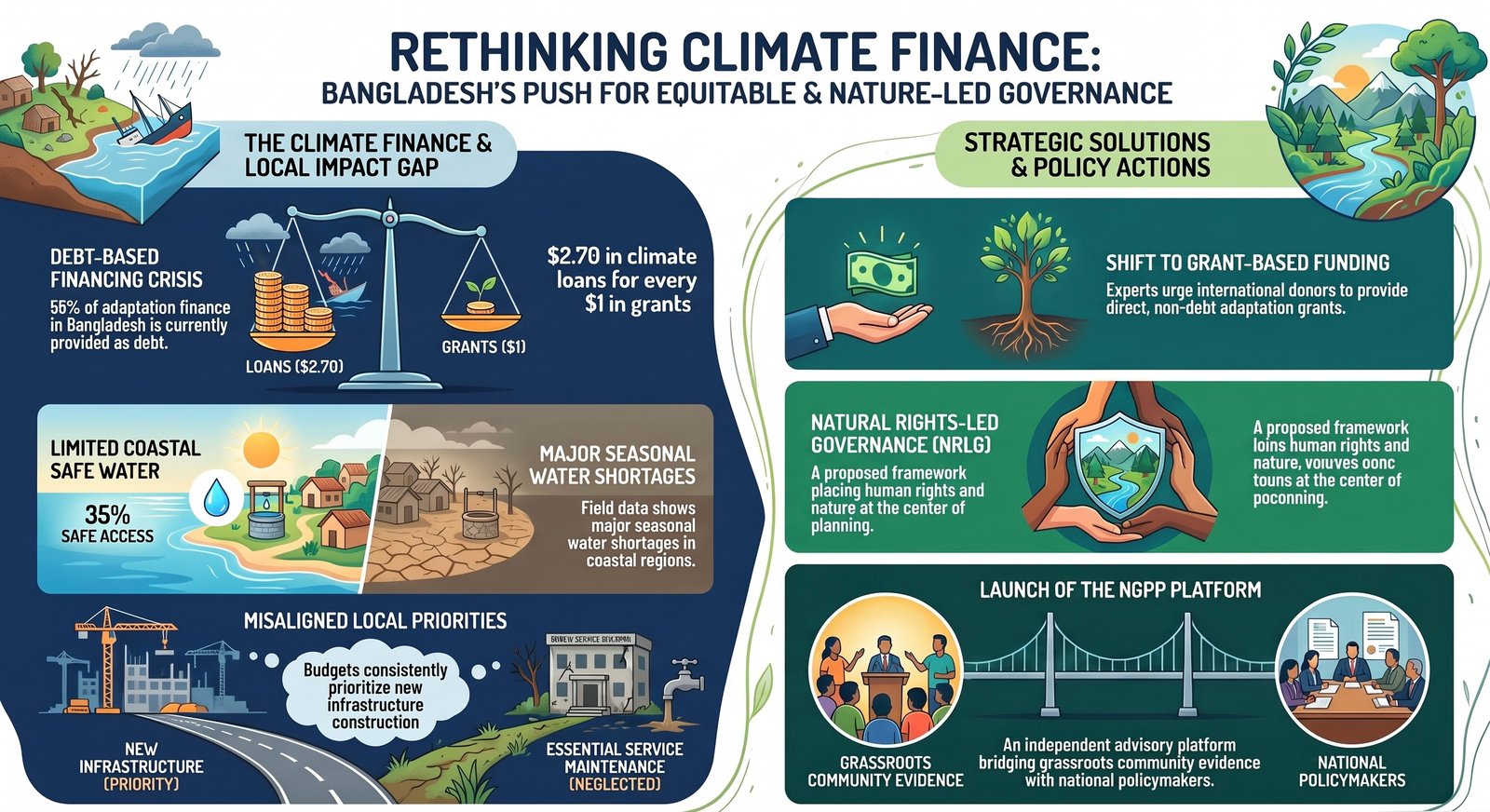
The dialogue highlighted concerns over Bangladesh’s reliance on climate loans, gaps in local-level financing and inadequate funding for the maintenance of essential services. Research presented by Change Initiative showed that Bangladesh received approximately US$2.70 in climate loans for every US$1 in grants, while 58% of adaptation finance was provided as debt.
Field evidence from Satkhira and Naogaon under the GO4Impact programme indicated that only around 35% of coastal households have access to safe water throughout the year. The findings also highlighted a tendency for local budgets to prioritise infrastructure construction over the maintenance needed to sustain services.
Change Initiative called for greater access to grant-based climate finance, equitable allocation of resources and stronger mechanisms to ensure that international funding reaches vulnerable communities and supports essential services beyond individual project cycles.
M. Zakir Hossain Khan, Co-Founder and Chief Executive of Change Initiative and Independent Observer of the CIF-SCF, warned that humanity had crossed seven of the nine planetary boundaries that help maintain the stability of Earth’s natural systems. He advocated Natural Rights-Led Governance (NRLG), placing the rights of people and nature at the centre of development planning.
“I need oxygen, I need fresh water, I cannot negotiate on that,” he said, stressing the need for action beyond international climate negotiations. He also called for debt relief, stronger cooperation among government, business and society, and financing mechanisms that directly benefit communities.
Chief Guest Dr Abdul Moyeen Khan, Minister for Local Government, Rural Development and Co-operatives, welcomed the initiative but described the task ahead for NGPP as a major challenge. He urged its members to take their responsibilities seriously and ensure that policy decisions reflect realities in villages and local communities.
He stressed that climate finance should be assessed in terms of investment quality, public benefits and sustainable outcomes. “The money we borrow, have we utilized this in the proper way? That is the question,” he said, calling for planning that starts at the grassroots rather than being confined to central government offices.
Diepak Elmer, Chargé d’Affaires at the Embassy of Switzerland in Bangladesh, said effective governance was essential to translating climate finance into lasting results. He called for clear mandates, adequate resources and stronger capacities for local institutions, alongside sustained funding for maintenance after projects are completed.
Mansura Akter, MP, emphasised the importance of involving ordinary people and grassroots communities in climate initiatives, warning that efforts would fail without their meaningful participation.
Dr Farhina Ahmed, former Secretary of the Ministry of Environment, Forest and Climate Change, called for greater national self-reliance in responding to climate risks. She also stressed that climate change, nature loss and pollution must be addressed as interconnected elements of the triple planetary crisis.
Farah Kabir, Country Director of ActionAid Bangladesh, called for an integrated approach to water security, food security and biodiversity protection, emphasising community ownership of local water infrastructure.
Dr Fazle Rabbi Sadeque Ahmed, a climate change and development expert, said access to climate finance, particularly for adaptation and loss and damage, was a right. Bipasha S. Hossain, Country Representative of IUCN Bangladesh, stressed that successful projects require continued financing and empowered local communities to sustain their benefits. Mrinal Kanti Tripura of Maleya Foundation called for climate policies that are equitable, culturally appropriate, nature-led and rights-based.
State Minister for Environment, Forest and Climate Change Shaikh Faridul Islam, MP, has agreed to serve initially as convener of NGPP. The founding core members also include Mahmuda Habiba; Mansura Akter, MP; Md Mostafizur Rahman, MP for Naogaon-1; Md Ziaul Haque, former Additional Director General of the Department of Environment; Dr Fazle Rabbi Sadeque Ahmed; Professor Dr Sharmind Neelormi of Jahangirnagar University; and Mostafa Kamal Majumder, Editor of GreenWatchBD. Members will serve in their individual capacities, with membership expected to expand gradually.
Change Initiative will serve as the platform’s technical secretariat, connecting community-level evidence, research and expert knowledge with policymakers to support informed decision-making on climate, nature and governance.
In his closing remarks, Md Tahmidul Islam, Country Director (In-Charge) of WaterAid Bangladesh, highlighted calls from young people for greater clarity and transparency in climate financing. He welcomed the launch of NGPP and expressed hope for continued government support.
The dialogue underscored the need to move beyond mobilising climate finance towards ensuring that funding is equitable, locally accessible, accountable and capable of delivering lasting benefits for people and nature.