
Dhaka, July 29, 2026: The Bangladesh government has reaffirmed its commitment to conserving the Royal Bengal Tiger and protecting its natural habitat in the Sundarbans, with authorities highlighting steady progress in tiger conservation and announcing stronger measures to combat wildlife crime.
Speaking at a discussion marking International Tiger Day 2026 on Wednesday, Environment, Forest and Climate Change Adviser Abdul Awal Mintoo said safeguarding the tiger is essential for preserving the ecological balance and biodiversity of the Sundarbans. This year’s theme was “Be Aware, Conserve Tigers.”
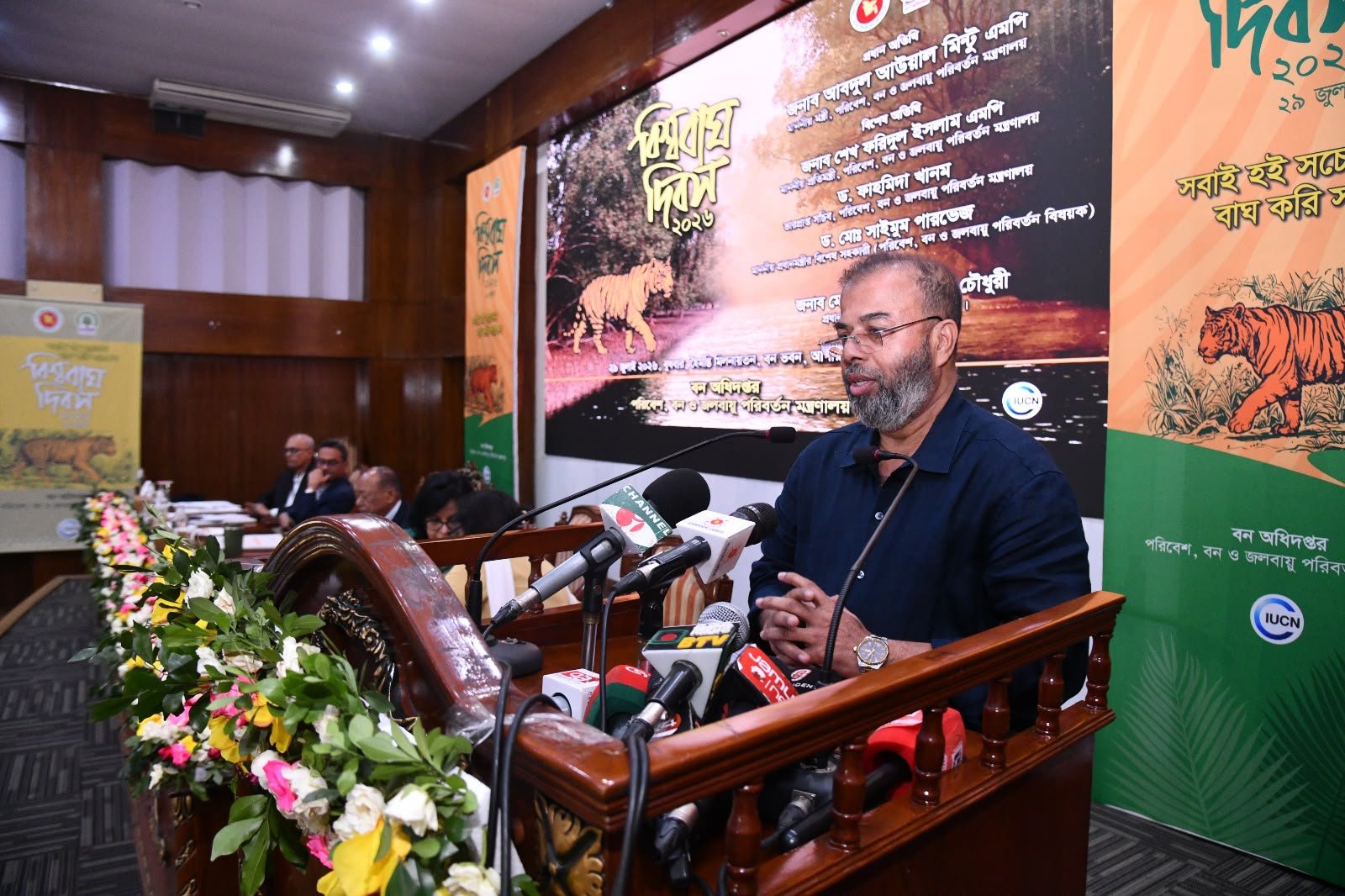
Describing the tiger as Bangladesh’s national animal and the guardian of the Sundarbans ecosystem, Mintoo said the species plays a critical role as a keystone predator in maintaining the forest’s food chain and ecological balance. Protecting the tiger, he said, is inseparable from conserving the Sundarbans’ biodiversity, forest resources and natural regeneration processes.
The adviser said the government has recently formed a 10-member commission to strengthen wildlife conservation and reduce human-wildlife conflict. The commission will work to increase the Bengal tiger population in the Sundarbans, recover illegally occupied forest land and raise awareness among communities living adjacent to the forest.
He noted that coordinated efforts by the government, the Forest Department and local communities have contributed to a gradual increase in the tiger population. According to camera-trap surveys, the number of tigers in the Sundarbans rose from 106 in 2015 to 114 in 2018, reaching 125 in 2024.
Mintoo credited initiatives such as the Village Tiger Response Teams, community patrol groups and the active participation of forest-dependent communities for supporting conservation efforts.
Reaffirming the government’s zero-tolerance policy against tiger poaching and illegal wildlife trade, he said the Wildlife Crime Control Unit and other enforcement agencies would intensify their operations. The government also offers rewards ranging from Tk 25,000 to Tk 50,000 for information leading to the detection of tiger-related crimes.
Special Guest State Minister for Environment, Forest and Climate Change Sheikh Faridul Islam described the tiger as a symbol of Bangladesh’s heritage and resilience. He said the government has expanded protected areas in the Sundarbans and implemented habitat improvement measures, including excavating 80 freshwater ponds to provide drinking water for wildlife and constructing 20 elevated mounds to offer safe resting areas for tigers.
He added that nylon fencing has been installed in selected areas to reduce human-wildlife conflict by preventing tigers from straying into nearby settlements.
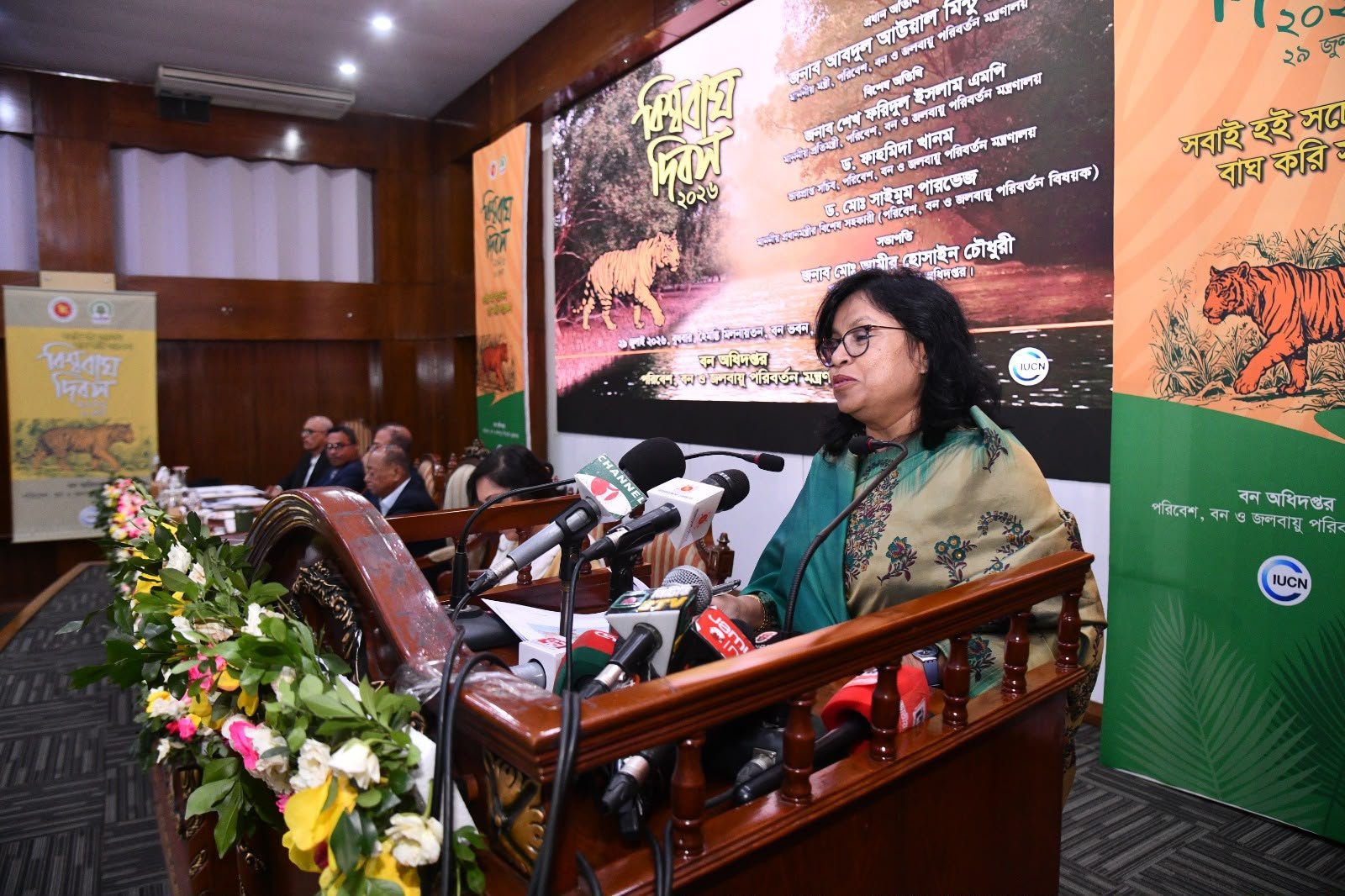
Acting Environment Secretary Dr Fahmida Khanam emphasised the tiger’s vital role in maintaining the Sundarbans’ ecological balance and stressed the need to promote sustainable tourism. She suggested that regulating the number of visitors to the Sundarbans could help minimise disturbances to wildlife and ensure a safer habitat for tigers.
The event was chaired by Chief Conservator of Forests Md Amir Hossain Chowdhury. Professor Dr M A Aziz of Jahangirnagar University’s Department of Zoology and Khulna Conservator of Forests Imran Ahmed presented technical papers on tiger conservation.
Representatives from conservation organisations, including WildTeam and IUCN Bangladesh, alongside officials from the Ministry of Environment, Forest and Climate Change, the Forest Department and members of the media, also attended the program.