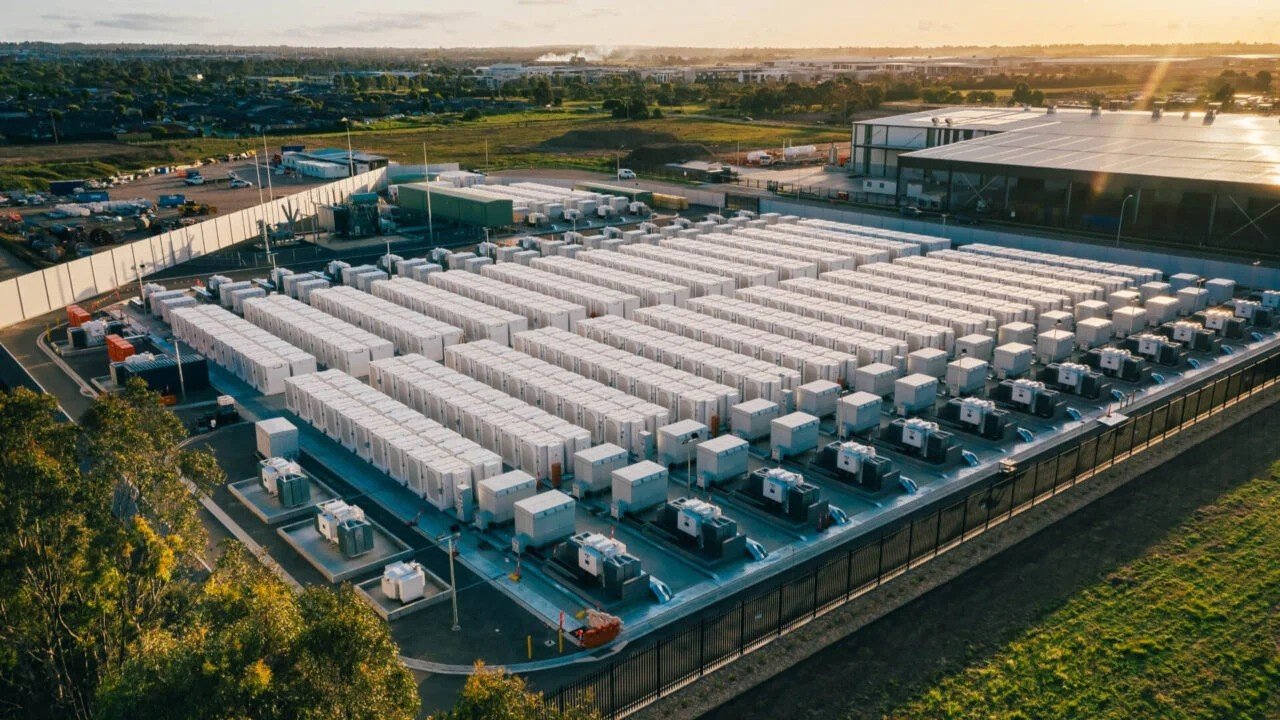
London, July 27, 2026: Global battery energy storage system (BESS) capacity is projected to increase sixfold between 2025 and 2030, driven by rapid electrification, expanding renewable energy deployment, growing electricity demand from industry and artificial intelligence (AI)-powered data centers, according to a new report by market intelligence firm GlobalData.
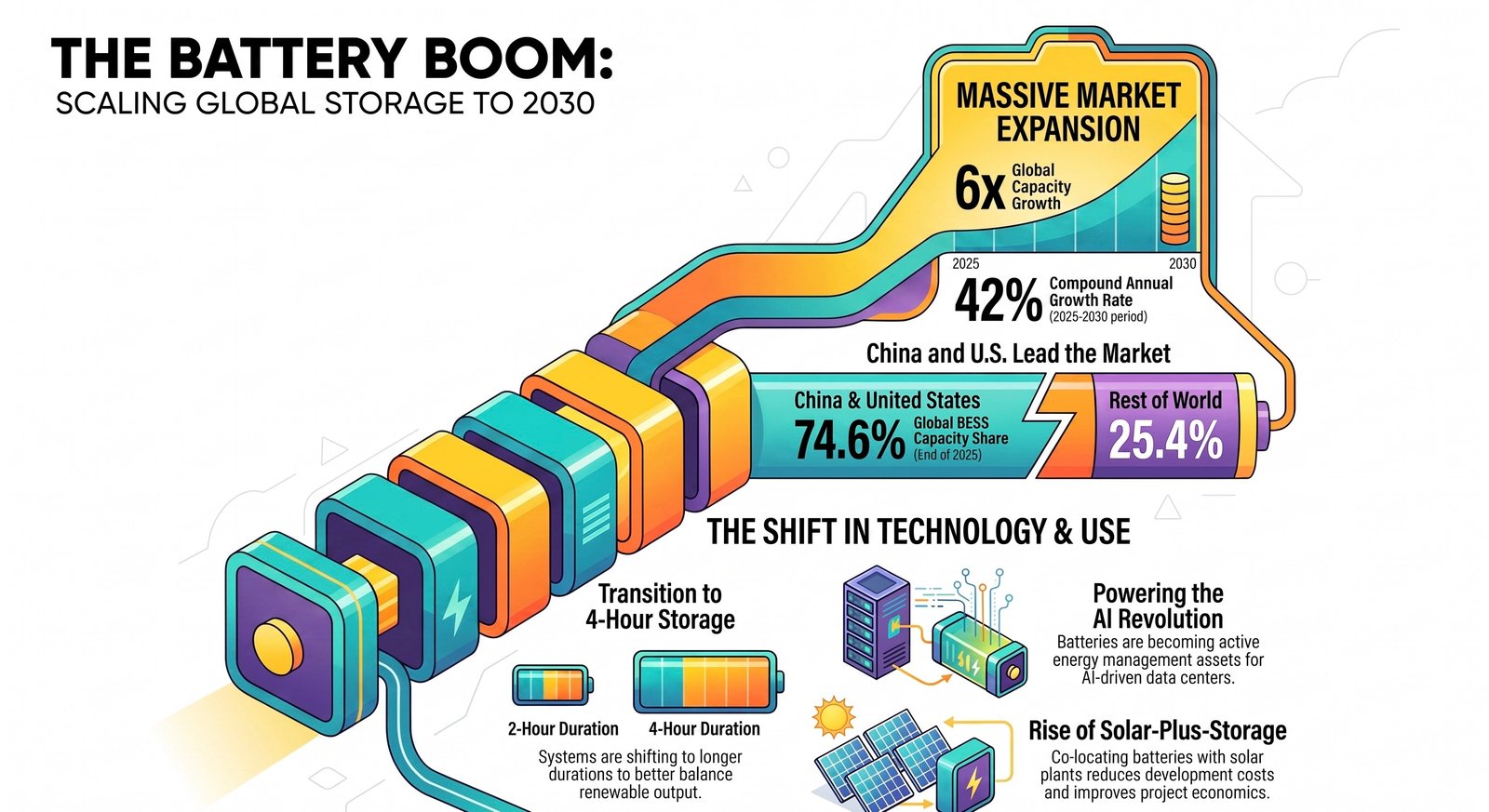
The report, “Strategic Intelligence: Batteries in Power (2026),” forecasts that global installed BESS capacity will grow at a compound annual growth rate (CAGR) of 42% over the five-year period as battery technology becomes increasingly central to modern power systems.
GlobalData said China and the United States will continue to dominate the global battery storage market. Together, the two countries accounted for 74.6% of global installed BESS capacity at the end of 2025, supported by strong government policies, large-scale utility investments and ambitious clean energy targets.
According to Rehaan Shiledar, Power Analyst at GlobalData, the power sector is increasingly shifting from two-hour battery systems to four-hour storage systems, reflecting the growing need to balance electricity generated from solar and wind power.
“As renewable energy penetration increases, longer-duration battery systems are becoming essential for storing excess daytime solar power and supplying electricity during evening peak demand,” he said.
The report notes that regulators and utilities in several countries have already adopted four-hour battery systems as the industry standard. California’s battery procurement programs, Australian renewable energy tenders in Victoria and New South Wales, as well as projects in the United Kingdom and the Middle East, are increasingly prioritizing multi-hour storage to improve grid reliability and reduce renewable energy curtailment.
GlobalData also highlights the rapid expansion of hybrid renewable energy projects, particularly solar-plus-storage facilities. Co-locating battery storage with solar plants reduces development costs, improves project economics and enables surplus daytime electricity to be stored and supplied when market prices are higher.
In electricity markets such as Texas, battery storage is also creating new revenue opportunities by charging when electricity prices are low and discharging during periods of high demand and elevated prices, while simultaneously improving grid stability.
Beyond supporting renewable energy integration, battery storage is expected to play a growing role in powering AI-driven data centers, which require highly reliable electricity supplies.
According to the report, batteries are evolving from traditional uninterruptible power supply (UPS) systems into active energy management assets capable of responding to grid disturbances within milliseconds. They can also help data centers reduce electricity costs, manage peak demand and overcome grid connection constraints.
Shiledar said battery storage is rapidly becoming a critical component of future electricity systems.
“Energy shifting has become the cornerstone of the battery storage business case. Batteries are no longer simply supporting the grid; they are becoming essential infrastructure that improves reliability, reduces renewable energy curtailment, eases network congestion and lowers dependence on expensive peak-generation plants,” he said.
GlobalData believes continued declines in lithium-ion battery costs, stronger global supply chains, supportive government policies and the ability to generate multiple revenue streams will sustain strong growth in battery energy storage throughout the remainder of the decade.
The report concludes that battery storage will remain a cornerstone of power systems with high shares of renewable energy, enabling countries to build cleaner, more reliable and more flexible electricity networks.