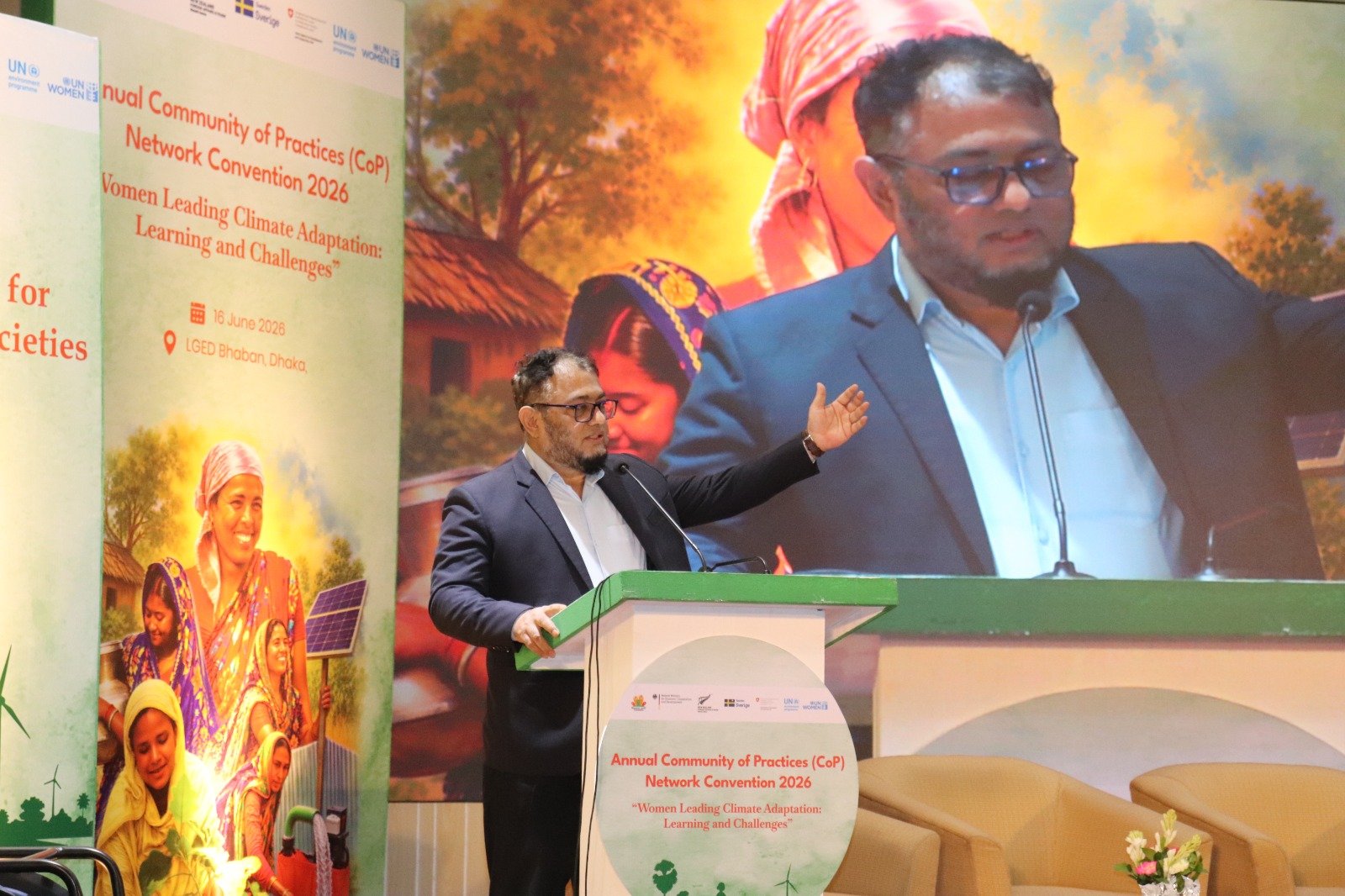
Dhaka, 16 June 2026 - Speakers at the 3rd Annual Community of Practice (CoP) Network Convention 2026 in Dhaka emphasized that women’s leadership, unpaid care work, and local knowledge must be formally recognized in climate adaptation, agriculture, and sustainable development policies.
The event, titled “Women Leading Climate Adaptation: Learning and Challenges,” was organized by the Manusher Jonno Foundation (MJF) under the EmPower: Women for Climate-Resilient Societies (Phase II) project, with support from UN Women.
Chief guest Dr Md Lutfor Rahman, Director General of the Department of Environment, said women have long played a central role in agriculture and remain key actors in food security and community resilience. He stressed the need for practical, cost-effective environmental solutions and highlighted ongoing efforts to reduce emissions through approaches such as using agricultural residues.
He also underscored that women’s contributions must be properly integrated into climate adaptation planning, particularly in agriculture-linked livelihoods and environmental protection initiatives.
Ms Susanne Wadstein of the Embassy of Sweden highlighted the interconnected nature of climate change, women’s empowerment, and sexual and reproductive health, calling for stronger civil society engagement and ownership in shaping solutions.
Ms Navanita Sinha of UN Women noted that global funding constraints are challenging development efforts but stressed the importance of maintaining program quality and strengthening partnerships with government and implementing agencies.
MJF’s Banasree Mitra Neogi urged national recognition of women’s unpaid care work in economic planning and budgeting, noting that efforts to value such contributions through time-use surveys and accounting frameworks must be expanded.
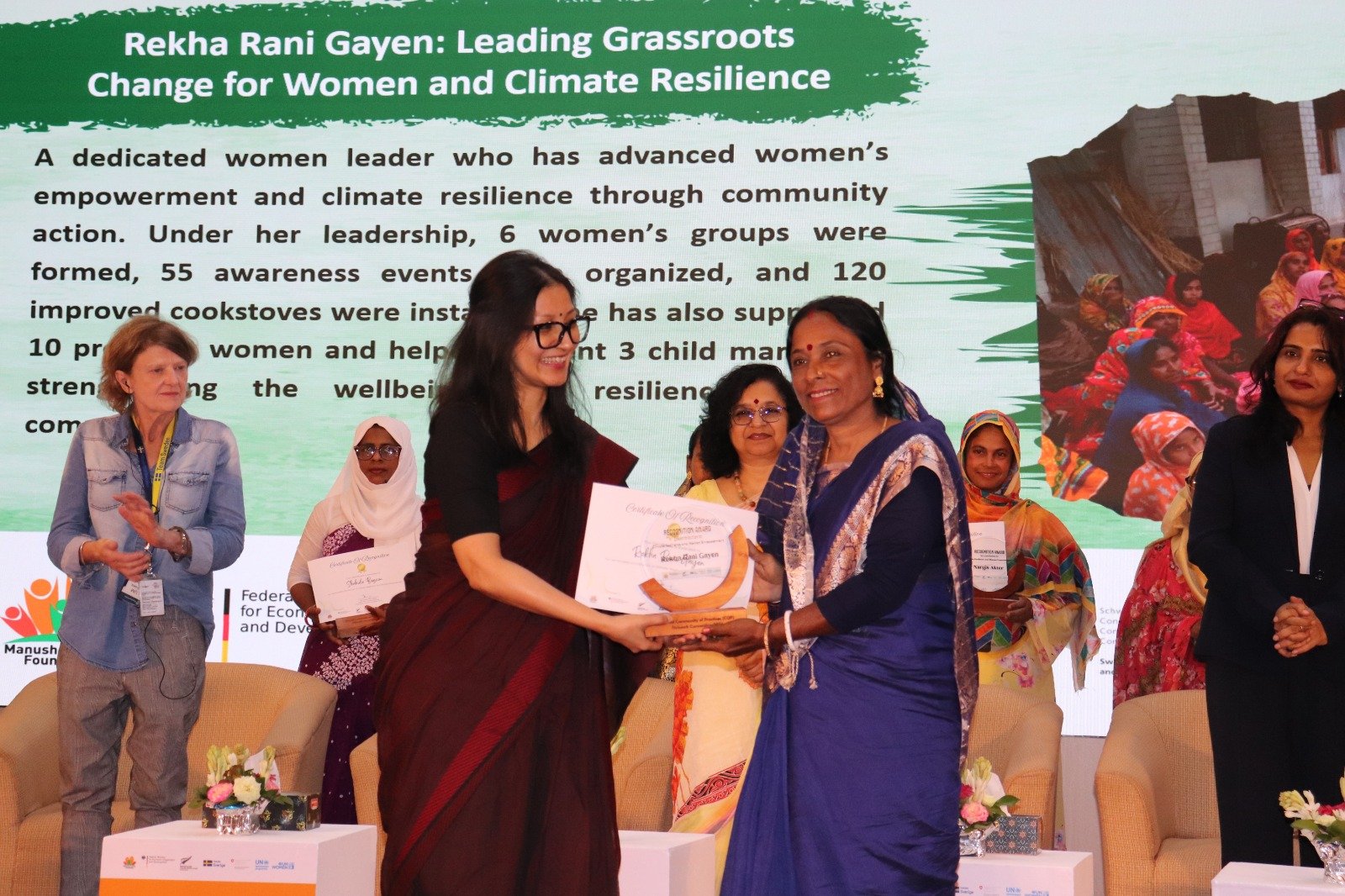
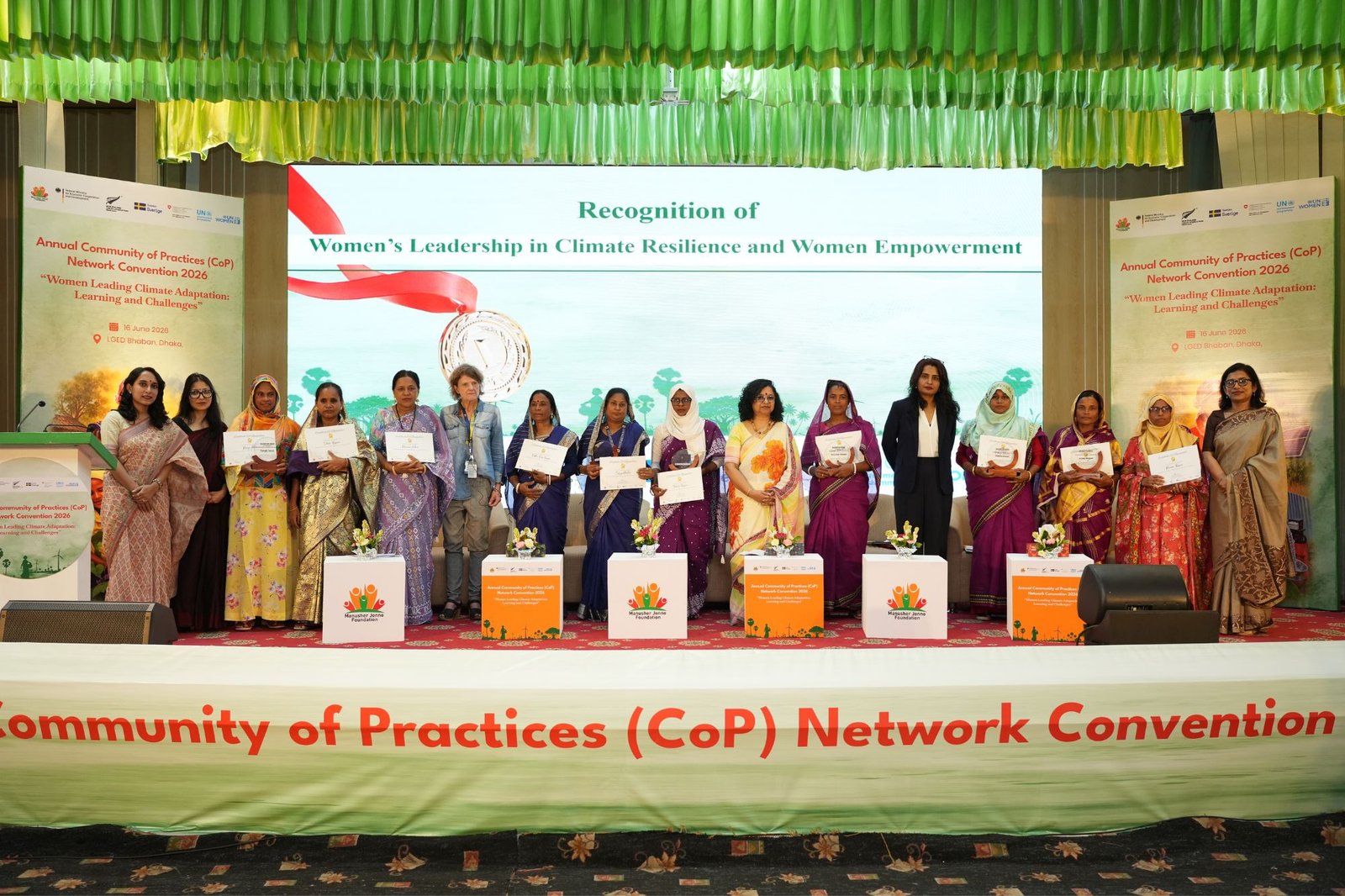
Women climate leaders from Kurigram, Jamalpur, Khulna, and Satkhira were recognized for their contributions to community resilience and local adaptation efforts. Ten partner organizations were also awarded for their work under the project.
Speakers reiterated that effective climate action requires stronger integration of gender equality, improved recognition of unpaid work, and greater inclusion of grassroots women in decision-making.
The convention brought together development partners, civil society representatives, researchers, and policymakers to review progress and explore future pathways for advancing women-led climate resilience in Bangladesh.