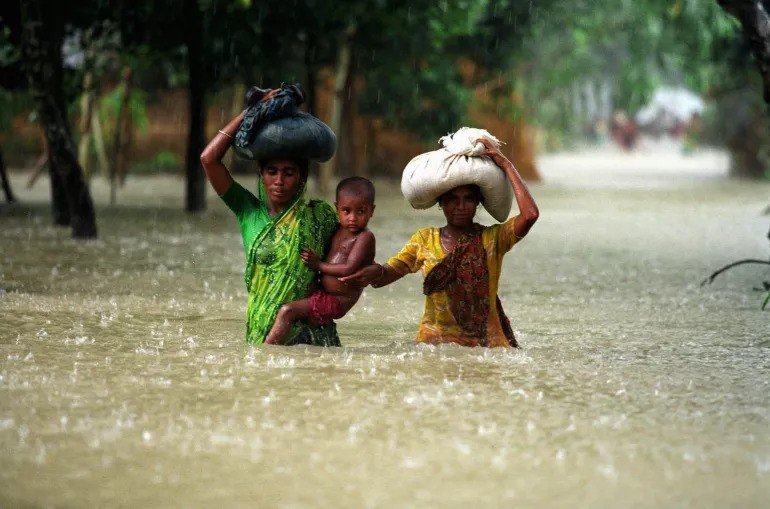
Climate experts and activists on Sunday voiced concern that the proposed national budget for FY2026-27 allocates insufficient resources to address Bangladesh’s growing climate challenges, calling on the government to increase climate-related spending to at least 3 percent of GDP.
Speaking at a seminar titled “National Budget 2026–27 and Climate Allocation” at the CIRDAP Auditorium in Dhaka, they argued that the proposed climate expenditure—equivalent to just 0.76 percent of GDP—falls far short of what is needed to implement long-term adaptation strategies and protect vulnerable communities from escalating climate risks.
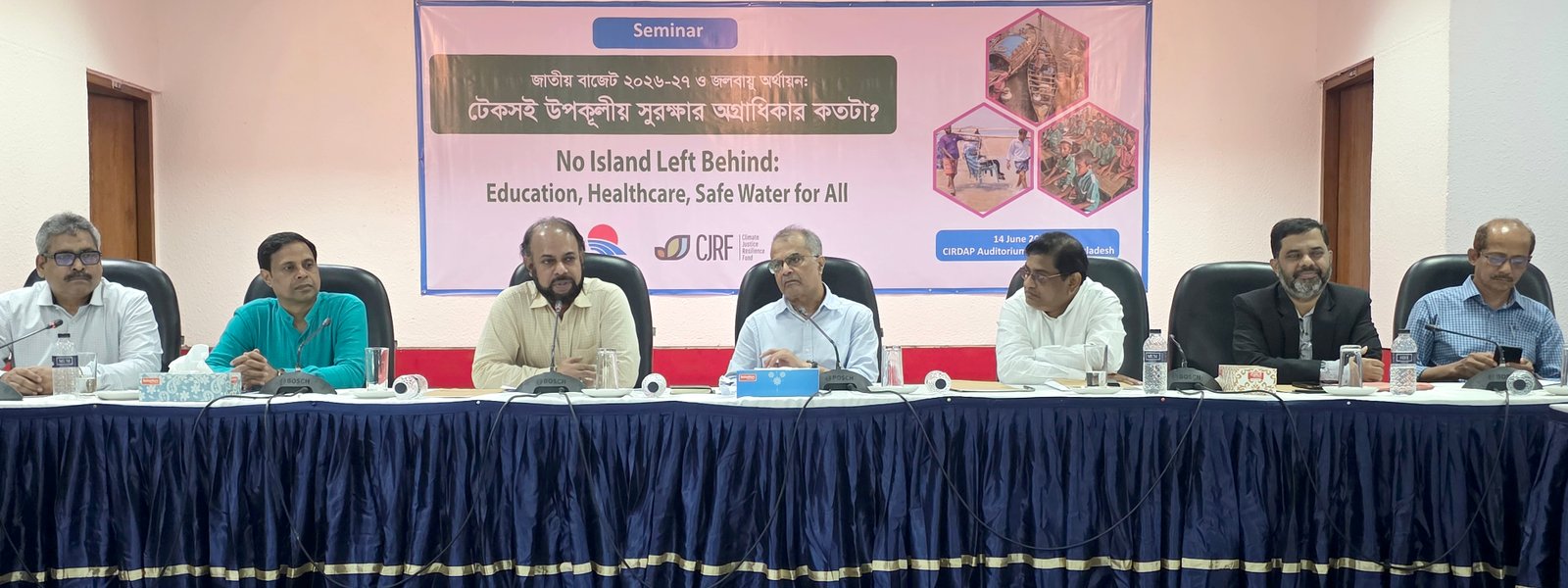
The event was jointly organized by COAST Foundation, BDCSO Process, and EquityBD, and moderated by COAST Foundation Executive Director M Rezaul Karim Chowdhury.
Participants stressed the urgent need for a dedicated climate adaptation plan for Bangladesh’s coastal regions, prioritizing investments in embankments, sluice gates, drainage networks, coastal protection infrastructure, and the rehabilitation of aging polders. They also called for the development of climate-resilient infrastructure to strengthen the country’s capacity to withstand increasingly frequent climate-related disasters.
Speakers highlighted the importance of improving access to safe water and sustainable irrigation systems through expanded rainwater harvesting, restoration of canals and water bodies, adoption of water-efficient irrigation technologies, and promotion of salinity-tolerant agricultural practices.
Addressing the seminar, M Rezaul Karim Chowdhury emphasized that climate justice for coastal communities must be reflected in national budget priorities. He identified salinity intrusion, riverbank erosion, freshwater scarcity, and climate-induced displacement as some of the most pressing challenges facing vulnerable populations.
He urged policymakers to ensure transparent and accountable climate financing targeted toward at-risk communities and advocated for wider use of rainwater harvesting systems, pond-based water storage, pond-sand filters, salinity-resilient water supply solutions, and small-scale desalination technologies.
Md Ziaul Haque, Additional Director General of the Department of Environment, said safeguarding communities from water-related disasters and diseases, while ensuring adequate supplies of safe drinking and irrigation water, should remain central to Bangladesh’s climate adaptation agenda.
He identified seawater desalination, pond excavation, and rainwater harvesting as practical and effective measures to address the persistent drinking water crisis in coastal areas.
Microfinance Policy and Advocacy Specialist Md Mosharraf Hossain highlighted the role of stronger governance and institutional reforms in improving fiscal management and reducing budget deficits. He argued that enhanced accountability and transparency could help maximize the effectiveness of public spending, including climate investments.
RDRS Bangladesh Director Tarek Sayeed Harun noted that microfinance institutions contribute approximately 22 percent to the country’s GDP but continue to receive limited policy recognition and support despite their significant role in rural development and climate resilience.
Meanwhile, COAST Foundation Director Syed Aminul Haque called for the establishment of a dedicated financing mechanism for microfinance institutions and urged greater transparency, stronger governance, and issue-based budgeting in the allocation and management of climate funds.
The speakers concluded that without significantly higher climate investments and a more targeted adaptation strategy, Bangladesh may struggle to protect vulnerable communities and achieve its long-term climate resilience goals in the face of intensifying environmental challenges.