
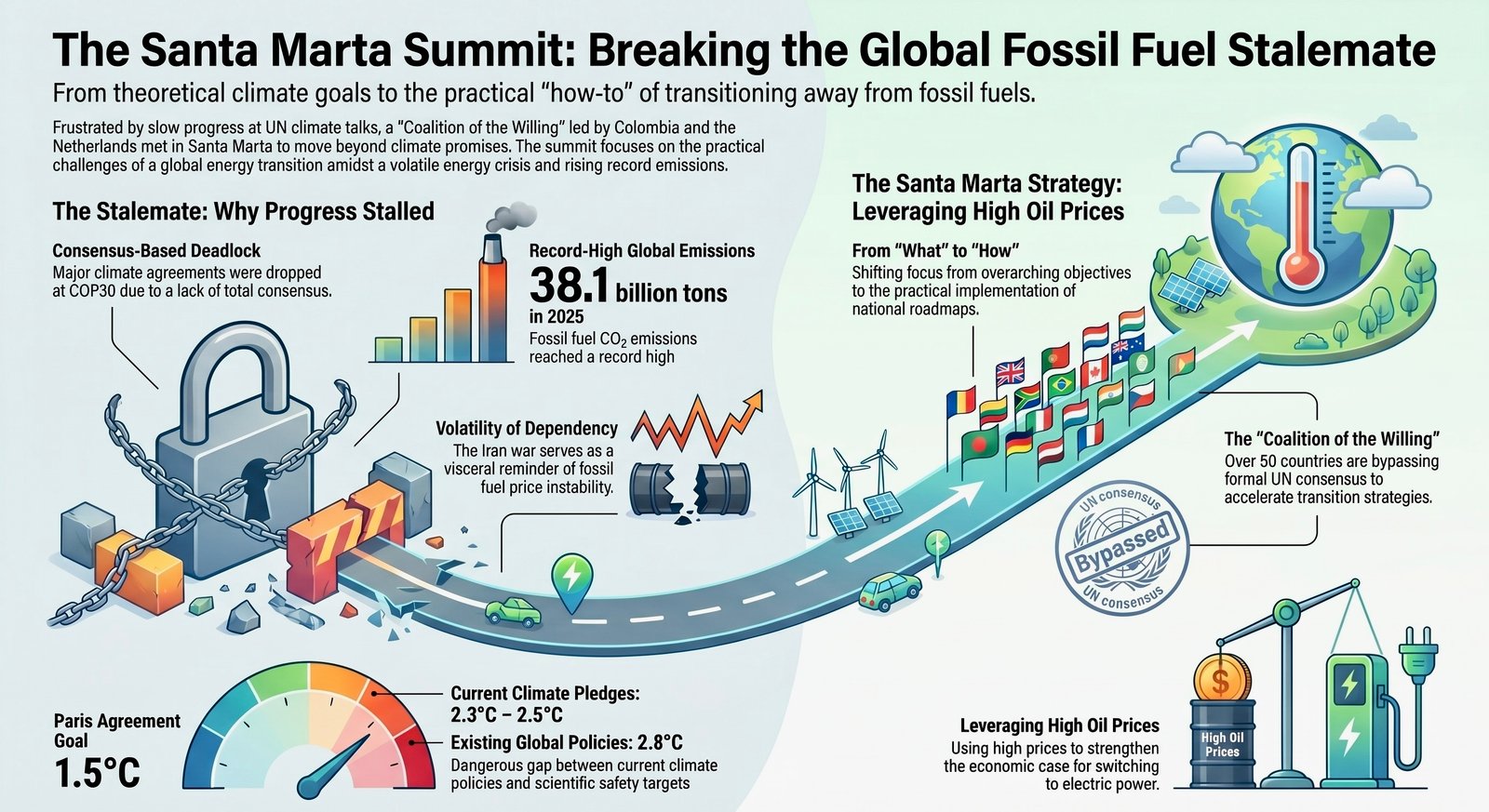
Santa Marta, Colombia, April 28, 2026 — More than 50 countries have gathered in Santa Marta for the world’s first international talks focused specifically on phasing out fossil fuels, against the backdrop of the ongoing Iran war and a tightening global energy supply.
The two-day conference brings together ministers and climate envoys aiming to revive momentum toward reducing dependence on fossil fuels—the main driver of global warming. Hosted in one of Colombia’s key coal-exporting hubs, the meeting highlights both the urgency and complexity of transitioning away from fossil-based energy systems.
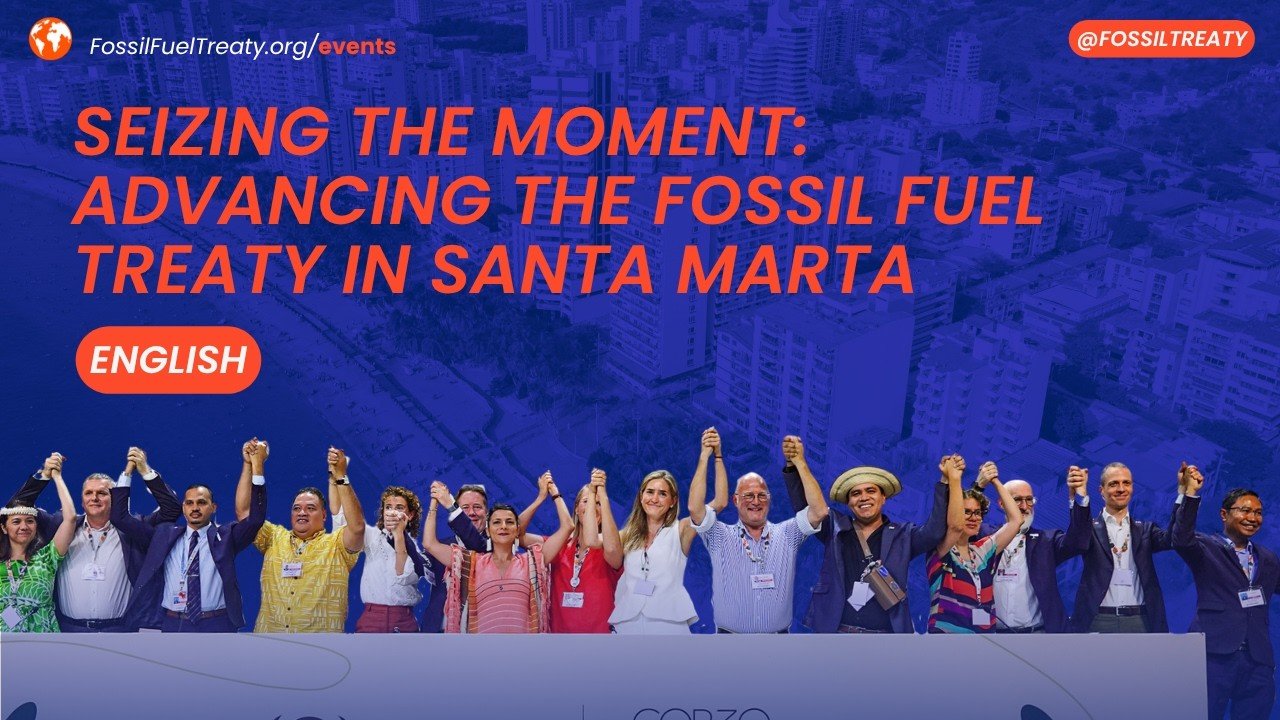
Unlike traditional negotiations under the United Nations framework, the conference reflects growing frustration over the slow progress in global climate talks. Participants say the setting allows for more direct discussions on ending fossil fuel use without revisiting fundamental debates.
Speaking ahead of the talks, UK Special Climate Envoy Rachel Kyte noted that countries appear more willing to engage constructively. “There is a sense of urgency and willingness to tackle a complex challenge made more immediate by the current crisis,” she said.
The conference has drawn a diverse group from major producers such as Canada, Norway, and Australia to developing oil economies like Nigeria, Angola, and Brazil. Pepengentive from the European Union, along with emerging economies such as Turkey and Vietnam, and climate-vulnerable island nations, are also participating. ???, major emitters like the United States, China, and India are absent.
The agenda includes discussions on halting new fossil fuel exploration, reducing production and consumption equitably, and reforming subsidies that hinder renewable energy investment. A recent analysis by the International Institute for Sustainable Development found that governments still spend ???? times more public funds on fossil fuels than on renewable energy.
Scientists warn that even without new exploration, existing fossil fuel reserves could push global temperatures up to 2.5°C by 2050—well above the safer limit outlined in the Paris Agreement. Brazilian climate scientist Carlos Nobre emphasized that there is “no justification” for expanding fossil fuel infrastructure under current conditions.
The world has already warmed by about 1.4°C compared to pre-industrial levels, with projections suggesting the 1.5°C threshold could be exceeded within years. Scientists caution that surpassing this limit could trigger irreversible impacts, including the loss of coral reefs and major ice sheets.
While the conference is not expected to produce binding commitments, it marks a significant step toward building consensus on a global fossil fuel transition at a time of rising geopolitical and energy challenges.