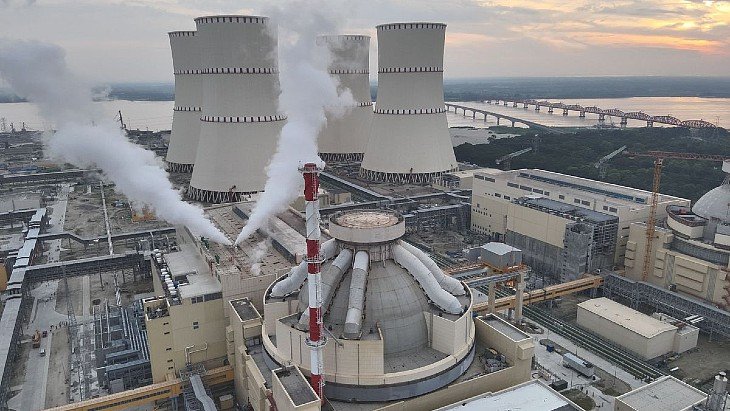
Bangladesh is set to enter a new chapter in its energy journey as uranium fuel loading at the Rooppur Nuclear Power Plant begins on Tuesday afternoon. The formal inauguration of the fuel loading process is scheduled for 3:35 pm.
The program will be chaired by Science and Technology Minister Faqir Mahbub Anam, with representatives from Rosatom and the International Atomic Energy Agency expected to attend.
Officials hope that around 30% of electricity generation from the plant’s 1,200 MW capacity first unit could begin supplying the national grid by August. However, full commercial operation will require about 14 months. The project had initially planned fuel loading in 2022 and power generation by late 2023, but faced multiple delays.
One of the major setbacks came after the Russia-Ukraine War, when sanctions disrupted equipment supply, including a critical substation from Siemens. Later, a Chinese contractor was appointed to complete the work. Delays in transmission line construction by Power Grid Company of Bangladesh also contributed to postponements.
According to project media focal point Saikat Ahmed, all preparations for fuel loading have been completed. Following the loading, electricity generation will begin gradually—starting at 3% capacity and increasing step-by-step to 5%, 10%, 20%, and eventually 30%.
After about four months, when generation reaches 30%, electricity will be supplied to the national grid. Full-scale production is expected roughly 10 months later, meaning the first unit could enter commercial operation by June 2027, if all goes as planned. The second unit is expected to follow about a year later.
The plant generates electricity through nuclear fission, where uranium atoms split to produce heat. This heat converts water into high-pressure steam, which spins turbines to generate electricity in a controlled chain reaction. Once fully operational, the plant is expected to run continuously for long periods.
With a total estimated cost of $12.65 billion—most of it financed by Russia—the project is the largest in Bangladesh’s history. One key advantage of nuclear power is long-term price stability, as fuel costs remain relatively over decades. However, the final electricity tariff has not yet been determined, according to the Bangladesh Power Development Board.
Nuclear energy is widely considered both cost-effective and environmentally friendly. Once the plant becomes operational, Bangladesh aims to reduce reliance on expensive oil-based power generation, lowering overall electricity production costs.
Globally, about 416 nuclear reactors operate across 31 countries, supplying roughly 9% of total electricity. More dozens are under construction, including in newcomer countries like Bangladesh.
Historically, the Rooppur project dates back to 1961 during the Pakistan era, though it never materialized at the time. After independence, renewed initiative eventually led to agreements with Russia starting in 2009, culminating in a full construction deal in 2015.
.jpeg)
Despite delays, one notable feature of the project is that its total cost has not increased—making it a rare example of a mega infrastructure project maintaining its original cost structure.