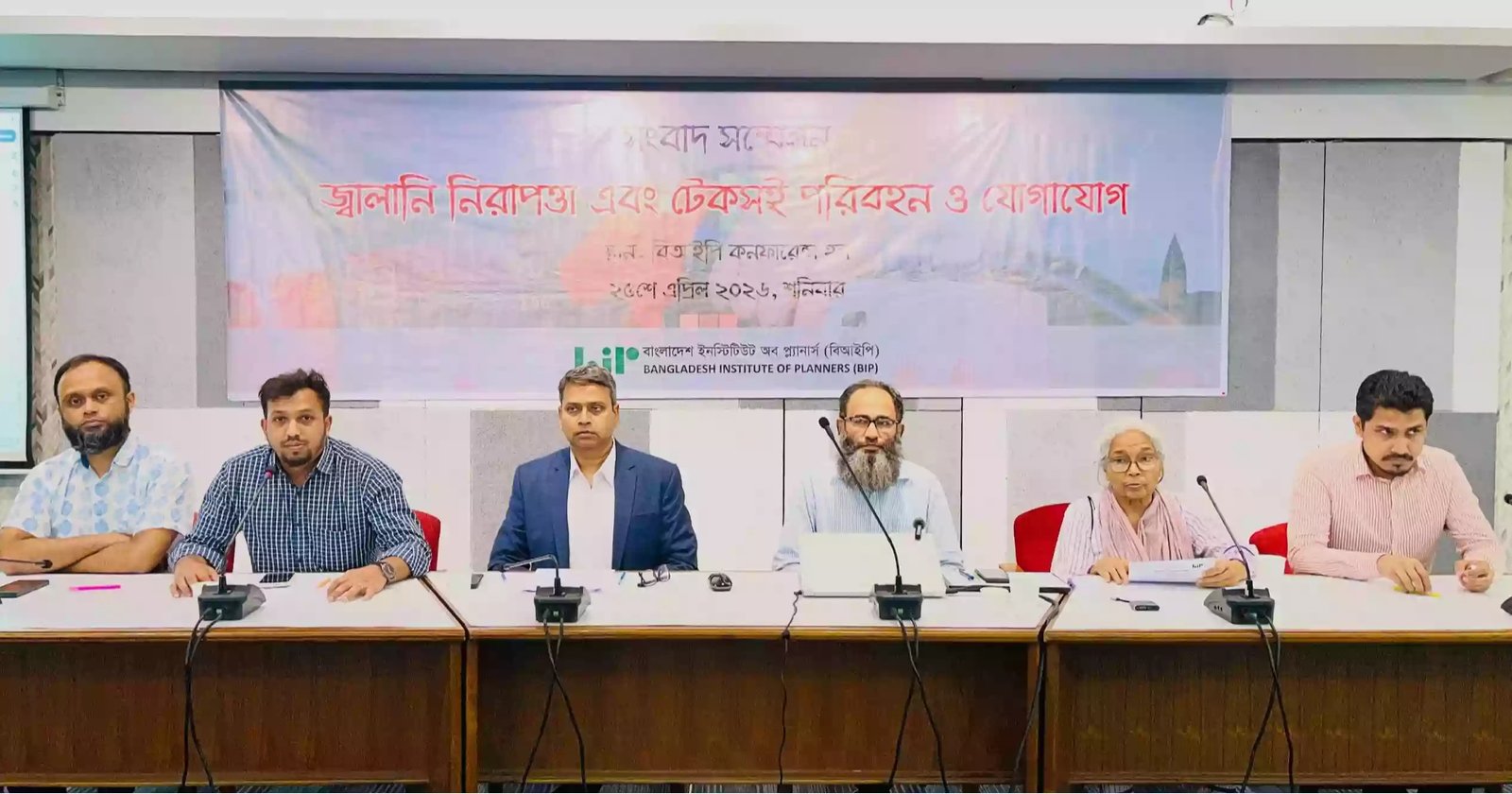
The Bangladesh Institute of Planners (BIP) has called for a major transition toward public transport systems to strengthen energy security and build a sustainable national transport framework. The appeal was made at a press conference titled “Energy Security and Sustainable Transport and Communication” held in the capital.
Chaired by BIP President Dr Muhammad Ariful Islam, the event featured a keynote presentation by General Secretary Prof Md Musleh Uddin Hasan, who emphasized reducing dependence on fossil fuel-driven private vehicles. He highlighted the need to prioritize mass transit systems, rail networks, and waterways to ensure long-term energy resilience.
Prof Hasan noted that the power sector remains the largest contributor to national carbon emissions, followed by transport, making reform in mobility planning increasingly urgent. He illustrated the environmental inefficiency of motor vehicles, stating that the materials used to produce a single car could instead manufacture around 150 bicycles.
To address these challenges, BIP proposed several immediate measures, including the introduction of Bus Rapid Transit (BRT), expansion of non-motorized transport, and the establishment of a national urban transport fund. A major proposal includes launching a bicycle-sharing program with around 100,000 bikes across 90 wards in Dhaka, with plans to expand to other cities within a year.
Dr Ariful Islam warned that Bangladesh’s growing reliance on private vehicles has made the transport system heavily dependent on imported fossil fuels. He stressed the need for integrating renewable energy solutions—such as solar, hydropower, and waste-to-energy—into the broader energy and transport strategy.
The institute also called for the development of an integrated, multimodal transport system combining road, rail, and waterways, alongside pedestrian- and bicycle-friendly infrastructure. Policy reforms were recommended to discourage private car and motorcycle use while encouraging public transport adoption.
Senior planner Syeda Monira Akhter Khatun highlighted past planning gaps, referencing the Dhaka Integrated Transport Study (DITS) of 1992, noting that lack of alignment with long-term urban plans has contributed to the system’s vulnerability during global oil shocks.
Among additional recommendations, BIP urged tax incentives for public transport, higher taxes on private vehicles, rapid deployment of electric buses, and expansion of rail and water-based freight systems. The organization also suggested introducing official commuting by bus for top government officials to promote public transport usage.
BIP welcomed the formation of a parliamentary committee to address the ongoing energy crisis and expressed readiness to provide technical support. The institute stressed that achieving energy security will require decisive action toward sustainable transport, efficient communication systems, and integrated urban planning.