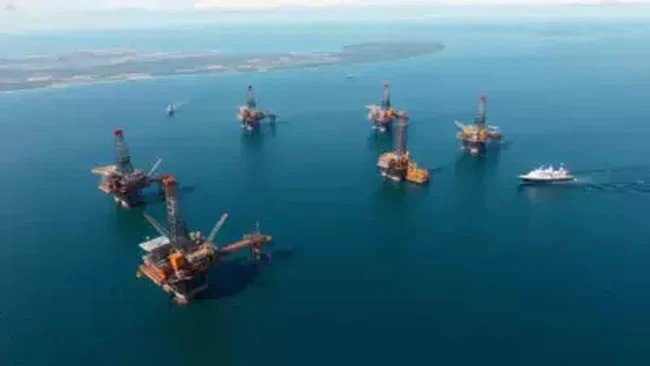
Major energy companies are returning to large-scale oil and gas exploration after years of underinvestment, as concerns grow over declining reserves and future supply gaps. Executives made the shift clear during the CERAWeek conference in Houston, signaling a renewed industry focus on finding new hydrocarbon resources.
From Dividends to Drilling
In recent years, many oil and gas companies reduced exploration spending, prioritizing shareholder returns such as dividends and buybacks. This shift was driven by the rise of US shale production and growing optimism around renewable energy reducing long-term oil demand.
However, output growth from the Permian Basin is now expected to plateau, while global energy demand continues to rise. As a result, companies are under pressure to replace depleting reserves, with current replacement rates falling sharply.
According to industry leaders, the sector is now replacing less than 25% of its annual production—far below historical levels seen during the mid-20th century exploration boom.
Geopolitics Adds Urgency
The ongoing tensions involving the United States, Israel, and Iran have heightened concerns about long-term supply security. Executives warned that prolonged disruptions could lead to sustained shortages, making new discoveries increasingly critical.
At the same time, relying on mergers and acquisitions to rebuild reserves is becoming less viable, as many major deals have already taken place. This is pushing companies back toward traditional exploration strategies focused on geology and untapped regions.
Speed and Technology Reshape Exploration
Energy companies are now leveraging advanced technology and streamlined decision-making to accelerate project timelines.
Equinor, for example, aims to reduce the time from discovery to first production to just two to three years—down from five to six years—by simplifying internal approval processes.
Similarly, ExxonMobil is prioritizing projects based on how quickly they can reach production, targeting output of 5.5 million barrels per day by 2030.
BP is focusing on building a strong pipeline of discovered resources to ensure a steady flow of investment-ready projects.
Search for the Next Big Discovery
The industry is under pressure to deliver major new finds similar to Guyana, where ExxonMobil discovered reserves estimated at over 11 billion barrels in 2015—one of the most significant recent breakthroughs.
Meanwhile, Shell has warned of a potential production shortfall of up to 800,000 barrels of oil equivalent per day over the next decade due to aging fields.
Chevron has also seen its reserves fall to a 10-year low, prompting renewed focus on exploration despite recent acquisitions.
Shift Toward Organic Growth
Industry leaders are increasingly recognizing that acquisitions alone cannot solve the reserve replacement challenge.
Eni plans to deliver significant “organic” production growth through exploration, targeting more than 850,000 barrels per day over the next five years.
Experts say the industry is now balancing organic exploration with strategic acquisitions, though exploration remains inherently risky and uncertain.
Faster Licensing, New Frontiers
Governments are also stepping in to attract investment by accelerating licensing processes. In countries like Angola, licensing timelines have been reduced from up to two years to under six months, with plans to cut this further.
Emerging regions such as Brazil and Namibia are drawing attention, although exploration success remains mixed.
A Renewed Exploration Era
Industry executives say the shift marks a broader reset for the sector, as companies confront the reality of declining reserves and rising demand.
With geopolitical risks, supply uncertainties, and energy transition pressures all converging, oil and gas producers are once again prioritizing exploration as a core strategy to secure future production and maintain global energy stability.