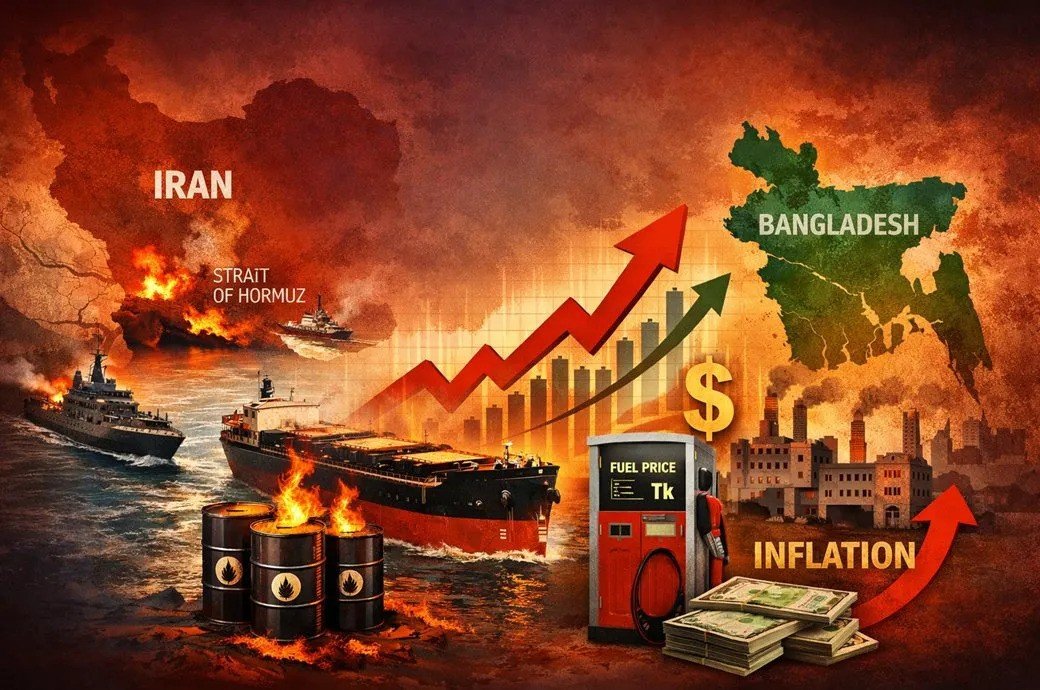
Dhaka, April 9, 2026: Bangladesh’s economy continues to face significant pressure from the ongoing energy crisis and persistent inflation despite a recent improvement in foreign exchange reserves, according to the latest economic update released by the General Economics Division (GED) of the Planning Ministry of Bangladesh. Report UNB
The March 2026 economic report warns that the prolonged energy crisis is affecting the country’s fiscal balance, external accounts and overall investment activities.
Although strong remittance inflows and recent gains in foreign exchange reserves have provided temporary relief, the report cautioned that high global energy prices could significantly raise import bills and widen the trade deficit.
According to the GED, policymakers are currently facing difficult economic trade-offs. Efforts to maintain exchange rate stability may put additional pressure on foreign exchange reserves, while further depreciation of the taka could intensify inflationary pressures. At the same time, energy subsidies continue to protect consumers but are adding to the government’s fiscal burden.
The report recommends prioritizing energy efficiency measures, rationalizing energy pricing through targeted subsidies and strengthening external sector management to reduce balance of payments risks.
Inflationary pressure rising
Headline inflation rose to 9.13 percent in February 2026, up from 8.58 percent in January, mainly driven by rising food prices. Food inflation climbed to 9.30 percent, surpassing non-food inflation for the first time in recent months.
Although rice prices—previously a major concern—eased to 2.39 percent, the decline was offset by rising prices of perishable items, particularly vegetables and fish. Vegetables alone accounted for 29.13 percent of total food inflation, the report noted.
The GED also highlighted a widening gap between inflation and wage growth. While inflation stood at 9.13 percent, wage growth remained lower at 8.06 percent, increasing real income pressures for many households, particularly low-income groups.
Banking and fiscal indicators
Banking sector indicators showed slight moderation. Total deposits stood at Tk 1,967,907 crore in January, marginally lower than December levels.
Public sector credit remained high at Tk 611,258.6 crore, indicating continued reliance on domestic borrowing by the government, while private sector credit growth remained modest at 6.03 percent.
Revenue collection by the National Board of Revenue (NBR) also fell significantly short of its February target. Against a revised target of Tk 42,051 crore, actual collections reached Tk 30,559 crore, more than 27 percent below the target.
Although the figure represents an 8.15 percent year-on-year increase, revenue declined by 17.48 percent compared to January.
Development spending slows
Implementation of the Annual Development Program (ADP) during the July–February period slowed compared with the previous fiscal year. The GED attributed the slowdown to delays in land acquisition, procurement inefficiencies and rising project costs linked to the energy crisis.
The report also noted a sharp increase in development spending in February, suggesting a pattern of “back-loaded implementation,” which raises concerns about expenditure oversight and project quality.
External sector trends
Foreign exchange reserves increased to $35.11 billion in February (or $30.36 billion under BPM6 standards), supported by remittance inflows exceeding $3 billion.
However, the GED warned that the improvement remains fragile due to rising energy import costs.
Export performance also weakened. Exports from the ready-made garment sector declined to $2.81 billion in February, down from $3.61 billion in January, reflecting softer global demand and rising domestic production costs.
The exchange rate remained relatively stable at around Tk 122.3 per US dollar, supported by interventions from Bangladesh Bank.
Meanwhile, the Real Effective Exchange Rate (REER) declined slightly to 124.05, indicating gradual depreciation in real terms. While this could potentially improve export competitiveness, the benefits are currently being offset by high energy-related production costs, the report added.