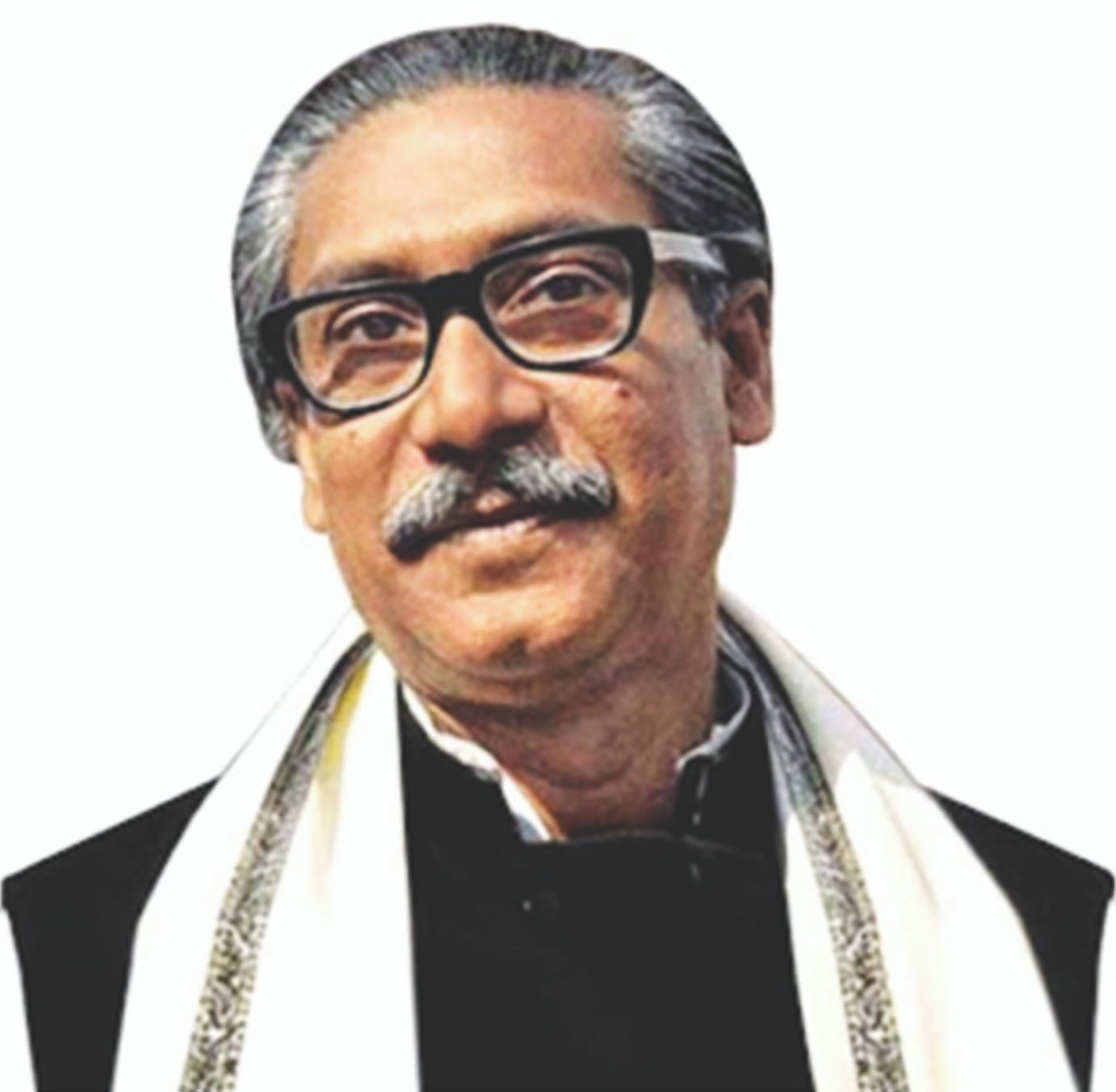
The greatest Bangali of all time, Father of the Nation Bangabandhu Sheikh Mujibur Rahman, envisioned a Golden Bengal. As a farsighted leader, he realized that without a self-reliant energy sector, the vision of Golden Bengal could not be materialized and the nation's fate could not be improved. This is why Bangabandhu had given a high priority to the energy sector and taken visionary steps to ensure the country’s energy security, that is, ensuring sufficient supplies at affordable prices.
Bangabandhu established state-ownership over the country's petroleum and mineral resources as stipulated in Article 143 of the Constitution of the People’s Republic of Bangladesh. Key laws related to the energy sector, such as the Bangladesh Petroleum Act and the Territorial Waters and Maritime Zones Act were passed in 1974, testifying the fact that Bangabandhu foresaw a sea of opportunities in the sea. It is worth mentioning that the Territorial Waters and Maritime Zones Act of 1974 was the first law on the sea in the region. On 9 August, 1975, only six days before the fateful August 15, 1975, Bangabandhu made the historic decision to purchase five resourceful gas fields (Titas, Hobiganj, Bakhrabad, Rashidpur, and Kailashtila) from Shell Oil, an Anglo-Dutch company, at a negotiated nominal price of 4.5 million pound sterling only. There has never been another instance in the history of acquiring such a huge gas resource for such a low price. This futuristic decision laid the foundation of Bangladesh’s sustainable energy future. These five gas fields contributed significantly to national energy security by providing low-cost gas for power generation and industrial development. Even after four decades of fulfilling the ever-increasing demands, they supply about one third of the country's total gas production today. In recognition of Bangabandhu's significant contribution to long-term energy security, the 9th of August has been designated as the Energy Security Day of Bangladesh since 2010.
Deep in his heart, Bangabandhu believed that Bangladesh had substantial petroleum and mineral resources to fuel the economy. Thus, he thought of weaning the country off import on grounds of energy as he prioritized best harnessing of domestic resources. Accordingly, Bangladesh Minerals, Oil and Gas Corporation (BMOGC) was established pursuant to Presidential Order No. 27 of 26 March, 1972 for the discovery and development of the country's oil, gas, and mineral resources. After several transformations, BMOGC was reconstituted as “Bangladesh Oil, Gas and Mineral Corporation (BOGMC)” and subsequently the BOGMC was short named “Petrobangla” and given authority to hold shares or interests in any company formed for the purpose of conducting exploration and exploitation of oil, gas and mineral resources. Currently, a total of thirteen companies are operational under Petrobangla. Bangabandhu also acquired the undertakings in Bangladesh of ESSO Eastern Inc. of the United States, which are now run as Meghna Petroleum Ltd, by promulgating the ESSO Undertakings Acquisition Ordinance on March 14, 1975. It was yet another significant stride forward in the storage, delivery, and distribution of fuel oil.
Recognizing electricity as an engine of growth and the crucial role it can play in a country's socio-economic development, Bangabandhu created the Bangladesh Power Development Board (BPDB) bifurcating the erstwhile Bangladesh Water and Power Development Authority (WAPDA) by issuing Presidential Order No. 59 on May 31, 1972. BPDB was established as a vertically integrated utility with electricity generation, transmission and distribution as its primary responsibilities.
In order to promote rural development and agricultural revolution, Bangabandhu, the architect of independence, inserted Article 16 into the Constitution of the People’s Republic of Bangladesh. Article 16 states, “The State shall adopt effective measures to bring about a radical transformation in the rural areas through the promotion of an agricultural revolution, the provision of rural electrification, the development of cottage and other industries, and the improvement of education, communications and public health, in those areas, so as progressively to remove the disparity in the standards of living between the urban and the rural areas.” So far as we know, no other Constitution in the world contains such an explicit provision for rural electrification. This Constitutional provision places the government under obligation to achieve widespread rural electrification as a top priority. Consequently, the BPDB established the Rural Electrification Directorate in 1972 to focus efforts on the development of a separate body responsible for electrification of rural areas, eventually leading to the creation of the present-day Bangladesh Rural Electrification Board (BREB).
Following the Bangabandhu’s footsteps, Prime Minister Sheikh Hasina, the heir to Bangabandhu Sheikh Mujibur Rahman, declared power and energy as a priority sector. Under her auspicious leadership, electricity sector in Bangladesh has made amazing progress over the last 12 years in terms of generation, capacity addition, strengthening the transmission and distribution network and enhancing access to electricity. Today, Bangladesh is on the verge of achieving universal access to electricity, well ahead of SDGs timeframe. Bangladesh's Solar Home System Program has been acclaimed globally as the world's most successful energy access program through provision of renewable energy. When the present government took office in 2009, people had only limited access to electricity and there were frequent power outages and load shedding, which are now a thing of the past. Bangladesh has made an example among developing economies to have surplus electricity generation in the shortest possible time with consistent economic growth. Achievements in the power sector are shown in the table-1.
Table 1: Power Sector at a Glance
|
Item |
2009 |
2020 |
Achievement |
|
No. of Power Plants |
27 |
149 |
(+) 122 |
|
Power Generation Capacity (MW) |
4942 |
25,227 (Including captive & renewables) |
(+) 20,285 |
|
Highest Power Generation (MW) |
3268
(6 Jan’ 09) |
13,792 (27 April 2021) |
(+) 10,524 |
|
Transmission Line (Ckt. Km) |
8000 |
12,744 |
(+) 4,744 |
|
Grid Substation Capacity (MVA) |
15870 |
50,074 |
(+) 34,224 |
|
Power Import (MW) |
- |
1160 |
(+) 1160 |
|
Distribution Line (Km) |
2,60,000 |
6,12,000 |
(+) 3,52,000 |
|
Access to Electricity (%) |
47 |
99 |
(+) 52 |
|
Per Capita Power Generation (kWh) |
220 |
512
(FY2019-2020) |
(+) 292 |
|
Electricity Consumers (Million) |
10.8 |
40 |
(+) 29.2 |
|
Irrigation Consumers |
2,34,000 |
4,46,000 |
(+) 2,12,000 |
|
Distribution System Loss (%) |
14.33 (FY2008-2009) |
8.73 (FY2019-2020) |
(-) 5.60 |
Source: Power Division
Bangladesh’s economic development, as with many other emerging economies, is mostly underpinned by energy security. To ensure proper exploration, production, distribution and rational use of energy, the first National Energy Policy (NEP) of Bangladesh was adopted during the first premiership (1996-2001) of Hon’ble Prime Minister Sheikh Hasina. Furthermore, adoption of a model production sharing contract (PSC) document together with redefining the whole of Bangladesh into 23 exploration blocks ushered in a new era of exploration and development of oil and gas in the country. As an outcome of the present government’s several pragmatic initiatives, significant successes have been made in the energy sector over the last 12 years as seen in the Table 2.
Table 2: Energy & Mineral Resources Sector at a Glance
|
Item |
2009 |
2020 |
Achievement |
|
No. of Gas Fields |
23 |
27 |
(+) 4 |
|
Daily Gas Production (MMCFD) |
1744 |
3300 |
(+) 1556 |
|
LNG Import (MMCFD) |
- |
1000 |
(+) 1000 |
|
Gas Transmission Pipeline (Km) |
2025 |
2887 |
(+) 862 |
|
Drilling Rig |
- |
5 |
(+) 5 |
|
New Structure Discovery |
3 |
22 |
(+) 19 |
|
No. of Exploratory Wells |
2 |
18 |
(+) 16 |
|
No. of Development Wells |
6 |
50 |
(+) 44 |
|
No. of Workover Wells |
4 |
41 |
(+) 37 |
|
Two-dimensional Survey (Km) |
2680 |
28,436 |
(+) 25,756 |
|
Three-dimensional Survey (Km2) |
766 |
4986 |
(+) 4220 |
|
Geological Survey (Km) |
557 |
19,486 |
(+) 18930 |
|
Fuel oil Supply (Million MT) |
4.043 |
8.632 |
(+) 4.589 |
|
Fuel Oil Storage Capacity (Million MT) |
30 days (0.9) |
40 days (1.328) |
(+) 10 days (0.428) |
|
LPG Supply (Million MT) |
0.045 |
1 |
(+) 0.955 |
|
No. of LPG Supply Company |
5 |
18 |
(+) 13 |
|
Price of LPG (12Kg) |
Tk. 1400 |
Tk. 975 |
(-) Tk. 425 |
Source: Energy and Mineral Resources Division
Many countries ignore environmental protection in their drive to increase energy supply, but Bangladesh has been very particular in this respect, and has been giving due importance to energy conservation, energy efficiency and renewable energy in its effort to increase supply. Through the Fifteenth Amendment to the Constitution in 2011, Hon'ble Prime Minister Sheikh Hasina introduced a new Article (Article 18A) for the protection and improvement of environment and biodiversity. The constitutional mandate of clean energy is implicit in Article 18A. Subsequently, the Sustainable and Renewable Energy Development Authority (SREDA) was established in 2014 under the Sustainable and Renewable Energy Development Authority Act of 2012 with a view to promoting renewable energy and energy efficiency, which are the twin pillars of sustainable energy. Since its inception, SREDA has been putting accelerated efforts to improve the framework conditions for the deployment of renewable energy and to ensure efficient and responsible use of energy. SREDA is credited with, among others, formulation of “Energy Efficiency and Conservation Master Plan [EECMP] up to 2030” aimed at achieving 15% improvement in primary energy consumption per GDP by 2021 and 20% by 2030 as compared to 2013 levels. Another notable move was the establishment of Bangladesh Energy and Power Research Council (BEPRC) in 2015, with the goal of finding innovative solutions for efficient, cost-effective and environmentally sustainable development of the country's energy and power infrastructure. The BEPRC serves as a platform for attracting experts from across the world and assisting in the development of in-country expertise through scientific collaboration as well as strengthening and mobilizing research capacities at relevant institutions.
Recognizing the significance of energy conservation, legendary Prime Minister Sheikh Hasina, who is also the Minister of Power, Energy, and Mineral Resources, has taken the lead in raising public awareness for responsible use of energy. While inaugurating the Power and Energy Week in 2018 she said: “… and there is no shame in turning off the switch while leaving the room. This is something I do too with my very own hands, even though I am a Prime Minister. Therefore, I encourage everyone to use electricity as if it is your own and bring out an embedding conviction to save or conserve it.”
Following Bangabandhu, Hon’ble Prime Minister Sheikh Hasina, as the torchbearer for a Golden Bengal, has brought Bangladesh to the pinnacle of success in all sectors. The country is now graduating from the status of a Least Developed Country to a Developing Country and aspiring to be a developed economy by 2041. This success would not have been possible without the secured supply of power and energy. What Bangabandhu envisioned over four decades ago is now serving as a springboard for the country's energy sustainability. Bangladesh has been demonstrating strong political commitment to ensure energy sustainability, that is, long term energy security, affordability and easy access to energy and environmental sustainability of the energy system. It is expected that Bangladesh’s approach towards energy sustainability will further spearhead successful transformation in other emerging economies of the world as Bangladesh Prime Minister Sheikh Hasina leads the global Climate Vulnerable Forum.
Mohammad Alauddin, Chairman (Additional Secretary), SREDA