Several companies are in various stages of investing in electric vehicles (EVs) – attracting foreign investment and setting up of plants. One of them is Bangladesh Auto Industries Limited (BAIL) which had plans to go into production in 2021, but that has been delayed due to Covid-19.
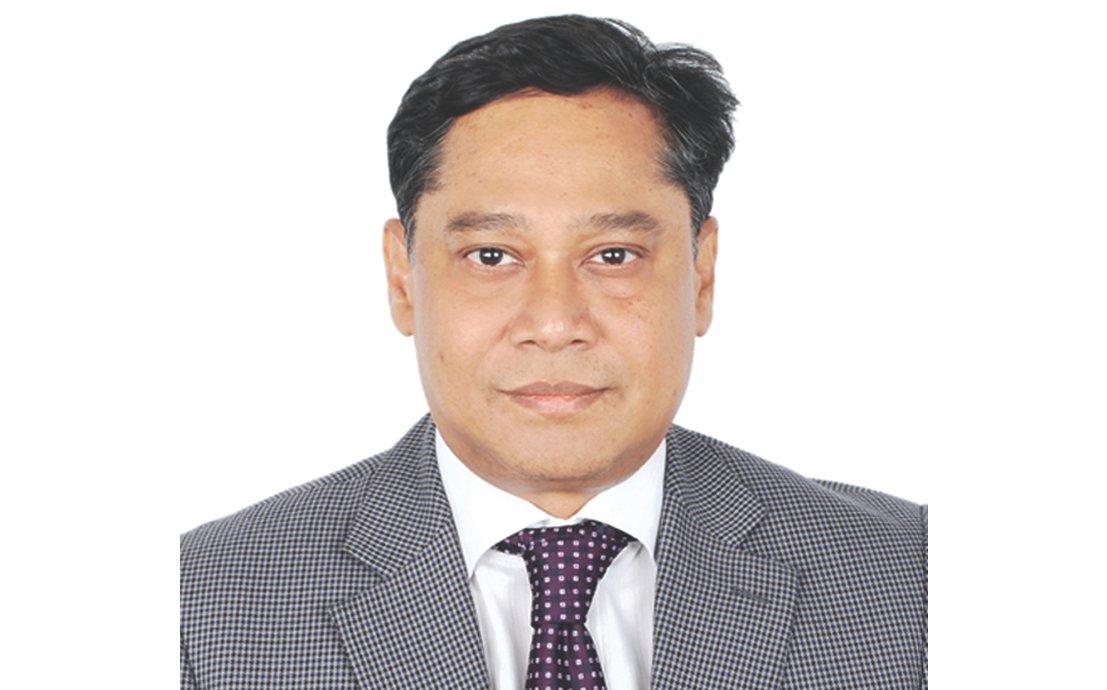
Syed Mansur Hashim, Deputy Editor of Energy & Power, talks to Mr. Mir Masud Kabir, Co-founder and Managing Director of BAIL, about his company’s goals and plans to introduce a full-fledged EV plant that will include production of Li-ion battery packs that will power these vehicles.
Pioneered the country's first private International Internet Gateway (IIG) & contributed to make internet affordable, Mr. Masud is one of the co-funders of BAIL, BLBL, MTL & Mango Teleservices.
Why did you think that EV is needed for Bangladesh?
First of all, EV will reduce the cost of transport and logistics for people, a fundamental problem that we need to solve in our country. The fuel and maintenance cost will reduce by 90% (reduction from Tk 10 to Tk 1.0 per KM). Initial purchase price will be 50%.
Second, the EV protects our threatened and fragile environment. EV does not use fossil fuel, there is no CO2 emission. It is a clean environment-friendly vehicle. Our environment in polluted cities would be better. EV will create a positive impact on global warming, there will be less possibility of sea level increase which can save our country in the long run. Each EV use is equivalent to 10 tree plantation for environment.
Above all, EV and automobile components can be the most successful export sector in our country. The world needs to replace 1.4 billion conventional vehicles in next 30-40 years. We can address that market with right initiatives & policy support. We are taking a small step which can be the starting of a giant leap for the country.
Why are you thinking of manufacturing EVs in Bangladesh?
We successfully pioneered the transformation of internet communication sector in Bangladesh with our mother company Mango, made it affordable for the people. Which eventually changed our lives. As part of a generation of entrepreneurs who took a lead in the digital transformation in this country, my partner and I have never shied away from taking a leap of faith into new frontiers. Our telecom business took us to China on a regular basis and back in 2013-2014, we found that EVs were growing, we observed Tesla & Nissan taking similar steps in USA, we felt, could be replicated in Bangladesh. We came to the conclusion that we must look into this seriously and started our research and development (R&D). We see a global transformation in automobile sector with smart EVs. We strongly believe that Bangladesh can become a hub of this transformation. That is the real driving force for us.
How did you go about taking that idea further?
We started to build relationships with all stakeholders in the supply chain of EVs and started R&D. Our efforts were hampered by a lack of human resources in Bangladesh. So, they had to be sourced from abroad. When Tesla came to the market in 2015, they created a stir. But what was happening in China was even more astounding. BYD came in with a whole range of EVs, from sedan cars to buses, and it came at a time when Chinese authorities were looking for a more environmentally-friendly, non-polluting solution to deal with the deadly smog that was engulfing its megacities.
Cities like Shenzhen, Beijing, Shanghai were becoming unlivable. BYD cars were not clunky, odd shaped vehicles. Rather, they were at par with current design trends of conventional vehicles – minus the carbon-dioxide emitting engines. City authorities helped in a big way. You could get a license plate for an EV immediately, whereas, a prospective buyer of a conventional car would have to wait months to get one. Then there is a government subsidy of up to USD 10,000. Such pro-EV policies actually encouraged many companies to start producing EVs. We studied the trajectory of all these companies and took lessons.
Tell us how you moved from your research to product planning?
We initiated the product ideas in house. We developed designs & supply chain by engaging with multiple global automotive design houses. One top tier executive in the Chinese auto industry helped us, he is with us till now. Through him we met a faculty of Wuhan University and started our battery, motor, controller & charger R&D.
Your production layout covers different units. Battery, Motor Control and Charger. Tell us more about this.
Our EV manufacturing company is BAIL. We decided to manufacture the crucial components of EV, battery and motor- controller. That will be done by 2 different companies set up by us; Bangladesh Lithium Batteries Ltd (BLBL) & Mango Technologies Ltd (MTL). BAIL has stamping, welding, painting & assembly line like any standard car manufacturer.
We developed SUV, Sedan, Hatchback, Microbus (MPV) and Mini-truck prototypes. We have developed multiple EV 3 wheelers & motor bikes prototypes too. Our R&D helped us developed EVs suitable for our roads utilizing the existing supply chain of components.
What sort of policy support are you hoping for as a prospective manufacturer of EVs in Bangladesh? Is the government planning to provide a subsidy regime for this nascent sector?
I think the government is willing to support this sector as it has tremendous value proposition. It shall protect our environment and reduce the cost of transport and logistics for people. We will also save foreign currency from import of fossil fuel needed for conventional cars.
We strongly feel that the government should give incentive to people of the country to use EVs like they are doing for agricultural machinery. They can provide cash subsidy and withdraw AIT, registration, fitness, and route permit fees for EVs. Low-cost financing for EV purchase could be made available for the vehicle owners.
The government may provide us R&D grant enabling us to target the global market and become sustainable long-term sector in the country. The government may send 5,000 people for on the job training in automotive and EV industry outside Bangladesh. That will become our future strength.
From a manufacturer side, we request to extend the existing motor cycle import duty, VAT & tax regime across all EVs and its crucial component manufacturing.
Are you going to have removable battery packs for your vehicles? What are your plans for charging stations? Will charging stations be fossil-fuel based or are you talking about renewables like solar?
Light EVs like 3 wheelers & motor bikes will have removable battery packs. We are working on countryside charging facility creation through automated App. Most of the charging stations will have partial renewable energy input, especially solar.
Charging stations will charge a vehicle in 15 minutes. Anyone can charge their vehicle at home too, which may take 3-5 hours.