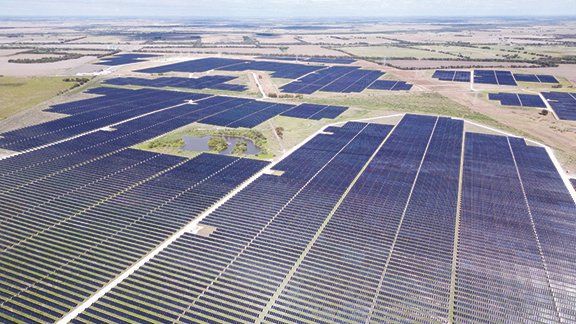
Bangladesh is facing a challenge in its fight for energy independence. For decades, the country relied on its own natural gas to produce over 60% of its electricity. Now, those local reserves are rapidly running out. To make up for the shortage, Bangladesh has fallen into a trap of spending millions of dollars importing expensive and unpredictable foreign fuel like Liquefied Natural Gas (LNG), coal and oil. This massive spending is draining the country's foreign currency reserves and hurting the economy. To truly protect its independence, Bangladesh must shift away from imports and build a domestic energy system powered by local renewable energy sources.
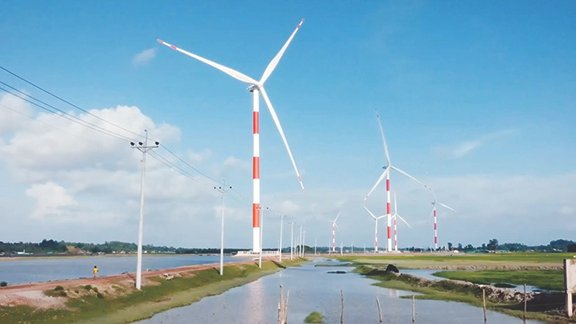
Bangladesh's Climate Prosperity Plan aims for a bold 40% clean energy share by 2041, but red tape is blocking progress. At first, the proposed National Budget for FY 2026-27 brought hope by removing import duties, value-added tax (VAT), and advance income tax (AIT) on solar equipment. However, the National Board of Revenue (NBR) quietly weakened this plan. Just three days before the budget announcement on 11 June 2026, the NBR issued Statutory Regulatory Orders (SROs) with strict conditions that directly undermine the government's green goals.
The SROs implement contrasting tax policies, scaling back broad fiscal support for fossil fuels while offering a significant, phased income tax holiday to encourage utility-scale clean energy generation. The comparative table below outlines the primary tax and incentive structures by the NBR:
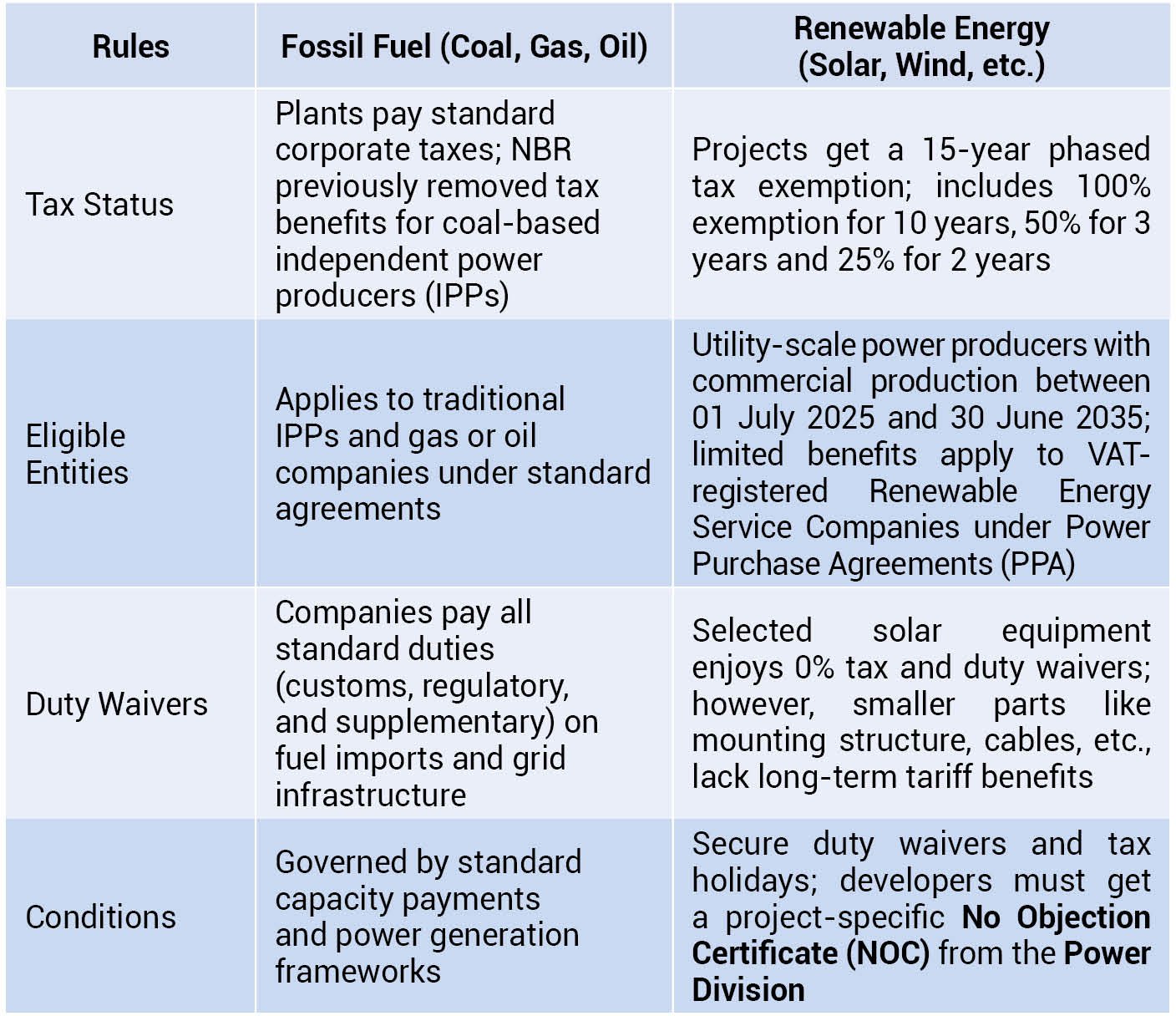
Stakeholder groups criticize current NBR policies. Groups like the Centre for Policy Dialogue (CPD) and Bangladesh Solar and Renewable Energy Association (BSREA) point out restrictive eligibility. They argue these tax waivers mainly benefit large corporations instead of residential rooftop users or small farmers.
Analyzing the above table, NBR SROs act as a barrier to energy independence by creating an unfair market. It grants duty and tax waivers only to VAT-registered Renewable Energy Service Companies that generate electricity under a PPA. Instead of encouraging a widespread solar boom across households and villages, the policy limits tax and duty benefits almost entirely to large commercial operations and utility-scale projects. The SROs potentially exclude everyday residents, small-scale farmers and rural entrepreneurs, who are completely excluded from tax incentives. As a result, while a massive industrial conglomerate can import solar components duty-free to cut costs, an ordinary citizen trying to install a modest 02 kW solar system on a village roof must pay heavy import duties.
By shutting out everyday consumers, the SROs are choking the massive potential of decentralized clean energy. Bangladesh has the technical capacity to generate over 100,000 MWp from advanced rooftop solar alone. To unlock this, the public must be empowered to become active energy producers. When financial policies create barriers for the average household, it stunts the growth of the clean energy grid and slow down job creation. While the national budget aims to create over half a million generic jobs, civil society groups point out that a fully unlocked renewable energy sector could independently create over one million green jobs. Unfortunately, this economic potential is currently stalled by bureaucratic red tape.
This regulatory barrier may reveal a deeper conflict in the state's economic strategy. Its old attachment to fossil fuels is undermining its new climate goals. Even though official statements celebrate a green transition, Government funding continues to back dirty energy. This keeps fossil fuels artificially cheap and slows down the shift to clean energy.
The contrast between fossil fuel incentives and renewable energy support in the current National Budget (FY 2026-27) could be examined as follows:
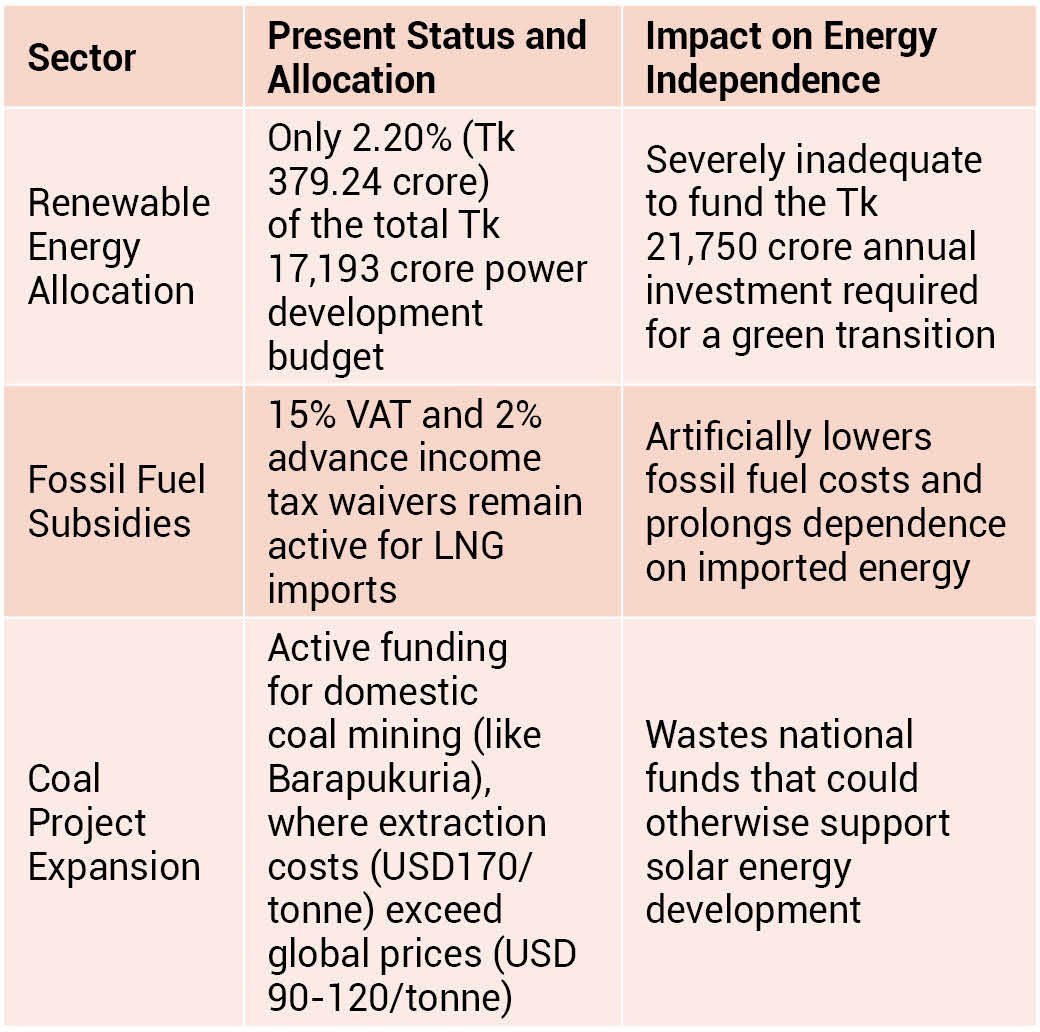
Ultimately, setting clean energy goals means nothing without the right regulations to back them up. To escape the expensive trap of importing fuel before its own gas reserves run out, Bangladesh must align its tax policies with its long-term vision. Resolving this crisis requires immediately canceling or majorly revising the restrictive NBR-issued SROs so that everyone gets equal tax benefits. True energy independence cannot be achieved by only favoring big corporations. Instead, the country needs an open, inclusive framework that empowers every household, farm and community to contribute to a green energy future.
Colonel (retd) Engr. A R Mohammad Parvez Mazumder, afwc, psc
Download Special Article As PDF/userfiles/EP_24_03_Special_Article.pdf