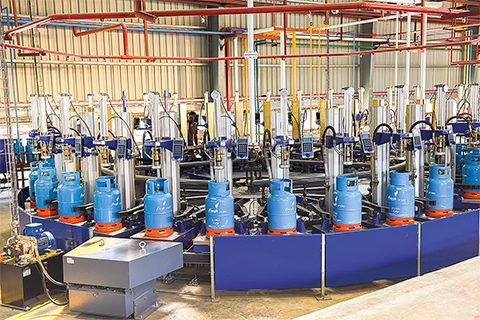
Bangladesh’s LPG industry has grown rapidly over the past decade, transforming from a limited alternative fuel into a major energy source for households, transport, restaurants, and industries. The expansion was largely driven by declining domestic natural gas reserves and the suspension of new residential gas connections, which increased reliance on LPG as a cleaner and more accessible energy option.
LPG has significantly improved energy access in urban, peri-urban, and rural areas where pipeline gas infrastructure is unavailable. It also plays an important role in reducing dependence on traditional biomass and supporting cleaner cooking solutions. However, the industry remains heavily dependent on imports, exposing it to global price fluctuations, foreign exchange pressures, and supply chain disruptions. Efficient port handling, storage infrastructure, inland transportation, consumer safety awareness, and a stable regulatory framework are therefore essential to ensure affordability, safety, and uninterrupted supply. As Bangladesh continues its energy transition, LPG is expected to play an increasingly important role in strengthening energy security, supporting industrial growth, and diversifying the country’s fuel mix. Sustained policy support, infrastructure development, and improved regulatory coordination will be critical for the long-term sustainability of the sector.
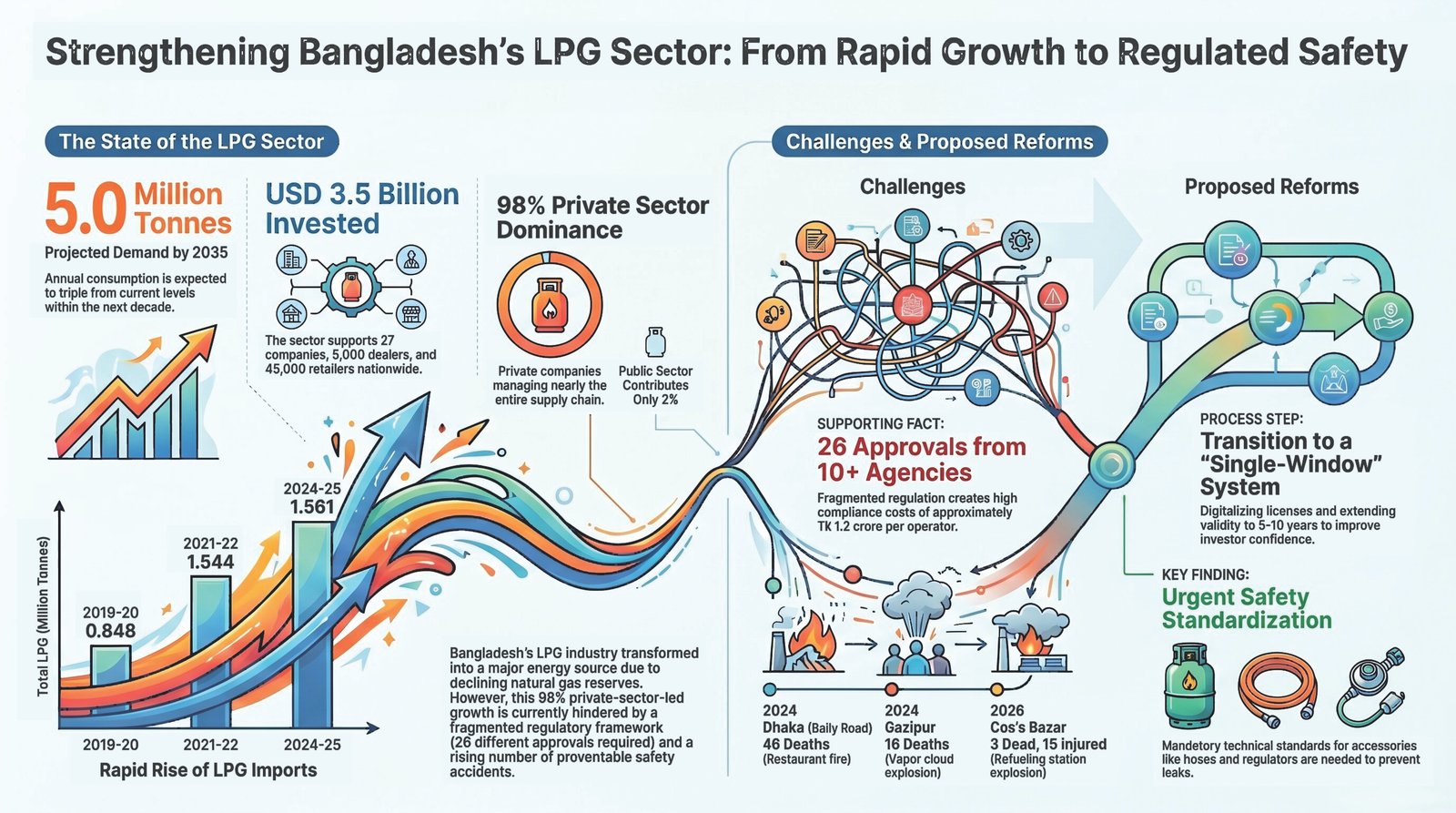
LPG Import, Rising Demand and Growth
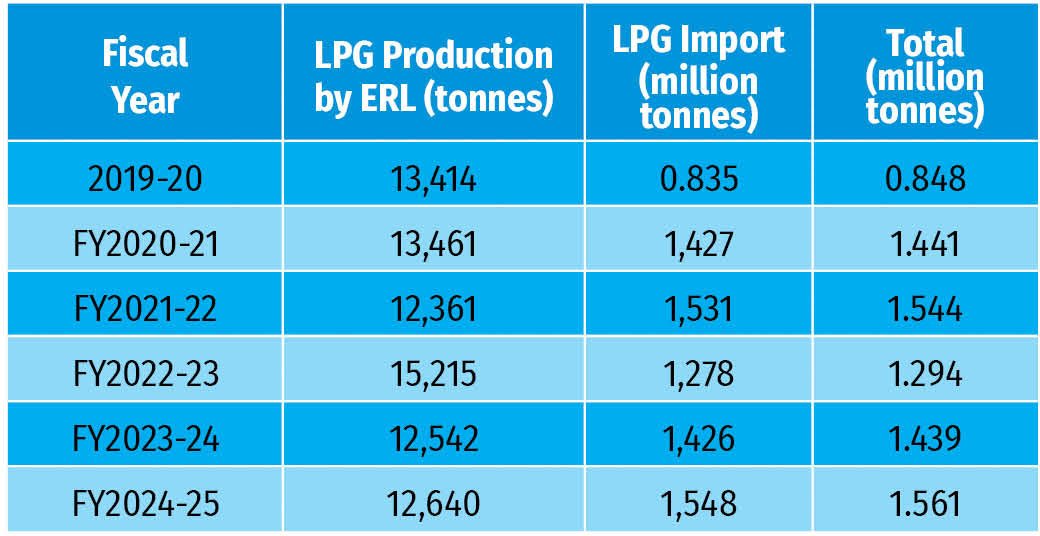
LPG import and distribution in Bangladesh are currently dominated by the private sector, while the government plans to engage BPC in imports to stabilize the domestic market and protect consumers. In FY 2024–25, public production through Eastern Refinery Limited (ERL) was 12,560 tonnes, complemented by private sector imports of 1.44 million tonnes. The LPG production and import from FY 2019–20 to FY 2024–25 is as follows.
The market is overwhelmingly dominated by the private sector, which accounts for approximately 98% of total supply, while the public sector, through BPC, contributes only about 2%. To date, 58 LPG licenses have been issued, supporting 27 companies. Among them, 20 operate import terminals and 7 function as satellite operators, reflecting a diverse infrastructure network. The industry has attracted an estimated USD 3.5 billion in investment, supported by around 5,000 dealers and 45,000 retailers nationwide. Current storage and distribution capacity includes approximately 40 million LPG cylinders.
The rapid growth of the LPG sector began after the government stopped providing new natural gas connections to households in 2008. Since then, LPG has emerged as a key alternative fuel for domestic, commercial, industrial, and transport sectors amid rising natural gas shortages. Current annual consumption is estimated at 1.5–1.7 million tonnes and is projected to exceed 3.5 million tonnes by 2030 and reach 5.0 million tonnes by 2035, highlighting the need for strategic import planning and regulatory reform.
Household consumption accounts for nearly 80% of total LPG use, while industry and commercial users represent about 12%, and Autogas around 8%. LPG is widely used in sectors such as textiles, ceramics, food processing, metal works, and chemical manufacturing, particularly where pipeline gas is unavailable or insufficient.
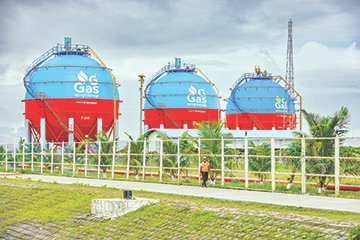
The transport sector has also supported LPG expansion. As demand for CNG increased, LPG has been promoted as an alternative automotive fuel to reduce pressure on the domestic gas supply. Its adoption is growing due to lower emissions compared to gasoline and diesel, expanding conversion facilities, and improved fuel availability.
Bangladesh’s LPG demand has been growing at nearly 10% annually. At present, LPG accounts for about 2% of the country’s primary energy mix and plays an increasingly important role in energy security and fuel diversification.
Ensuring Safe LPG Cylinder Transportation and Distribution
The transportation of LPG cylinders from import terminals to storage depots, from storage facilities to industrial consumers, and onward to Autogas refueling stations should remain the full operational responsibility of LPG operators. Operators must ensure that all cylinder movements are conducted in compliance with approved safety standards, including proper handling, secure loading, certified transport vehicles, and trained personnel.
Regular inspection and verification are essential to confirm that cylinders are stored and transported under safe and compliant conditions throughout the supply chain. This includes checks on stacking practices, ventilation, fire safety arrangements, cylinder integrity, and adherence to designated storage limits.
For monitoring domestic LPG cylinder storage and distribution, a certified and authorized third-party inspection mechanism may be introduced as a supportive oversight system. Such entities should be independently accredited, technically competent, and institutionally structured to carry out routine audits and compliance verification at retail points, godowns, and distribution networks.
The development of clear qualification criteria, certification standards, and capacity-building programs for these third-party organizations is crucial to ensure their effectiveness. This will strengthen regulatory oversight, enhance safety compliance, and reduce operational risks across the LPG distribution chain.
Financial Burden for LPG Operators
The LPG industry in Bangladesh faces a significant financial burden due to multiple layers of licensing, compliance, and regulatory requirements. On average, operators incur direct regulatory costs exceeding about Tk-1.0 crore annually, while indirect costs, including administration, manpower, inspections, travel, and coordination with multiple agencies, can raise total compliance expenses to around Tk-1.2 crore per operator per year.
Major costs include fees to the BERC, Bangladesh Inland Water Transport Authority, BPC, and the DoE, along with BSTI compliance and safety certifications. Recently imposed mandatory in-house laboratory requirements have further increased operational costs, as establishing and maintaining a compliant LPG testing laboratory may require investment ranging from approximately Tk-1.5 crore or more per plant, depending on the scope and accreditation requirements.
LPG Cylinder Accidents
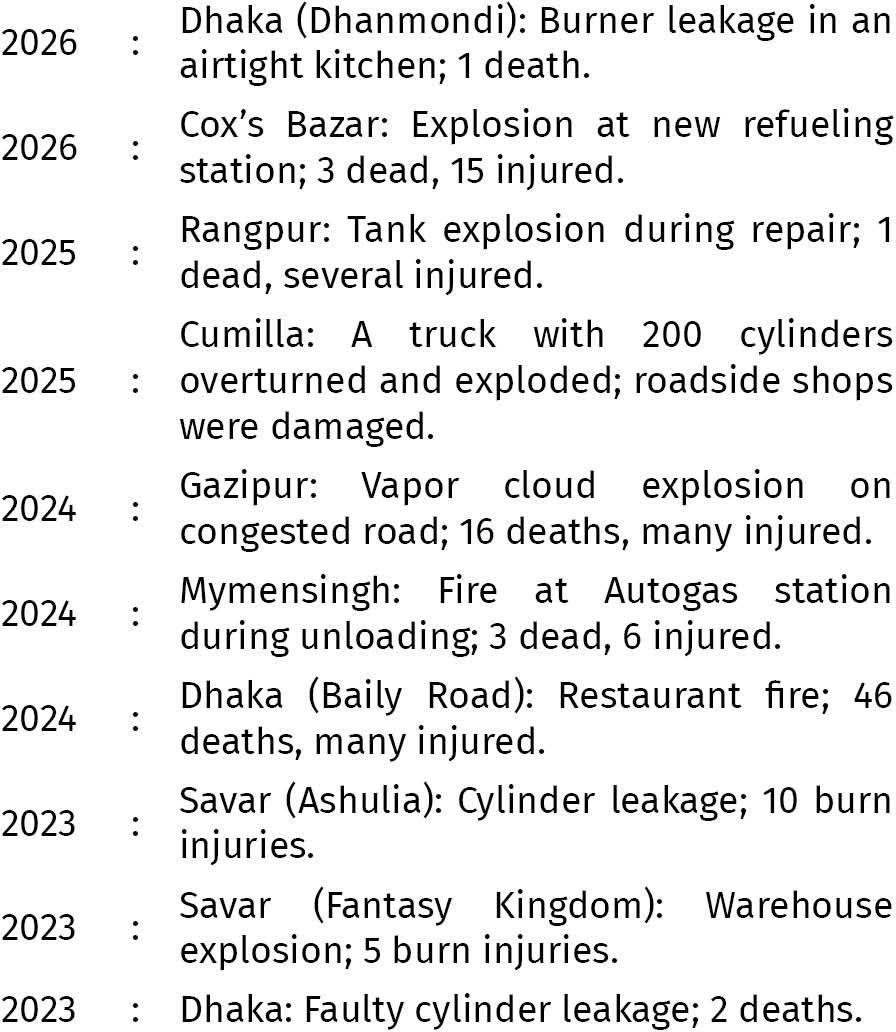
LPG cylinder accidents have become a growing safety concern in Bangladesh, reflecting both the rapid expansion of LPG usage and gaps in safety practices. Incidents ranging from household leaks to large-scale explosions at refueling stations and during transportation have resulted in significant loss of life and property. These accidents highlight the urgent need for stronger safety standards, better consumer awareness, and stricter regulatory enforcement to ensure that the benefits of LPG as a clean energy source are not overshadowed by preventable technological disasters. Recent LPG cylinder accidents are as follows:
Role of LPG Operators Association of Bangladesh (LOAB)
The LPG Operators Association of Bangladesh should play a leading role in promoting safety, efficiency, and sustainable growth in Bangladesh’s LPG sector. Working with the Government and BERC, LOAB can help develop safety regulations, strengthen compliance, and raise technical standards across the industry. Regular safety awareness campaigns, stakeholder coordination and promotion of best practices are essential to reducing accidents. Consumer education on the safe use of LPG cylinders and appliances, especially in households, should also remain a priority to improve public safety and confidence in LPG as a cleaner energy source.
Safety Aspects of LPG
Safety is a critical concern in the LPG industry due to its highly flammable nature and risks across the supply chain, including production, storage, transportation, distribution, and end use. Any gas leakage must be treated as a serious hazard requiring immediate action. Although LPG is odorized for leak detection, leaked gas can accumulate in low-lying or poorly ventilated spaces because it is heavier than air, increasing fire and explosion risks. Incomplete combustion may also produce toxic, odorless carbon monoxide.
Most LPG accidents occur at the consumer level due to poor installation, unsafe handling, substandard appliances, and a lack of safety awareness. Improper cylinder placement in confined or poorly ventilated areas further increases danger. As pressure vessels, LPG cylinders require proper inspection, maintenance, and adherence to safety standards.
Strengthening safety, therefore, requires coordinated action by industry, regulators, and consumers through standards enforcement and widespread awareness campaigns. In Bangladesh, rapid LPG expansion makes safety compliance and public education essential to prevent accidents and ensure safe, reliable energy use.
Regulatory and Safety Framework for the LPG Sector
Despite the rapid growth of the LPG industry in Bangladesh, there is still no fully approved and comprehensive national safety regulation governing LPG storage, bottling, transportation, and dispensing operations.BERC prepared drafts of the “LPG Storage, Bottling, Transportation, and Dispensing Codes and Standards (2016)”, as well as the “LPG Codes and Standards Regulation (2023)”. However, these regulations are yet to be finalized through consultation with key stakeholders, including LOAB, Energy and Mineral Resources Division, LPG operators, and experts.
Bangladesh now urgently needs a modern, integrated, and enforceable regulatory framework to ensure safe, efficient, and sustainable growth of the LPG sector. One of the key priorities should be consolidating approvals, licenses, inspections, and compliance monitoring under a coordinated authority to reduce institutional fragmentation and overlapping responsibilities among different agencies.
The licensing and compliance process should also be fully digitalized to improve transparency, efficiency, and ease of doing business. At the same time, strict safety and quality standards must be enforced for LPG cylinders, storage facilities, transportation systems, bottling plants, and refilling operations. Effective oversight of imports and domestic distribution is equally important to ensure an uninterrupted supply and equitable market access across the country.
In addition, a balanced regulatory mechanism is needed to protect consumers from artificial shortages, unsafe practices, and excessive price volatility. The framework should also encourage new investment in terminals, storage infrastructure, and distribution networks while ensuring accountability, regular monitoring, and strong governance.
As Bangladesh becomes increasingly dependent on LPG to address energy shortages, active government oversight and a clear regulatory structure will be essential for establishing a safe, competitive, and reliable LPG market in the long term.
Regulatory Challenges
The LPG sector in Bangladesh continues to face major regulatory challenges that affect operational efficiency, investment growth, and timely project implementation. At present, LPG operators are required to obtain about 26 separate approvals and licenses from over ten different agencies, including BERC, Department of Explosives, DoE, BSTI, Bangladesh Inland Water Transport Authority, and the Energy and Mineral Resources Division.
This fragmented and multi-layered approval process involves repeated physical visits, extensive documentation, multiple inspections, and lengthy administrative procedures, significantly increasing compliance costs and delays. In many cases, overlapping responsibilities among regulatory bodies create duplication of work, procedural inconsistencies, and uncertainty in regulatory compliance.
Such inefficiencies not only slow down infrastructure development and business expansion but also discourage new investment in a sector that is becoming increasingly important for Bangladesh’s energy security. As LPG demand continues to rise, the need for regulatory reform has become critical.
To support the sustainable growth of the sector, Bangladesh should introduce a more streamlined and integrated regulatory framework with improved coordination among agencies. Digitalization of licensing and compliance processes, reduction of overlapping approvals, and establishment of a single-window clearance mechanism would significantly improve transparency, efficiency, and ease of doing business in the LPG industry.
Regional Best Practices
International best practices in energy regulation show clear models for Bangladesh. Vietnam uses a consolidated licensing system with 10-year validity, ensuring predictability and efficiency. Turkey’s EMRA demonstrates the benefits of a single energy regulator supported by strong digitalization. Pakistan’s OGRA offers long-term licenses up to 15 years with simplified inspections, reducing administrative burden. India’s PESO combines unified safety regulation with digital licensing through ePESO, balancing oversight and ease of doing business. Sri Lanka maintains a centralized regulator with low fragmentation and a stable, investor-friendly framework. Together, these models highlight the value of consolidation, digitalization, and long-term licensing.
Proposed Regulatory Reform
To strengthen Bangladesh’s LPG sector, regulatory reform should focus on stability, efficiency, and alignment with international best practices. A key step is introducing long-term licenses of 5–10 years to reduce frequent renewals, lower administrative burdens, and improve investor confidence, as seen in countries like Turkey, India, and Vietnam.
A fully digitized licensing system is also essential, enabling online applications, integrated payments, automated renewals and time-bound approvals. A centralized digital platform would reduce physical interactions and improve transparency. In addition, duplication among regulatory agencies should be eliminated through a single integrated inspection framework. Designating BERC as the principal authority and establishing a single-window system would streamline licensing, enhance accountability, and support efficient, investor-friendly LPG sector growth.
Safety Standards for Domestic Gas Cooking Appliances
Bangladesh previously had no national safety standards for domestic gas cooking appliances, despite frequent household gas accidents affecting women and children. In 2025, with support from the ADB, Petrobangla, and BSTI developed and published BDS ISO Safety Standards for Domestic Gas Cooking Appliances aligned with international best practices. The standards will become mandatory after a three-year transition period to allow compliance preparation, testing, and enforcement. However, accessories such as hoses, joints, and regulators remain largely unstandardized, although these are the most common sources of hazardous gas leaks in households. Standardizing these and related supply accessories is therefore essential to ensure gas supplies in domestic households are much less prone to leakage of gas.
Consumer Safety Awareness
Consumer safety awareness is a critical component of LPG safety in Bangladesh, especially as household dependence on LPG continues to grow. Effective awareness campaigns should highlight the quality–safety link between gas, appliances, and installation, the risks of poor workmanship, the importance of adequate ventilation, recognition of odorized LPG, and the immediate actions to take in case of a leak.
Despite rapid LPG expansion, public awareness and technical knowledge have not kept pace, creating significant safety risks. Many domestic users lack a basic understanding of safe cylinder handling, regulator use, ventilation requirements, and leak detection. At the same time, a lack of appropriate training and certification systems allows unskilled technicians to perform installations, increasing accident risks.
Safety gaps are also evident at the distribution level, where some facilities operate without full compliance, and unsafe practices such as unauthorized storage and illegal cross-filling further heighten hazards. These issues highlight the need for stronger enforcement and coordinated action.
A nationwide LPG safety awareness program should be implemented through television, radio, social and print media, focusing on simple, practical safety messages. BERC, in collaboration with LOAB and industry stakeholders, should lead these initiatives.
In addition, mandatory safety instructions in the Bengali language should be provided at the point of sale with visual guidance, while distributors should demonstrate safe installation practices. A basic certification or orientation program for domestic users, especially in urban areas, can further improve safety outcomes.
Finally, strict enforcement should ensure that only certified technicians handle installation and maintenance, supported by LPG operators and LOAB. Overall, improving consumer awareness is essential for reducing accidents and ensuring safe, reliable LPG use across Bangladesh.
Recommendations
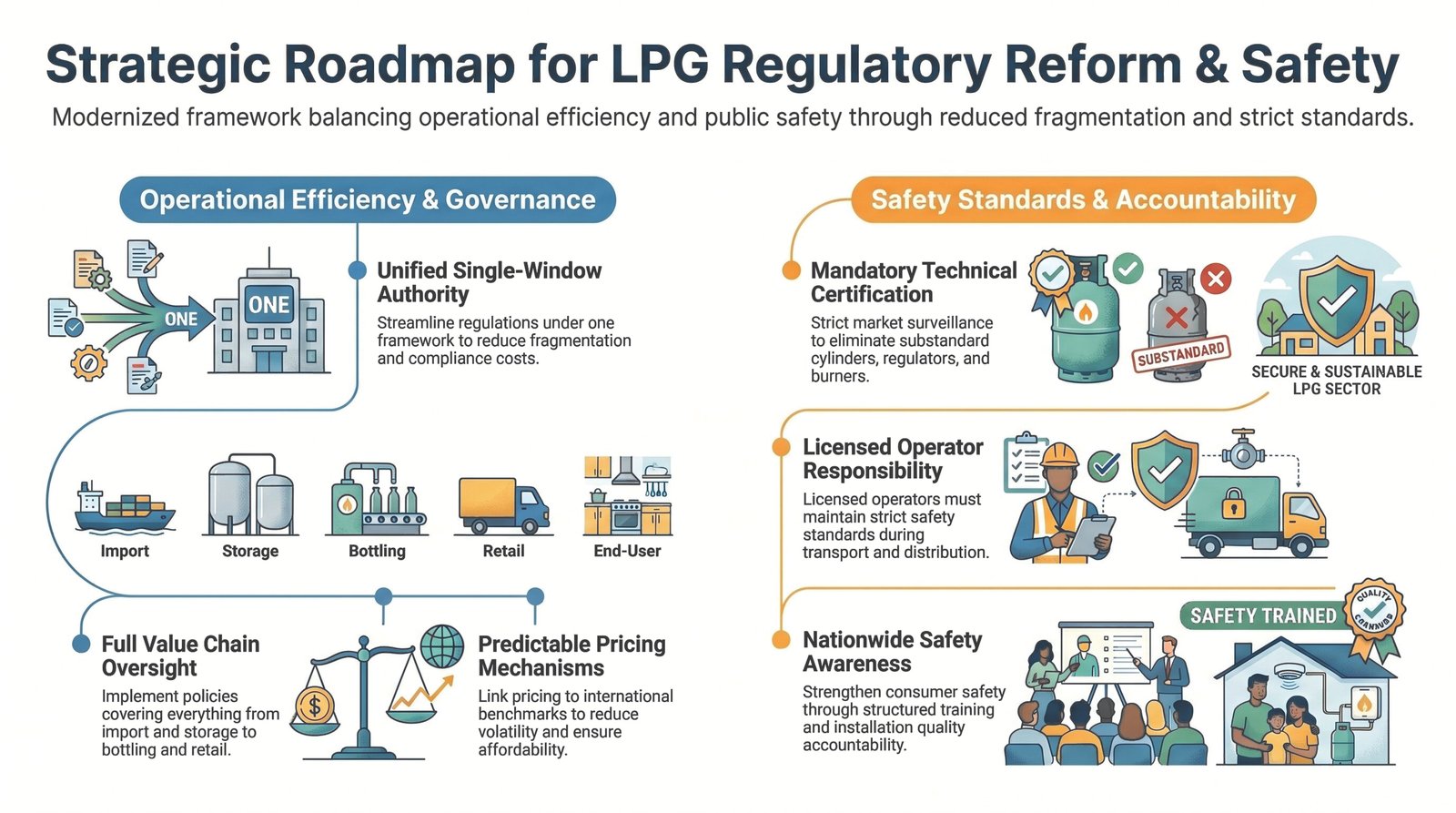
· Key reforms should include the introduction of long-term licensing, digital governance systems, and a single-window regulatory authority under a unified framework.
· Consumer safety and awareness should be strengthened through nationwide awareness campaigns, structured training programs, and strict enforcement of accountability for installation quality, equipment standards, and appliances.
· Strong stakeholder engagement between government, regulators, industry operators, and consumer groups is essential for developing a credible and investment-friendly policy framework.
· The LPG regulatory framework should be streamlined and made more efficient to reduce fragmentation and compliance costs, strengthen safety outcomes, and create a more investment-friendly environment.
· A comprehensive LPG policy is required to cover the full value chain, including import, storage, bottling, distribution, and retail, along with end-user safety standards.
· Safe and reliable LPG cylinder transportation and distribution must remain the responsibility of licensed operators, strictly following established safety standards throughout the supply chain.
· Introduce mandatory technical standards certification for all LPG equipment and appliances, with strict market surveillance to eliminate substandard cylinders, regulators, and burners.
· Establish a transparent and predictable LPG pricing mechanism linked to international benchmarks to reduce market volatility while ensuring affordability for low-income households.
Download Special Article As PDF/userfiles/EP_23_24_Special_Article.pdf
Mortuza Ahmad Faruque, Energy Specialist and Former Managing Director, BAPEX