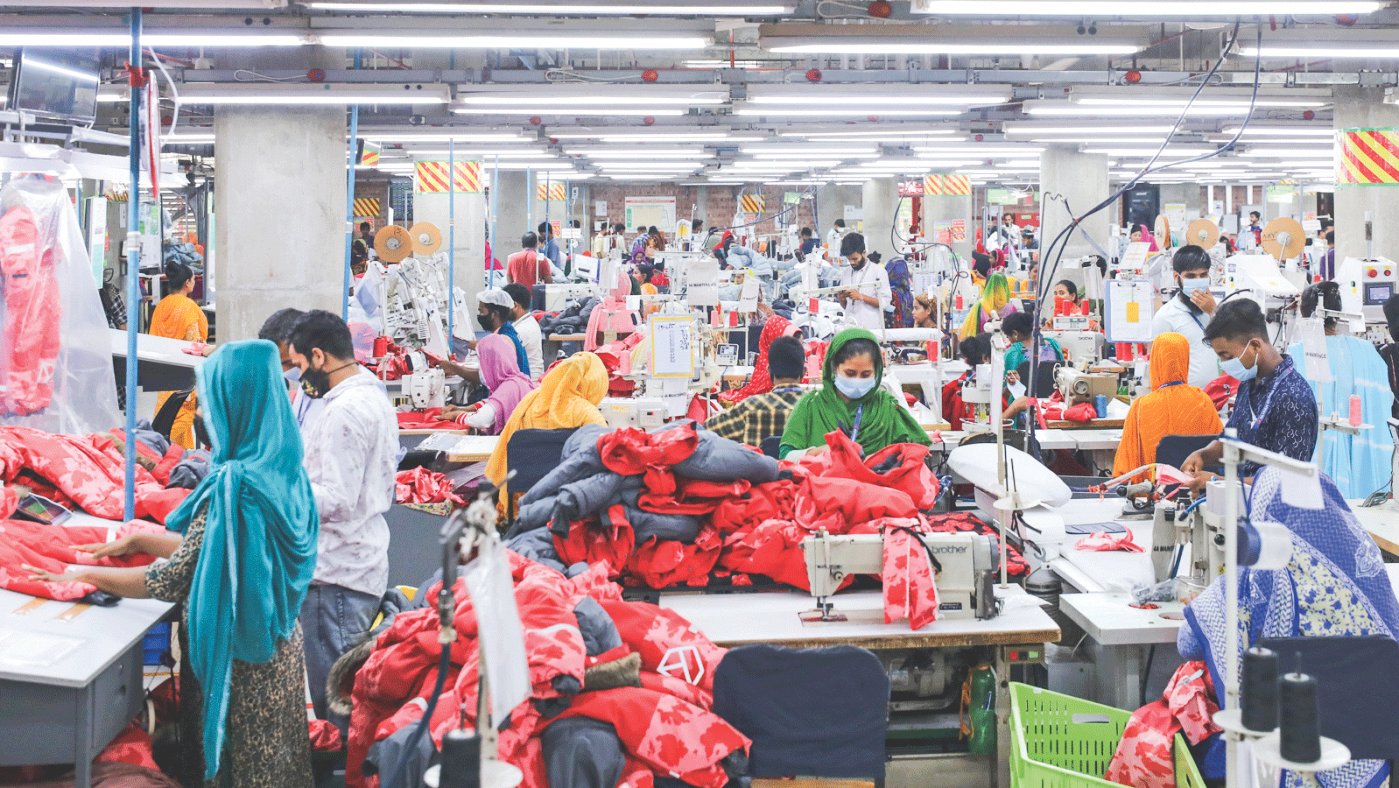
Bangladesh’s garment industry needs coordinated investment in renewable energy, stronger government support and long-term infrastructure planning to reduce dependence on imported fossil fuels and remain competitive in global markets, industry leaders said recently.
They made the call at the third “Rapid Energy Transition Conference: Powering Security, Sustainability & Growth in Bangladesh RMG”, organised by Ethical Trading Initiative (ETI) Bangladesh, in Chattogram.
The conference brought together 85 participants, including factory representatives, BGMEA and BKMEA leaders, industry experts, financial institutions, renewable energy providers and a worker representative to discuss barriers to the sector’s energy transition.
Enamul Aziz Chowdhury, director and acting vice-president of the Bangladesh Garment Manufacturers and Exporters Association (BGMEA) and managing director of HK-TG Garments Ltd, said the energy crisis had exposed the vulnerability of the country’s dependence on imported fossil fuels.
“Renewable energy and carbon reduction are no longer simply environmental agendas or corporate social responsibility initiatives. They are directly linked to our industry’s ability to survive and remain competitive in global markets,” he said.