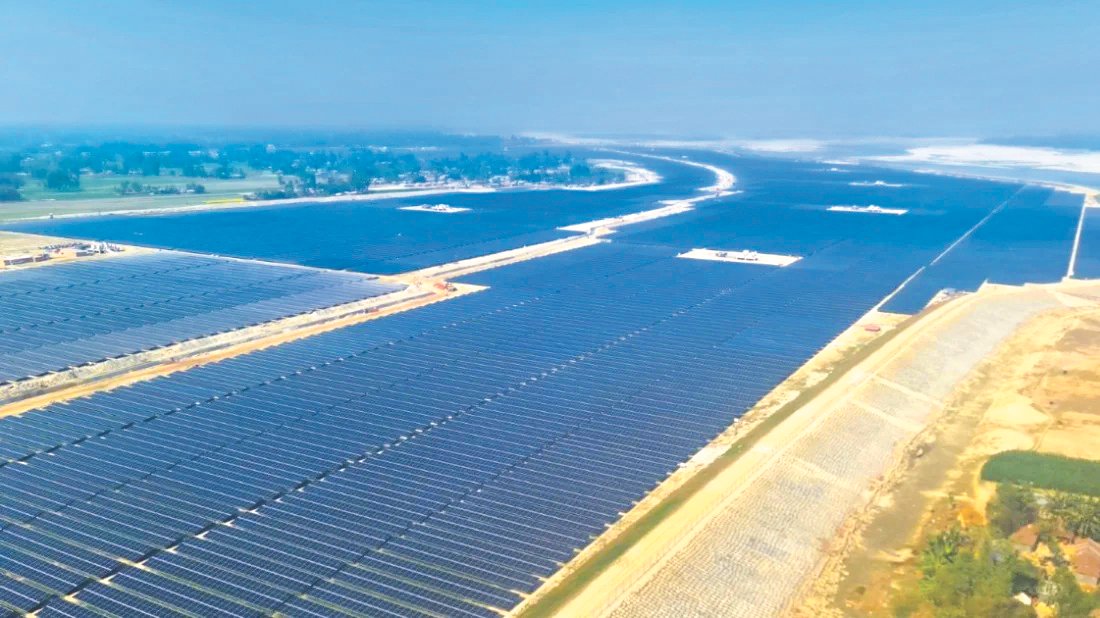
Trapped in its worst-ever primary fuel supply crisis for power generation, the Government of Bangladesh has launched commendable initiatives to expand solar power generation on a massive scale, both on and off the grid. It plans to generate up to 10,000 MW of renewable energy, mostly from solar, by 2030. The government has announced various fiscal and financial incentives and pledged to offer loans on favorable terms. Homeowners, government offices, factories and industries have also been encouraged to supply surplus electricity generated from rooftop solar systems to the grid through net metering.
However, given the current state of the power grid and the lack of smart metering, integrating more rooftop solar generation into the grid carries obvious risks. Bangladesh could learn from Sri Lanka's power grid collapse, which raised concerns about the challenges of managing high levels of solar generation. It could also draw lessons from Australia's innovations in reliably and efficiently integrating more customer-generated rooftop solar power into the grid. Australia's national science agency, the Commonwealth Scientific and Industrial Research Organisation (CSIRO), received the 2026 International Smart Grid Action Network (ISGAN) Award of Excellence for demonstrating how existing electricity networks can be used more dynamically.
CSIRO's research, titled Dynamic Operating Envelope Integration Via an Interoperable Utility-Distributed Energy Resource Communication Standard, highlights Australia's journey in developing and adopting Dynamic Operating Envelopes (DOEs), which facilitate the flexible export of rooftop solar electricity to the grid.
Australia has one of the world's highest rates of rooftop solar adoption. On sunny days, homes and businesses can generate more electricity than they consume, leaving surplus power available for export to the grid. In some areas, however, local electricity networks can accept only a limited amount of solar power at certain times.
System operators manage this challenge by setting fixed export limits, restricting how much electricity customers can send to the grid, even when additional network capacity may be available. When spare capacity exists and grid demand is higher, more electricity can be accommodated from rooftop solar systems. When demand is lower, or network constraints become more pronounced, export limits can be reduced accordingly.
Dynamic management of this kind requires smart meters that allow operators at load dispatch centers to monitor electricity flows in real time. Bangladesh will therefore need to upgrade its metering infrastructure. Until the grid is sufficiently upgraded, some future renewable energy capacity, particularly rooftop solar, could be integrated into local distribution networks.
Before discussing the integration of Dynamic Operating Envelopes in detail, let us examine Bangladesh's renewable energy plans, the present state of its power grid and the integration of rooftop solar into the national grid through the net metering system.
Bangladesh's Power Supply Chain
Bangladesh has an installed power generation capacity of 32,688 MW, comprising 29,143 MW of grid-connected capacity and 3,545 MW of off-grid capacity. Its fuel mix is dominated by natural gas, both domestically produced and imported as LNG, coal from domestic and imported sources, and furnace oil. The country also imports electricity from neighboring countries. However, the contribution of clean energy sources, particularly hydropower and solar, remains negligible.
Over the past decade, Bangladesh has shifted from almost exclusive dependence on domestic primary energy resources to increasing reliance on imported fuels. Wars and conflicts that disrupt key trade routes, including the Strait of Hormuz, have exposed the country to volatility in global fuel markets and supply-chain disruptions. Against this backdrop, increasing the contribution of renewable energy, particularly solar and wind, has been identified as a major component of the strategy to address the country's severe energy crisis.
The announcement of various fiscal and financial incentives has generated considerable enthusiasm in Bangladesh for the rapid development of both rooftop and grid-connected solar power generation. However, it is important to recognize that the country's power grid has limited capacity to accommodate rooftop solar generation. Moreover, the net meters currently in use in Bangladesh are not smart. This prevents the National Load Dispatch Centre (NLDC) from assessing the grid's capacity to accommodate rooftop solar exports on a real-time basis.
Bangladesh plans to generate up to 10,000 MW of renewable energy by 2030. Recently, the prime minister expressed the expectation that an additional 3,000–4,000 MW of solar power could be added to the grid by the beginning of next summer, around March 2027. If achieved, this would be a major boost. But a critical question remains: Can the grid accommodate surplus electricity generated by rooftop solar systems? System operators must determine what upgrades will be required and how electricity exports can be monitored and managed. Bangladesh may need to plan for and introduce Dynamic Operating Envelopes to manage this integration.
Dynamic Operating Envelopes (DOEs)
DOEs are time-varying import and export limits for distributed energy resources (DERs), calculated on the basis of real-time grid conditions to maintain voltage stability and comply with thermal and network constraints while maximizing the capacity of the grid to accommodate distributed generation. They determine how much power a customer, device or community can inject into or draw from the grid at any given time, based on actual network conditions rather than fixed limits designed around worst-case assumptions. These operational boundaries adjust throughout the day, across seasons and over the year as network conditions change.
Why should Bangladesh consider DOEs? They can unlock additional network capacity by replacing conservative, static export limits with more flexible ones. They can also facilitate the integration of solar systems, batteries, electric vehicle (EV) charging and community energy systems. In addition, DOEs can help ensure a fair allocation of available network capacity among downstream users.
Applications of DOEs
DOEs have several practical applications, including setting export and import limits for households and businesses based on grid conditions; controlling EV charging in response to local voltage conditions; enabling energy communities to manage shared import and export limits; and supporting active network management to maintain voltage stability and comply with thermal constraints.
Conclusion
We commend the government's initiatives to harness the country's renewable energy potential, particularly through the expansion of solar power and, more specifically, rooftop solar. However, extensive research is needed to assess the grid's condition and capacity to integrate variable renewable energy (VRE) at different times of day and across locations. The assessment must take into account variations in electricity demand and the limits on how much additional generation individual parts of the network can accommodate.
Until the grid is upgraded and smart meters are installed to facilitate real-time monitoring of rooftop solar generation and electricity exports, some of the additional solar power could be utilized locally through the establishment of microgrids.
Bangladesh must also study how Australia manages the integration of a high share of rooftop solar into its electricity network. CSIRO could potentially provide valuable technical assistance to Bangladesh's power sector.
Saleque Sufi, Energy Expert
Download Special Article As PDF/userfiles/EP_24_11_SA.pdf