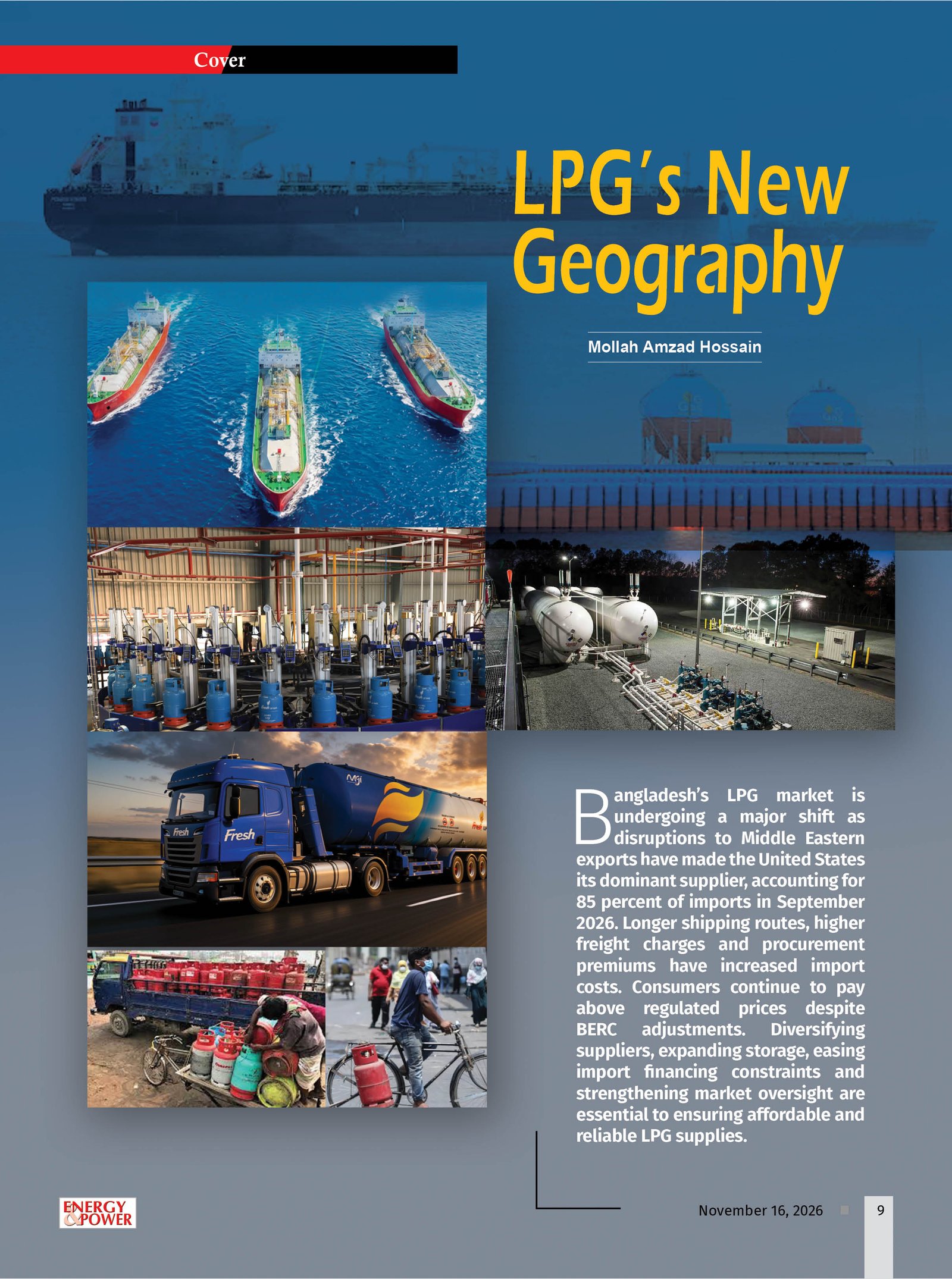
Bangladesh’s LPG market is undergoing a major realignment as disruptions to exports from the Gulf region amid the conflict involving Iran force importers to turn increasingly to the United States. The shift has helped the country secure alternative supplies, but it has come at a cost: longer shipping routes, higher freight charges, procurement premiums and greater exposure to volatile international markets.
The implications extend far beyond the import sector. Nearly 12 million consumers depend on LPG, primarily for household cooking, while industries, commercial establishments, restaurants and autogas stations are also major users. With domestic production remaining limited, Bangladesh must now confront a difficult challenge: securing reliable supplies at predictable prices while ensuring that consumers are not forced to pay substantially more than the rates set by the Bangladesh Energy Regulatory Commission (BERC).
The immediate challenge is no longer simply whether Bangladesh can import enough LPG. It is whether the country can secure supplies at predictable prices, maintain adequate stocks, and ensure that consumers can purchase cylinders at the prices fixed by BERC.
From Middle Eastern Suppliers to the United States
The scale of the sourcing shift is striking. According to BERC data reported by The Daily Star, US-based suppliers accounted for 85 percent of Bangladesh’s LPG imports in September 2026, compared with 27.4 percent in September 2025. Imports from traditional Middle Eastern suppliers, including Oman, Iraq, Saudi Arabia and the United Arab Emirates, fell to zero in September.
Oman and Iraq accounted for 41 percent and 21 percent of imports, respectively, in September 2025. The United States has consequently moved from being one of several important sources to becoming the dominant supplier in a relatively short period.
The shift reflects disruptions to LPG exports from the Middle East and efforts by Asian buyers to replace lost volumes. Reuters reported in April that Middle Eastern LPG shipments had fallen sharply in March, while Asian importers were competing for cargoes from the United States and other alternative suppliers. However, the diversion of US cargoes toward Asia has not been sufficient to eliminate the supply shock. Longer voyages, limited shipping availability and uncertainty surrounding the Strait of Hormuz have kept freight and procurement costs elevated.

For Bangladesh, the shift has significant cost implications. LPG cargoes from the United States travel much farther than shipments from traditional Gulf suppliers. Ajam J Chowdhury, director of Omera Petroleum and a former president of the LPG Operators Association of Bangladesh (LOAB), said freight charges for transporting LPG directly from the United States had been around $82 per tonne before the Middle East crisis. Some vessel owners subsequently began demanding as much as $250 per tonne.
The increase is substantial. Freight alone can add considerably to the landed cost of imported LPG, even before insurance, financing, port handling and other charges are taken into account.
Mohammed Nurul Alam, chief executive officer of JMI LPG, said his company had imported around 8,000 tonnes of LPG and paid a premium of $300–350 per tonne over the Saudi Contract Price to secure supplies. “We were selling the product at a loss to maintain supplies,” he said.
His remarks illustrate the difficult position facing importers. Companies must secure cargoes in a highly competitive international market, but domestic prices are regulated and adjusted periodically. When international procurement costs rise faster than the domestic pricing mechanism allows, operators face mounting pressure on their margins and working capital.
A New Supply Chain, but Greater Vulnerability
The growing dependence on US suppliers does not automatically mean that Bangladesh will run out of LPG. The United States is a major global producer and exporter, and its export capacity provides an important alternative to disrupted Middle Eastern supplies. Nevertheless, concentrating imports in one country or supply region creates a different set of risks.
The longer shipping route increases Bangladesh’s exposure to vessel availability, freight-market movements, insurance costs and delays. Cargoes from the United States take substantially longer to reach Bangladesh than those sourced from the Gulf. This requires importers to plan further ahead, maintain more working capital and have greater storage capacity to ensure uninterrupted supplies.
Chowdhury has warned that Bangladesh has limited alternatives to the United States under the current circumstances. Nigeria and Algeria could emerge as alternative sources, but Bangladeshi importers have comparatively little experience sourcing LPG from those markets.
Another emerging feature is the use of Asian storage and trading hubs. US-origin cargoes may be stored or traded through facilities in Vietnam, South Korea, Japan and China before reaching Bangladesh. Such arrangements can provide flexibility, but they may also introduce additional handling and trading costs.
Competition for available cargoes is another concern. Large buyers such as India have secured supplies well in advance, making it more difficult for smaller importing countries to compete for spot-market cargoes. Bangladesh’s relatively small purchasing volumes can weaken its bargaining position when global supplies tighten.
Azam J Chowdhury has also cautioned that an end to the current conflict would not necessarily restore normal supply conditions immediately. Damage to energy infrastructure and disruptions to shipping arrangements could delay a return to pre-crisis trade flows.
This is an important consideration for Bangladesh’s energy planners. Diversification should not be limited to replacing Middle Eastern cargoes with US supplies. It should also involve building relationships with suppliers in Africa and other regions, developing long-term contracts and ensuring that importers have access to more than one reliable source.

Import Concentration and Domestic Market Structure
Bangladesh’s domestic market structure adds another layer of vulnerability. Although around 46 companies hold licenses to operate in the LPG sector, only 10 to 12 are active importers, according to industry information reported by the English-language daily. The five largest importers accounted for around 71 percent of the country’s total LPG imports of 1.743 million tonnes in FY2025–26.
United Aygaz imported approximately 296,000 tonnes, followed by Meghna Group’s Fresh LPG with 280,000 tonnes, Omera with 265,000 tonnes, BM Energy with 203,000 tonnes and Jamuna Spacetech with 187,000 tonnes.
Several other established companies, including Bashundhara, Unitex, Orion, Beximco and JMI, have reduced or suspended imports, according to industry sources. The reasons include banking restrictions, financing constraints and difficulties in securing cargoes.
This concentration means that a disruption affecting a few major importers can have consequences across the national market. A large number of licensed companies does not necessarily translate into a competitive supply base when only a small group can regularly finance and import cargoes.
Md Redhwanur Rahman, chief operating officer (sales and marketing) of Bashundhara LP Gas, said that even companies with term supply contracts were not receiving their full contracted volumes because of shipping constraints. His observation suggests that long-term contracts alone cannot guarantee deliveries when international logistics are disrupted.
Bangladesh therefore needs to examine both the number of active importers and the practical barriers preventing licensed companies from participating in the market. Access to trade finance, foreign currency, letters of credit, shipping and terminal facilities will be critical to expanding the pool of reliable suppliers.
Why Consumers Continue to Pay Above the Regulated Price
Supply-side difficulties have coincided with persistent instability in the domestic retail market. On October 4, BERC raised the official price of a 12kg LPG cylinder by Tk252 to Tk1,837, effective from 6 p.m. The September price had been Tk1,585.
The October adjustment was based on Saudi Aramco’s Contract Price of $680 per tonne for propane and $730 per tonne for butane, giving an average of $712.50 per tonne. BERC also considered shipping and trader premiums of $250 per tonne and an average exchange rate of Tk123.18 per US dollar.
Despite the adjustment, consumers in several markets reported paying between Tk2,200 and Tk2,500 for a 12kg cylinder. Some were reportedly paying Tk500–600 above the regulated price. This gap raises questions about the effectiveness of price regulation and market monitoring.
Importers and operators argue that the official price does not always reflect the actual cost of replacing cargoes during periods of international disruption. Distributors and retailers, meanwhile, point to transportation, handling, storage and operating expenses. Consumers are left bearing the combined impact of higher import costs and weaknesses in the domestic distribution system.
The disagreement was evident at a public hearing organized by BERC on October 29. The commission’s technical committee recommended increasing the importer margin for a 12kg cylinder to Tk280 from Tk200, the distributor margin to Tk80 and the retailer margin to Tk70. If accepted, the proposed changes could raise the official retail price to Tk1,976.
Operators sought higher margins. Omera Petroleum proposed an importer margin of Tk478 per cylinder, while Petromax proposed Tk349, Delta LPG Tk360 and Meghna Group Tk300. Distributors sought an increase in their commission from Tk50 to Tk150, while retailers proposed Tk70 instead of Tk45.
Industry representatives say existing margins do not adequately reflect financing, logistics and compliance costs. Abu Sayeed Raja, chief marketing officer of Meghna Fresh LPG, said the sector had attracted investments of around Tk400 billion and that investors’ returns needed to be protected. He argued that the costs of importing, transporting and distributing LPG were not adequately reflected in the existing pricing structure.
However, higher margins at each stage of the supply chain would ultimately have to be borne by consumers unless efficiency improves or other costs are reduced.
Consumer Protection Cannot Be Separated from Price Regulation
The Consumers Association of Bangladesh (CAB) has questioned whether the regulatory system is adequately protecting consumers. Its energy adviser, M Shamsul Alam, has argued that BERC should investigate complaints through its formal dispute-resolution process rather than allow disagreements among importers, distributors and retailers to continue.
At the October 29 public hearing, CAB adviser Khalilur Rahman said BERC’s primary responsibility was to protect consumers and ensure that regulated prices were implemented in the market. “Without considering consumer interests, this hearing will fail to serve its purpose,” he said, urging the regulator not to approve further price increases without first addressing compliance with existing rates.
CAB has also demanded investigations into allegations of artificial shortages, hoarding and overcharging. It has called for licenses to be canceled where operators, distributors or retailers are found to have violated regulated prices. The organization wants import, storage, bottling and distribution costs to be disclosed separately and supported by audited accounts.
Its central argument is that higher international import costs should not automatically justify increases in every component of the domestic price. Freight and procurement costs may rise, but local transportation, storage and retail expenses do not necessarily increase at the same rate. Consumers should not be made to pay twice for the same expense or bear the cost of inefficiencies.
The association has also called for updated price lists at sales outlets, proper receipts, transparent home-delivery charges and an accessible complaint mechanism for overpricing, shortages, underweight cylinders and safety concerns.
BERC’s Challenge: Balancing Costs and Consumer Interests
BERC Chairman Jalal Ahmed has acknowledged that the shift toward US supplies has increased the distance LPG cargoes must travel to reach Bangladesh, raising transportation time and costs.
The regulator’s monthly pricing mechanism is based on changes in the Saudi Contract Price, freight charges, the exchange rate and fuel-related costs. Jalal has explained that BERC established this mechanism following public hearings in 2021. He has maintained that monthly hearings are not necessary because the main variables are international market factors beyond the commission’s control.
However, the debate over margins and market conduct has made public consultation important again. At the October 30 hearing, BERC considered proposals to revise importer, distributor and retailer margins. The commission must now assess whether the proposed changes are supported by verifiable costs and whether they would improve supply reliability without imposing an excessive burden on consumers.
A key issue is the difference between the regulated price and the actual retail price. Even if BERC adjusts the official rate to reflect higher import costs, the adjustment will have limited value if consumers continue to pay substantially more in the market.
The regulator therefore needs to strengthen price monitoring, investigate supply restrictions and ensure that all stages of the distribution chain comply with its decisions. Importers should provide evidence of procurement and freight costs, while distributors and retailers should disclose legitimate handling and transportation expenses.
What Bangladesh Needs to Secure Supplies and Stabilize Prices
The current crisis demonstrates that Bangladesh needs a broader LPG security strategy. First, import sources must be diversified. The United States can remain a major supplier, but the country should develop commercial relationships with alternative producers, including Nigeria and Algeria, and explore other reliable markets.
Second, long-term supply contracts should receive greater attention. Heavy dependence on spot-market purchases exposes importers to sudden price increases and competition for available cargoes. A balanced portfolio of term contracts and spot purchases could help reduce this exposure.
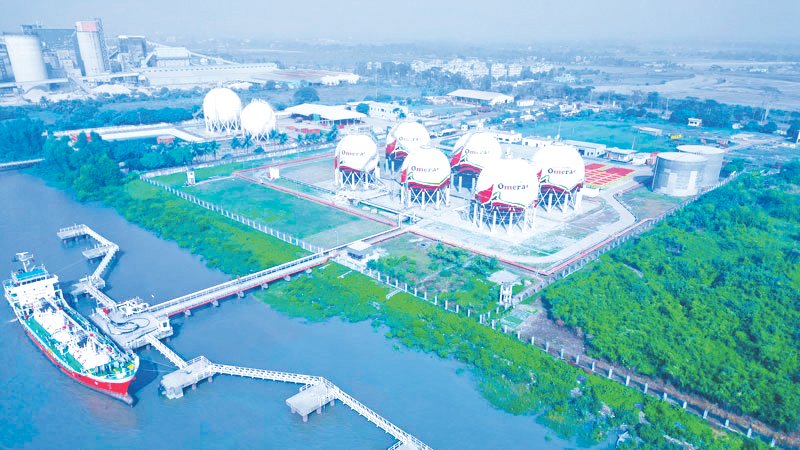
Third, Bangladesh needs adequate storage and import infrastructure. Additional storage capacity would allow importers to maintain buffer stocks and manage delays in international shipping. Shared terminal facilities at suitable locations, including the Moheshkhali area, could improve access for multiple operators and reduce dependence on a limited number of infrastructure providers.
Fourth, the government and financial authorities should examine the banking and foreign-exchange constraints that prevent licensed companies from importing. A larger number of active importers could improve competition, provided they meet financial, technical and safety requirements.
Finally, BERC’s pricing system needs greater transparency. International benchmark prices, freight assumptions, exchange rates, importer margins and distribution charges should be clearly disclosed. Any proposed increase in margins should be assessed on the basis of verifiable accounts and independent technical evaluation. Price reductions in international markets should also be passed on to consumers without unnecessary delay.
Bangladesh’s LPG market is entering a period in which international supply security and domestic market governance are closely connected. The shift from Middle Eastern suppliers to the United States has provided an alternative source of fuel, but it has also exposed the country to longer shipping routes, higher procurement premiums and greater dependence on a concentrated group of importers.
The way forward is not simply to accept higher prices as an unavoidable consequence of global disruption. Bangladesh must diversify its suppliers, strengthen import and storage capacity, expand meaningful competition and enforce regulated retail prices. Without these measures, the country may secure cargoes in the international market but still fail to ensure affordable and reliable LPG supplies for millions of households.
Download Cover As PDF/userfiles/EP_24_11_Cover.pdf