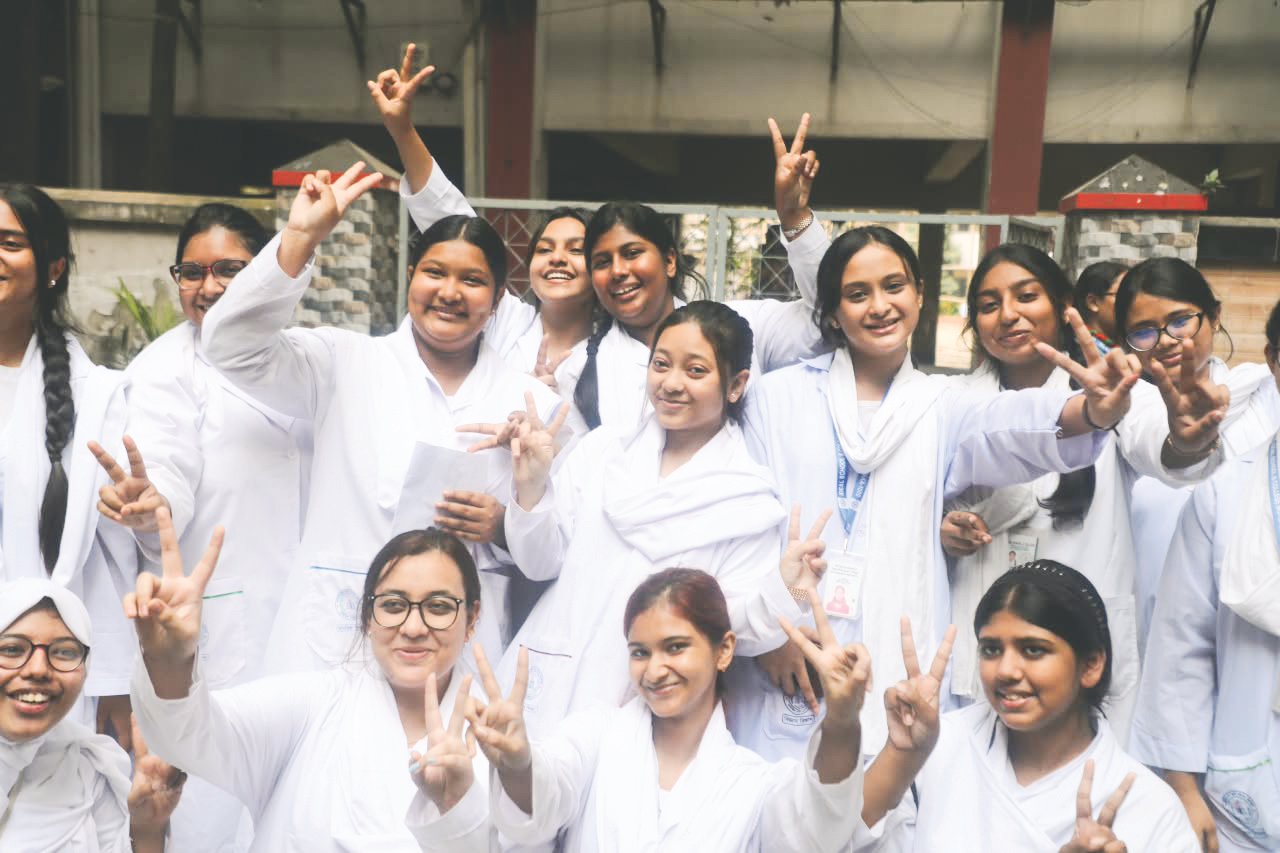
The sweetmeat shops were ready with an additional production. Examinees spent a sleepless night in anticipation of the results. Guardians were restless. Then were published the results. This time there had hardly been any dance, songs, exchange of cheerful hugs. Nor there had been happy distribution of sweetmeats.
When one out of two students fails in crucial nationwide examinations, calling the results unsatisfactory is an understatement. The results in this year’s HSC exams (with pass rates in nine education boards averaging at 51.62%) have been a debacle, the worst in the past 22 years. The last time the HSC pass rates dropped below this year’s performance (47.74%) was in 2024. Coincidentally, that time too BNP was in the power. The number of students passing with GPA-5, the brightest of the results, has also declined significantly. However, cheers to those who have passed, especially with GPA-5
When nearly half the students flunk in nationwide exams such as the HSC it exposes many an ills in the entire education system. Cheers to those who have passed, especially with GPA-5. A preliminary review of the results sheets show that many of the examinees failed in the compulsory subject of English and some in the ICT. In both subjects the unsuccessful students will get one more month to reappear in the tests. That is expected to add more students to the list of the success.
Hard questions and strict assessment standards are being cited as the reasons why the pass rates crashed this year. No grace marks have been added to those who flunked in one or two subjects falling short by one or two marks. The education ministry under the supervision of a minister known as a hard taskmaster refuses to comprise with the strict rules set to find what it says the best of the talents. The other factors that have led to the debacle are prolonged closure of classes due to Covid-19 pandemic, learning losses caused by student unrest, especially during the July upsurge, indiscipline in the entire education sector, the Yunus-led interim government’s failure to bring the students back to classes from the streets, shortage of skilled teachers in the classrooms, financial constraints faced by the families and the rural-urban gap in the quality of education. Above all, the structural weaknesses in the education system are also blamed for low quality in education. The education system in Bangladesh has long been struggling with finding an answer to its chronic illness. The number of schools and colleges is increasing. Private institutions are outnumbering the government-run colleges. The number of skilled teachers in the classrooms has gradually been declining. Too many changes and experiments with the curricula are confusing both the students and the teachers. A big issue has been the gradual politicization of the education system.
The debacle has raised many a question. What is going to happen to the unsuccessful students? Will they be able to return to classes or be dropped out of schooling? How many of the families can send their children back to colleges to try for a second chance? The question is more pertinent for women students. Many of their families will go for their marriages than sending back to classes. For them there is no point in sending a failed student for a second try. What is going to happen with the seats available in the higher university education? While public institutions like the Dhaka University are expected to face lesser flow of admission-seeking students many of the private universities will have their seats vacant or half-filled. According to a Times of Bangladesh newspaper report 40% of the higher education seats may remain vacant because of the low HSC pass rates. This means the entire education system suffers.
Download Column as PDF/userfiles/EP_24_10_Column.pdf