
The UN Climate Change Technology Executive Committee (TEC) has advanced plans to accelerate climate technology development and deployment in developing countries, focusing on artificial intelligence, early warning systems, industrial decarbonization and stronger international partnerships.
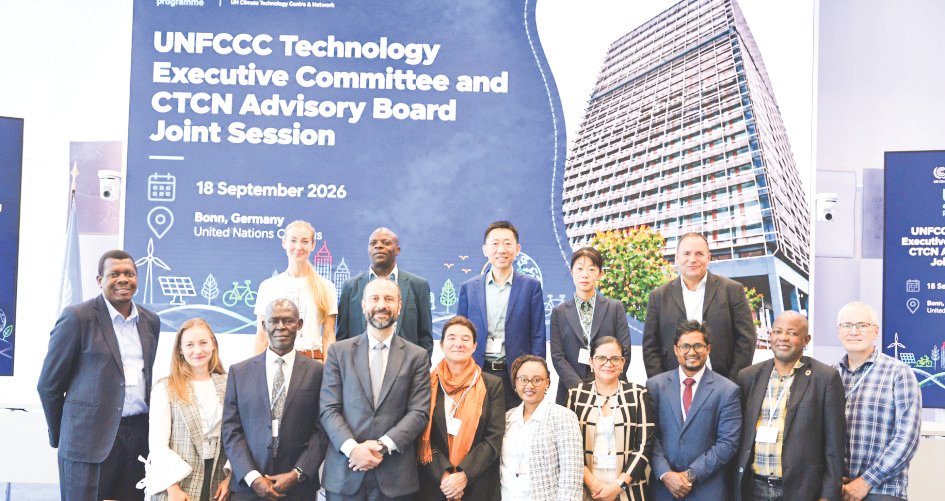
At its 33rd meeting in Bonn, the TEC progressed policy briefs and knowledge products on climate technology incubators and accelerators, digital technologies, and industrial decarbonization.
It also agreed on key messages and policy recommendations for countries under the UN Framework Convention on Climate Change and the Paris Agreement, covering technology incubators, community-based early warning systems, and buildings and infrastructure.
The committee agreed to invite submissions from governments, observers, international organizations and other stakeholders to help shape its next rolling workplan. The call for submissions is expected to be published ahead of the UN Climate Change Conference, COP31, in November 2026.
The TEC also emphasized stronger engagement with National Designated Entities to ensure that its future activities reflect countries’ technology priorities and improve the uptake of its knowledge products.
It began discussions with the Climate Technology Centre and Network (CTCN) on the Technology Mechanism’s next joint work program, aiming to improve coordination between policy development and practical implementation.
The first global dialogue under the Belém Technology Implementation Program will examine how developing countries can overcome barriers to climate technology deployment through stronger institutions, technical capacity, financing and partnerships.
The dialogue is expected to take place alongside the UNFCCC June Climate Meetings in 2027.
UN Adaptation Forum Urges More Finance, Stronger Implementation
Countries need stronger financing, institutional capacity and monitoring systems to translate climate adaptation plans into effective action, according to discussions at the 2026 Adaptation Forum convened by the UNFCCC Adaptation Committee in Baku, Azerbaijan, on September 9–10.
The forum brought together governments, international organizations, climate funds, development banks, researchers and civil society representatives to explore practical approaches to scaling up adaptation and achieving the global goal on adaptation.
The Adaptation Committee reported that 88 of the 198 Parties covered had submitted national adaptation plans, while 128 had reported other national adaptation plans or strategies.
However, participants stressed that translating these plans into action requires adequate funding, technical expertise and stronger coordination between national institutions and local communities.
Country experiences highlighted practical solutions. Azerbaijan shared measures to improve the climate resilience of healthcare facilities, while Kenya presented a financing program supporting locally led climate action. The World Health Organization highlighted heat-health action plans linking early warning systems with measures to protect vulnerable people.
Participants emphasized the need for predictable climate finance and sustained technical support, particularly for vulnerable communities. The Asian Development Bank presented its 10-year Glaciers to Farms program, which connects glacier monitoring, water management and agriculture across nine countries through partnerships with climate funds and other financing sources.
Monitoring and evaluation also emerged as priorities. According to the Adaptation Committee, 31% of Parties reported having monitoring, evaluation and learning systems in place, while another 32% were establishing them. Participants said stronger systems were essential to assess adaptation outcomes, identify gaps and improve future investments.
The forum also explored dynamic risk assessments, multi-hazard early warning systems, scenario planning and artificial intelligence to anticipate evolving climate threats. Participants stressed that these tools must complement local knowledge and institutional decision-making.
The discussions will inform the Adaptation Committee’s ongoing work to improve coordination, assess adaptation progress and help countries turn climate plans into effective action under the Paris Agreement.
Bangladesh to Promote Jute as Plastic Alternative at COP31
Bangladesh plans to showcase its traditional jute and jute-made products at the country’s pavilion during the UN climate conference COP31 in Antalya, Türkiye, from November 9 to 20, to promote eco-friendly alternatives to plastic and explore new export opportunities.

A special exhibition is being planned to present a range of products, including jute bags, home décor items and handicrafts, to international buyers, investors and policymakers. Preparations are underway, with a display already set up at the Ministry of Foreign Affairs.
At a meeting on October 15, State Minister for Foreign Affairs Shama Obaed Islam highlighted the commercial potential of Bangladesh’s jute industry during discussions on COP31 preparations with climate experts and relevant stakeholders.
As a natural, renewable and biodegradable fiber, jute offers an environmentally friendly alternative to conventional plastic products. Stakeholders believe rising global concern over plastic pollution could create opportunities to expand international markets for Bangladeshi jute goods.
The initiative is expected to highlight the diverse applications of the country’s “golden fibre”, attract foreign buyers and investors, and strengthen Bangladesh’s position in the global market for sustainable products.
Istanbul to Screen 20 Climate Documentaries Ahead of COP31
Twenty documentaries exploring the human and environmental impacts of climate change will be screened in Istanbul ahead of the UN climate summit COP31, scheduled to take place in Antalya, Türkiye, from November 9 to 20.
Organized under the COP ART initiative, the free screenings will be held at Atlas 1948 Cinema on October 27–28 and October 31–November 1. The program features nine feature-length and 11 short documentaries recognized at international film festivals, including Sundance, Cannes and Berlin.
The films explore a wide range of issues, including biodiversity loss, Indigenous rights, food and water security, ecosystem restoration, land protection and climate policy. Their stories span the Amazon rainforest, Siberia, drought-hit Kenya, Palestinian olive groves and Türkiye’s Lake Salda.
Featured films include Raoni: Amazon Warrior, about efforts to protect the Amazon; Wilding, which examines ecological restoration in the United Kingdom; and The Battle for Laikipia, which explores conflicts over scarce water and grazing resources in Kenya. The program also includes The White House Effect, examining political influences on climate policy.
Anadolu Agency’s documentary Salda: A Bridge to the Red Planet explores the scientific significance of Lake Salda and its potential relevance to Mars research, while highlighting the importance of protecting the lake’s natural environment.
Following the Istanbul screenings, COP31 Documentary Days will continue at Antalya Science Center in Dokumapark from November 9 to 12, using documentary films to raise awareness of climate challenges and possible responses.
Download Road2Antalya as PDF/userfiles/EP_24_10_R2A.pdf