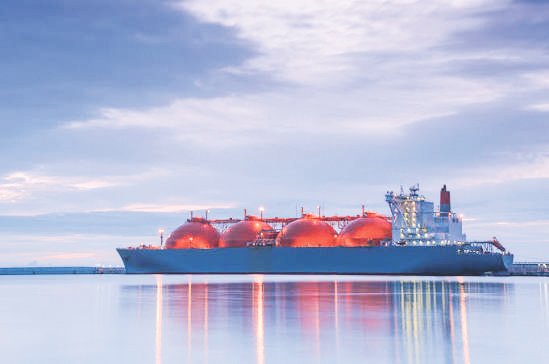
The present government is confronting what could be Bangladesh's most severe electricity and fuel supply crisis, rooted largely in years of inadequate planning for the exploration and development of domestic primary fuel resources. The gas supply crisis that existed before the BNP-led government assumed power was further aggravated by the US-Israel war against Iran. Bangladesh's growing dependence on imported energy—particularly LNG and liquid fuels from the Middle East—has left the country highly exposed to international price and supply shocks. The closure of the Strait of Hormuz severely disrupted supply chains, while LNG imports under long-term contracts with Qatar and Oman were completely halted.
Bangladesh is now importing LNG from the spot market at almost three times the previous price. The crisis was further intensified when one of the country's two floating LNG terminals was forced out of operation for more than three weeks following a fire. Gas and electricity supplies to all categories of users were severely affected. Domestic consumers suffered from disruptions in cooking fuel supplies, CNG users faced shortages at filling stations, and the country experienced unprecedented power load-shedding. Industries were hit hard by shortages of both gas and electricity.
Faced with the crisis, policymakers adopted a number of emergency measures. The Prime Minister and State Minister for Energy have also announced mid- and long-term plans to achieve sustainable energy security. This report assesses and analyzes those initiatives.
Expediting Petroleum Resources Exploration Programs
The Awami League government had been proceeding with a plan to drill 50 and 100 wells. The interim government, without making alternative arrangements, canceled all contracts and ongoing negotiations initiated during the Awami League regime. During its one-and-a-half-year tenure, the gas deficit widened to an alarming level.
The BNP-led government started with a gas deficit of 1,200–1,400 MMCFD. The new government has done everything possible to expedite the drilling projects of BAPEX, BGFCL and SGFL. Some progress has been made, and some good news is expected soon. The government has also announced initiatives to conduct seismic surveys to identify new resources for future drilling programs.
Experts have suggested mobilizing BAPEX rigs at Chhatak and Tengratila on a priority basis to monetize the gas resources there. They have also suggested commencing exploration of potential gas resources in five identified areas in the greater Chittagong Hill Tracts.
The government remains uncertain about how to evacuate Bhola's discovered gas resources to the national grid. A properly executed plan could connect Bhola's gas resources to the national grid at Khulna via Barishal within three years. Khulna has anchor load, while the Barishal and Khulna regions have significant potential for developing agriculture-based industries. A gas transmission pipeline in the region would also encourage investors to explore there.
The government must declare the pipeline project a top-priority national project and engage a competent EPC contractor as soon as possible to execute it in challenging terrain.
Engaging IOCs under PSC
Bangladesh's image as a host country for PSC operations has not encouraged potential international oil companies (IOCs) to participate in offshore bidding in the Bay of Bengal. The issues that led to the change of government in 2024, followed by what has been described as mob terrorism, have created a sense of insecurity among the investment community.
We are not sure the government will achieve much from the scheduled roadshows in Singapore, London and New York. Experts have suggested organizing an international conference in Dhaka and inviting interested IOCs.
The updated Model PSC contains attractive provisions. However, IOCs remain concerned about the prolonged, multistage decision-making process. Records of mismanaging PSCs and arbitration cases also act as negative catalysts. Still, we expect some participation by major IOCs and the quick conclusion of PSCs.
Experts have suggested offering PSCs for onshore blocks outside BAPEX's ring-fenced areas. Bangladesh may discover 2–5 Tcf of new gas from onshore exploration if 10 exploration rigs, operated by BAPEX and IOCs, can work in tandem from the end of 2027.
LNG Import Initiatives
The government is negotiating a new FSRU with a Chinese company. Some controversies have already arisen over the proposal and require clarification to ensure transparency.
The government may also review the contract for a third FSRU with Summit Energy, which the interim government canceled without valid reasons. The government must also expedite construction of the land-based LNG terminal at Matarbari.
Bangladesh must not increase LNG imports beyond 5,000 MMCFD, as LNG prices are likely to remain prohibitively high amid wars and conflicts across the globe. The government must also explore alternative sources of LNG from Indonesia, Malaysia, Brunei and Australia under long-term contracts.
Some storage facilities may also be developed to hold at least two months' LNG demand, allowing Bangladesh to take advantage of lower prices in the spot market when available. Proposals to set up FSRUs at Khulna and Barishal and to import LNG in ISO tanks would be a waste of time.
Fuel Utilization Strategy
Sooner or later, Bangladesh will have to review the use of gas for cooking, transportation and even power generation. Gas should be prioritized for fuel-efficient industries and fertilizer plants.
LPG may be subsidized to bring its price closer to that of gas for domestic use before gradually phasing out gas supplies to domestic consumers and transport. Power generation during the transition period can rely on coal, nuclear power, LNG and electricity imports until renewable energy grows sufficiently as part of a smart energy transition.
Bangladesh must gradually move toward second- and third-generation fuel-efficient industries.
Coal Reserve Exploitation
Domestic coal must receive top-priority national attention. Environmentally acceptable, proven technologies are available for exploiting high-quality coal deposits buried at mineable depths.
A decision now could assist in establishing at least 5,000MW of new domestic coal-based power generation by 2031. There should be no major issues with mine-water management; agricultural land can be progressively rehabilitated, and mine-affected communities can be adequately compensated and resettled.
Restructuring Petrobangla and Companies
Petrobangla is responsible for exploring, developing and supplying primary fuel. It must be redeveloped as a Grade-A corporation without delay. Only line professionals with relevant academic degrees and proven track records should be placed in top positions to reestablish Petrobangla's credibility as a flagship corporation in the energy sector.
Retired competent Petrobangla officials, researchers and business leaders should be included on the boards of directors of Petrobangla and its companies instead of inexperienced bureaucrats. The pay scales of Petrobangla company officials must be commensurate with their tasks and responsibilities. There must also be provisions for rewards and penalties based on achievements and failures.
One must remember that Bangladesh does not have an abundance of competent officials in the energy sector. No one should be victimized because of political faith or belief.
The Prime Minister may invite former chairmen and senior executives to share their views on a road map for recovering from the present energy crisis.
Download Analysis As PDF/userfiles/EP_24_10_Analysis.pdf