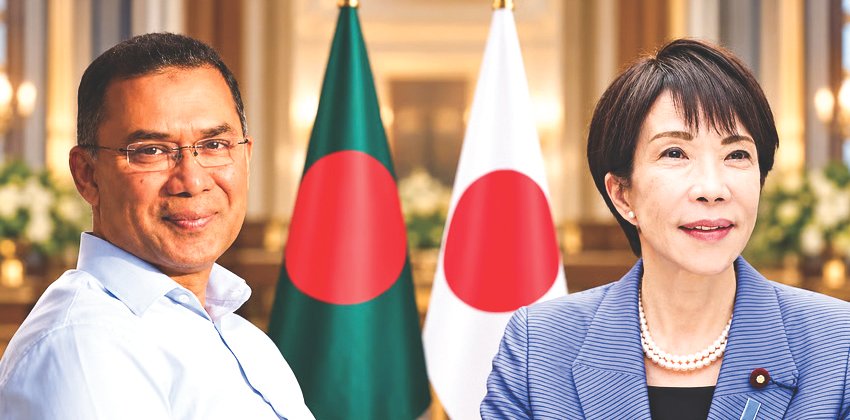
Bangladesh Prime Minister Tarique Rahman has concluded his four-day official visit to Japan, opening up new prospects for cooperation in energy security, liquefied natural gas (LNG) supply, infrastructure development, and private investment.
The October 26–29 visit, at the invitation of Japanese Prime Minister Sanae Takaichi, resulted in a proposed 1.0 trillion yen ($6.3 billion) private investment program over five years, a 50 billion yen emergency loan initiative to support energy security, an agreement to explore LNG cooperation between JERA and Petrobangla, and renewed commitments to develop the Matarbari-Maheshkhali region as an energy, industrial and logistics hub.
The two countries also signed six bilateral cooperation instruments, secured commitments for two additional yen-loan projects worth 46.56 billion yen, and witnessed the signing of 17 memorandums of understanding (MoUs) between private-sector entities, according to official statements.
Energy Security and LNG Cooperation
Energy cooperation emerged as one of the most important areas of the visit, as Bangladesh faces rising fuel import costs, persistent gas shortages and growing demand for reliable electricity supplies.
At the October 27 summit in Tokyo, Tarique and Takaichi discussed a proposed 50 billion yen, equivalent to around $317 million, emergency support loan to strengthen Bangladesh’s economic resilience and ensure a stable energy supply. The loan is the first yen-loan project under Japan’s Partnership on Wide Energy and Resources Resilience Asia (POWERR Asia) initiative.
The initiative reflects growing concern over volatility in international energy markets and the need for stronger cooperation between energy-producing and energy-consuming countries. The two leaders also emphasized the importance of strengthening oil stockpiles and coordinating responses to energy supply disruptions.
A significant development came on October 28, when Japanese energy company JERA Co., Inc. and Bangladesh Oil, Gas and Mineral Corporation (Petrobangla) signed a non-binding memorandum of understanding to explore potential cooperation in LNG supply and related infrastructure.
Under the MoU, the parties will examine opportunities for collaboration, drawing on JERA’s international experience in LNG procurement, transportation, infrastructure and power generation. Any concrete projects or supply arrangements will depend on the outcome of further discussions and studies.
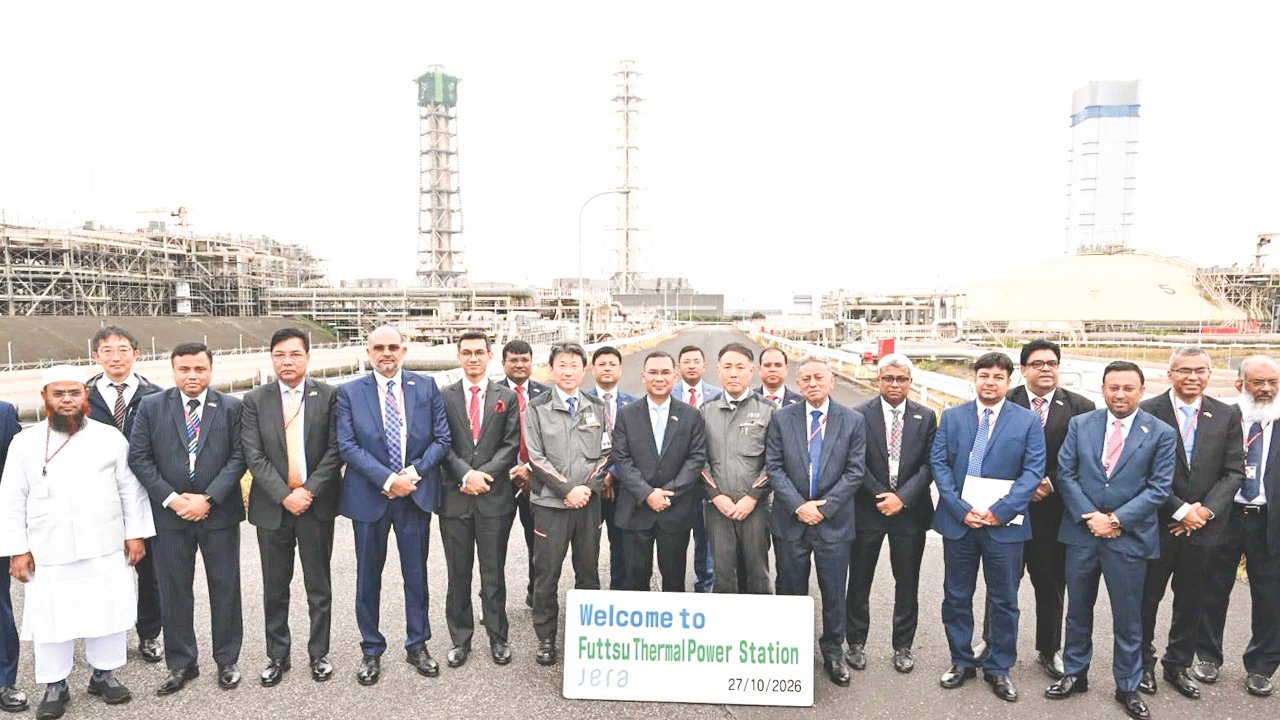
Prime Minister Tarique also visited JERA’s onshore LNG terminal and power plant in Futtsu, Chiba Prefecture, during the visit. The tour provided an opportunity to observe Japan’s energy infrastructure and operational capabilities.
The proposed cooperation could help Bangladesh explore additional LNG sourcing options and infrastructure development. However, the MoU does not constitute a binding LNG supply contract or confirm a specific investment commitment.
$6.3 Billion Investment Prospect
The summit also focused on attracting Japanese private investment in Bangladesh’s energy, infrastructure, and information and communication technology sectors.
Japan projects that private-sector investment in Bangladesh could reach 1 trillion yen, or approximately $6.3 billion, over the next five years, with the potential to generate around 200,000 jobs. The two governments agreed to work towards advancing the investment plan, including through the proposed dispatch of a Japanese team to Bangladesh.
The investment projection is separate from the emergency energy-support loan and the other development financing commitments announced during the visit.
Tarique invited Japanese companies to invest in priority sectors including energy, automotive manufacturing, technology and space, high-speed rail and logistics, and agro-processing. He also proposed establishing a Bangladesh-Japan Tech Park and pledged government support and reforms to improve the business environment.
The prime minister addressed the Bangladesh-Japan Economic Forum Dialogue at the Japan External Trade Organization (JETRO) headquarters on October 28, encouraging Japanese companies to expand their presence in Bangladesh through investment, technology transfer, industrial development and skills training.
Matarbari-Maheshkhali Energy and Industrial Hub
Infrastructure development featured prominently in the joint statement issued after the summit. The two leaders agreed to advance the Bay of Bengal Industrial Growth Belt initiative under the framework titled “BIG-B for Shared Prosperity.”
The initiative aims to develop the Matarbari-Maheshkhali area into a major regional hub for logistics, energy and industry, centered on the Matarbari Deep Sea Port.
For Bangladesh, the initiative has strategic significance. Improved port capacity and integrated energy infrastructure could support LNG and other fuel imports, industrial expansion and more efficient supply chains. The development could also strengthen Bangladesh’s role in regional connectivity and trade.
The two governments also agreed to advance preparatory work for the early operationalization of the third terminal at Hazrat Shahjalal International Airport and expressed their intention to move forward with the early construction of Dhaka metro rail lines. They also discussed future cooperation in the operation and management of Matarbari Deep Sea Port.
Japan International Cooperation Agency (JICA) President Akihiko Tanaka reaffirmed Japan’s interest in supporting economic infrastructure, including the Moheshkhali-Matarbari Integrated Infrastructure Development Initiative, as well as Dhaka’s mass rapid transit system and improvements to the investment climate.
Development Loans and Cooperation Agreements
During the visit, Bangladesh and Japan signed six bilateral cooperation instruments covering economic relations and the business environment, agriculture, skills development, fisheries and livestock, and climate change cooperation. Japan also agreed to provide grant assistance of up to 2.12 billion yen, approximately $13.4 million, for a patrol-vessel project to strengthen Bangladesh’s maritime and coastal security capabilities.
Separately, Japan pledged two yen-loan projects worth a combined 46.56 billion yen, or around $295.5 million. These include 15.88 billion yen for the Investment Climate Improvement Project and 30.68 billion yen for the second phase of the Upazila Governance and Development Project.
The agreements are intended to improve the business environment, strengthen local governance and support Bangladesh’s wider development priorities.
The two leaders also stressed the importance of bringing the Japan-Bangladesh Economic Partnership Agreement, signed in February 2026, into force at an early date. Effective implementation of the EPA is expected to strengthen trade and investment ties and expand opportunities for Bangladeshi products in the Japanese market.
From Commitments to Implementation
The visit has strengthened the framework for Bangladesh-Japan cooperation, particularly in energy security, LNG infrastructure, industrial development and connectivity. Japan’s proposed private investment program and energy-related financing could provide important support as Bangladesh seeks to diversify its energy sources and reduce supply vulnerabilities.
However, the investment projection, the proposed projects and the non-binding JERA-Petrobangla MoU represent different stages of cooperation. Their economic impact will depend on subsequent feasibility studies, financing arrangements, project agreements and implementation.
The immediate challenge for Bangladesh will be to translate the diplomatic outcomes into concrete investments, reliable energy supplies and infrastructure projects that deliver measurable benefits.
With energy security becoming increasingly important to economic growth, the follow-up to Tarique Rahman’s Japan visit could play a significant role in shaping Bangladesh’s future energy and infrastructure development.
Download Special Report As PDF/userfiles/EP_24_10_SR1.pdf