UN Climate Change has completed 100 technical expert reviews of Biennial Transparency Reports (BTRs) submitted under the Paris Agreement’s Enhanced Transparency Framework (ETF), marking a milestone in the first review cycle launched in 2024.
The milestone was reached recently, when in-country reviews of the first BTRs submitted by Romania and Mongolia were completed. The reviews have covered countries across all regions, including least developed countries and small island developing states.
According to UN Climate Change, the reviews have helped countries strengthen national reporting systems, improve data quality and identify areas for improvement through technical dialogue and exchanges with international experts.
“BTR reviews are more than a technical exercise,” said Xuehong Wang, Director of Transparency at UN Climate Change. She noted that the process helps countries assess their progress, identify opportunities for improvement and build a stronger evidence base for climate policymaking.
Lessons from the first 100 reviews are being used to improve review planning, technical guidance, expert training and efficiency while maintaining quality standards. The process has relied on cooperation among national experts, international review teams, partner organizations and donors.
Attention is now turning to the next reporting cycle, with countries due to submit their second BTRs by December 31, 2026.
UN Carbon Market Opens New Pathway for Clean Cooking Projects
Cleaner cooking projects can now seek carbon credits under the Paris Agreement’s carbon market after the Article 6.4 Supervisory Body adopted two new methodologies, according to UN Climate Change.
The new methodologies cover more efficient wood- and charcoal-burning cookstoves and the transition to cleaner, lower-emission household cooking technologies. They establish rules for project eligibility, emissions calculation, monitoring and verification to ensure that carbon credits represent real and credible emission reductions.
Around 2.1 billion people worldwide still rely on open fires or inefficient stoves using polluting fuels. Cleaner cooking solutions can reduce greenhouse gas emissions, limit pressure on forests and improve household air quality.
Mkhuthazi Steleki, Chair of the Supervisory Body, said the decision creates a new pathway for clean cooking initiatives under the UN carbon market while establishing safeguards to maintain the credibility of carbon credits.
The body also adopted an initial tool to assess the risk of emissions being reversed in clean cooking projects and other activities that reduce the use of non-renewable biomass. The tool aims to prevent carbon credits from being counted when the underlying emission reductions are subsequently undone.
The Supervisory Body is expected to present its annual report at COP31 in Antalya, Türkiye, in November, where countries may provide further guidance on the mechanism’s future development and carbon market rules.
COP31 Host Country Agreement Takes Effect Ahead of Antalya Summit
The Host Country Agreement (HCA) between the government of Türkiye and the United Nations Framework Convention on Climate Change (UNFCCC) has entered into force, establishing the legal framework for hosting COP31 in Antalya in November.

According to UN Climate Change, the agreement introduces measures to improve conference efficiency, strengthen human rights protections and ensure more inclusive participation. It also aims to improve cost management and provide greater clarity for delegates and other participants.
The agreement consolidates existing improvements and introduces new provisions, including stronger commitments to gender equality, the inclusion of Indigenous Peoples and local communities, and accessibility for persons with disabilities.
To support participation by countries with limited financial resources, accommodation costs for delegates funded through the Trust Fund for Participation will be capped at 50% of the daily subsistence allowance. Additional measures require early engagement with the hospitality sector and better information for participants about their rights under Turkish consumer law.
The agreement also strengthens oversight by requiring Türkiye to keep the COP Bureau informed of organizational challenges and report on the conference’s achievements and implementation of the agreement after COP31.
UN Experts Step Up Transparency Support for Developing Countries
The Consultative Group of Experts (CGE) under the UN Framework Convention on Climate Change (UNFCCC) is strengthening technical support for developing countries to improve climate reporting under the Paris Agreement’s Enhanced Transparency Framework (ETF).
At its 15th meeting in Bonn in September, the CGE reviewed progress and identified priorities for making assistance more practical and responsive to countries’ needs as they move from the first to the second reporting cycle.
In 2026, the group published guidance based on countries’ Biennial Transparency Reports (BTRs), covering indicators for tracking progress towards nationally determined contributions (NDCs) and the application of flexibility provisions. Its assessment also highlighted persistent challenges in greenhouse gas inventories, data systems, adaptation reporting and tracking climate commitments.
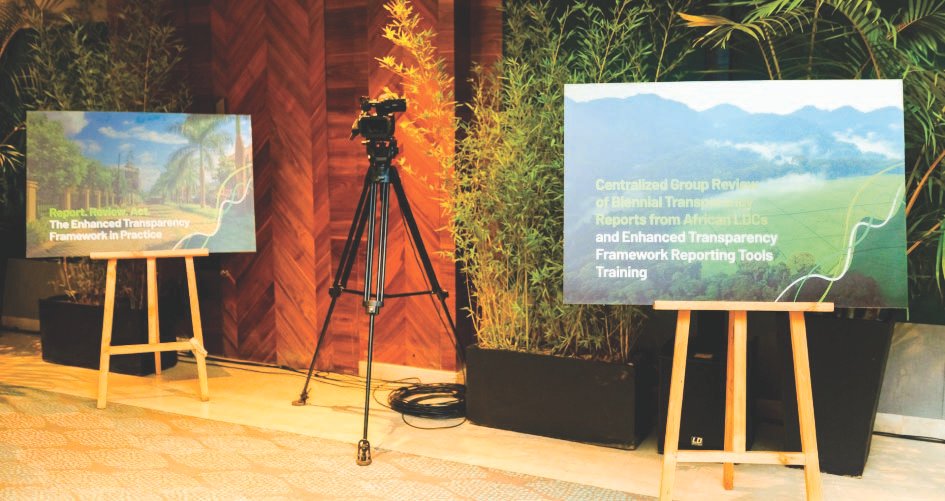
The CGE organized three regional training workshops involving 114 participants from 85 developing countries. The workshops covered BTR preparation, adaptation reporting, institutional arrangements, improvement planning and technical review processes.
Download Road2Antalya As PDF/userfiles/EP_24_09_R2A.pdf