Bangladesh needs to ensure the use of its own energy resources, including gas, coal and renewable energy, through medium- and long-term initiatives while developing the infrastructure needed for energy imports. The country must gradually move out of the energy crisis through a combination of domestic resources, imports and efficient management. At the same time, the energy crisis has not yet significantly affected buyers' confidence in the textile and readymade garment sectors. However, if the situation persists for a prolonged period, it could eventually create a crisis of confidence among international buyers.
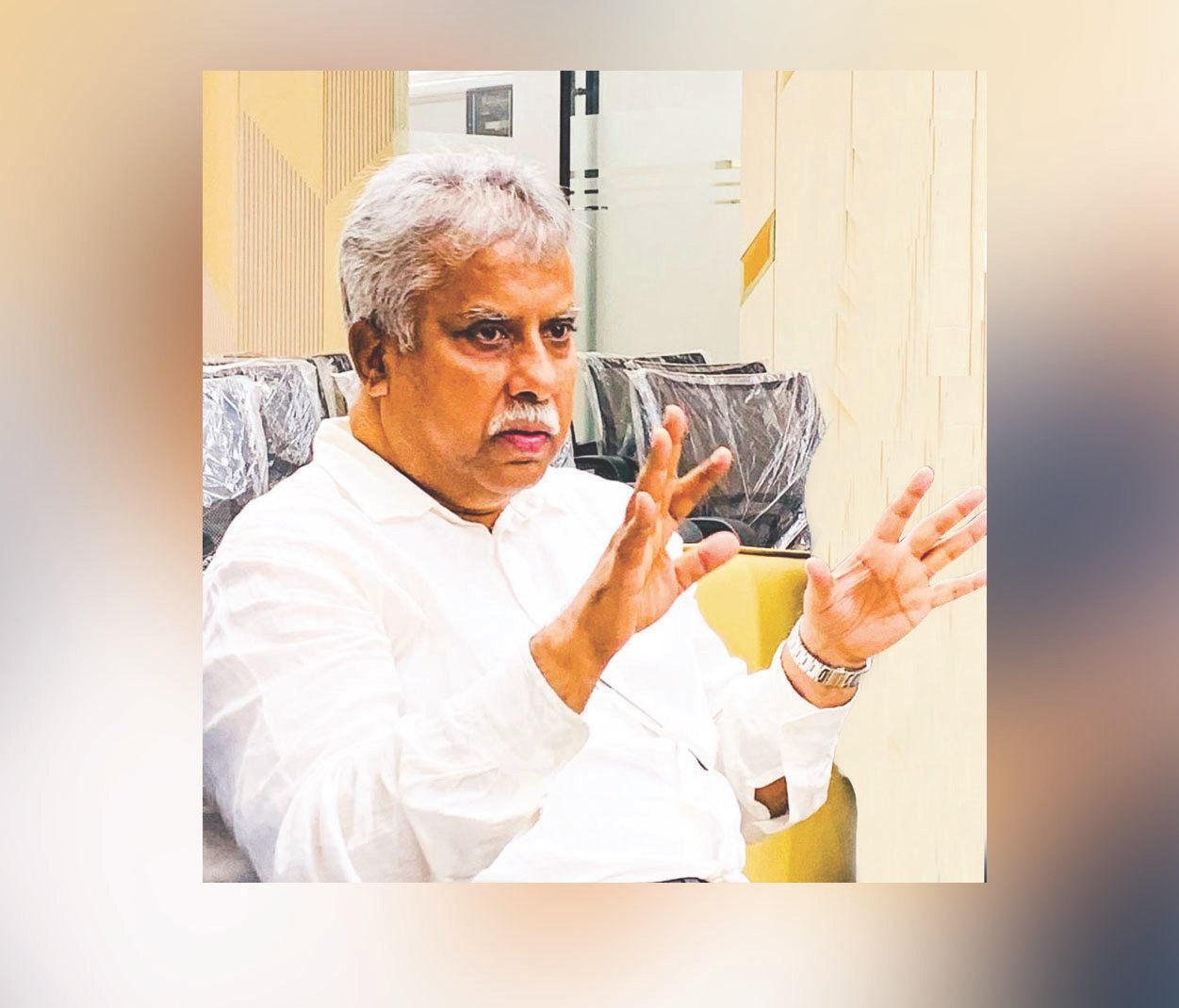
The Federation of Bangladesh Chambers of Commerce and Industry (FBCCI) Administrator and Plummy Fashions Managing Director Md Fazlul Hoque made the remarks in an interview with Energy & Power Editor Mollah Amzad Hossain.
How do you assess the current energy crisis and its impact on the industrial sector? What recommendations would you like to give the government on behalf of the FBCCI to overcome the crisis?
Energy is now one of Bangladesh’s most pressing problems. Everyone, from industries to households, is being affected. I mean both electricity and fuel. The crisis is affecting both export-oriented and domestic industries. We have informally submitted some proposals to the government to help overcome the crisis, while the process of preparing formal recommendations is underway. There is no need to reiterate our concerns about the electricity and energy situation. Once the recommendations are finalized, we may share them with the media and the relevant ministries and agencies. We will also try to meet the Prime Minister to discuss the issues.
Everyone is aware of the crisis, so there is little scope for the FBCCI to offer any historically unprecedented advice. Nevertheless, as part of our regular responsibility, we are trying to highlight the concerns and challenges facing businesses.
Since assuming office, the Prime Minister has been working with business leaders to address energy and other crises. Is this part of the reason you are preparing your recommendations?
You are right. He began consulting with business leaders even before taking office as Prime Minister. There has been a major change since the elected government assumed responsibility, as businesses had largely been sidelined during the interim government’s tenure. As part of this process, we have met ministers of different ministries and presented our proposals. We are now working to consolidate these proposals into more coordinated and comprehensive recommendations.
Recently, Policy Exchange Bangladesh and MCCI jointly published the Bangladesh Business Climate Index. It said that gas supply in different sectors is currently 42 to 80 percent below demand, while industries are facing up to six hours of load-shedding a day on average. At the event, business leaders said there is little scope for new investment amid the current energy crisis and that even sustaining existing investments is a challenge. What is your view?
I have some reservations about that particular presentation. Our primary responsibility now should be to keep existing industries operational by addressing their energy and other challenges. The government should prioritize keeping existing industries running. The reopening of closed industries and attracting new investment should be addressed later.
I do not disagree with the government’s package for bringing closed factories back into production. If closed factories resume operations, new employment can be created with relatively little additional investment. My concern is about the timing. It would not be appropriate to reopen closed industries and expose them to new risks before energy supplies have returned to a reasonably normal level.
You are a major investor in the textile sector, have led BKMEA and are now the FBCCI administrator. How do you view the current industrial crisis? In particular, what are you doing to maintain the confidence of buyers in the readymade garment sector?
I do not think a significant crisis of confidence has emerged yet. Many people are worried about the situation, but I am a positive person and do not want to become alarmed at this stage. There were major disruptions in energy and electricity supplies throughout August. Despite this, exports of the textile and apparel sector grew by 13 percent during the month. As entrepreneurs in the sector, we managed to complete our work on time and deliver products despite many limitations. Therefore, I do not think buyers will lose confidence quickly.
However, if the energy and electricity crisis continues for a prolonged period without a solution, and if we keep telling buyers that it will take a long time to resolve, their confidence could eventually be affected.
In today’s world, no information can remain hidden. Many international buyers have offices in Dhaka, so they are fully aware of what is happening.
The finance minister and other ministers have said that it could take at least two years to overcome the current gas and electricity crisis. Indeed, a crisis that has developed over a long period cannot be resolved overnight. But could such statements by ministers create renewed uncertainty among buyers in the apparel sector?
Such statements have two sides. They may be trying to be transparent about the situation, indicating that the energy and electricity crisis may not be fully resolved within two years. This could also allow industries to prepare themselves accordingly.
The energy crisis is not a new issue in Bangladesh. It has been continuing for the past six or seven years and has gradually intensified. The current situation has become more severe due to the war situation and LNG supply constraints. If we do not present the issue in an excessively negative manner, I believe it will not create a crisis of confidence among buyers.
The government has initiated work on a 10-year plan to ensure energy security, with priority given to domestic coal extraction, gas exploration, and expansion of renewable energy. What initiatives should be taken to quickly implement the plans for developing and using domestic energy resources?
I do not think the government is rushing to formulate the 10-year energy security plan. The finance minister spoke about coal extraction at an AmCham event about 15 days ago. He also said that a new roadmap is being prepared and will be presented. The plan will prioritize solar and other renewable energy sources.
Coal has been a controversial issue for a long time. Environmentalists around the world oppose coal, and the situation is becoming increasingly complicated. At some point, it may become a global legal requirement to stop coal extraction and coal-based power generation. Therefore, Bangladesh should develop and utilize its domestic coal resources before such a situation arises.
However, as the Prime Minister has said, coal extraction and utilization must be carried out only after strictly ensuring all necessary measures, including resettlement of affected people, environmental protection, and proper water management.
Environmental groups in Bangladesh, as in many other countries, are strongly opposing coal extraction. If the government takes a political decision to extract coal, how will the business community support the initiative?
We, particularly myself, want to support any rational initiative. At a time when the country is facing an energy crisis, I believe taking steps to extract and utilize domestic coal is a rational approach. I may be proven wrong, but I believe we need to move in this direction.
At the same time, we need more planned and coordinated initiatives for the exploration and extraction of domestic gas resources. Power generation at the Rooppur Nuclear Power Plant should also begin as soon as possible. However, I understand that the start of generation may be delayed further due to problems related to valves. It may take more than another year for electricity from Rooppur to reach the grid at full capacity.
We should now consider whether additional nuclear power plants can be established to strengthen energy security. Therefore, the 10-year plan must ensure energy and electricity supplies through an integrated approach. Alongside domestic resources, imports must also be incorporated into the plan.
We should remember that many countries depend entirely on imported energy, yet they do not face energy crises. Therefore, we have to develop a plan that ensures there is no recurrence of such a crisis. This requires not only adequate supply but also efficient management.
During the interim government’s tenure, the agreement for installing the third FSRU was cancelled. A long-term LNG supply agreement was also cancelled, while three negotiations for expanding LNG infrastructure were suspended. In addition, 37 Letters of Intent for renewable power projects were cancelled. There are allegations that these decisions by the interim government have put the BNP government under pressure. What is your view?
You are right. Bangladesh’s energy crisis is not new. But instead of taking initiatives to address the crisis, the interim government cancelled agreements and negotiations. In other words, it moved away from possible solutions to the crisis.
Although it cancelled agreements for FSRUs and LNG procurement and also cancelled agreements for expanding renewable energy, it did not even initiate the necessary files for alternative arrangements. As a result, the current government has had to face greater pressure over the energy crisis than it otherwise would have.
The situation has also been compounded by the war in the Middle East. Therefore, I believe the current government should bear somewhat less responsibility for the existing energy and power crisis.
The country’s energy crisis cannot be resolved very quickly. The Prime Minister is working with a target of creating 10 million new jobs by next year. You have said that new investment is difficult under the current energy and power situation. What should be the national strategy to address the crisis?
We have urged the government to take immediate steps that can produce results in addressing the crisis. For example, coal-fired power plants should be operated at full capacity by ensuring adequate coal supplies. At the same time, furnace oil-based power plants should also be made fully operational.
This may increase the cost of power generation to some extent, but now is not the time to focus on that issue. Instead, outstanding payments in the sector should be settled. If immediate payment is not possible, the government should discuss the matter with entrepreneurs and find alternative solutions.
Even those who are not directly affected by the energy crisis are becoming mentally crippled by the uncertainty. Therefore, if the crisis cannot be resolved, creating another 10 million jobs will be extremely difficult.
I believe that alongside investment in energy exploration, resource development and infrastructure expansion, Bangladesh should adopt a policy of promoting investment in low-energy-intensive sectors.
Whether the target of creating 10 million jobs can ultimately be achieved is not the only issue. What matters is whether the right initiatives are being taken to achieve that goal.
Around 1,857 new industrial investments are currently waiting for gas connections. Even after depositing the required demand-note payments, they have not received gas connections. What steps should the government take to protect these entrepreneurs?
The priority should be to ensure that these industries receive energy supplies as quickly as possible. If energy cannot be supplied, however, it is essential to protect their investments.
One option could be temporarily suspending their bank-loan instalment and interest payments, or introducing some other alternative mechanism to protect them until the energy supply situation improves.
Download Interview As PDF/userfiles/EP_24_06_Interview.pdf