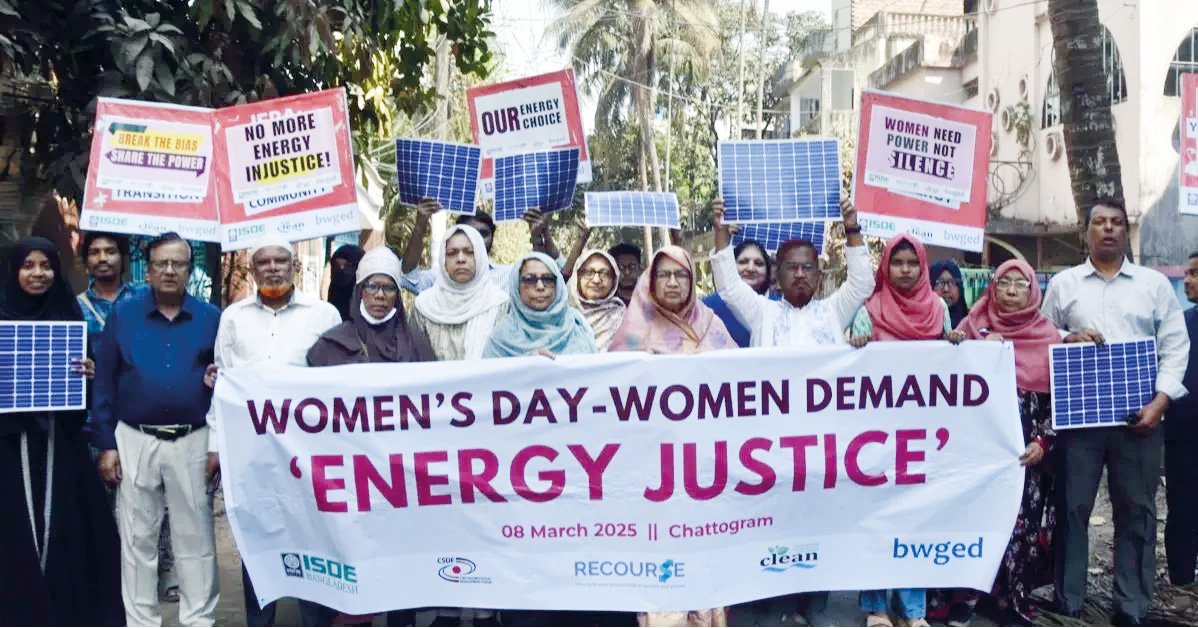
As Bangladesh gradually moves toward clean and sustainable energy, the transition is about more than reducing carbon emissions. It also offers opportunities for job creation, economic growth, and building a more inclusive society. For this transition to succeed, women must play a central role.
Women already play a key role in managing household energy—making daily decisions about cooking fuels, electricity use, and energy conservation. When energy prices rise or shortages occur, women are often the first to feel the impact. Yet in the renewable energy sector, their role largely remains limited to being users rather than designers, engineers, entrepreneurs, or decision-makers.
Globally, women represent only about 32 percent of the renewable energy workforce, according to the International Renewable Energy Agency (IRENA). Their presence in technical and leadership roles is even lower. Bangladesh, despite progress in expanding its energy sector, still struggles to ensure meaningful participation of women.
The Sustainable and Renewable Energy Development Authority (SREDA) reports that renewable energy currently contributes about 5.4 percent of Bangladesh’s total electricity generation. However, the country has made notable progress in solar energy. Around six million solar home systems have been installed, providing electricity to more than 18 million people. Not involving women more actively in such a rapidly growing sector represents a missed economic opportunity, particularly as Bangladesh seeks to balance development goals with climate commitments.
Experiences from other countries offer useful lessons. In Nepal, government-backed renewable energy programs have helped women become entrepreneurs in solar and micro-hydro power. In India, women-led self-help groups now install and maintain solar pumps for irrigation, earning income and gaining respect in their communities. In Germany, the Energiewende energy transition initiative has encouraged more young women to pursue careers in renewable energy research and engineering. These examples show that with strong policies and investment in training, meaningful change is possible.
For Bangladesh, the first step is capacity building. More young women should be encouraged to study science, technology, engineering, and mathematics (STEM). Scholarships, internships, and partnerships between universities and renewable energy companies can help connect education with employment opportunities. Technical and vocational training institutions can also introduce short courses on solar installation, maintenance, and green entrepreneurship.
At the community level, rural women should receive practical and accessible training. Such programs must consider social realities, including mobility restrictions and caregiving responsibilities, so that women can participate effectively.
Policy reforms are equally important. Gender-responsive budgeting in the energy sector, incentives for companies hiring and training women, and gender targets in national energy strategies can help institutionalize women’s participation. Collaboration among government, civil society, development partners, and the private sector will also be crucial for tracking progress and ensuring accountability.
Renewable energy is not only a technological field but also a rapidly expanding market. Women-owned businesses could play a role in installing and maintaining solar home systems, biogas plants, and mini-grids. With access to microfinance and business training, such enterprises could create jobs, strengthen local economies, and support climate action.
Bangladesh has committed to achieving the Sustainable Development Goals (SDGs), including SDG 5 (gender equality), SDG 7 (clean energy), SDG 8 (decent work), SDG 10 (reduced inequalities), and SDG 13 (climate action). These goals are interconnected, and progress in one area can accelerate progress in others.
Ultimately, Bangladesh’s renewable energy transition is not only about technology or megawatts—it is about people. By training, supporting, and empowering women across the renewable energy value chain, Bangladesh can accelerate its clean energy transition while building a more inclusive and resilient future.
The transition to renewable energy has already begun. The next step is ensuring that women are not just participants, but leaders in shaping that future.