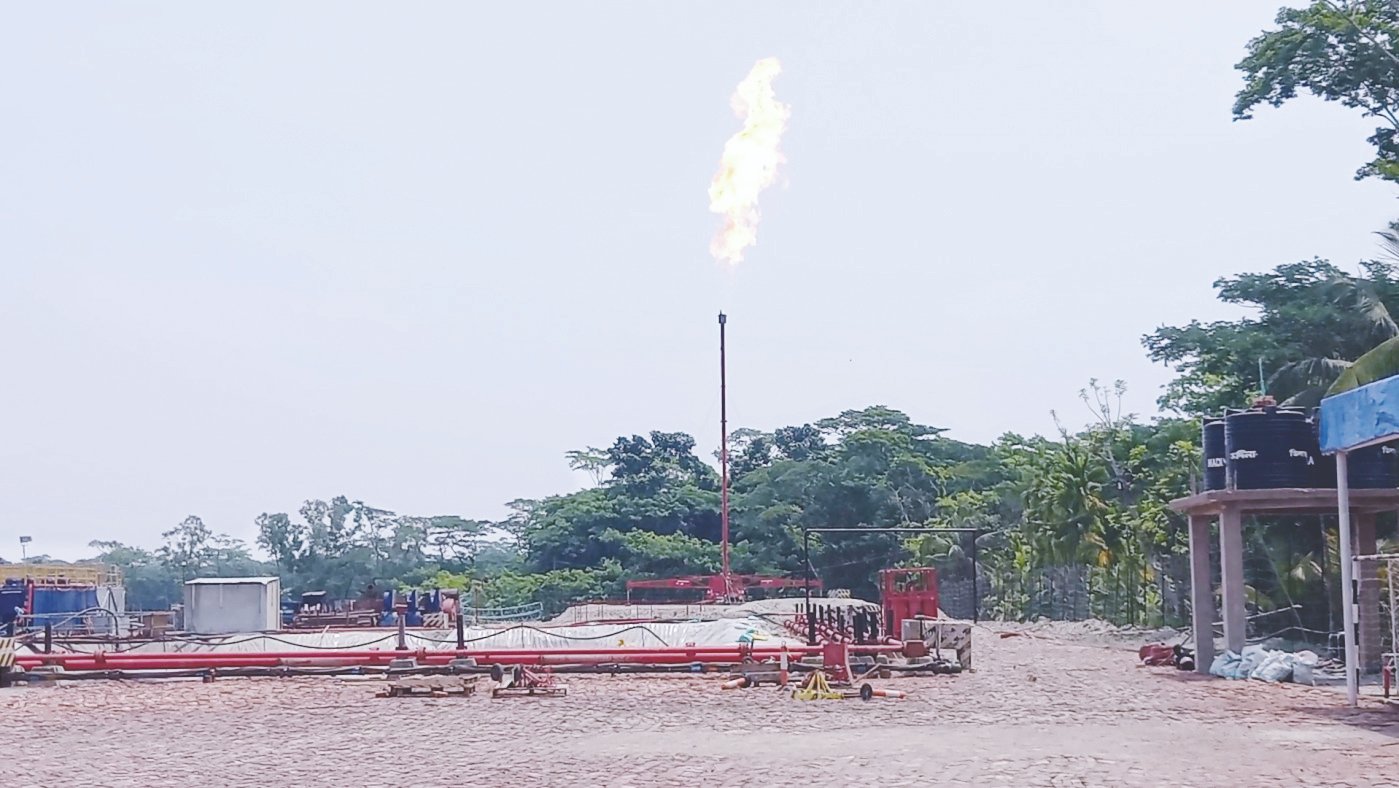
It is deeply unfortunate and frustrating that, while Bangladesh’s energy sector continues to suffer from an acute gas shortage, the gas at the Bhola gas fields remains stranded due to the absence of evacuation infrastructure. Natural gas was discovered at the Shahbazpur field in Bhola by BAPEX in the mid-1990s. From 1995 to 2026, more than three decades have passed. During this time, BAPEX drilled and developed several additional wells and discovered two more gas structures.
Over the years, short-sighted proposals surfaced, such as converting the gas to CNG or LNG, or setting up fertilizer and power plants at Bhola. GTCL surveyed several routes for constructing gas transmission pipelines, either to Khulna via Barishal or directly to Dhaka. Yet, due to a flawed and often irrational decision-making process, gas from the Bhola fields remains stranded, while the national gas supply chain continues to endure a chronic crisis. Alarmingly, Petrobangla has not even conducted a comprehensive gas reservoir study by engaging specialized international firms to properly assess the proven recoverable reserves of the Bhola gas fields.
In the late 1990s, US-based UNOCAL proposed the Western Region Integrated Project (WRIP) to develop these gas resources. The project aimed to evacuate gas from Shahbazpur, Bhola, to Digholia in Khulna through a 120-kilometer, 20-inch-diameter gas transmission pipeline, and to set up three power plants—one each at Bhola, Barishal, and Khulna. UNOCAL proposed an investment of about US$750 million at the time and committed to bearing the resource risk, project implementation risk, and market risk.
Petrobangla and BPDB negotiated the Production Sharing Contract (PSC), Gas Purchase and Sales Agreement (GPSA), Gas Sales Agreement (GSA), Gas Transportation Agreement (GTA), Power Purchase Agreement (PPA), and Implementation Agreement (IA) with UNOCAL. Power plant locations were selected, and the pipeline right-of-way was identified. However, at the final stage, a lack of consensus between the Government of Bangladesh and UNOCAL led to the abandonment of the WRIP.
Why a Pipeline Should Be the Preferred Option
Globally, the standard practice is to transport gas from the source to load centers or distribution hubs through high-pressure gas transmission pipelines, whether the fields are located in deserts, deep seas, or dense forests. There are thousands of kilometers of such pipelines worldwide, including from Russia to Western Europe, from Bolivia to Brazil, from Canada to the United States, and from Norway to Switzerland via the Netherlands and Belgium.
No country chooses to convert 2–3 Tcf of natural gas into LNG by investing billions of dollars in LNG plants, vessels, and terminals. Equally impractical is the idea of converting natural gas into CNG at such a scale. Even if a fertilizer plant or a large power plant were established at Bhola, long-term fuel security over 40–50 years would still require connection to the national gas grid.
Proven technologies already exist for constructing submarine pipelines beneath tidal rivers at safe depths. This writer personally surveyed pipeline routes across the Tetulia and Meghna rivers with U.S. experts and has also reviewed the design of Gazprom's Nord Stream 2 pipeline at its Moscow office. From a technical standpoint, constructing a gas transmission pipeline from Bhola to Khulna or from Bhola to Dhaka is entirely feasible.
Connecting Bhola’s gas resources to the national grid at Khulna would be the most logical first step, as anchor loads already exist there to justify the investment. While such a pipeline would require major international pipeline construction companies on an EPC basis, the long-term benefits would far outweigh the costs. Even if the project required an investment of US$1 billion and three years to complete, gas would then become available to the greater Barishal and Khulna regions. In the future, an additional pipeline could be constructed from Barishal to Dhaka.
The presence of a major gas pipeline would also encourage international oil companies to invest in exploration across southern Bangladesh, both onshore and offshore. Industrialization in the southern region would receive a significant boost, and many struggling industries in Khulna would gain a new lease on life.
LNG is Not a Practical Solution
An economically viable LNG plant would require an investment of approximately US$3–4 billion and proven gas reserves of at least 3–4 Tcf. Proposals for smaller LNG plants are simply unrealistic. LNG would also need to be transported by specialized carriers to land-based terminals near the gas grid and then regasified.
Bangladesh’s own experience underscores these challenges. Since 2008, over 18 years, the country has managed to establish only two floating storage and regasification units (FSRUs) at Maheshkhali. The cost of LNG utilization remains extremely high, placing a heavy burden on the economy.
Regional Equity and Energy Security
The gas fields at Bhola represent the only realistic hope for supplying gas to the greater Barishal and Khulna regions. People in these regions already suffer from significant energy disparities. It would be deeply unjust to further deprive them by leaving gas stranded at Bhola or by diverting it elsewhere through costly LNG conversion.
Conclusion
The immediate priority should be to engage accredited reservoir assessment companies to professionally evaluate the gas reserves at Bhola. At the same time, the government should initiate a transparent tender process to engage a reputable international contractor to construct a gas transmission pipeline connecting Bhola to the national gas grid.
If such an initiative is taken in 2026, the project could realistically be completed by 2030. Bangladesh is expected to face a severe gas shortage around that time, as existing proven reserves may be largely exhausted. In hindsight, the failure to approve UNOCAL’s WRIP in 2000, reportedly due to misguided advice, stands out as a major missed opportunity. The country cannot afford to repeat such mistakes.
Saleque Sufi, Energy & Climate Expert
Download Article As PDF/userfiles/EP_23_16_Article 2.pdf