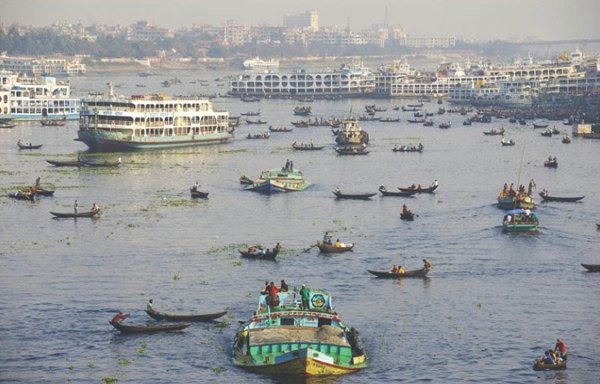
A recent study has revealed alarming levels of heavy metal contamination in the Buriganga River, posing significant threats to both the environment and public health in and around Dhaka city.
The study, titled 'Heavy Metal Contamination in the Buriganga River, Bangladesh: A Review of Ecological Risk and Pollution,' was conducted by Beauty Akter and Professor Dr Syed Hafizur Rahman from the Environmental Sciences Department at Jahangirnagar University (JU).
The study was published in the June 2025 edition of the Jahangirnagar University Environmental Bulletin.
Drawing on a wide range of peer-reviewed research, the study presents a comprehensive analysis of the concentrations of heavy metals in the river's water and sediment and assesses the associated ecological risks.
According to the findings, dangerously high levels of toxic metals including lead (Pb), cadmium (Cd), chromium (Cr), mercury (Hg), arsenic (As), zinc (Zn), nickel (Ni), copper (Cu), and iron (Fe) have been detected, particularly in areas near unregulated industrial discharge points. Many of these concentrations exceed both national and international safety thresholds.
The study identifies tannery waste, textile and dyeing factories and chemical industries as the primary contributors to this pollution, particularly in the Hazaribagh and Kamrangirchar areas. Additional sources include untreated domestic sewage, roadside runoff, agricultural discharge, and open solid waste dumping.