With a steady rise in export earnings and remittances, Bangladesh has begun to recover from a severe shortage of foreign exchange, and its external reserves are gradually building up. These developments have enabled the government to loosen its grip on the exchange market, apparently in response to meeting the conditions of an IMF loan. Meanwhile, the government has cleared almost all the outstanding bills of gas and electricity suppliers to ensure a smooth energy supply.
However, industrial entrepreneurs are, on the other hand, facing utter frustration due to the unmanageable challenges of keeping their operations running amid a chronic gas supply crisis. Industries also suffer from an unreliable supply of quality electricity from the grid. Amid poor supplies of gas and electricity, many SMEs and medium-sized industries have shut down. Even many large and export-oriented industries have become unviable. In response to intense lobbying by business leaders, the Energy Adviser promised to supply an additional 250 MMCFD of gas to industries. However, there has been no improvement in the gas supply so far, and under the prevailing conditions, it is highly unlikely that gas supply to industries will increase soon. This is deepening the frustration of the business community. Without contingency measures to remedy the situation, the country’s export earnings could be adversely impacted.
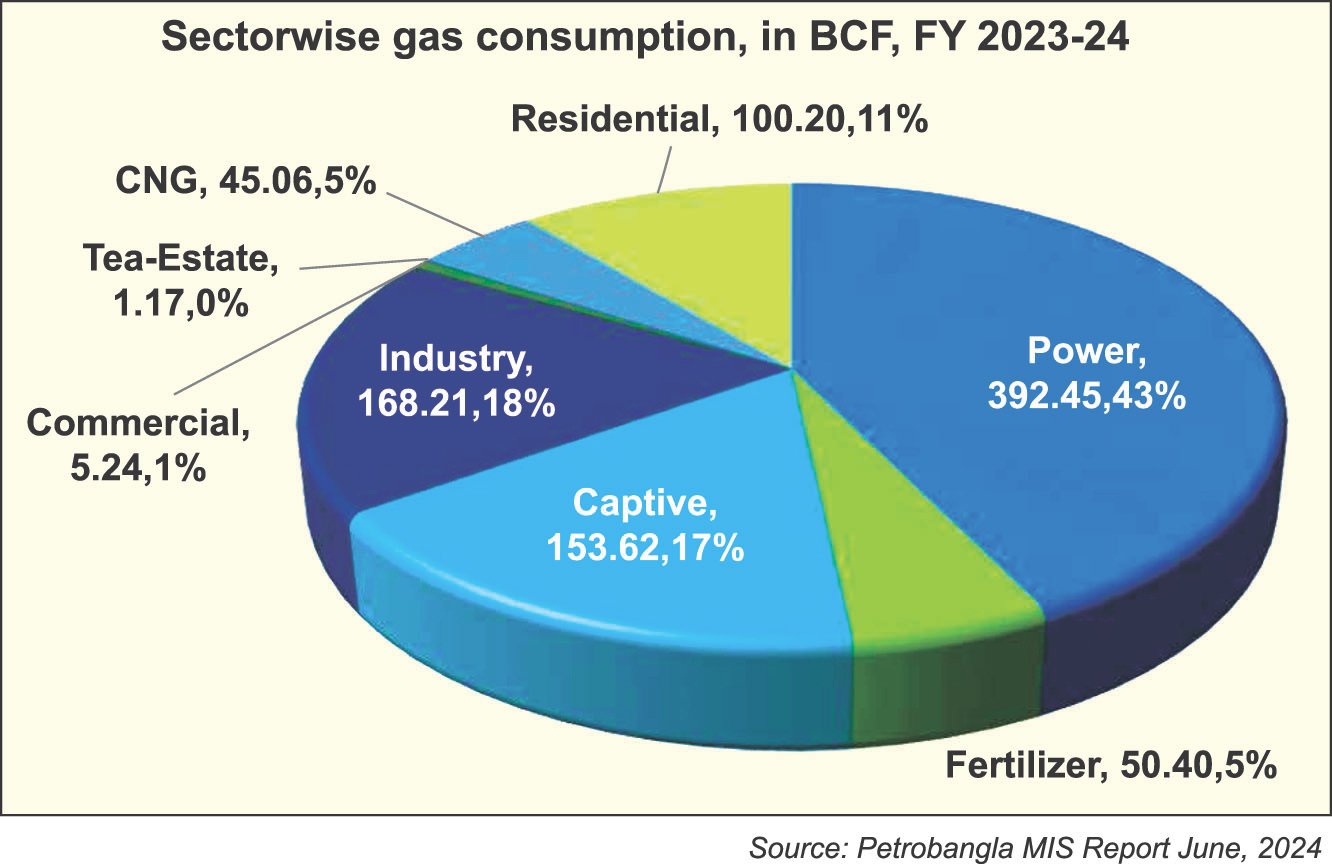
Given the current pattern of gas supply versus demand across various downstream users, it will be extremely challenging to increase supply to industries without cutting or downsizing supply to other sectors, such as power, fertilizer, domestic use, and others. Constraints in gas transmission and distribution networks further complicate the situation.
An industrial entrepreneur, speaking with EP, acknowledged the Energy Adviser’s sincerity but noted that the supply situation has not improved. Petrobangla has taken some initiatives, but results may not be immediate. Petrobangla expects an additional 100 MMCFD of LNG to be available by May 22. However, it remains to be seen how this additional LNG will reach industrial load centers across the gas supply chain.
A Historical Perspective
Natural gas usage in this region began in the 1960s. Initially limited to residential and commercial uses, its applications expanded during 1960–1980 to include fertilizer production, industries, and broader commercial and residential purposes. From 1980–1990, gas use began to grow in power generation as well. By 1990–2020, compressed natural gas (CNG), brick kilns, and captive power generation were added to the list of sectors using gas.
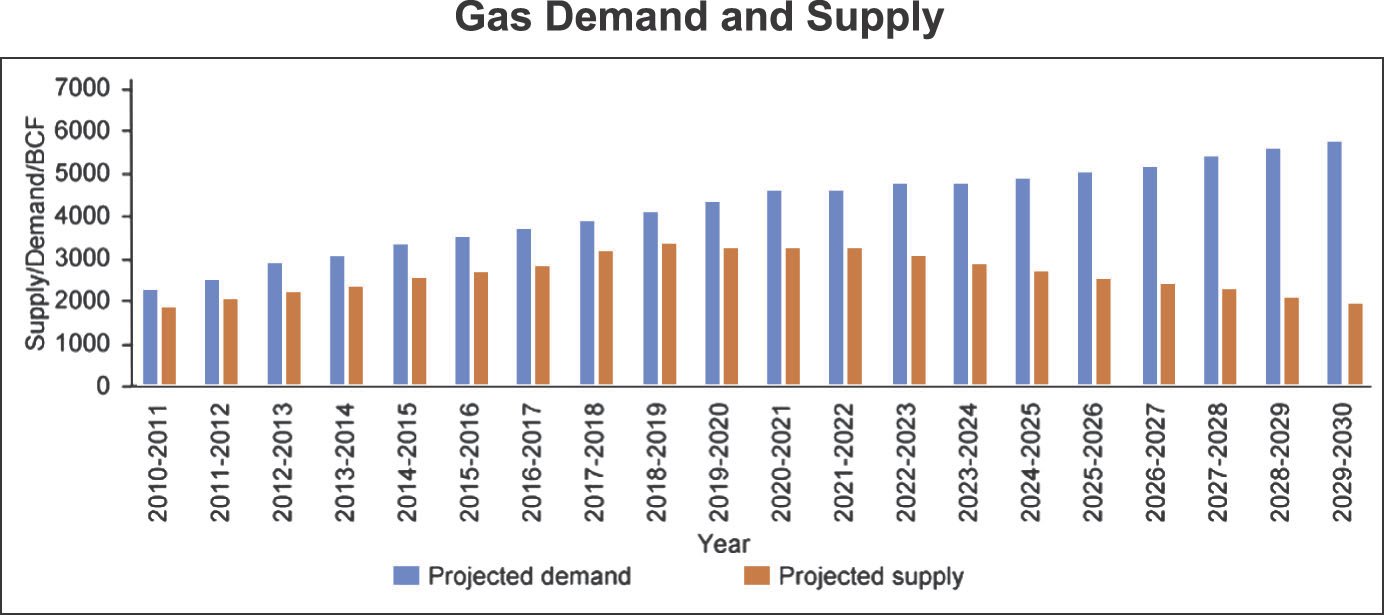
Bangladesh has been facing a growing gas shortage since 2008. In response, gas connections for residential and commercial sectors were halted. Eventually, supply to industries was also restricted. Nonetheless, supply to industrial and captive power sectors continued under special consideration. However, no restrictions were placed on grid power generation using gas, even though multiple power plants were built up to 2024 without ensuring an adequate gas supply.
The power sector’s current gas demand is around 2,200 MMCFD, but only 1,100 MMCFD can be supplied. As a result, major plants such as the 718 MW Jera Meghnaghat and the 800 MW Rupsha Power Plant could not begin commercial operations yet.
Failure to Explore Domestic Gas
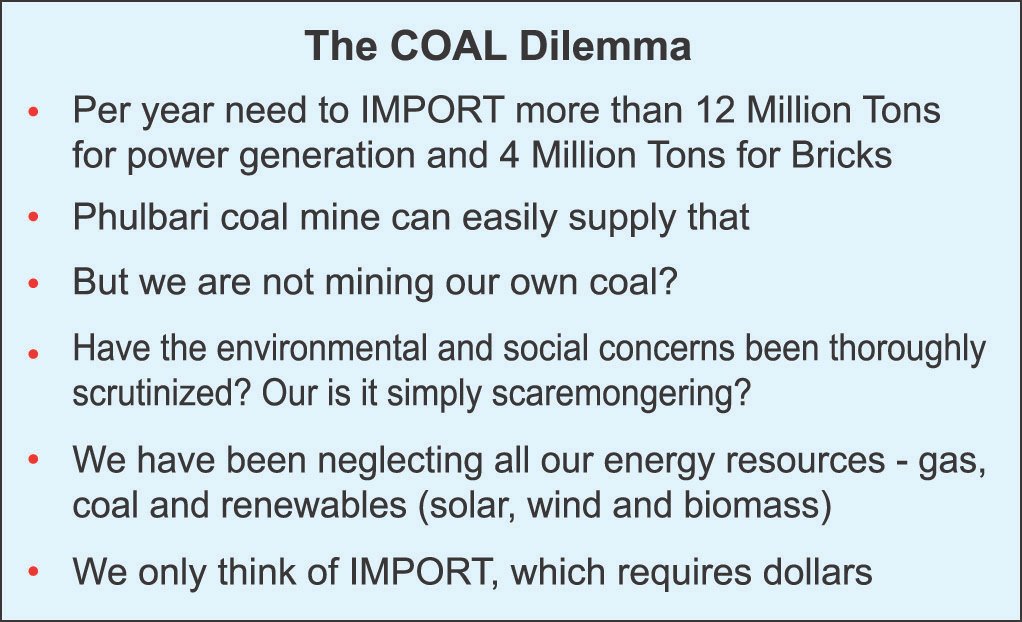
Since 2001, there has been no significant investment in domestic gas exploration. Although the caretaker government initiated plans in 2008 to explore oil and gas in the Bay of Bengal, the subsequent elected government failed to act effectively. Instead, from 2009, production from existing fields like Bibiyana was ramped up. Between 2009 and 2017, domestic production increased by 1,300 MMCFD. The peak production was on May 6, 2015, at 2,786 MMCFD. Since then, production has gradually declined and now hovers between 1,850 to 1,900 MMCFD.
Bangladesh currently has an estimated 9 trillion cubic feet of recoverable gas. If new reserves are not discovered, this could be exhausted by 2031.
LNG Imports and Delays
While domestic exploration stagnated, the government began working on LNG import plans in 2012. The idea was to quickly install several floating storage regasification units (FSRUs) and, in the medium term, build a land-based LNG terminal. Under a special power and energy act, the first FSRU began operation in 2018, followed by a second in 2019. Several more were proposed but eventually suspended, citing the plan to build a land-based terminal. That terminal has still not materialized.
Recently, the interim government adopted the land terminal as a Public-Private Partnership (PPP) project. Meanwhile, a third FSRU was contracted under special provisions to be built on the Maheshkhali coast, expected to operate by late 2026. However, this contract was canceled by the current government. Separate negotiations with a U.S. company for another FSRU in Kuakata and RLNG imports from India were also canceled. These projects were expected to start gas supply by early 2027.
Post-COVID Crisis and Price Hikes
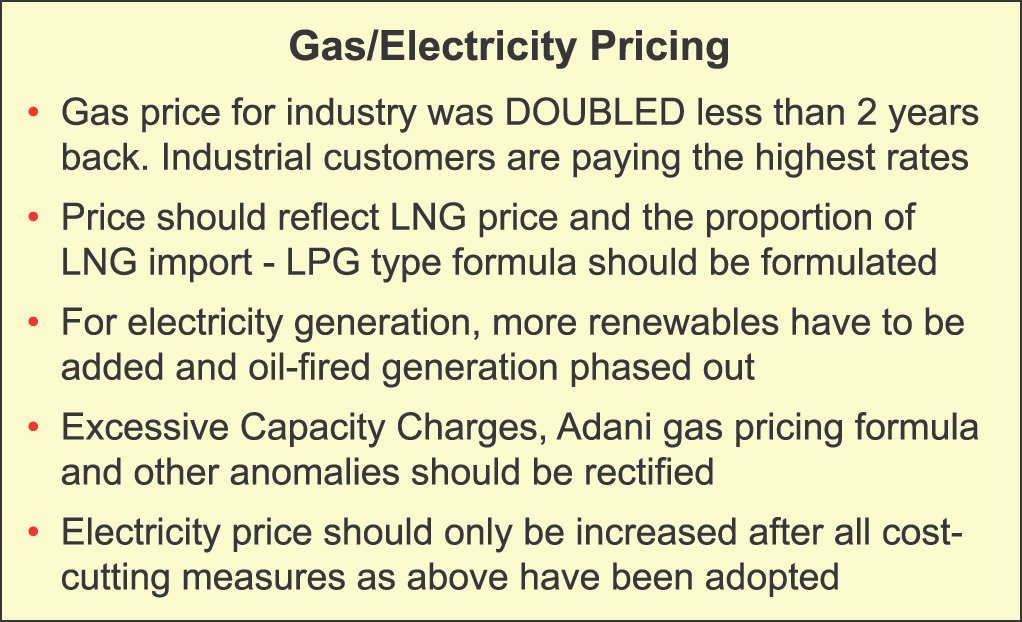
Due to delays in implementing gas exploration and LNG import plans, the gas crisis intensified after COVID-19. The ousted Awami League government repeatedly raised gas prices, promising increased supply through LNG imports. However, the supply did not improve; rather, it worsened.
Gas supply to the power plants decreased, increasing reliance on furnace oil, which raised generation costs. But the industrial sector suffered the most. Since late 2022, gas shortages have disrupted industrial production by 30–50% in various sectors. The situation has only worsened, with many factories shutting down and others operating far below capacity due to inadequate gas supply.
According to Petrobangla, in FY 2023–24, total gas supplied was 1,007.04 billion cubic feet (BCF), of which 803.63 BCF was domestic and 203.41 BCF was imported LNG.
Current national gas demand is 4,000 MMCFD, while supply is around 2,700–2,750 MMCFD. Petrobangla expects to raise this to 2,800–2,850 MMCFD by May-end. If gas supply to the power grid is reduced by 150 MMCFD as promised, a temporary improvement for industry could be possible. However, as residential, CNG, commercial, and industrial sectors draw gas from the same network, it is not clear how much of the increased supply will reach industries.
Current Status of Gas Supply to Industry
To address the crisis, the government announced on May 7 an additional 250 MMCFD supply to industries. A week later, there has been little improvement. Business leaders report that the supply increased by only about 40–50 MMCFD.
Reports indicate that due to shortages, most garment factories in Dhaka, Gazipur, Savar, and Ashulia are shut down for large parts of the day, causing production losses. Entrepreneurs cannot deliver products to foreign buyers in time, which is affecting export earnings. There is a concern about paying workers’ wages and bonuses ahead of the upcoming Eid.
Entrepreneurs warn that a $70 billion investment in the textile and garment sector is at stake. In a recent letter to Energy Adviser Muhammad Fouzul Kabir Khan, the Bangladesh Textile Mills Association (BTMA) said the crisis could lead to complete shutdowns if the gas supply does not improve. The letter also warned that delays in paying workers ahead of Eid-ul-Azha could trigger unrest.
On May 7, the Energy Adviser held a meeting with business leaders. Following the meeting, he announced that an additional 250 MMCFD of gas would be allocated to the industrial sector. Of this, 150 MMCFD would be redirected from the 1,200 MMCFD daily supply previously allocated for electricity during Ramadan. Additionally, four extra LNG cargoes would be imported between May and August, adding another 100 MMCFD of gas.
Commenting on this development, Anwar-ul Alam Chowdhury, President of the Bangladesh Chamber of Industries, said, “We don’t doubt the adviser’s sincerity, but we have not seen any tangible benefits in the industrial sector yet. If this situation continues, it would not be possible to continue production.”
BKMEA President Mohammad Hatem noted a slight improvement in gas supply over the past few days, but added, “It’s not nearly enough to say the crisis has eased.”
Entrepreneurs report that they are still facing gas shortages like before, with little improvement, especially in industrial zones like Savar and Ashulia.
A manager from Titas Gas, which supplies gas to Dhaka, Gazipur, Narayanganj, Mymensingh, and Narsingdi, said they are receiving about the same amount of gas now as they did a week ago. However, a slight increase—about 40-50 MMCFD—has been redirected to the Gazipur area from power plants.
Speaking on the matter, Shahnewaz Parvez, Managing Director of Titas Gas Transmission and Distribution Company, acknowledged, “There’s been some minor improvement, but the deficit is still large. From May 22, an additional 100 MMCFD of LNG will be available, which is expected to improve the situation to some extent.
A review of the Petrobangla gas production and supply report shows that from May 15-16, 2025, gas supply decreased by 13.5 MMCFD compared to May 14-15, standing at 2,698.3 MMCFD. Of this, 1,879.2 MMCFD came from domestic sources, and 813.2 MMCFD from LNG. During this period, gas supply for electricity and other sectors, including industry, declined by 13.2 MMCFD. With a demand of 4,000 MMCFD, the deficit stood at 1,301.7 MMCFD.
The total supply was 2,725.4 MMCFD on May 9-10 but has since been declining. On May 13-14, total supply dropped to 2,698.7 MMCFD.
Petrobangla sources say that gas allocated for power during Ramadan was reduced as early as April. Since then, the overall gas supply has dropped by about 140 MMCFD, making it difficult to increase supply to industries. The additional LNG cargoes are expected to arrive at the end of this month, which may improve the situation.
Savar, Ashulia, and Gazipur
One of the largest garment manufacturers at Hemayetpur, Savar, is AKH Group, employing around 40,000 workers. Factory owner Abul Kashem said that gas shortages have worsened this month (May) compared to April.
Mohammad Mainuddin, Deputy General Manager of New Age Garments in Narsinghpur, Ashulia, said, “We need at least 10 PSI of gas pressure to run our garment factory, but we’re getting just 1-2 PSI. Using diesel as an alternative fuel doubled our production costs.”
There are over 1,200 factories in Savar and Ashulia, many of which have been incurring financial losses due to the gas crisis for several months. Moslem Uddin, Manager of Al-Muslim Garments in Ulail, Savar, said that factories need 15 PSI gas pressure to run generators and boilers, but since January 1, the gas pressure has dropped to 2-3 PSI, disrupting production. At his factory, low gas pressure in dryers has made it impossible to wash finished garments, and workers are sitting idle.
Abu Saleh Muhammad Khademuddin, Manager of Titas’s Ashulia Zone, said gas pressure in Savar and Ashulia is low due to insufficient supply in the pipelines.
A visit to Tusuka Jeans Ltd. in Konabari, Gazipur, revealed a similar situation. Due to the gas crisis, workers were sitting idle. Tarek Hasan, Director of Tusuka Group, said gas pressure was below 1 PSI, while 15 PSI is needed for operations. The factory is running on diesel, costing an extra Tk 3.0 million per day.
Nearby, at Fashion Wear in Mouchak, the situation was even worse. There was virtually no gas supply, and the factory was running partially under its own arrangements, with 75% of workers sitting idle. Sohel Rana, Director of Sadma Group, said, “We’re spending over Tk 400,000 daily on diesel, and we still cannot fully operate.”
Mahr Ali, Deputy Chief Inspector at the Department of Inspection for Factories and Establishments in Gazipur, said there are over 2,000 industrial facilities in the district and city, and most complain about gas shortages during inspections.
According to Ridwanuzzaman, Manager of Titas’s Gazipur Zone, the gas demand in the area is about 590 MMCFD, but only 300 MMCFD is being supplied.
Conclusion
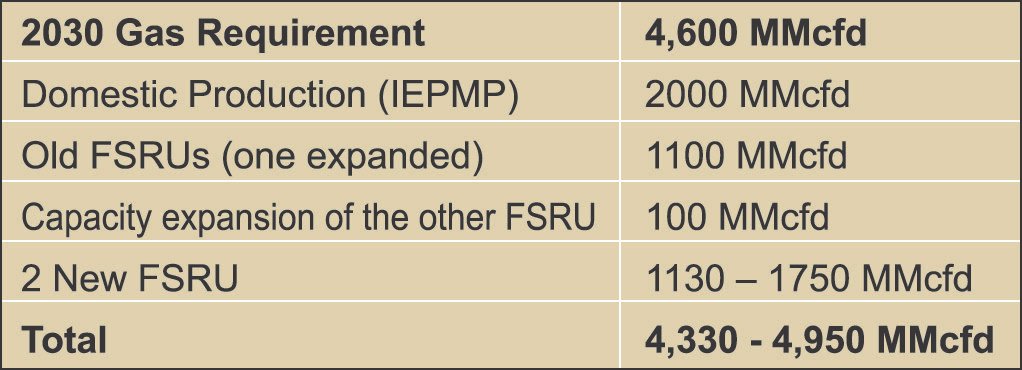
The industrial gas crisis, which began in 2022, is worsening. The previous government claimed that Petrobangla’s 50-well drilling program would raise domestic production to 2,000 MMCFD by 2025, with another 700 MMCFD added through LNG imports by late 2026 or early 2027.
However, LNG projects under special provisions have been canceled. New LNG capacity beyond the current 1,100 MMCFD is unlikely before 2029. Even if the drilling program is completed by June 2026, it may only add around 200 MMCFD, keeping domestic output capped near 1,850 MMCFD.
One short-term alternative is to increase gas supply to Gazipur and Savar through the Bibiyana-Dhanua line, but that would require cuts elsewhere, such as the Bibiyana-North South Pipeline or Bibiyana power plant.
In short, even if temporary improvements occur, sustained supply above 2,800–2,900 MMCFD is needed. This would require rapid LNG infrastructure expansion—unlikely under a caretaker government. Another option is connecting Bhola’s gas to the national grid, but that would take at least four years.
There is no quick fix to this deepening industrial gas crisis. On the contrary, the situation may deteriorate further in the coming years.
Download Cover As PDF/userfiles/EP_22_23_Cover.pdf