Mollah Amzad Hossain from Antalya, Türkiye
Negotiations at COP31 have entered a decisive phase, but deep divisions over climate finance, adaptation, fossil fuel transition and just transition are slowing progress towards a final agreement, with only two days remaining before the scheduled close of the UN climate summit.
The release of an 18-page draft cover decision on November 16 was expected to help narrow differences among nearly 200 participating countries. Instead, the document exposed the scale of disagreements over how far governments are prepared to go in translating previous climate commitments into concrete action.
Australia’s Climate and Energy Minister Chris Bowen, who is leading the formal negotiations under the joint Türkiye-Australia presidency arrangement, described the draft as an attempt to identify areas of disagreement and bring countries closer to compromise. He acknowledged that some provisions had already faced rejection from participating countries.
The draft is not an agreed negotiating outcome. It contains competing proposals and unresolved language on several politically sensitive issues.
Climate finance remains the biggest obstacle
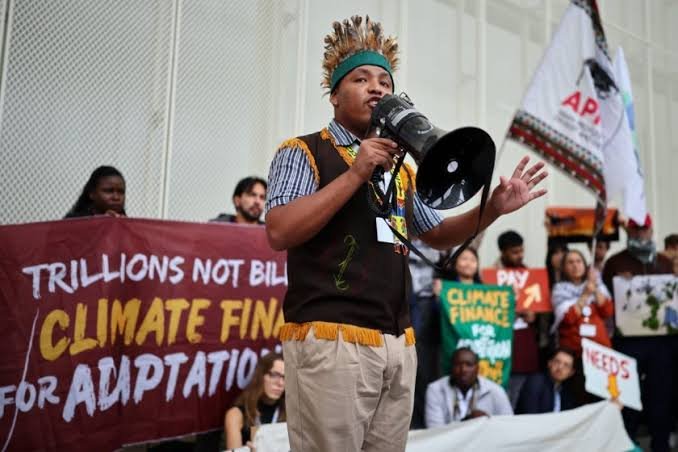
Climate finance has emerged as the most difficult negotiating issue, with developing countries demanding predictable, accessible and largely grant-based public funding from developed nations.
A major dispute concerns implementation of the commitment made at COP30 in Belém to triple adaptation finance by 2035. Developing countries want a clear delivery pathway, including a defined baseline, timelines and accountability arrangements. Some have pressed for annual adaptation finance to reach US$120 billion by 2035.
However, developed countries have resisted proposals that would impose additional specific obligations without broader consideration of public and private finance sources. They favour mobilising investment from private institutions and emerging economies alongside government contributions.
The disagreement has also affected the Climate Finance Work Program. Developing countries want developed nations’ obligations under Article 9.1 of the Paris Agreement to remain central to discussions. Several developed countries have questioned the programme’s scope and modalities, leaving negotiations largely stalled.
A draft climate finance text released by the presidency on November 17 was placed almost entirely in square brackets, indicating that countries had yet to agree on its provisions. The absence of a clear compromise has raised concerns that the final decision could contain broad political language without firm implementation arrangements.
Fossil fuel transition faces renewed resistance
The future of fossil fuels is another major dividing line. The draft cover decision includes language calling for accelerated action to phase out fossil fuels, including an immediate transition away from fossil fuels in energy systems. It also contains less ambitious wording reflecting the commitment made at COP28 in Dubai.
Oil- and gas-producing countries and several developing nations remain reluctant to accept language that could be interpreted as imposing uniform restrictions on national energy choices. They argue that energy security, development needs and different national circumstances must be considered.
Countries supporting stronger climate action want COP31 to build on the Dubai commitment and advance the fossil fuel transition roadmaps initiated under Brazil’s COP30 presidency.
The draft also includes Türkiye’s proposal to increase electricity’s share of global final energy consumption to 35 percent by 2035. However, countries remain divided over the target and the pace of electrification. Supporters argue that electrification, renewable energy, modern grids and storage systems are essential to reducing emissions, while others stress the need for adequate investment and infrastructure.
Just transition mechanism under pressure
The proposed Belém-Antalya Mechanism (BAM) is another contentious issue. Developing countries and climate-vulnerable groups want a permanent institutional framework with adequate resources to support workers, communities and economies affected by the transition to low-carbon development.
They argue that a mechanism limited to coordinating existing institutions would not provide the financial and technical support required to implement a just transition.
Disagreements also persist over the future of the Just Transition Work Programme, with some countries supporting its continuation beyond 2026 and others warning against duplication of existing processes.
Adaptation, loss and damage remain unresolved
Negotiators are also struggling to agree on practical measures to strengthen adaptation and address climate-related loss and damage. Developing countries are seeking greater financial support for resilient infrastructure, early warning systems, coastal protection and climate-resilient livelihoods.
The debate over adaptation indicators and implementation arrangements under the Global Goal on Adaptation remains linked to the wider finance dispute. Vulnerable countries insist that measuring progress must be accompanied by adequate resources to achieve it.
A proposal by Nepal, Bhutan and Kyrgyzstan to establish a separate work programme on mountain regions and climate change has, however, appeared in the draft cover decision. It would address glacier-related risks, scientific research and adaptation needs in mountain communities. The proposal is still part of the draft and has not been adopted.
Final push for compromise
The negotiating process is now moving towards intensive ministerial consultations, as the presidency seeks to bridge differences before Friday’s scheduled conclusion. Informal discussions are expected to play a crucial role in resolving the most difficult political questions.
For Bangladesh and other climate-vulnerable countries, the central priorities remain stronger adaptation finance, grants rather than additional loans, debt-relief measures, technology access and an effective just transition mechanism. Prime Minister Tarique Rahman has also urged world leaders to allocate at least half of international climate finance to adaptation and ensure that climate-vulnerable countries receive predictable support.
With the final text still far from agreement, the success of COP31 will depend on whether political commitments can be converted into measurable actions, financial resources and credible implementation mechanisms. The coming days will determine whether Antalya delivers an implementation-focused outcome or leaves major climate challenges unresolved.