Dhaka, October 15, 2026: Bangladesh has significant potential to generate solar power at a cost as low as Tk 4.25 per unit, with opportunities to install around 132 MW of capacity on unused rooftops of 31 public universities and 150 colleges, as well as at Rajshahi City Corporation and Shaulkupa.
A study conducted by a team from Daffodil International University estimates that the identified sites could generate around 192.75 million units of electricity annually and reduce carbon emissions by approximately 119,502 tonnes a year.
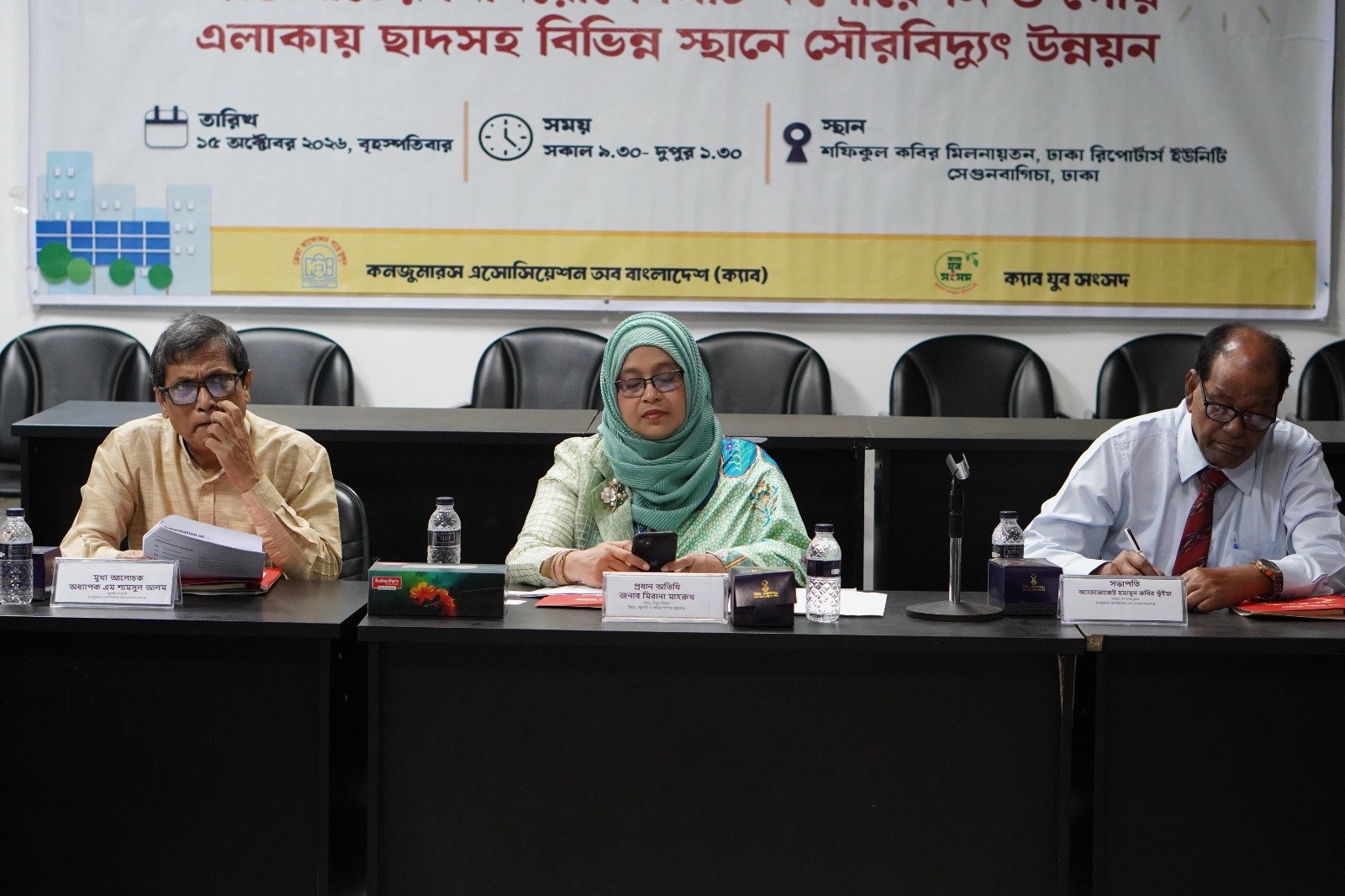
The findings were presented on Thursday at a citizen dialogue organised by the Consumers Association of Bangladesh (CAB) at the Dhaka Reporters Unity. The event focused on promoting private investment in rooftop and other forms of solar power in city corporation and municipal areas.
According to the study, the unused rooftops of 31 public universities could accommodate 52.50 MW of solar capacity. The proposed installations would require an investment of Tk 2.88 billion and could generate electricity valued at Tk 11 billion over the project period.
The rooftops of 150 colleges offer a further opportunity to install 51.12 MW of solar capacity, generating more than 71.4 million units of electricity annually. Including maintenance costs over 20 years, the estimated generation cost would be Tk 4.15 per unit.
Rajshahi City Corporation has the potential to install 24.6 MW of solar capacity, requiring an investment of Tk 1.355 billion. The study estimates the value of electricity generated over 20 years at Tk 5.16 billion.
The research team identified potential sites through field visits and assessed the investment requirements, generation costs and expected output. It argues that rooftop solar can provide electricity at a lower cost than coal- and oil-fired power plants, while offering greater price stability because it does not depend on imported fuels. Costs could decline further as technology and market conditions improve.
Presenting the findings, lecturer Sihab Uddin said the cost estimates had been prepared using the highest generation costs among solar power plants currently in operation.
Chief guest Mirana Mahrukh, Secretary of the Power Division, welcomed the research, describing it as timely amid the challenges facing the country’s energy sector. She said the government was committed to expanding solar power and had taken initiatives including reducing import duties. Further proposals would also be considered, she added.
On the government’s decision to set the price of merchant solar electricity at Tk 7.50 per unit, Mahrukh said the rate was reasonable under current circumstances. However, she expressed hope that prices would decline as more incentives were introduced and duties reduced.
Dr Shamsul Alam, energy adviser to CAB, put the generation cost of rooftop solar at around Tk 4.50 per unit. He said solar power offered a strategic advantage because sunlight is free, insulating generation costs from geopolitical conflicts and fluctuations in international fuel prices. Expanding solar power alongside energy conservation could help reduce overall electricity costs, he added.
Alam argued that Bangladesh did not need to priorities electricity storage at this stage, suggesting that consumers could invest in storage where necessary. He also questioned the government’s plan to develop solar projects through a capital-expenditure model under the Local Government Division, raising concerns about the capacity to maintain installations over the long term.
Masudur Rahim, chief executive officer of Omera LPG, identified maintenance as a major challenge for rooftop solar projects, particularly when panels are installed on buildings owned by third parties. He also raised concerns about the security of equipment, including transformers and cables, and the risk of delayed or unpaid electricity bills undermining investors’ returns.
Other entrepreneurs echoed these concerns, stressing that clear arrangements to protect investments and ensure payment for electricity supplied would be essential to attracting private capital and accelerating rooftop solar development.
CAB General Secretary Advocate Humayun Kabir Bhuiyan chaired the dialogue, while Shuvo Kibria, CAB’s research coordinator, moderated the event.