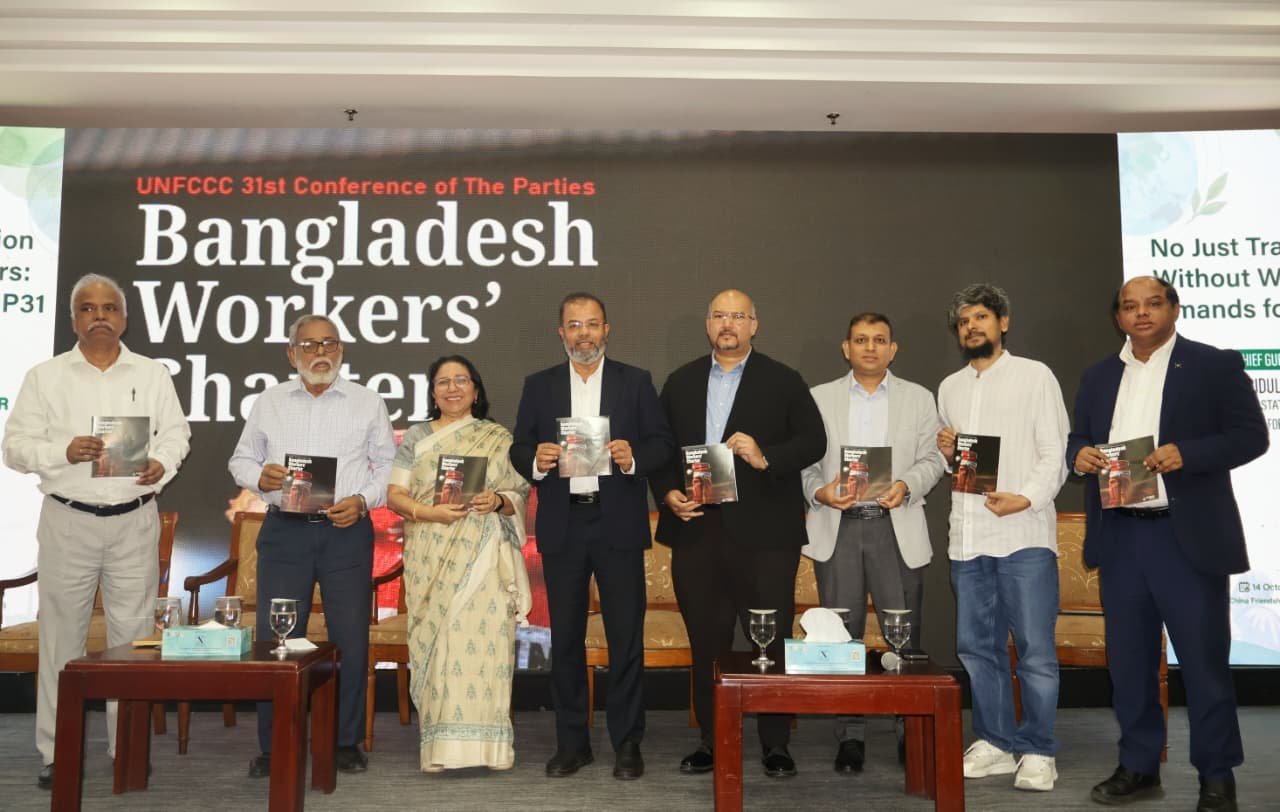
Dhaka, October 14, 2026 - The National Alliance for Just Transition Bangladesh (NAJTB), in collaboration with Manusher Jonno Foundation (MJF) and Bangladesh Labour Foundation (BLF), on Wednesday presented the Bangladesh Workers’ Charter for COP31, calling for worker representation in climate negotiations, fair compensation for climate-related losses and protection of livelihoods.
The Charter outlines 23 demands across eight negotiation tracks, focusing on extreme heat, climate-induced displacement, industrial decarbonisation and the vulnerabilities of informal workers. Speakers urged the government to include workers, particularly women, in Bangladesh’s official COP31 delegation and ensure that the transition to a green economy safeguards labour rights.
.jpeg)
Syed Sultan Uddin Ahmmed, Executive Coordinator of NAJTB and Executive Director of the Bangladesh Institute of Labour Studies (BILS), said workers contribute significantly to the economy but bear the consequences of a climate crisis they did little to cause. He called for compensation based on actual losses and meaningful worker participation in decisions affecting their livelihoods.
MJF Executive Director Shaheen Anam highlighted the risks facing informal workers, who account for around 84% of Bangladesh’s workforce. She called for income protection, job security, decent work and targeted support for women. Mir Mohammad Ali of Sher-e-Bangla Agricultural University cited World Bank estimates that heat-related illness cost Bangladesh approximately 250 million workdays in 2024.
State Minister for Environment, Forest and Climate Change Shaikh Faridul Islam described the Charter as timely and comprehensive, assuring participants that the ministry would seek to incorporate relevant demands into national and local climate policies and Bangladesh’s COP31 position paper.
The Charter was developed through eight consultations involving 43 organisations. Its demands include stronger social protection, workplace safety, funded reskilling programmes, grant-based climate finance and evidence-based compensation for climate-related losses.
Participants also stressed the need to protect workers from occupational heat exposure and technological displacement while ensuring that women and informal workers have a voice in climate policymaking.
As Bangladesh prepares for COP31 in Antalya, Türkiye, from November 9–20, the Charter calls for a just transition that recognises workers not merely as victims of climate change but as essential stakeholders in decisions shaping their employment, safety and livelihoods.