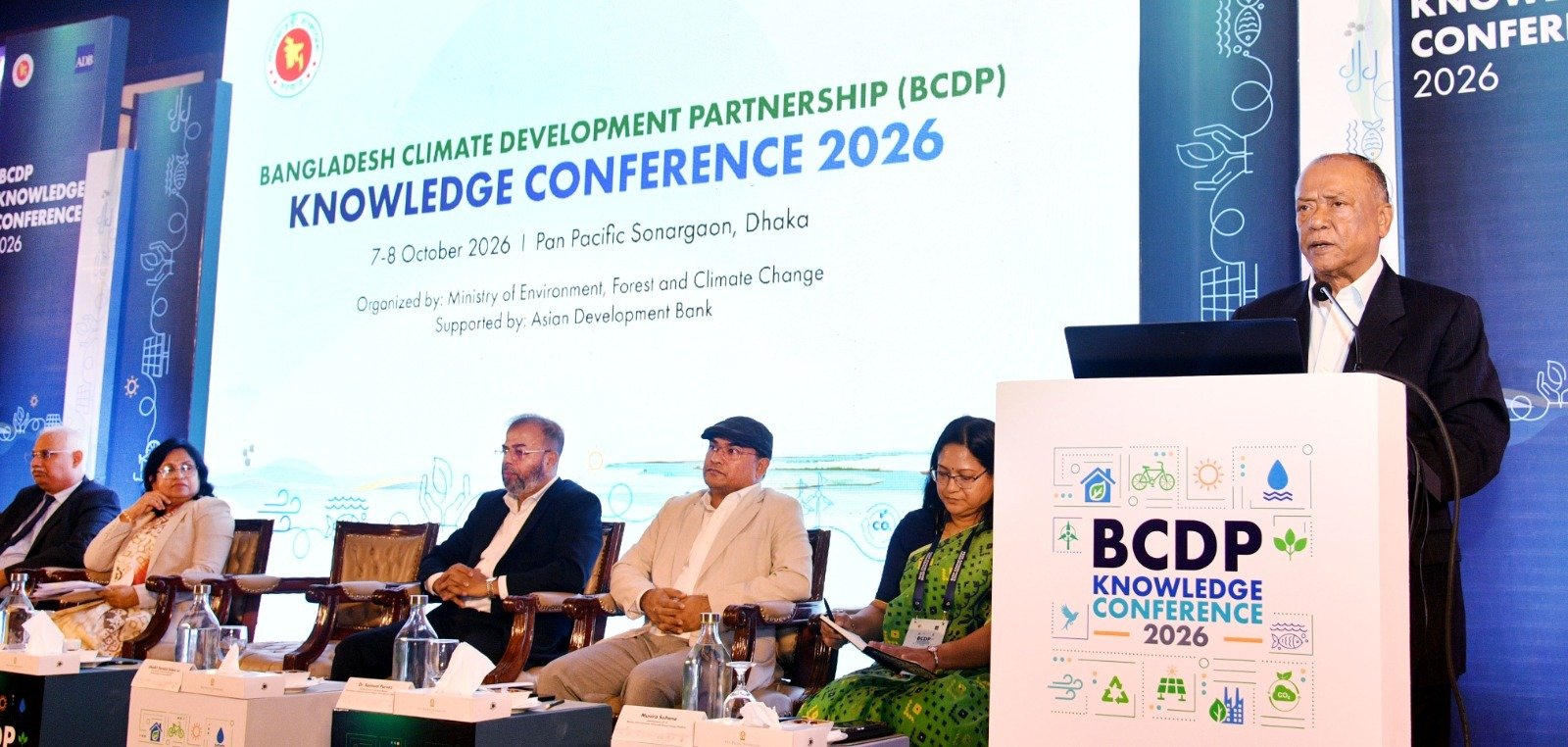
Dhaka, 7 October 2026: Environment, Forest and Climate Change Minister Abdul Awal Mintoo has called for Bangladesh’s climate policies and plans to be translated into coordinated programmes, investment-ready projects, appropriate financing and measurable outcomes.
Speaking at the opening of the two-day Bangladesh Climate Development Partnership (BCDP) Knowledge Conference 2026 in Dhaka on Wednesday, Mintoo said development decisions made today would shape the country’s climate risks for decades. Major investments, he said, must therefore take local climate conditions into account.
The Minister also launched the BCDP Web Portal, a digital platform designed to provide real-time monitoring of climate-related projects and investments, improve transparency and strengthen the development of domestic and international climate finance pipelines.
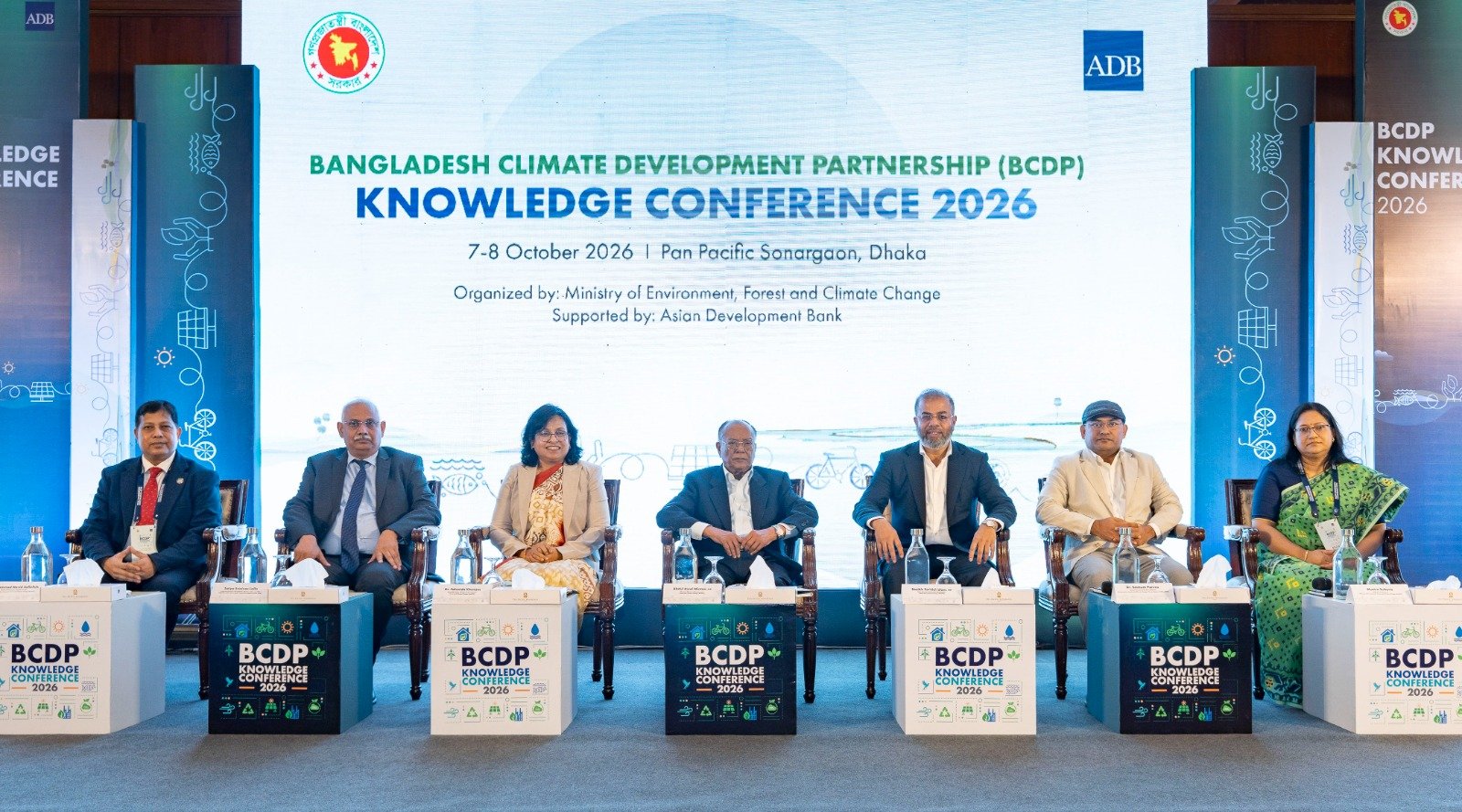
Mintoo stressed that adaptation projects can generate major public benefits even when they do not produce direct financial returns. Climate financing, he said, should be aligned with Bangladesh’s development priorities and fiscal capacity, while greater private-sector investment should be encouraged in clean energy and sustainable infrastructure.
He also called for stronger participation of local communities in project planning and implementation, particularly women, youth, persons with disabilities and marginalized groups. Bangladesh, he said, would continue to seek international support and climate justice on adaptation, loss and damage.
State Minister Sheikh Faridul Islam highlighted rising coastal salinity, declining agricultural productivity and growing threats to livelihoods. He said the government was promoting nature-based solutions, including canal excavation and tree planting, alongside electric buses and solar power as part of its low-carbon development efforts.
Dr. Md. Saimum Parvez, Special Assistant to the Prime Minister for Environment, Forest and Climate Change, described Bangladesh’s adaptation experience as a story of innovation and collective action. He emphasized community ownership, accessible grant-based finance, local capacity building, transparency and accountability.
ADB Executive Director Satya Srinivas Lolla said implementing Bangladesh’s climate plans would require substantial public and private investment. He stressed the need to combine finance, technical expertise, institutional capacity and partnerships to move from planning to implementation.
The first day of the conference focused on climate resilience, low-carbon growth, the National Adaptation Plan and NDC 3.0. Sessions on 8 October will cover energy transition, low-carbon transport, water resources, climate-resilient agriculture and the development of investment-ready projects.
Organized by the Ministry of Environment, Forest and Climate Change with support from the Asian Development Bank, the conference has brought together more than 500 policymakers, development partners, experts, private-sector representatives, academics and civil society members.