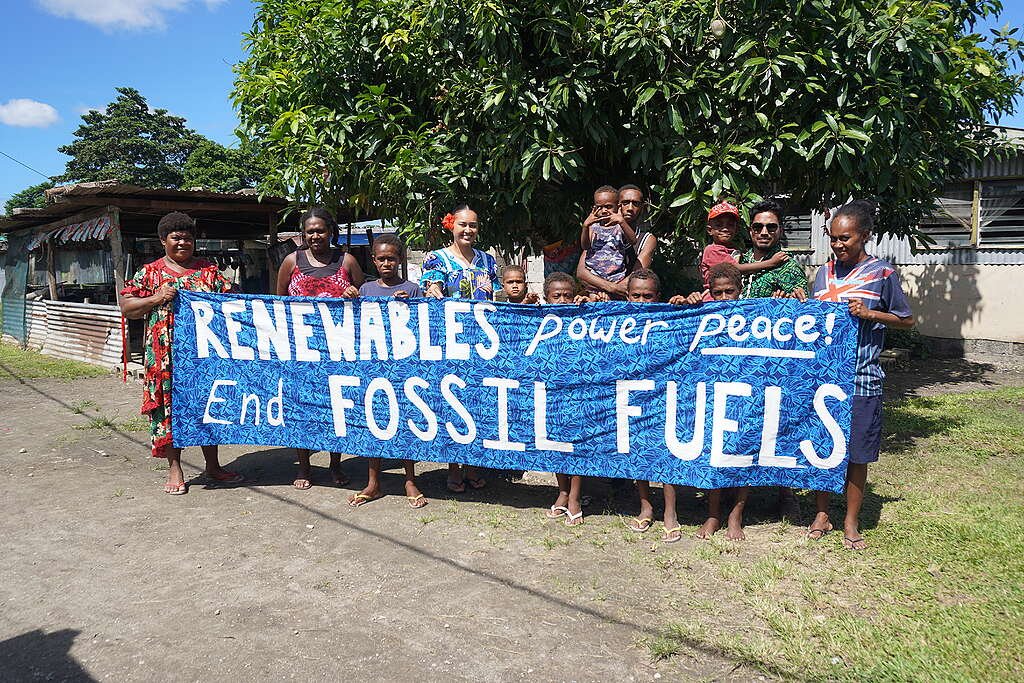
Fiji, October 7, 2026: Pacific Island ministers and regional representatives have discussed developing a regional roadmap to transition away from fossil fuels and achieve a 100% renewable energy future.
The discussion took place at a high-level event during Pre-COP31 in Fiji, organised in partnership with the Beyond Oil & Gas Alliance (BOGA). The proposed roadmap is intended to translate the Pacific’s strong climate ambition into coordinated action while addressing the scale, financing and energy-security challenges facing small island economies.
The initiative builds on the decision by Pacific Islands Forum leaders in August to establish a Pacific Renewable Energy Commissioner, tasked with strengthening regional coordination on the transition to renewable energy and reducing dependence on fossil fuels.
Pacific countries have been at the forefront of calls for a global fossil fuel phase-out. The 2023 Port Vila Call for a Fossil Fuel-Free Pacific urged an end to coal, oil and gas production, while Pacific states played a key role in securing the COP28 agreement to transition away from fossil fuels. The region has also supported the development of a global roadmap for implementation of that commitment.
“It’s high time to transition away from fossil fuels,” said Tina Stege, COP31 Pacific Envoy and Climate Envoy for the Marshall Islands. She said reducing fossil fuel dependence was essential not only for climate action but also for the Pacific’s economic and energy security.
Fiji’s Minister for Environment and Climate Change, Lynda Tabuya, said the Pacific had long spearheaded the global energy transition and stressed that keeping the 1.5°C goal alive was an “existential need” for the region.
Tuvalu’s Minister for Home Affairs, Climate Change and Environment, Maina Vakafua Talia, said the roadmap could examine both energy supply and demand, as well as changing trade flows, and potentially serve as a model for other regions.
Marshall Islands Environment Minister Jess Gasper Jr said renewable energy was a matter of energy security, resilience and greater independence for small island states, noting that fuel prices in the Marshall Islands can reach $8 per gallon in the capital and $20 in outer islands.
Pacific civil society also welcomed the initiative. Sindra Sharma of the Pacific Islands Climate Action Network said ending fossil fuel dependence was essential to maintaining the region’s “non-negotiable” 1.5°C survival threshold and urged Pacific communities to help shape and implement the roadmap.
International partners, including the COP30 Presidency, BOGA, the Asian Development Bank and the NDC Partnership, expressed support for a Pacific-led transition. The ADB said its Just Transition Support Platform would help countries assess transition opportunities, strengthen energy security and resilience, and develop practical pathways that protect vulnerable communities.
The proposed roadmap could become an important regional framework for translating the Pacific’s long-standing call for a fossil fuel-free future into coordinated investment, policy and implementation ahead of COP31 in Antalya.