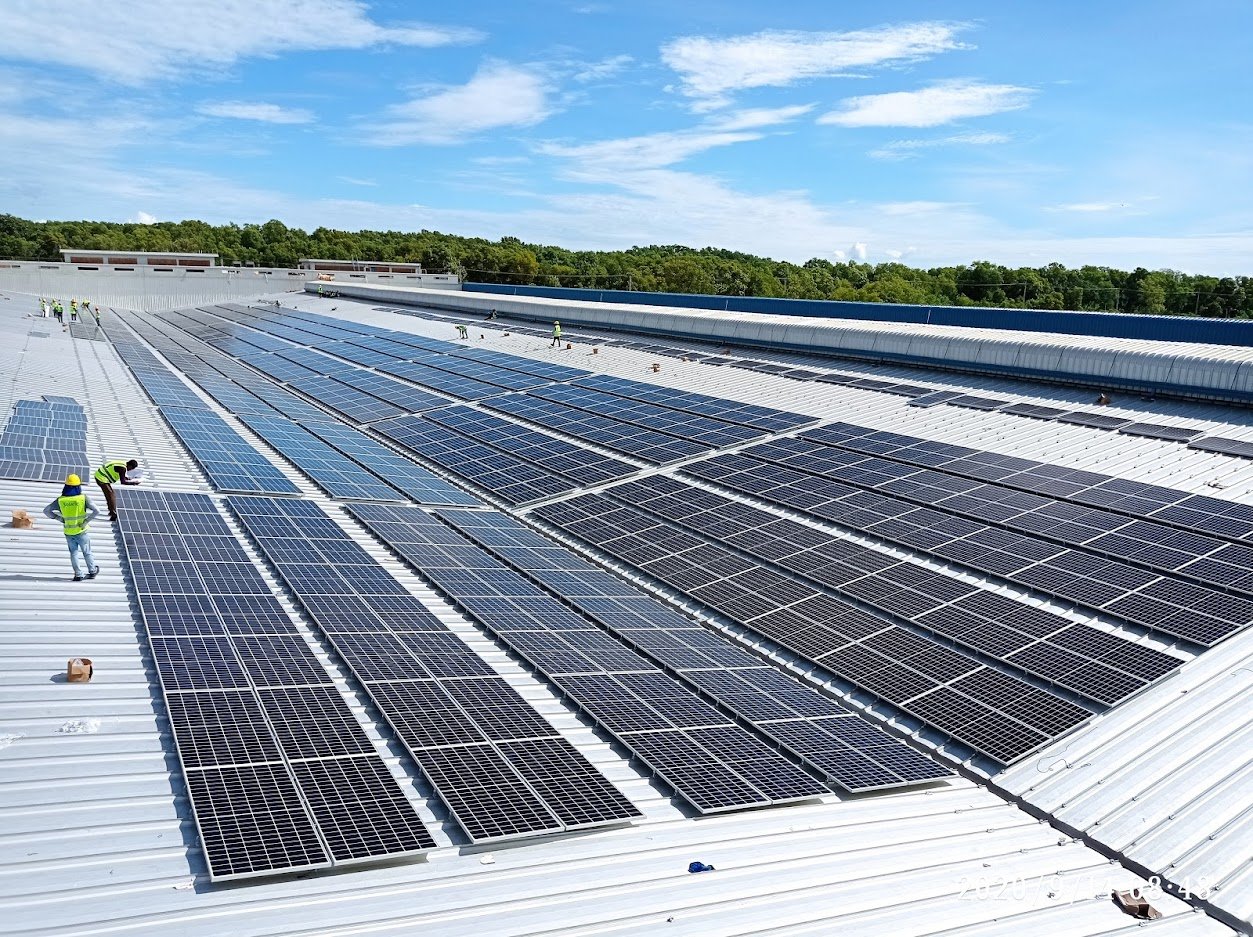
DHAKA, Aug. 4, 2026 — Bangladesh’s distributed energy resource (DER) sector is beginning to emerge as a key pillar of the country’s energy transition, driven primarily by rapid growth in industrial rooftop solar installations, according to a new analysis by the Institute for Energy Economics and Financial Analysis (IEEFA).
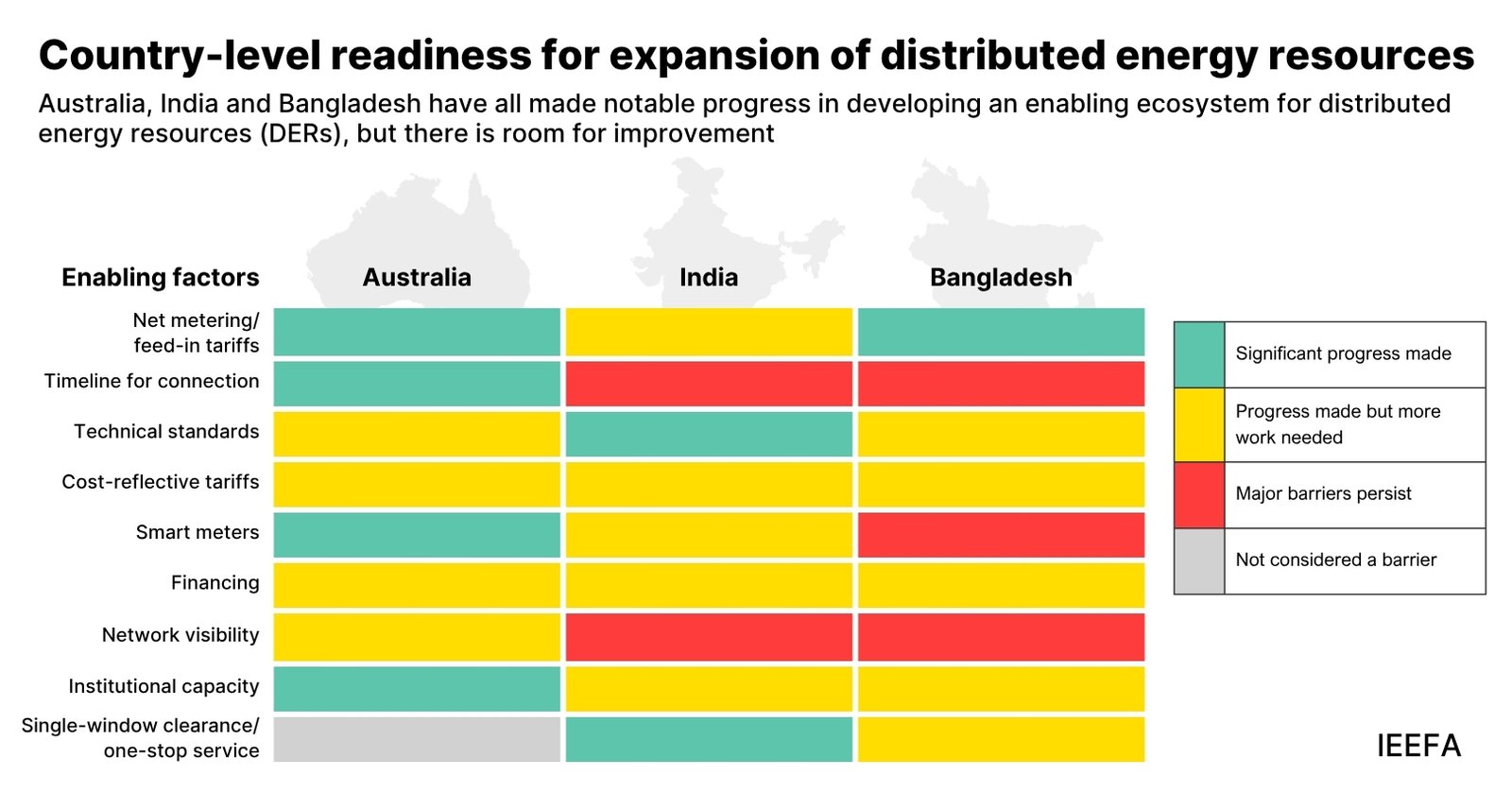
The briefing note, “Role of Distributed Resources in Energy Transition: A Multi-country Perspective,” compares the experiences of Bangladesh, Australia and India, concluding that rooftop solar has become the dominant driver of distributed energy growth while reducing dependence on fossil fuel-based electricity.
Although Bangladesh’s power system remains largely dependent on centralized generation and transmission, IEEFA says distributed energy technologies—including rooftop solar, solar-powered irrigation, battery storage and vehicle-to-grid (V2G) systems—are increasingly demonstrating their ability to provide affordable, clean and reliable electricity.
According to government data, Bangladesh had installed 418.1 megawatts (MW) of rooftop solar capacity by June 2026. However, IEEFA estimates that rooftop solar capacity has already reached 667MW across 239 industrial establishments and business groups. If smaller installations below 0.15MW are included, total rooftop solar capacity could already be approaching 1,000MW.
The report says the rapid expansion of rooftop solar has already contributed to a modest decline in daytime electricity demand, based on comparisons between power demand during April 16-June 11, 2024 and the same period in 2026.
“Compared with the country’s grid-scale variable renewable energy capacity of 859MW as of June 2026, the rapid expansion of rooftop solar sends a highly encouraging signal for Bangladesh’s power sector,” said Shafiqul Alam, Lead Analyst for Bangladesh Energy at IEEFA South Asia and co-author of the report.
He noted that the rooftop solar market is expected to expand further, with engineering, procurement and construction (EPC) companies currently holding a project pipeline exceeding 500MW.
“Bangladesh, however, must accelerate efforts to unlock the several thousand megawatts of rooftop solar potential available in the country’s industrial sector,” Alam said.
The report notes that the government’s renewable energy strategy targets the installation of 10,450MW of new renewable energy capacity between 2026 and 2030, with rooftop solar expected to account for more than half, or approximately 5,500MW, of that expansion.
Beyond rooftop solar, Bangladesh’s diesel-dependent irrigation sector represents another major opportunity for distributed renewable energy. According to IEEFA, converting one-third of diesel-powered irrigation pumps to solar energy could reduce the country’s annual diesel import bill by approximately US$244 million (around Tk 30 billion).
While Bangladesh has introduced net metering regulations and concessional financing to encourage rooftop solar, rising electricity tariffs have become one of the strongest economic drivers for businesses to invest in solar systems. Similarly, higher diesel prices are encouraging farmers and agricultural entrepreneurs to adopt solar-powered irrigation.
However, the report identifies import duties as one of the principal barriers to faster deployment.
Although the government has recently revised the duty structure for rooftop solar equipment, IEEFA says the changes do not fully address long-standing concerns. Small rural solar projects may struggle to qualify for duty concessions because of restrictive eligibility requirements, while industrial rooftop solar projects now face an effective import duty of around 17%, compared with 1% under the previous capital machinery provisions.
Drawing lessons from Australia and India, the report argues that fiscal incentives such as capital subsidies and broader duty exemptions have played a critical role in accelerating distributed energy deployment.
IEEFA recommends that Bangladesh introduce a full exemption from import duties on rooftop solar systems to reduce project costs and help achieve its renewable energy targets.
The study also highlights administrative challenges, noting that despite regulations requiring approval of net metering applications within 10 to 15 days, both rooftop solar and solar irrigation projects continue to experience significant delays in obtaining grid connections.
To address these bottlenecks, IEEFA recommends that the Sustainable and Renewable Energy Development Authority (SREDA) and the Ministry of Power, Energy and Mineral Resources closely monitor online net metering applications and ensure timely approvals.
The report further recommends integrating battery energy storage systems with distributed renewable energy projects and gradually deploying smart electricity meters to improve grid management as rooftop solar penetration increases.
According to IEEFA, Bangladesh can draw valuable lessons from Australia and India by accelerating the deployment of distributed renewable energy resources, reducing dependence on imported fossil fuels, strengthening energy security and supporting the country’s long-term clean energy transition.