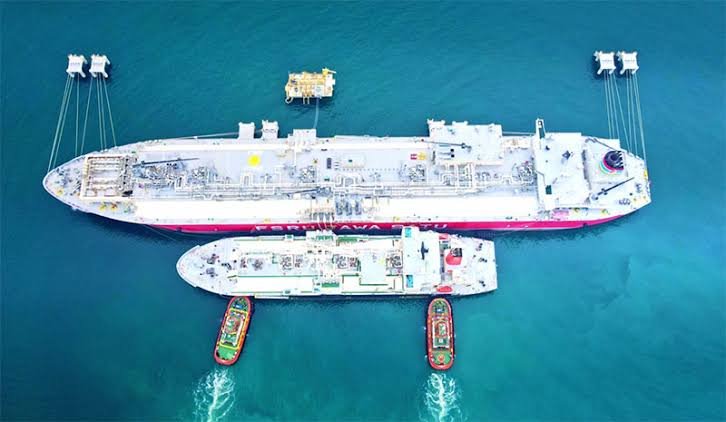
Dhaka, July 28, 2026: The Bangladesh government has moved to accelerate the development of a new Floating Storage and Regasification Unit (FSRU) at Kutubjom in Maheshkhali, Cox’s Bazar, as it seeks to ease the country’s deepening natural gas crisis following the disruption of an existing LNG import terminal.
The Cabinet Committee on Economic Affairs, chaired by Finance Minister Amir Khosru Mahmud Chowdhury, on Tuesday granted policy approval to process a proposal submitted by China’s China National Energy Engineering & Construction Co. Ltd. (CNEE) to develop the new LNG terminal under a government-to-government (G2G) arrangement.
The proposal was placed by the Energy and Mineral Resources Division.
The approval marks the first formal step towards expanding Bangladesh’s LNG import infrastructure, a move that has gained urgency after a recent fire at one of the country’s operational FSRUs significantly reduced regasification capacity and disrupted gas supplies nationwide.
Bangladesh has become increasingly dependent on imported liquefied natural gas (LNG) to offset the steady decline in domestic natural gas production. LNG imported by sea is converted into natural gas through floating regasification terminals before being supplied to the national transmission network.
The recent outage forced Petrobangla to ration gas supplies to power plants, industries, fertilizer factories and household consumers, exposing the country’s heavy reliance on a limited number of LNG import terminals.
According to official estimates, Bangladesh’s daily gas demand stands at around 3,800 million cubic feet per day (MMCFD), while current supply has fallen to approximately 2,700 MMCFD, leaving a shortfall of about 1,100 MMCFD.
The shortage has affected electricity generation, industrial production and domestic consumers, with manufacturers—particularly in the textile and garment sectors—reporting severe disruptions due to low gas pressure. Business leaders have repeatedly urged the government to restore reliable gas supplies to sustain industrial output and export competitiveness.
Government officials have indicated that expanding LNG import capacity is a key component of Bangladesh’s broader energy security strategy.
Once completed, the proposed Kutubjom FSRU is expected to enhance the country’s LNG import capacity, improve the resilience of the gas supply system and reduce dependence on a small number of floating regasification terminals. The additional facility is also expected to minimize the impact of future technical disruptions on the national gas network.
Bangladesh began importing LNG in 2018 through its first FSRU at Maheshkhali to supplement declining domestic gas production. Since then, imported LNG has become an essential component of the country’s energy mix, supplying fuel to power generation, industries and other key sectors.
While policy approval has now been granted, the government has yet to disclose the project’s investment cost, regasification capacity or implementation timeline.