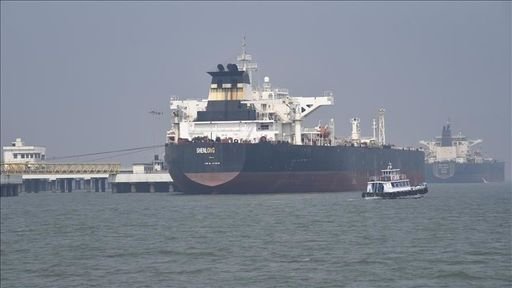
Iran has reopened the Strait of Hormuz to commercial shipping, but cautioned that it may shut the vital passage again if the United States continues its blockade of Iranian vessels and ports.
Officials in Beirut said on April 18 that ships are now allowed to transit the waterway—through which roughly 20 percent of global oil supply is transported—but only via routes approved by Tehran. This condition suggests Iran continues to exercise significant control over maritime movement in the strait. It remains unclear whether transit fees are being imposed. Shipping data indicates that vessel traffic is still limited to designated corridors requiring Iranian authorization.
U.S. President Donald Trump said the American blockade would remain in place until Iran reaches a comprehensive agreement with Washington, particularly concerning its nuclear program. While initially welcoming Iran’s decision to reopen the strait, he later clarified that restrictions would continue until negotiations are fully concluded.
Iranian officials condemned the blockade as a violation of a recent ceasefire understanding and warned that continued U.S. pressure could prompt Tehran to close the strait again. Since the blockade began, U.S. forces have reportedly intercepted and turned back several Iranian vessels.
Trump also signaled the possibility of renewed talks with Iran, following earlier negotiations that failed to produce a breakthrough—mainly due to disagreements over nuclear issues. Market optimism surrounding potential diplomacy contributed to a decline in global oil prices, amid concerns that prolonged disruption in the strait could destabilize energy markets.
However, mixed signals have emerged within Iran, where some semi-official media outlets questioned the authority behind the decision to reopen the strait, suggesting it may still require approval from senior leadership.
Meanwhile, a ceasefire between Israel and the Iran-backed Hezbollah in Lebanon appeared to be holding, raising cautious hopes for reduced regional tensions and progress in diplomatic efforts. Nonetheless, uncertainty persists over full compliance, particularly with Israeli troops still stationed in southern Lebanon.
Despite the truce, sporadic violence has continued, including an Israeli strike that caused casualties shortly after the ceasefire took effect. Neither side has confirmed full adherence to the agreement.
The broader conflict has resulted in thousands of deaths across multiple countries, with key unresolved issues in ongoing mediation including Iran’s nuclear program, control over the Strait of Hormuz, and compensation for war-related damages.
Trump also claimed that Iran may be willing to make concessions regarding its enriched uranium stockpile, although this has not been independently confirmed by Iranian authorities or international mediators.