The Energising Development (EnDev) programme, implemented by the Deutsche Gesellschaft für Internationale Zusammenarbeit (GIZ) GmbH, today hosted a “Knowledge Dissemination Workshop on EnDev’s 16-Year Journey”. The event brought together government officials, private sector representatives, development partners, NGOs, and academia to celebrate EnDev Bangladesh’s long-standing contribution to expanding access to clean, reliable, and affordable energy.
Since its inception in 2009, EnDev Bangladesh, implemented in partnership with the Ministry of Power, Energy and Mineral Resources (MoPEMR), has reached over four million people across the country with modern energy solutions. The programme’s interventions have improved energy access for rural, peri-urban, and underserved communities, contributing significantly to Sustainable Development Goal 7 – Affordable and Clean Energy.
Through market-based approaches promoting decentralized renewable energy technologies, including improved biomass cookstoves, induction stoves, biomass briquettes, solar home systems, solar mini-grids, and solar-powered e-rickshaw charging stations — EnDev has supported long-term sustainability, improved livelihoods, and reduced carbon emissions. The programme’s inclusive initiatives further strengthened its social and developmental impact.
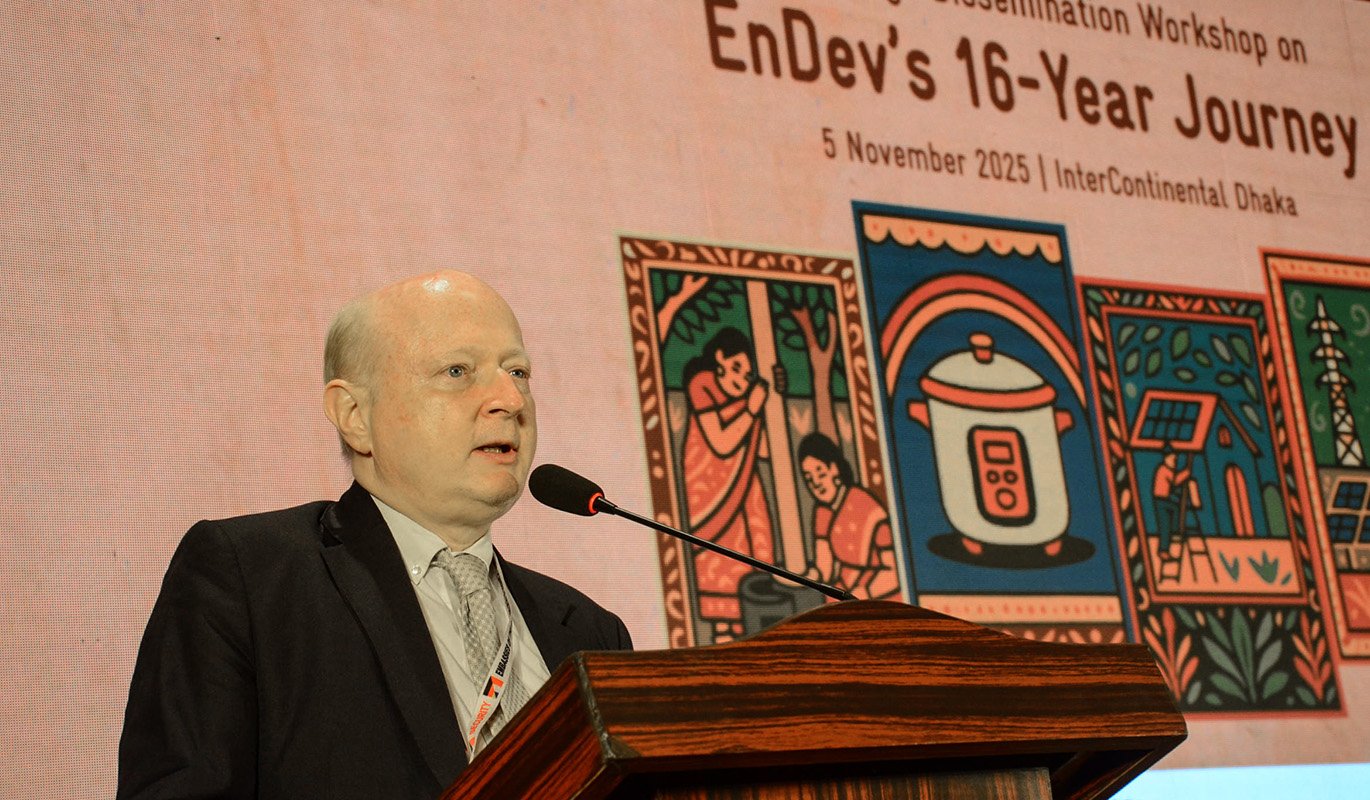
Opening remarks were delivered by Mr. Juergen Schilling, Country Director, GIZ Bangladesh, and Mr. Ratan Kumar Ghosh, Member (Joint Secretary), Energy Efficiency and Conservation, SREDA.
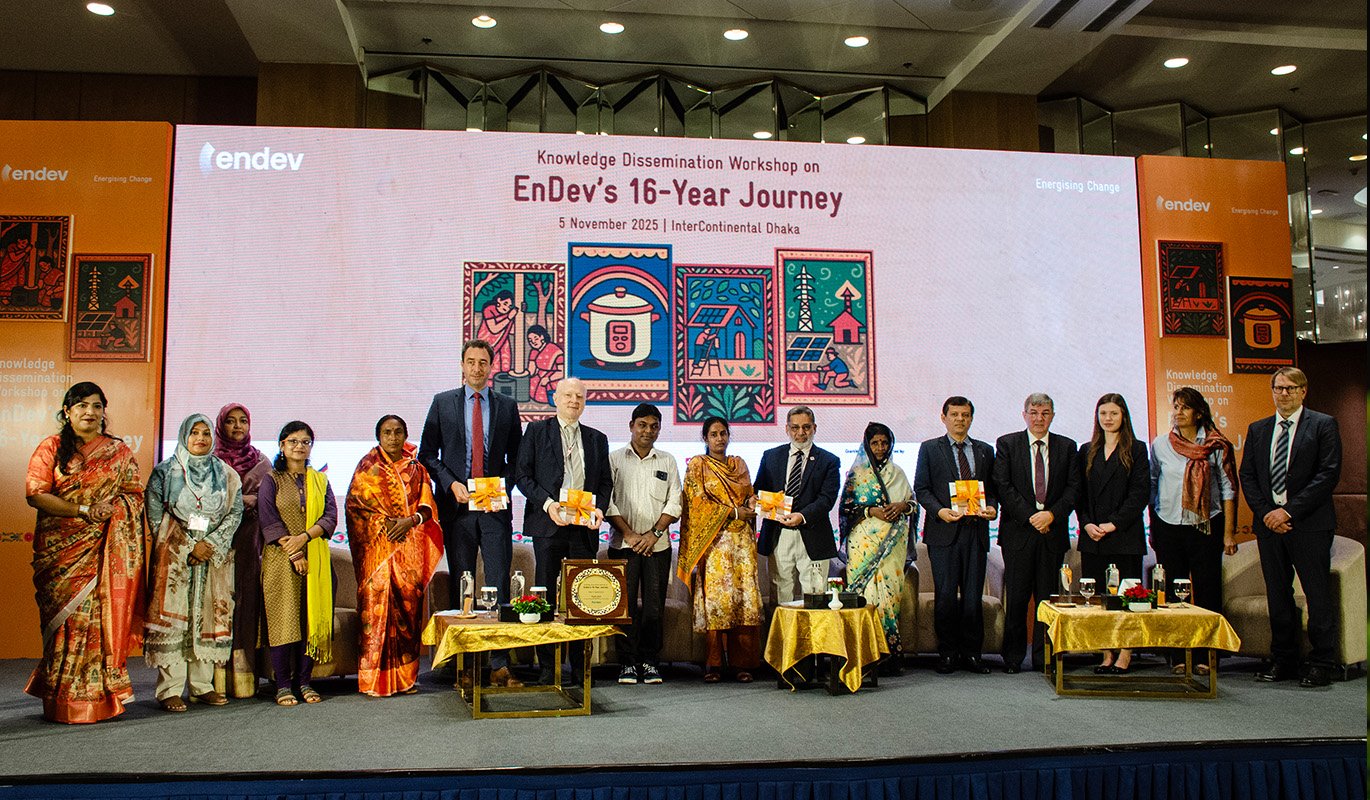
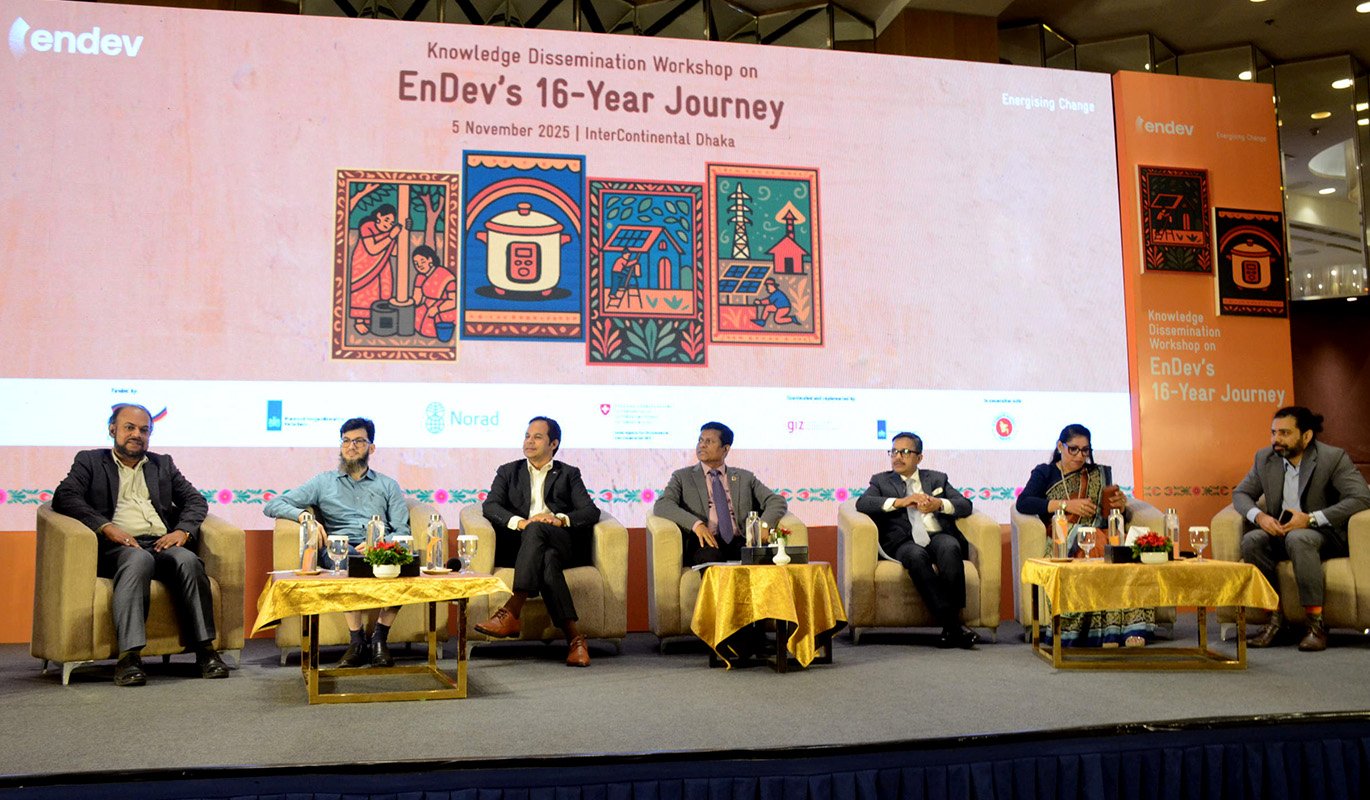
The event featured presentations on EnDev’s knowledge products and sectoral insights, a panel discussion on advancing access to clean energy, and a recognition segment highlighting EnDev’s partners and beneficiaries who have driven positive change across Bangladesh. In the panel discussion titled “Advancing Access to Clean Energy in Bangladesh” discussants highlighted government initiatives to enforce quality standards for clean cooking and renewable energy appliances, integration of clean energy goals into broader climate and air quality management frameworks, creating an enabling environment for investment in clean cooking, e-cooking, and renewable energy technologies, and the importance of partnerships and donor coordination to trigger meaningful changes in the sustainable energy development landscape.
H.E. Dr. Rüdiger Lotz, Ambassador, Embassy of the Federal Republic of Germany graced the occasion as a special guest, highlighting in his remarks “When a community gains access to reliable energy, it means that a woman can run her business after dark, that children do not have to study by candlelight, that a farmer can keep their produce fresh and cool for a longer time. Clean energy can thus transform lives. EnDev has demonstrated this transformation – now together, let us build on these learnings as Bangladesh continues in the journey towards a clean, equitable, and inclusive energy transition.”
In his closing remarks, Mr. Alexander Haack, Director, EnDev Programme, emphasized that the lessons learned from EnDev Bangladesh’s 16-year journey will inform future efforts to scale up sustainable energy access and strengthen collaboration among public and private actors.
As the EnDev programme in Bangladesh reaches its conclusion, the workshop served as a platform to reflect on achievements, share experiences, and explore pathways to sustain the progress made in promoting clean energy and inclusive development. By engaging government, private sector, and development partners, the workshop aims to foster collaboration and identify opportunities to build on EnDev’s achievements, ensuring that the benefits of energy access continue to reach communities across Bangladesh.
More information about the global programme: https://endev.info/about-endev/