VOLUME 23 ISSUE 15
Download Link for Energy & Power Vol 23 Issue 15//userfiles/EP_23_15.pdf
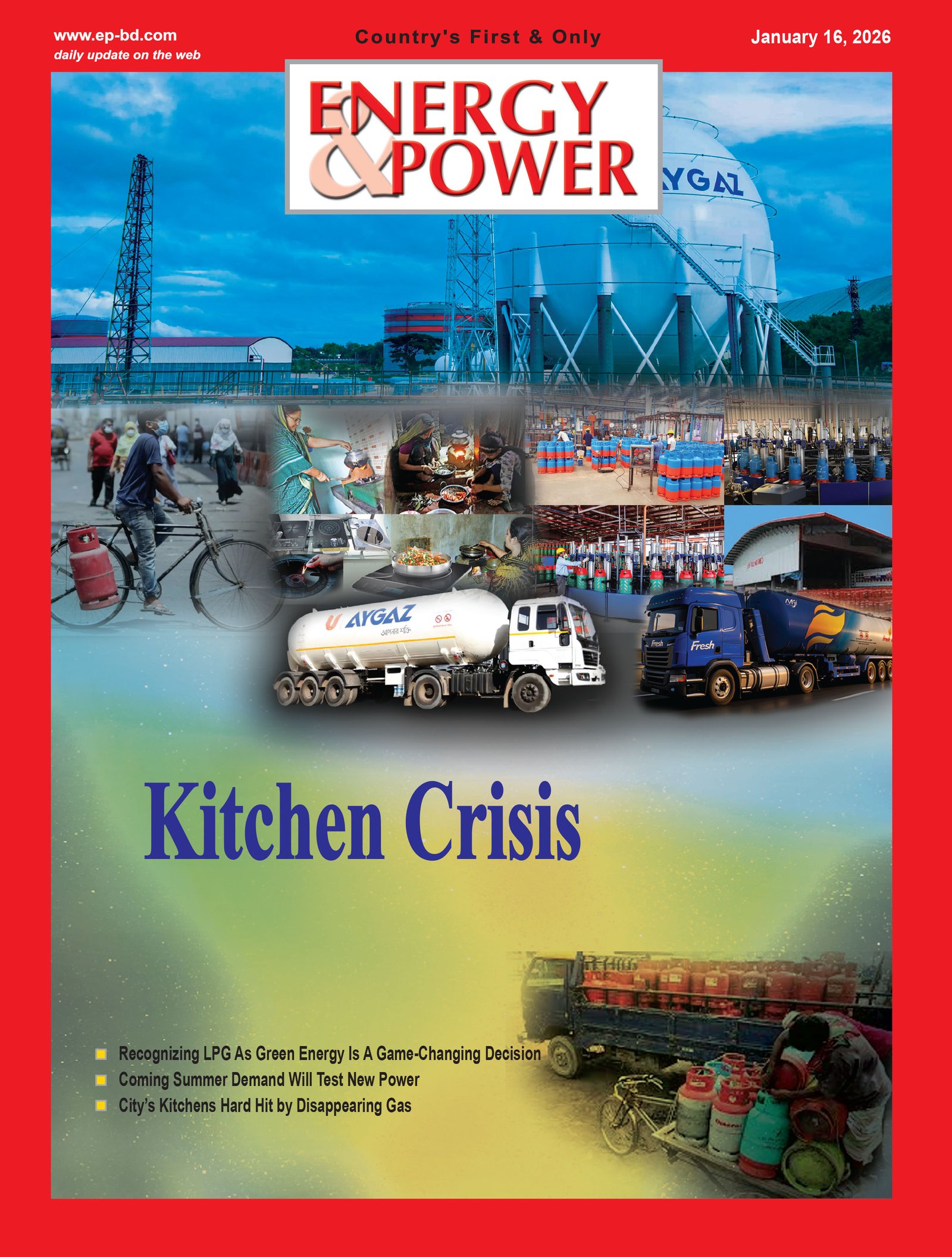
Energy crises are often discussed in megawatts and million cubic feet. But in Bangladesh, the crisis has now revealed its most human face – in kitchens without flames. When households cannot cook regular meals, energy policy stops being abstract and becomes deeply personal. The current shortages of piped gas, LPG, and even electric cooking appliances reflect not just a temporary disruption but years of fragmented planning and misplaced priorities. For decades, piped gas was treated as a permanent solution for urban households. LPG was promoted as the fallback, yet left entirely to market forces. When sanctions, shipping constraints, and financial stress converged, the system cracked. Electric cooking, long discussed as part of the clean energy transition, arrived not by design but by desperation. What makes this moment alarming is not only the severity of the shortage but the absence of resilience. Households have no affordable, reliable option to switch to when one fuel fails. That is a policy failure. Clean cooking is a Sustainable Development Goal, but it must also be treated as a national energy-security priority.
The way forward requires abandoning fuel silos. Piped gas, LPG, and electric cooking must compete on transparent pricing. Cooking fuel should be recognized as green energy, eligible for financing support and long-term planning. Above all, policymakers must accept a hard truth: Bangladesh can no longer promise gas in every kitchen. What it must promise instead is reliability, choice, and dignity—so that no family is left wondering how to cook the next meal.
For E-Book: https://enp.tiny.us/Jan16Y26