Introduction
Dhaka, the capital of Bangladesh, accounts for up to 35% of the economy. In this financial, commercial, and entertainment capital, the electricity demand is increasing along with steady GDP growth of around 6%. Meanwhile, the government has achieved declared ‘VISION 2021’ to provide “Electricity for All” by the ‘Golden Jubilee Year of Independence’ and has a dream to become a high-income country by 2041. The country plans to increase its power capacity to 60,000 MW by 2041 as per the Integrated Power and Energy Master Plan (IPEMP) conducted by the cooperation of Japan International Cooperation Agency (JICA).
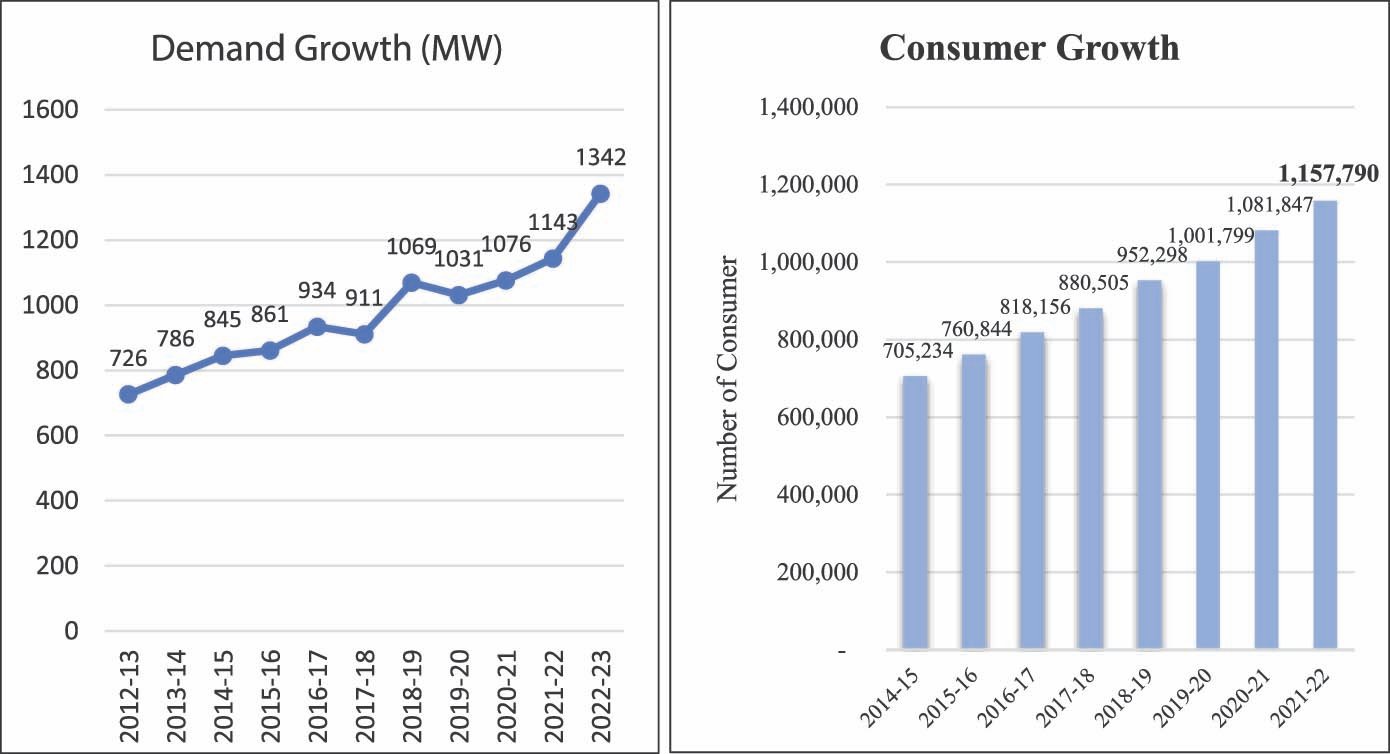
Dhaka Electric Supply Company Limited (DESCO) is a leading electricity distribution company committed to supplying reliable electric power within the major parts of Dhaka. DESCO was founded as a public limited company on November 03, 1996, under the Companies Act 1994 and started its commercial operation in 1998 in the Mirpur area with a consumer strength of 71,161 and a load demand of 90 MW. In the subsequent years of successful operation and performance, now the total area of DESCO is approximately 245 square kilometers, and the maximum demand goes to 1,342 MW with a strength of more than 1.2 million consumers.
As DESCO looks toward the future, it faces various investment challenges and revenue flow considerations for sustainability. Future investment challenges refer to the obstacles and difficulties that businesses or investors may encounter when making investment decisions or allocating capital in the coming years. These challenges can arise due to various factors, including market conditions, regulatory changes, technological advancements, shifting consumer preferences, etc.
Invest in Modern Technologies
DESCO always try to provide quality power to its customer and thus has taken some initiatives and adopted state-of-the-art technologies to enhance the resilience of its distribution system and serve uninterrupted quality power to the consumers. Some initiatives are briefly discussed below:
E-Services
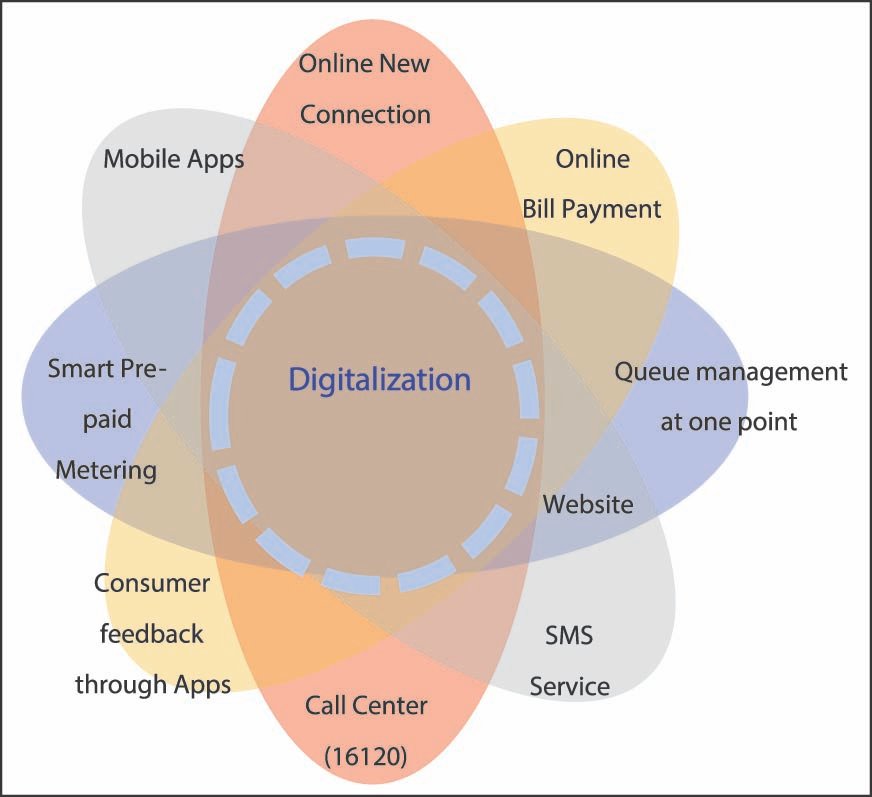
DESCO is the pioneer in customer service excellence among all the distribution utilities in the country. It has introduced a lot of innovative services for their customer e.g. online new connection, bill payment, mobile apps, call center (16120), SMS services, smart prepaid metering, etc. Similarly, some digital systems e.g. e-tender, e-filling, online recruitment, web-based inventory management, etc. are also launched to achieve a paperless office and a low-carbon society.
Supervisory Control and Data Acquisition (SCADA)
The DESCO’s SCADA system is designed for 69 stations and 2 control centers with a capacity for approximately 70,000 DB points with 50% reserved designed capacity. All the equipment up to 132kV, 33kV, and 11kV levels will be monitored and controlled by this SCADA system. Real-time loading data, network optimization, load flow study, training simulator, etc., and automatic SAIDI & SAIFI could also be calculated from this system. Ring Main Unit (RMU) will also be included under the supervision of SCADA in the long run.
Geographic Information System (GIS)
DESCO is implementing a project on the Design, Development & Installation of a Multi-Platform GIS-based application for the management of a distribution network. This project includes a comprehensive survey of the Distribution System Network, asset mapping, and short-term, mid-term, and long-term plans for the renovation and expansion of the distribution network. With the help of this map, the geo-location of any asset or customer in the DESCO area could be found easily and service could be restored very quickly. Besides, Asset Management and Online Complaint Management System will also be implemented using a GIS map in the DESCO area very soon.
Master Information Center (MIC)
DESCO has implemented a 3rd Tier Master Information Centre (MIC) that centralizes all the shared IT operations and equipment of the organizations for storing, processing, and disseminating data. For data interpretability and Information security, DESCO ensures the Master Information Center has to offer a secure environment that minimizes the chances of a security breach.
Advanced Metering Infrastructure (AMI)
AMI provides electric power utilities with a two-way communication system from the control center to the meter, as well as the ability to modify customers’ different service-level parameters with real-time data and load profiles. It can also be integrated with various DESCO billing, collection, and reporting software. It is expected that by June 2024, 100% of customers will be connected by SMART Prepaid Meter through AMI (Advanced Metering Infrastructure).
Electric Vehicle (EV) Charging Station
Electric vehicle (EV) charging stations can play an important role to power EVs and reducing the need for fossil fuels. This can also help utilities to reduce the stress on their grid during peak periods of energy demand, and improve the stability of their systems. When EVs are connected to the grid, they can both charge and discharge energy, helping to balance the demand for electricity on the grid and providing an additional source of power during periods of high demand. As the world is moving to EVs and EVs will jump a lot in the upcoming years, DESCO is also planning to install EV charging stations in its area to cope with the latest trend.
Looking into the Future
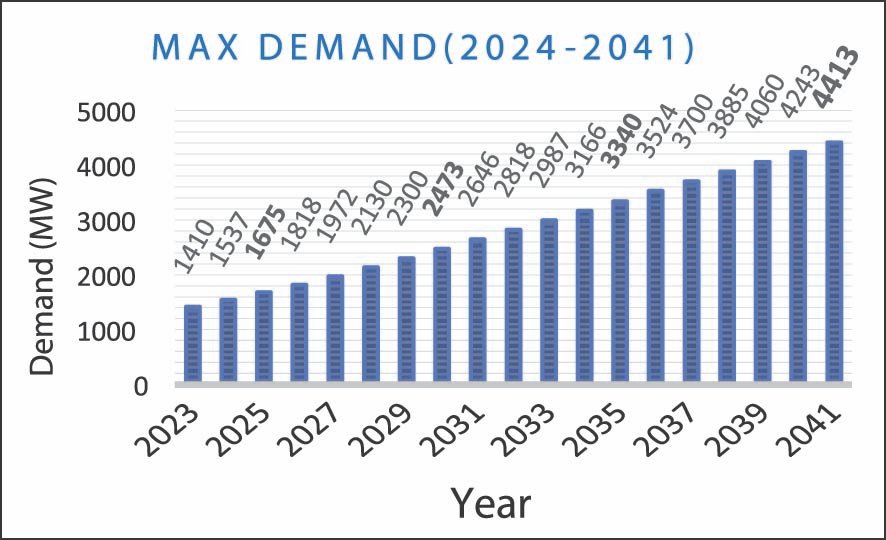
Due to the increasing load demand in its jurisdiction, DESCO has forecasted the maximum demand up to 2041 by the Integrated Energy and Power Master Plan (IEPMP) conducted by JICA. To meet up this demand, huge investment is required in infrastructure, modern technologies, and distribution automation systems. DESCO already converted 55% of customers into SMART pre-payment metering systems and plans to convert 100% to SMART pre-payment meters by 2024.
Master Information System (MIC) is going to be completed very soon and AMI (Advanced Metering Infrastructure) will be implemented with the consideration of cyber security. SCADA system in the DESCO area will collect the real-time data of all the substations and monitor & control all the switches remotely up to 11kV level. The GIS project in the DESCO area is a GIS-based application for the Management of Distribution Network which is expected to be completed by June 2023.
DESCO is also thinking about undertaking a project on Distribution Transformer Monitoring, which will help monitor the real-time distribution load, minimize load balance/unbalance and ensure quality power to consumers. In the near future, DESCO is heading to adopt Distributed Management System (DMS), Outage Management System (OMS), and Customer Management System (CMS), implementing electric vehicle charging stations in its jurisdiction.
All these systems are expected to help optimize their operations and improve the reliability of their systems by providing real-time information on power grid performance. After completion of these ongoing and upcoming projects, the ultimate goal for DESCO is to go for the SMART GRID System which will ensure the utmost satisfaction of the consumers in its jurisdiction. Thus, to implement all of these services and systems, a huge investment is required as well as revenue inflow is crucial for the sustainability of DESCO.
Financial Obligation
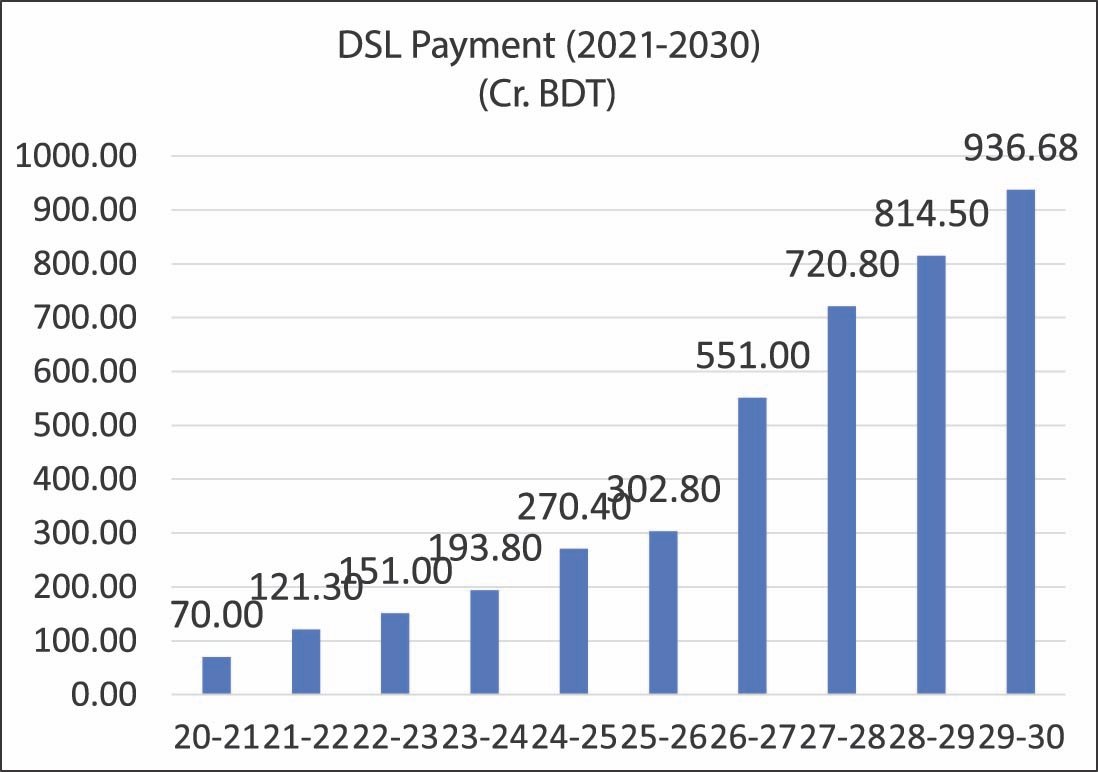
From 2013 to June 2022, DESCO has completed 06 (six) projects at a total cost of US$ 375 million and currently executing 04 (four) projects with a value of US$ 433 million. Besides, the total estimated cost for 03 (three) upcoming projects is approximately US$ 1,760 million. Securing adequate financing for infrastructure development projects poses a significant challenge. DESCO needs to explore various funding options, including partnerships with financial institutions, public-private collaborations, and government support to ensure the availability of sufficient capital for its investment plans. DESCO has to pay a Debt Service Liability (DSL) against completed projects for the next 10 (ten) years which is shown in the chart accordingly.
Investment Requirement
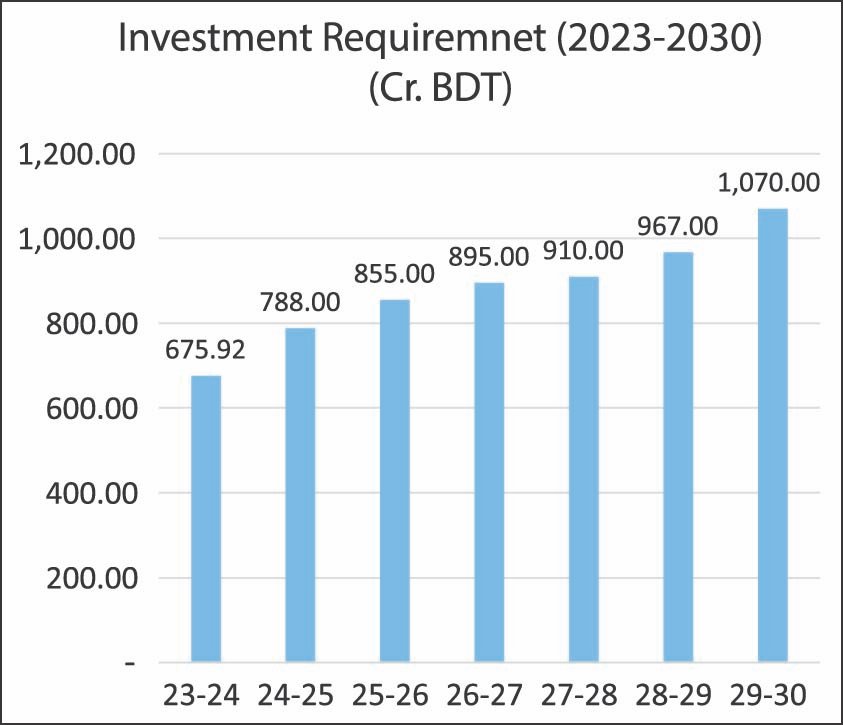
The investment requirements for a power distribution company can vary significantly depending on various factors such as the size of the service area, existing infrastructure, technological adaptations, regulatory environment, and demand projections. To be a role model of a good electrical power distribution system, DESCO always relies on three main requirements i.e. Safety. Efficiency. Reliability. Considering all of this, DESCO required approximately BDT 6161 crore to invest within 2030 so that a resilient system can develop to serve the consumers in its jurisdiction.
Future Investment Challenges
Securing adequate financing for infrastructure development projects and adopting a modern Distribution Automation System poses a significant challenge. DESCO needs to explore various funding options, including partnerships with financial institutions, public-private collaborations, and government support to ensure the availability of sufficient capital for its investment plans.
Infrastructure Development
Infrastructure investment is directly relevant to its operations and responsibilities as a power distribution company. Infrastructure investment is essential for DESCO to maintain, upgrade, and expand its grid infrastructure, Metering Infrastructure, Substation Up gradations, Distribution Automation, etc. DESCO must invest in upgrading and expanding its infrastructure to meet the increasing electricity demand in Dhaka in such a manner that will be in line with the integrated Energy and Power Master Plan (IEPMP) of the Bangladesh government.
Technological Advancements
Rapid advancements in technology require continuous investment to stay at the forefront of the electricity distribution sector. DESCO should embrace emerging technologies such as DMS, OMS, CMS, Cyber Security, and Battery Energy Storage Systems (BESS) to optimize operations and provide enhanced services to customers.
DMS can help DESCO overcome challenges related to grid management, load balancing, and fault detection. OMS enables DESCO to quickly identify the location and cause of outages, dispatch crews effectively, and provide accurate information to customers regarding restoration times. CMS can offer self-service options, real-time billing information, and personalized communication channels to improve customer satisfaction and reduce operational costs. All of these will lead us to be a part of the SMART Grid System. But, a huge investment will be required to implement all of these modern and sophisticated systems in the DESCO area.
HR Planning
Investing in proper human resource (HR) planning is essential for DESCO to successfully navigate the challenges associated with modern technologies. HR planning involves assessing the skills and expertise required to operate and maintain the new technologies. DESCO should invest in training programs to upskill existing employees and recruit new talent with expertise in areas such as renewable energy, smart grid technologies, data analytics, and cyber security. Effective HR planning ensures that DESCO has a skilled workforce to leverage modern technologies, manage operations efficiently, and drive innovation.
LDC graduation
LDC graduation could be the cause of the loss of certain preferential treatment and benefits that were available to Bangladesh as an LDC. This could include preferential trade agreements, tariff exemptions, and concessional loans. The loss of these benefits may increase the cost of importing technologies, equipment, and materials required for DESCO's infrastructure projects. Proper strategic planning, effective resource management, and active collaboration with national and international stakeholders to maximize the benefits and mitigate the challenges associated with LDC graduation.
Private Sector Participation/Public Private Partnership
Public Private Partnerships can help address investment challenges by leveraging private sector participation and capital. By partnering with private entities, governments can tap into additional financial resources and expertise, enabling them to fund and implement infrastructure projects that may be beyond their budgetary capacity. PPPs can enhance investment capacity and alleviate some of the financial burdens faced by the public sector. In other countries, Governments have increasingly turned to the private sector to provide infrastructure services in energy and power that were once delivered by the public sector. The Bangladesh government can follow the same policy in the country.
Target in IEPMP
JICA is conducting the Integrated Energy and Power Master Plan (IEPMP) to achieve a low-carbon society within 2050. At present the clean energy is very small at about 4%, but, as mentioned in the study, it will gradually increase with the development of power sources that do not emit CO2 at all. In 2041, the target year, it will be about 40%, and it will gradually increase thereafter, reaching more than 60% in 2050 (Ref: Bd IEPMP DFR Ver5_Clean). Thus, as a power distribution company, DESCO will face challenges to invest more in clean energy technologies to be aligned with the government master plan.
Economic Uncertainty
Economic fluctuations, geopolitical events, and regulatory changes can introduce uncertainty into investment decisions. The COVID-19 pandemic and the Russia-Ukraine war have shown us these issues clearly. US-China ‘Economic War’ could also make some uncertainty in the economy which should be considered during investment. Navigating through all these uncertainties requires careful analysis and risk management during the feasibility study and project design.
Revenue Flow
Revenue is the money a company earns from the sale of its products and services. In 2021-22 DESCO generated Tk 4,721.78 crore in revenue from sales which was Tk 4,347.05 crore in the previous financial year, representing a growth of 8.62%, while generating a net profit after tax of Tk 63.09 crore in FY 2021-22 as compared to Tk 73.91 crore in FY 2020-21, declining by 14.61%. On 30 June 2022, number of customers was 11, 57,490. During the year the company added 75,643 new customers. The growth rate of customers is 6.99%.
In the current financial report of the third quarter (Jan-March’23), around Tk 145 crore is shown as an operating loss, which is a very alarming indication for DESCO. The reason behind the net profit decline is the increase in bulk tariff rate as compared to the retail tariff, dollar fluctuation, increase in operating expenses, etc. All of these have a significant impact on revenue. For positive revenue flow, some issues should be considered carefully which are described below:
Tariff Structure Optimization
DESCO needs to periodically review and optimize its tariff structure to ensure a fair balance between revenue generation and affordability for customers. Implementing demand-based pricing, time-of-use tariffs, and progressive tariff structures can incentivize energy conservation while maintaining adequate revenue. At present, the bulk tariff rate of DESCO at the 33kV level is the highest (Tk 8.2480/kWh) among all the distribution utilities. BERC or Power division should take necessary action to revise the retail tariff rate in accordance with the bulk tariff so that this organization can sustain itself in the long run and can maintain a positive cash inflow.
New Customer Acquisition
Expanding the customer base and expanding its jurisdiction is essential for revenue growth. DESCO may invest in strategies to attract new customers, such as offering reliable service, expanding coverage, and implementing customer-centric initiatives. Jolshiri Housing area near Purbachal New Town and Gazipur City Corporation may be included in the DESCO jurisdiction with the concern of proper authority for more revenue flow.
Value-Added Services
Offering additional services beyond electricity distribution can diversify revenue streams. For example, DESCO may explore opportunities to provide value-added services like energy auditing, energy management solutions, electric vehicle charging infrastructure or MT customer substation maintenance, etc. This will not only ensure the quality of service but also earn some revenue besides energy sales.
Cross-Selling Opportunities
Identifying opportunities to cross-sell or bundle services can enhance revenue flow. As DESCO has a door-to-door electric connection to the consumers, DESCO may partner with telecommunications companies to offer combined services like broadband internet, home security, or smart home solutions by using the overhead and underground distribution facilities in its jurisdiction. It will help to earn some extra revenue and makes the organization more sustainable.
Demand Forecasting
Accurate demand forecasting is crucial for DESCO to effectively plan investments and ensure an optimal revenue flow. In 2050, DESCO has a forecasted load demand of 6281 MW. By employing advanced data analytics, machine learning, and customer behavior analysis, DESCO can project electricity demand patterns accurately and make informed decisions about capacity expansion and revenue projections.
Customer Engagement and Service Quality
Enhancing customer satisfaction and engagement is essential for revenue growth. DESCO should focus on improving service quality, responsiveness, and reliability. Embracing digital solutions for bill payment, complaint resolution, and customer feedback can enhance the overall customer experience. DESCO is conducting stakeholder meetings at regular intervals in different S&D and customer feedback has been considered to deliver better service and to generate revenue.
Energy Loss Reduction
Addressing technical and non-technical losses within the distribution network is crucial for revenue optimization. DESCO should invest in grid infrastructure upgrades, renovate distribution lines, deploy advanced metering technologies, and implement measures to detect and prevent electricity theft and unauthorized connections to reduce energy loss and system optimization.
Renewable Energy Integration
As the global shift toward renewable energy accelerates, DESCO should explore opportunities for integrating renewable energy sources into its distribution system. By procuring electricity from renewable sources and facilitating customer participation in distributed generation, e.g. Solar Home Systems (SHS), Net Metering, EV Charging Stations, etc. DESCO can diversify its revenue streams and contribute to a sustainable energy future.
Way Forward
To implement all the pipeline and upcoming projects including Underground Distribution System, DESCO will face several challenges and considerations regarding future investments and revenue flow. In this Fourth industrial revolution era, DESCO is dreaming to be a part of the SMART GRID system of the country. This will integrate innovative ideas and technologies with the distribution system as well as ensure the utmost satisfaction of the consumer.
To the way forward of this goal, huge investment challenges will come along the pathway and positive revenue flow should be maintained. Conducting a comprehensive feasibility study, cost-benefit analysis, and technology assessment will help determine the precise investment requirements and develop a strategic investment plan for DESCO's successful adoption of modern technologies.
Maintaining a minimum gap between Bulk and Retail Tariff rates, adopting smart technologies, acquisition of new areas, focusing on proper Human Resource planning, engaging Public Private Partnerships in upcoming projects and customer-centric approaches will be the key to positioning DESCO as a forward-looking and resilient electricity distribution company in Dhaka.
Rngr. Md. Kausar Ameer Ali, Managing Director, DESCO
Click Here to Download Anniversary 2023_11 as PDF/userfiles/EP_Anniversary 2023_11_Kausar Ameer Ali.pdf