Introduction
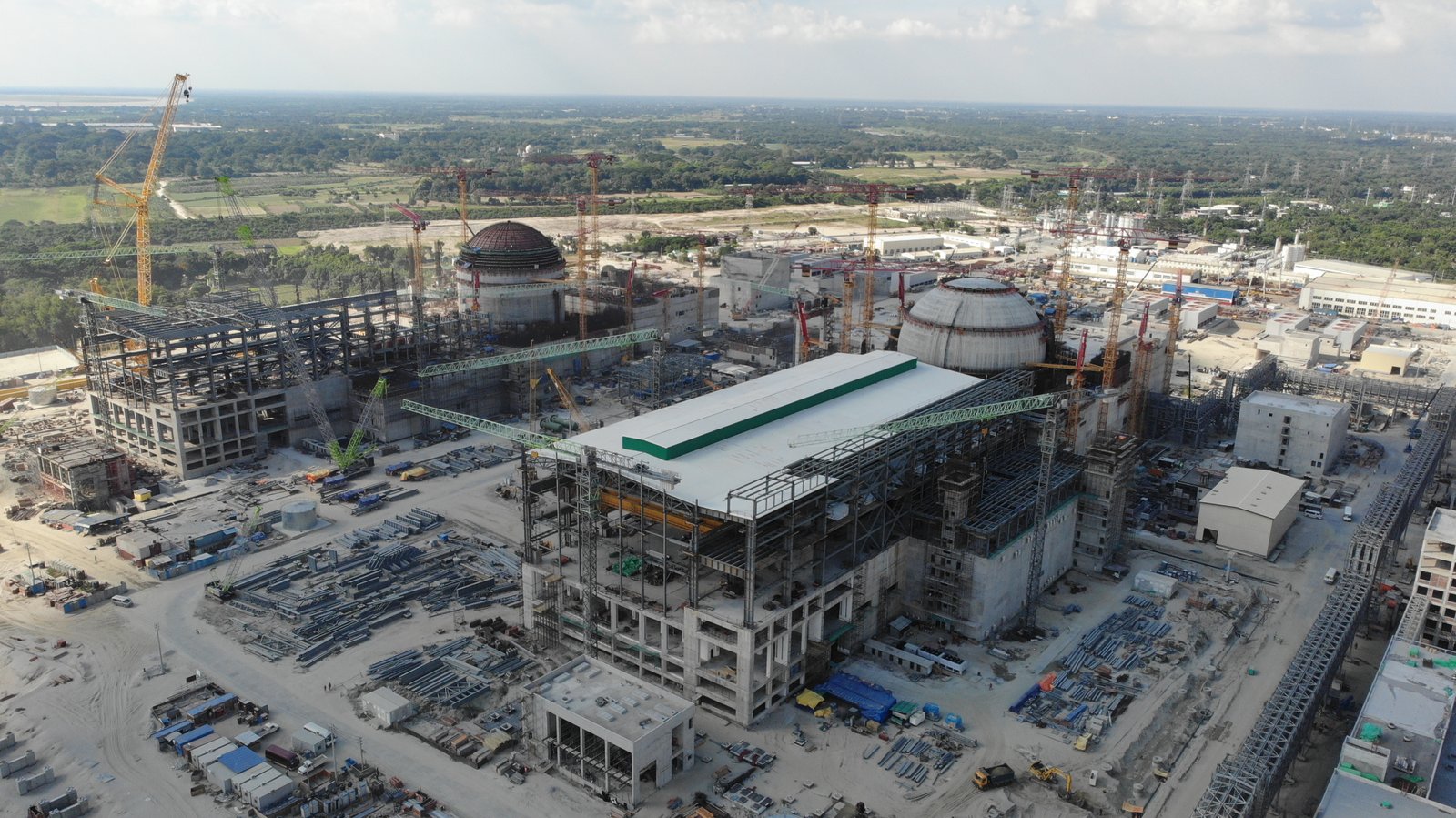
Rooppur nuclear power plant will be the leading energy source with minimal environmental pollution and an attractive component for the country for energy diversification. The safety of the personnel, public, and the environment from all types of ionizing radiation will be ensured by applying a systematic approach both in onsite and off-site areas at Rooppur Nuclear Power Plant (NPP) including the transportation of nuclear fuel from the airport to the NPP site. Multiple types of administrative and technical measures will be in place to protect the population and the environment.
The objective of radiation monitoring is to protect personnel and the population as well as the environment from the harmful effect of ionizing radiation by fulfilling the fundamental principles and radiation safety norms, as well as to limit radiation’s impact on the environment so as not to exceed the limits established for Rooppur NPP.
The main sources of radiation in an NPP are radioactive fission products and different types of radiation and radioactive substances generated as a result of irradiation of the process media and materials by the neutron flux of the reactor. Although it is known that commercial NPP releases very small amounts of radioactivity into the environment, there are still some risks if safety measures are violated. For continuous monitoring and control of the radiation situation in the on-site area, an Automatic Radiation Monitoring System (ARMS) is being put in place. It includes technological control, dosimetric control, room radiation control, and control spreading of radioactive non-proliferation contamination for quickly obtaining, analyzing, and processing information on the monitored parameters of the NPP workplace.
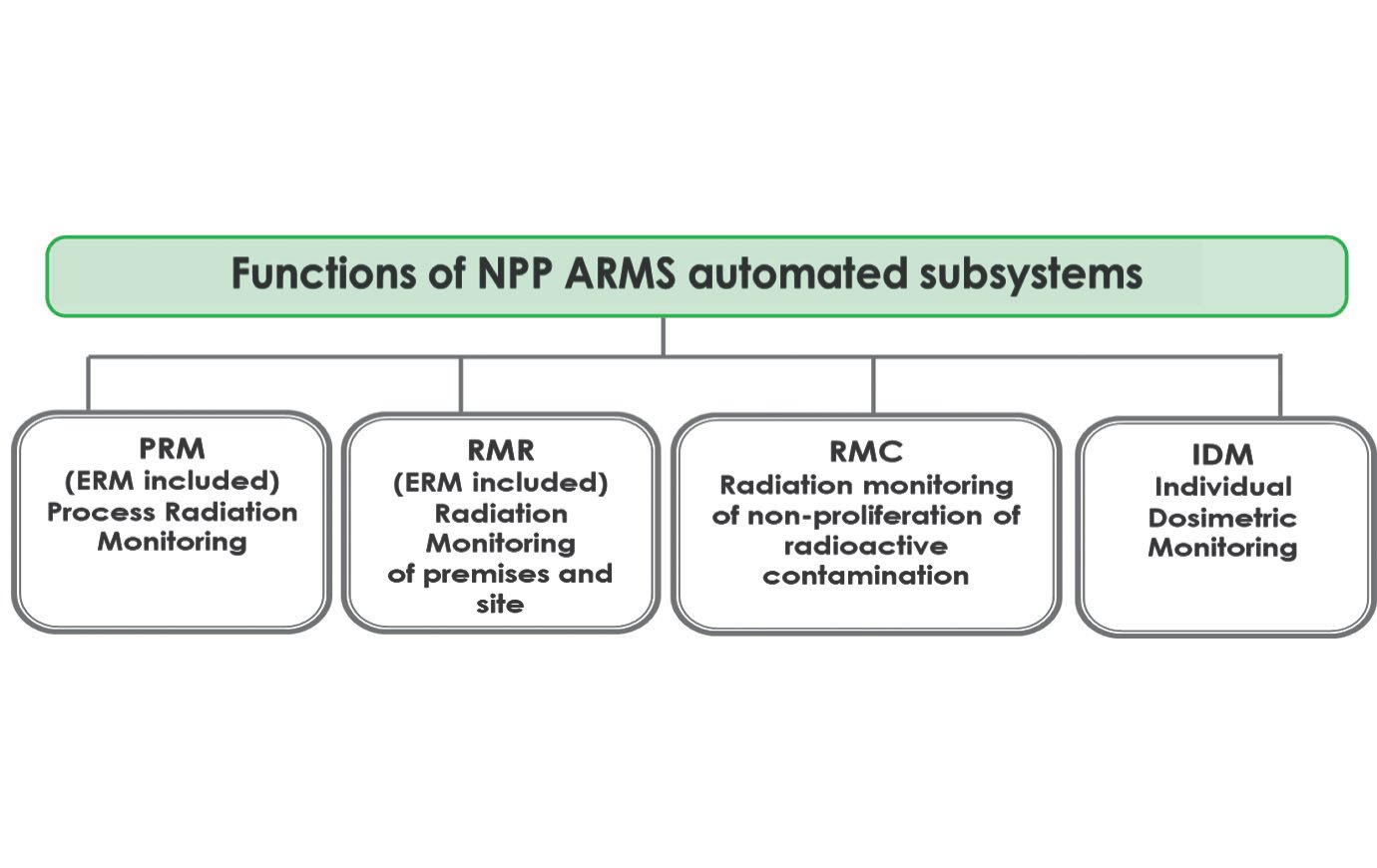
Schematic diagram of ARMS
An off-site radiation monitoring system, “Automatic Environmental Radiation Monitoring System (AERMS)”, will be set up within a 12.5 Km radius at Rooppur NPP for continuous monitoring of the radiation situation which is publicly open and accessible. Information on radiation parameters will be exchanged between the automated workstation of the on-site area and automatic radiation monitoring posts of the off-site area to immediately detect any small amount of deviation from the control level.
.jpg)
UDZHG-42R-07 unit for Volumetric Activity measurement in liquid
Among all the safety features, radiation safety measures are an indispensable factor in the commissioning period. To achieve a level of radiation safety, all the radiation monitoring systems and equipment which are connected to the safety system need to be tested and adjusted by the design and regulatory requirements to bring the power plant put into operation. At this stage, rigorous organizational and technical measures are being developed and verified for all operational modes.
2. Description
2.1. On-Site Radiation Monitoring
To ensure radiation safety as is the main goal, ARMS perform online monitoring of the radiological environment in the Power Unit and at the NPP site as well as personnel exposure doses. It uses both stationary and portable devices/detectors/equipment to receive information about the radiation state. ARMS equipment will generate an alarm if the measuring value exceeds the normal value (set point). It has an independent channel for monitoring radiation during normal operations and emergencies.
2.1.1 Process Radiation Monitoring (PRM)
Radiation process monitoring means monitoring the state of protective barriers and process equipment of systems, its diagnosis, finding the sources of leakage, and controlling the radionuclide inflow over protective barriers to the NPP premises and the environment.
Fuel cladding separates the fuel rod from direct contact with the process water i.e. water of the primary circuit. If the radionuclides leak from the fuel cladding the whole primary circuit can contain all radioactive elements. An automatic spectrometric equipment SZhG-1001 measures the Volumetric Activity of I131, I132, I133, I135, Na24, Kr88, K42, and Xe135 in the primary circuit coolant by taking primary circuit coolant as a sample.
A very intensive continuous monitoring is made with UDGP-01 for measuring primary circuit to secondary circuit leak. It measures gamma energy from N16 in the steam outlet site of a steam generator. Also, measure gamma energy from N16 in turbine condenser output. Another detection unit BDMG-100-07 is used to measure the gamma activity of the steam pipeline from the steam generator to the turbine condenser.
Any leaks from the primary circuit can emit gaseous radionuclides inside the reactor containment. Hence, we need continuous and periodic monitoring of air activity inside the air and also monitor released air through the ventilation stack. SGG-1002, BDGB-40, RKS-11I, and some other units are used to measure the release of Tritium, Inert radioactive gases, alpha-beta aerosol, etc. through a ventilation stack. Measuring unit UDI-304AB, UDG-304B, etc. equipment are used to measure air activity inside the containment.
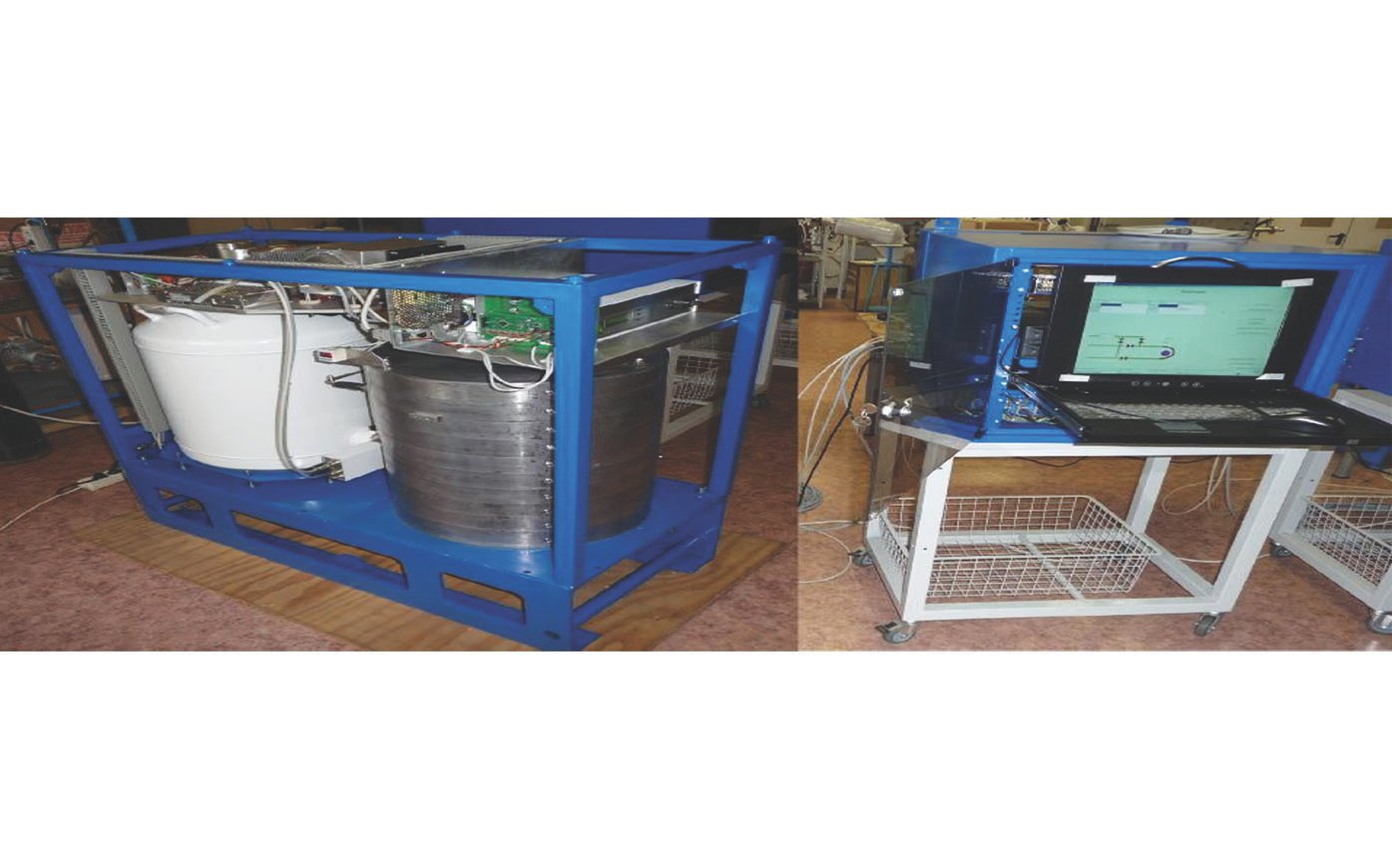
Spectrometer to monitor emissions from the NPP Unit ventilation stack.
The flow path of the radionuclides from the fuel matrix to any kind of release is monitored to ensure the radiation safety of people and the environment. The information from the detectors is analyzed regularly by the personnel of the Radiation Safety Department (RSD) and sent to the upper level. For any anomaly or higher value from the listed parameters, the operator of the reactor plant can use this information from RSD to terminate reactor operation.
2.1.2 Radiation Monitoring of Site and Premises (RMR)
NPP site and premises radiation conditions are monitored by some stationary and portable devices. Stationary automated technical means (equipment) are used to provide continuous monitoring. Portable and mobile technical means measure radiation in an emergency, this type of equipment also provides casual and periodic inspection.
Equipment used in this subsystem can measure the Volumetric Activity (Bq/m3) of Aerosol, Iodine-131, and Inert Radioactive Gas. Also, measure Gamma & Neutron Ambient Equivalent Dose Rate (AEDR) in CAA premises and at the NPP site, Alpha & Beta particle flow density in the site or any premises.
2.1.3 Radioactive Contamination Monitoring Subsystem (RCMS)
Contamination is the presence of radioactive substances on the surface, inside the material, in the air, in the trolley, or another place in an amount exceeding the levels established by sanitary regulations. In other words, contamination means the harmful presence of radioactive substances in a material or the human body or other places.
2.1.3.1 Sources of Radioactive Contamination at NPP
Surface radionuclide contamination of the premises (floors, walls) and NPP equipment is possible in case of entering into premises of active process media, due to their leaks from sampling lines or during opening equipment for repair and inspection. Finally, violation of radiation safety regulations may lead to exceedance of surface permissible contamination standards.
2.1.3.2 Surface Radioactive Contamination Monitoring
The purpose of surface radioactive contamination monitoring is to obtain reliable information on actual levels of radioactive contamination of the surfaces at the NPP, based on which the decision on sanitary-and-hygienic interference and development of organizational and technical measures to ensure safe working conditions is made.
At the NPP radiological monitoring of radioactive contamination is carried out through the use of stationary and individual portable instruments for monitoring clothes and transport in places as provided in the project. The surface contamination monitoring shall be carried out by portable instruments and swipe samples.
Radioactive contamination monitoring is a functional subsystem of the NPP ARMS. For Radioactive contamination monitoring tasks in normal operation (NO), abnormal operation (AO) conditions, and accidents at NPP different types of radiation monitoring equipment is used. Some important equipment that is generally used is; RZB-01A: beta contamination monitoring unit; RZS-02А: radioactive contamination inspector to inspect NPP personnel; RPS-201E radioactive contamination monitoring device to inspect items; Radiometer RZBA-04-04M: beta contamination of surfaces; Yantar-2P system.
The unit of surface contamination monitoring may be decontaminated by wiping with decontaminating solutions. Chemical composition with a temperature of up to 95℃ is used for the detection units:
Ø (Caustic soda NaOH - 50 g/dm3, potassium permanganate KMnO4- 5 g/dm3);
Ø Oxalic acid - H2C2O4 - 10 g/dm0, nitric acid HNO3 - 10 g/dm3).
For the measuring unit, the chemical composition (5% solution of citric acid in ethyl alcohol C2H2OH with a density of 96% [4].
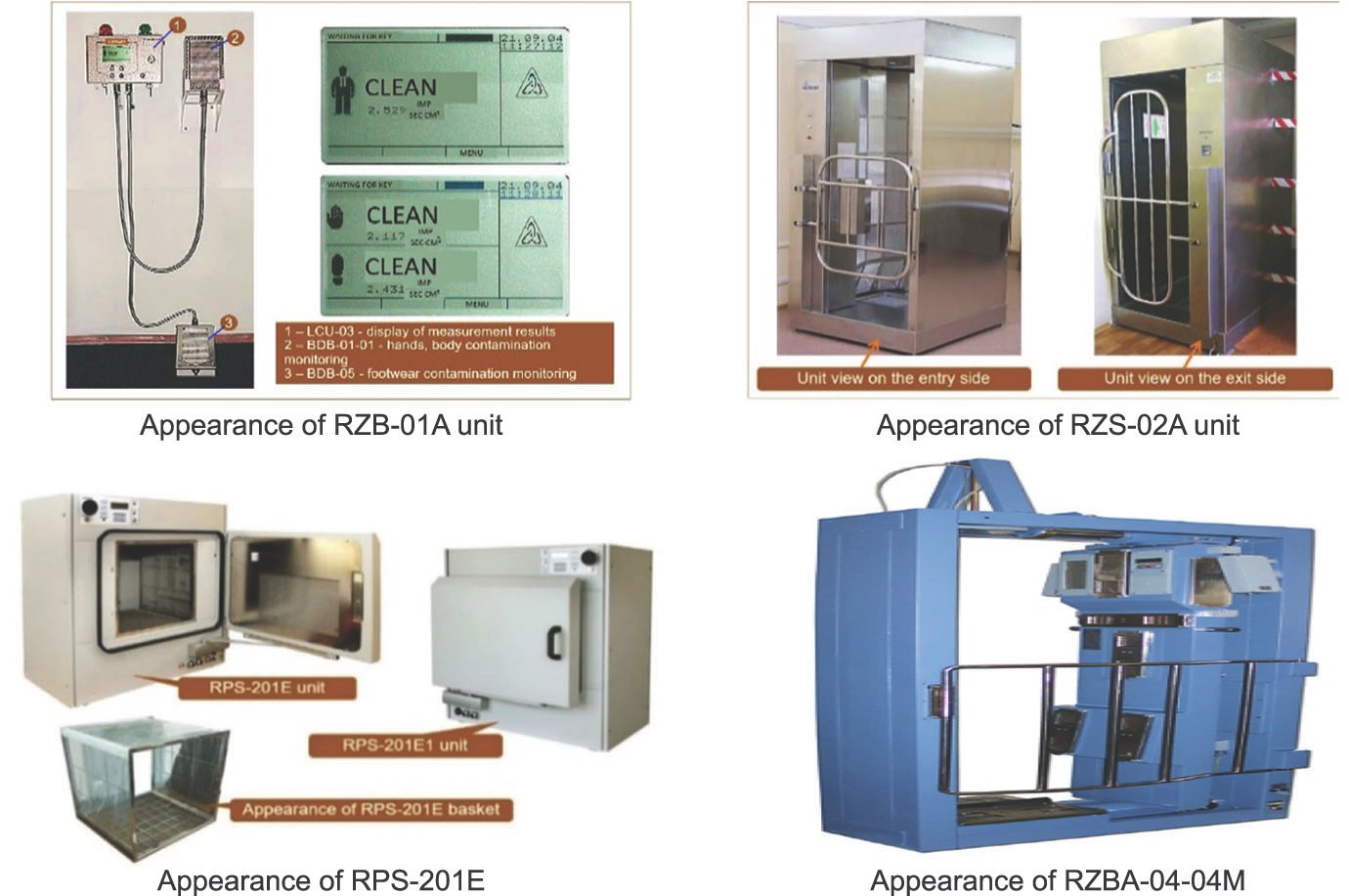
Radioactive contamination monitoring
2.1.4 Individual Dosimetry Monitoring (IDM)
IDM is an essential part of the radiation safety system of the nuclear plant aimed at protecting personnel's health and consists of a reliable determination or assessment of individual effective radiation doses of the personnel during the calendar year.
The main task of IDM is to obtain reliable results on external and internal radiation doses for NPP personnel and seconded persons of contracting organizations who work in the operation area.
IDM consists of:
· IDM of external radiation
· IDM of internal radiation
The following is used for occupational radiation monitoring:
· Individual dosimetric monitoring;
· Group dosimetric control (GDC).
2.1.4.1 Individual Dosimetric Monitoring of External Radiation
Radiation workers received occupational exposure due to sources outside the body or irradiating apparatus known as external exposure. Radiation workers are required to wear a device known as a personnel dosimeter which is used to measure the radiation dose received while working within the radiation area.
IDM of external radiation is divided into:
· Current control,
· Operational control and
· Emergency control.
Current IDM of external radiation is the main kind of monitoring for these all personnel are provided with personal TL dosimeters, which are measured (read) once every quarter. Current monitoring data are official and are subject to accounting and recording in the individual dose card for each employee.
The current IDM of NPP personnel is performed using thermoluminescent dosimeters (TLD dosimeters):
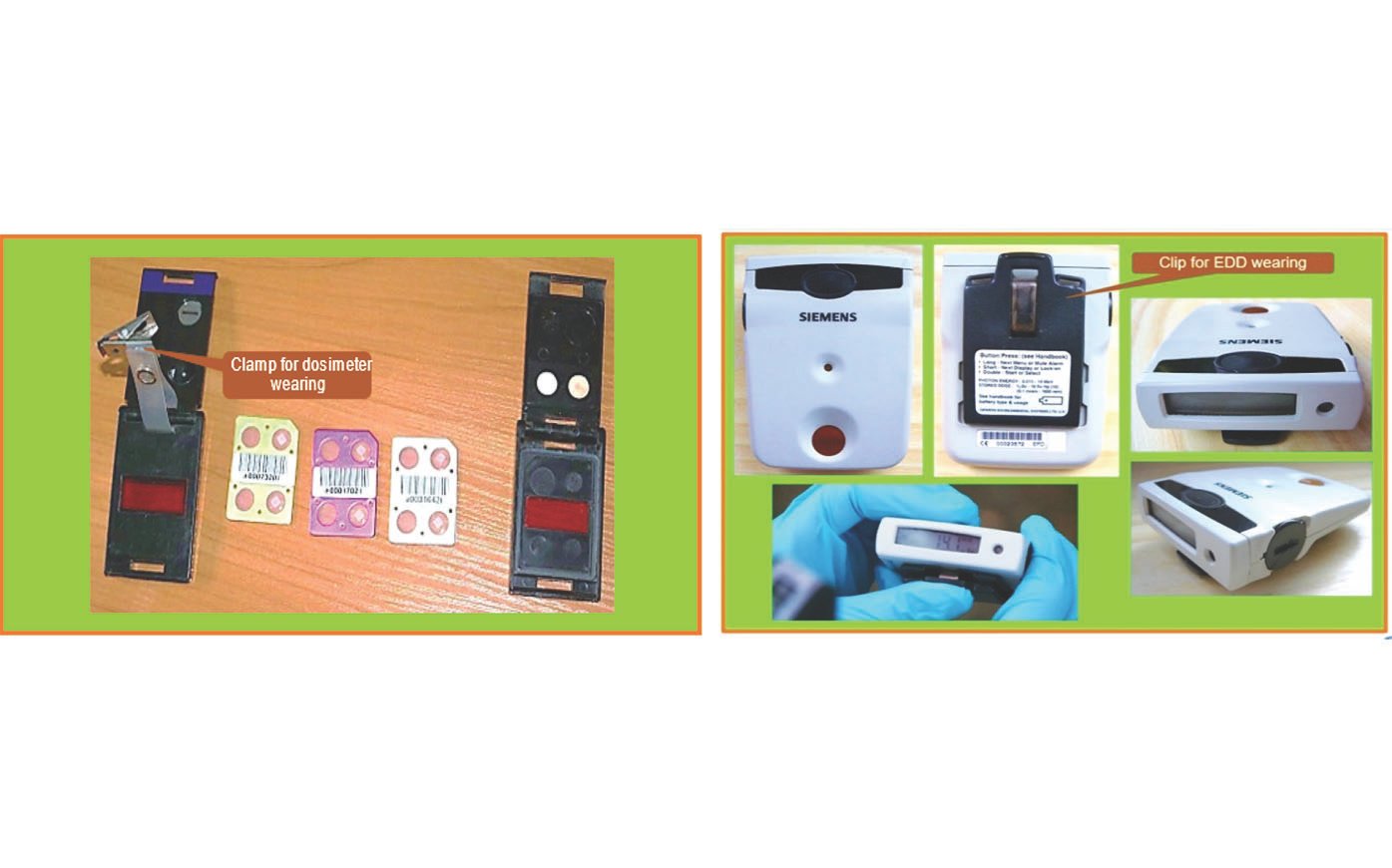
Operational IDM of external radiation is added to the current monitoring and is designed for accounting of operational doses, i.e., doses received during the working day, during an operation, or during equipment walk-around. Electronic Direct-reading Dosimeters (EDD) are used for operational IDM of NPP personnel.
2.1.4.2 Individual Dosimetric Monitoring of Internal Radiation
Personnel who work at workplaces or environments in which the presence of unsealing sources or contamination is confirmed are required to undergo internal exposure monitoring. Working with a contaminated environment and improper way of working with unsealed sources might lead to intake of the radioactive material which results in internal contamination. The ingress of radioactive materials into the body is through ingestion, inhalation, and open wound. To assess the intake of radioactive substances in the body, special instrumentation is used.
Internal radiation is radiation of human organs and tissues due to the intake of radionuclides into the human organism. The main contribution to the internal radiation of personnel is made by gamma-emitting fission and activation products: 22Na, 51Cr, 54Mn, 59Fe, 58Co, 60Co, 65Zn, 95Zr, 124Sb, 131I, 134Cs, and 137Cs.
Two common methods used to measure internal contamination are a direct method and an indirect method. The direct method is a method where the radiation dose is measured directly using measuring instruments-whole body counter (WBC). On the other hand, the indirect method will require samples (bioassay) namely urine, feces, or sweat. These samples will be analyzed in the laboratory to obtain the required data.
Internal radiation monitoring is performed using the following equipment:
· unit “Reference WBC” SEG-10P-01;
unit “Measuring/iodine WBC” SEG-10P-02
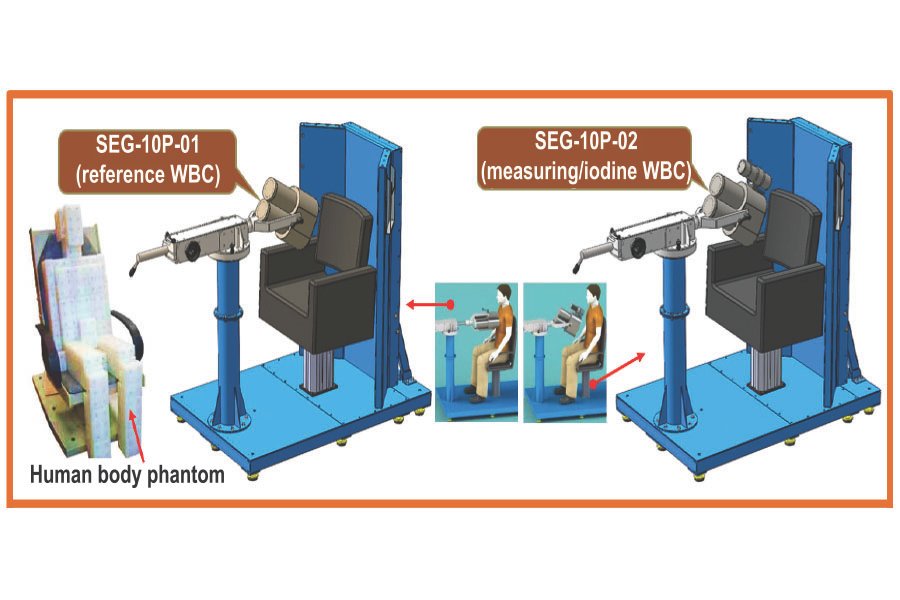
Whole body Counter for internal exposure dose monitoring
2.2 Off-Site Radiation Monitoring
Environmental radiation monitoring in the sanitary protection and surveillance zones is performed by an Automated Environmental Radiation Monitoring System (AERMS), together with the external radiation monitoring laboratory and automated vehicles for sample collection and radiation monitoring.A schematic diagram of AERMS is given in Figure 10.
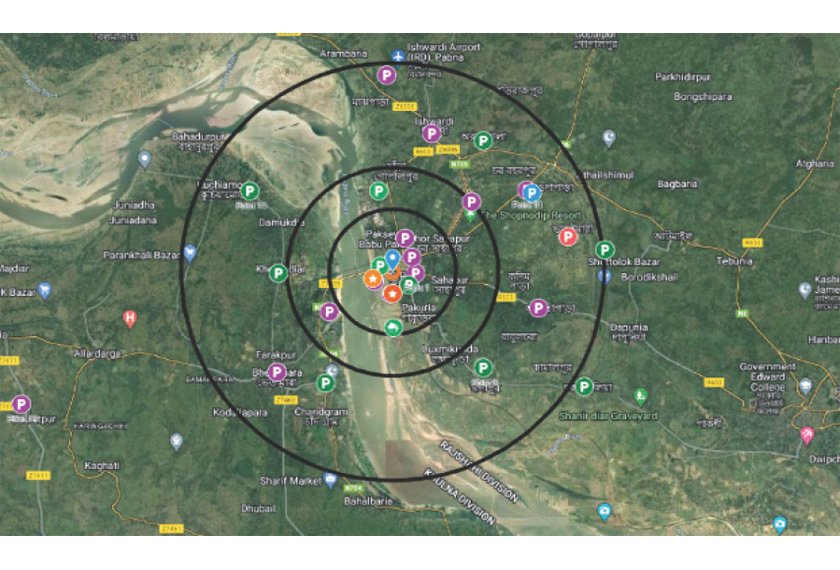
Google location of AERMS posts
An AERMS continuously monitors the radiation situation in all operation modes and forecasts the effect of NPP releases by23 AERMS posts located in different positions around Rooppur NPP.
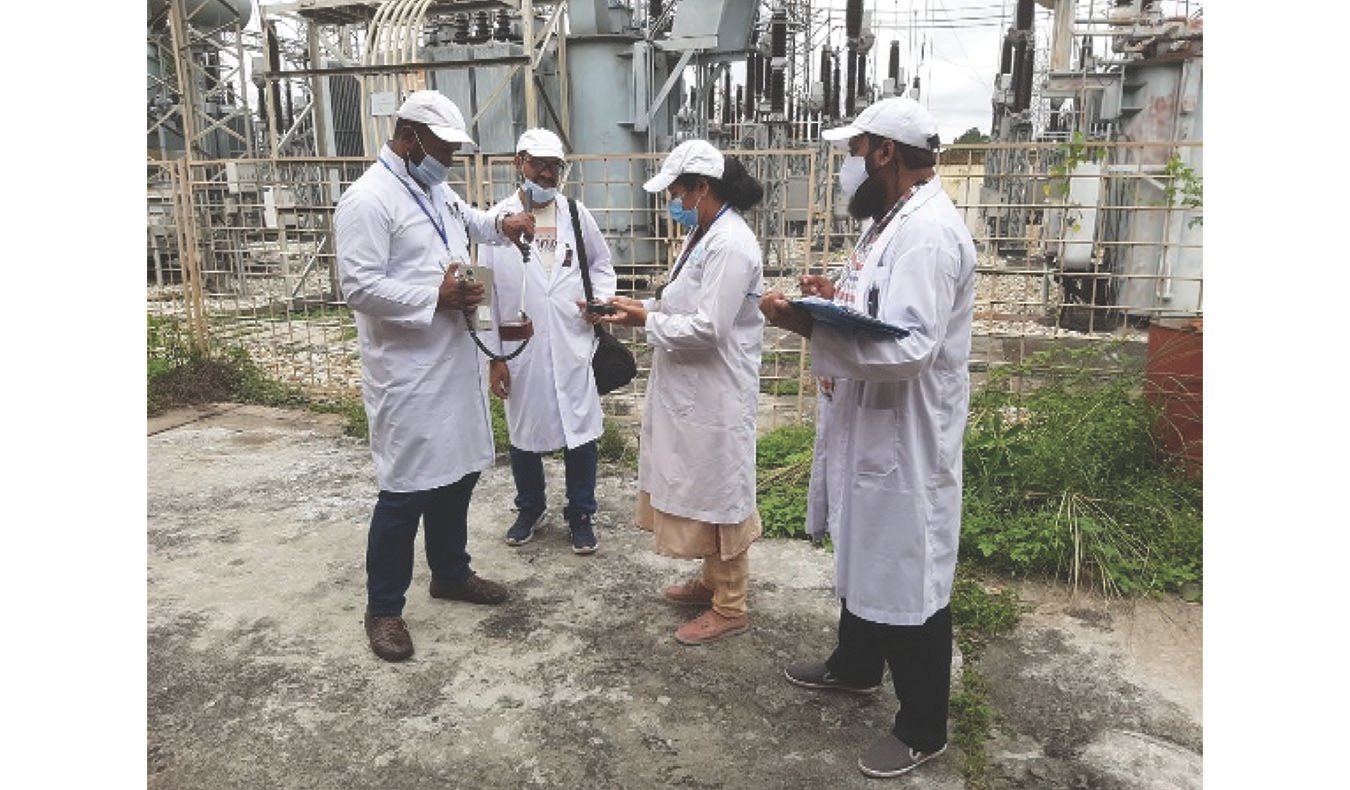
Background data collection
Out of 23 posts, 4 posts have the Filter Ventilation Unit (FVU). They are designed for continuous sampling of air on analytical aerosol filters. The AERMS transmits information to the unified national system for radiation situation monitoring in all operation modes including accidental situations.
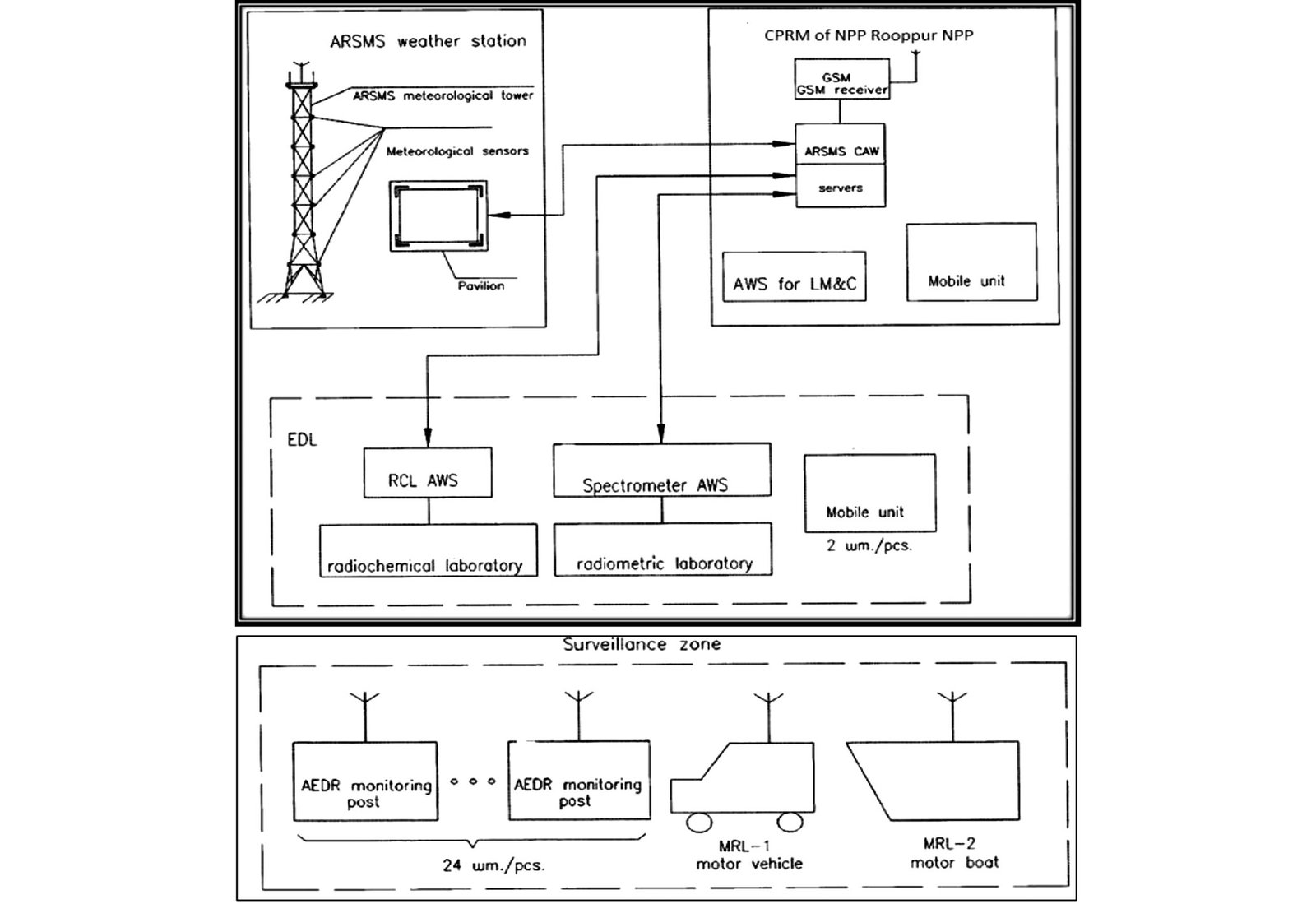
Schematic Diagram of AERMS
An External Dosimetric Laboratory (EDL) will be built outside the NPP industrial area. It will measure radioactivity in samples (both terrestrial and aquatic) taken from the soil, water, vegetation,and food productsin the entire area within the surveillance zone of a radius of 12.5 km around the site, throughout the life of the NPPs to check for any variations from the baseline data. EDL also includes a Mobile Radiometric Laboratory (MRL) which is a specialized vehicle with a special layout, equipped with power supply and life support systems, designed for the work of the operational group which provides dosimetric monitoring, communication, and control means, as well as transportation of equipment, property, and devices. MRL can detect and localize radioactive waste sources. It can also map the boundaries of the contaminated territories and determine the characteristics of radioactive contamination with appropriate equipment. A sampling of soil, water, and air can be performed with MRL.
Information from the AERMS post and the external radiation monitoring laboratory is sent to the central radiation monitoring station, a unified national system for radiation situation monitoring. These posts transfer information via radio channels and GSM channels. The structure of the post includes backup batteries allowing it to carry out control for at least 72 hours during a power failure. From the ARMS computerized workstation (CWS), the radiation situation can be seen and necessary measures can be taken.
Conclusion
The Rooppur NPP (VVER-1200 reactor), which is known as the Generation III+ reactor, is equipped with an active as well as a passive safety system to ensure the safe and reliable operation of the NPP. All necessary measures are being put in place to protect the personnel, public, and the environment from any adverse effect of radiation in all modes of NPP operation including emergencies by ensuring all the regulatory compliances from the national and international bodies. Along with the on-site radiation monitoring system, an additional offsite radiation monitoring system will be put into operation for the sake of public safety and confidence.
Md. Mizanur Rahman, Md. Shohel Reza, Kazi Rakibul Islam, Md. Al Amin, Md. Salah Uddin, Md. Ikram, Md. Forman Ullah, Mohammad Asaduzzaman, Dr. Mohammad Shawkat Akbar, Nuclear Power Plant Company Bangladesh Limited.
References:
|
[1]
|
TECHNICAL ASSIGNMENT; For the development of design documentation for units No. 1 and No. 2 of Rooppur NPP, RPR-AEC0002, Revision B02 (2016) |
|
[2] |
RPR-P0507100101-BAA0002, Automated radiation environment monitoring system AREMS (2016) |
|
[3] |
SRO NO. 205-Law/97, Nuclear Safety & Radiation Control Rules – 1997. |
|
[4] |
RPR.0534.1.0.RK.AK.OP.DC0012, Operation instruction for RZS-06A (2021) section 16.4 |
|
[5] |
Sanitary rules and norms SanPin 2.6.1.2523-09, Radiation Safety Rules, NRB-99/2009. |
|
[6] |
Principle radiation safety rules, OSPORB-99/2010. |
|
[7] |
MU 2.6.1.25-2000, Dosimetric Monitoring of External Occupational Exposure General requirements. |
|
[8] |
МТ 1.2.6.1.2.6.0043.2011, Methods for measuring individual doses of external irradiation of NPP personnel. |
|
[9] |
MU 2.6.1.26-2000, Dosimetric Monitoring of Vocational Internal Exposure. General requirements. |
|
[10] |
MVR 2.6.1.50-01, Determination of radionuclide intake and individual effective radiation dose based on results of WBC measurements of radionuclide content in the human body for nuclear power plant personnel. |
|
[11] |
MUK 2.6.1.09-03, Regulation of dosimetric monitoring of the internal exposure of nuclear power plants personnel”. General requirements; |
|
[12] |
RPR. 0120.0.0.ES.DD0085, Environmental monitoring in the area of the site of Rooppur NPP, (2020) |