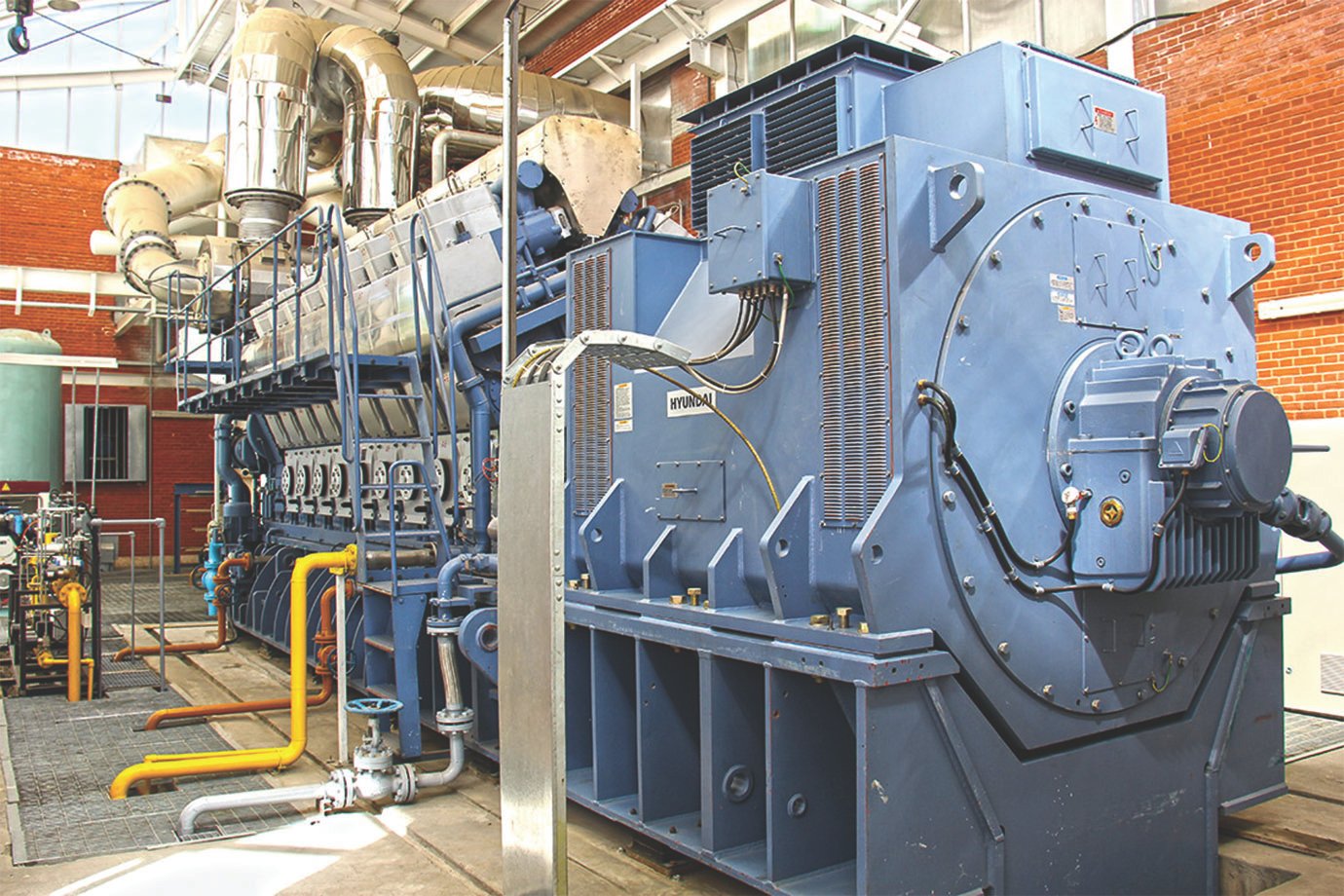
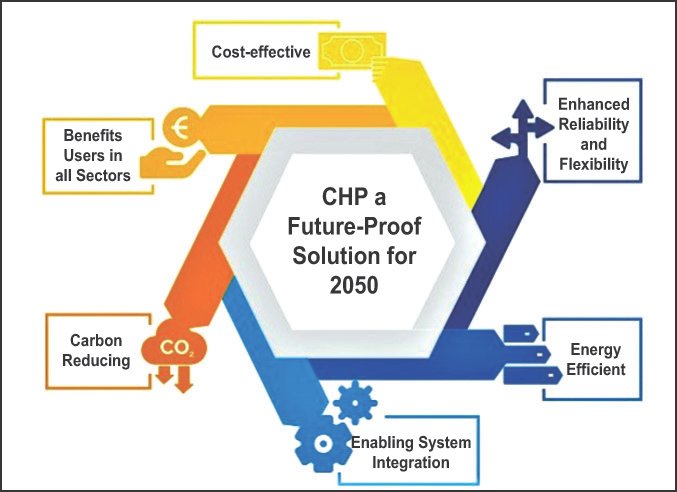
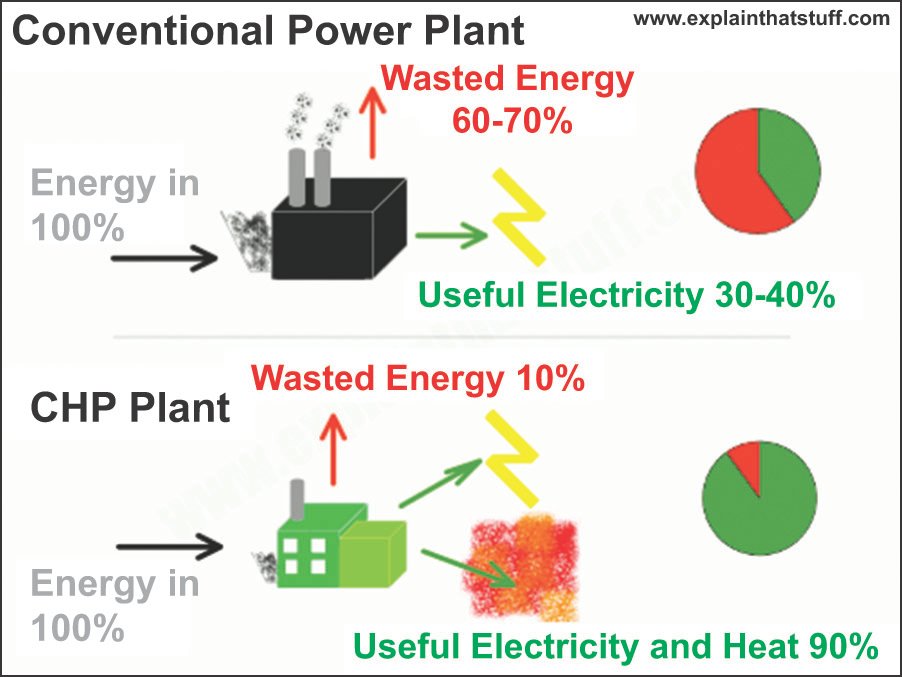
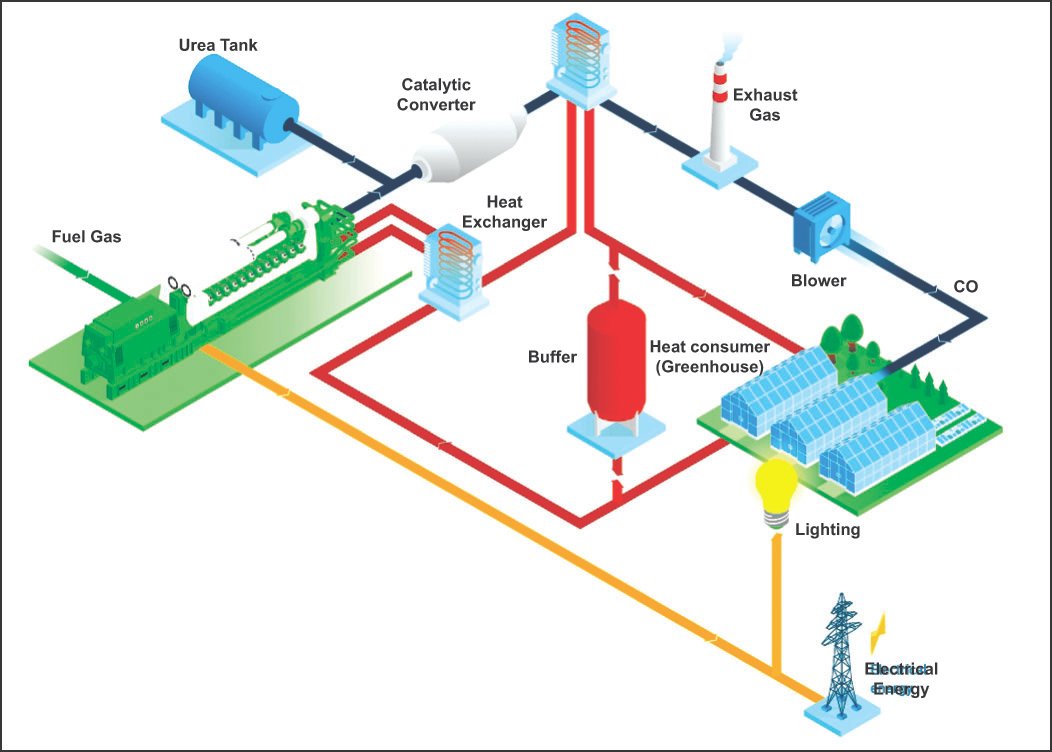
Cogeneration is an efficient technology that has capability to generate heat and electricity simultaneously from a single fuel source, and re-cycled the bi-products (heat, waste materials) to produce in the form of energy (electricity). It is also called “Combined Heat and Power (CHP)” and the power is produced by renewable sources (through steam or heat). It means that the cogeneration is on-site generation through a gas turbine connected with a generator to produce electricity, and additional power by using exhaust heat/steam. The technology is more energy efficient (86-90%), efficiency gains 40%, cost-effective and sustainable than conventional plants that generate heat and power separately in two different units (boiler, power plant) with only 40-44% efficiency. But the CHP system ensures 90% use of natural gas (with only 10% losses), and saves 40-44% of total gas used.
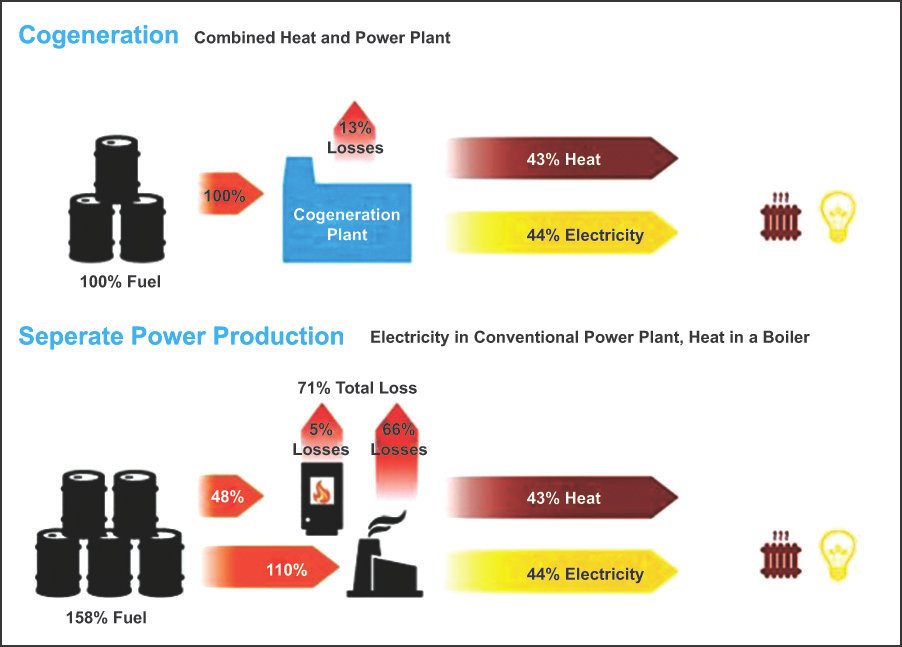
For example, in a normal separate plant, steam generation of 34 heat units in a boiler (fuel input 40 units), and 24 units electricity in a conventional plant (fuel input 60 units), a total of 100 units get fuel losses of 42 units, while in the cogeneration plant, the fuel input will only lose 68 units (saving 42 units fuel) to generate both heat and electricity, fuel losses only to 10 units.
Cogeneration technologies also incorporate renewable energy sources. If renewable energies are used, it makes sense to utilize the waste steam/heat from generation processes for additional energy. CHP may be of all sizes, from 1 KW to nearly 1 GW, and can be used by all types of users, from a single household to large industrial complex, or entire city. Energy efficiency is an increasingly important contributor to climate change mitigation while at the same time reducing the energy cost, presenting an opportunity for technological innovation. The high level of efficiency achieved in the process, using waste heat as a bi-product of electricity generation.
Historical Background of Developing Cogeneration
The cogeneration principle is not a new one. It has been already in place globally for many decades as state-of-the-art technology. The advantages of a cogeneration plant were first utilized by Thomas Edison’s Edison Illuminating Company, which supplied both electricity for street lighting and steam for industrial use in New York City in 1882. The world is now paying for a new efficient cogeneration system, to integrate the renewable sources of energy, while declining fossil fuel. Secure, reliable and affordable energy supplies are fundamental to economic stability and development. More efficient use of primary energy sources can help mitigate the impact of the negative trends. Cogeneration represents a proven technology to achieve that goal. Many industrialized countries have taken it to heart and have developed explicit objectives and policies to promote cogeneration.
In February 2004, the EU adopted cogeneration policy to promote cogeneration in the European countries by addressing several problems, including lack of awareness, unclear provisions related to electricity network access, inadequate support from local and regional authorities and disparate rules determining how cogeneration qualifies as highly efficient. The reason why this technological concept attracts so much attention is that the efficiency gain of cogenerated heat and power as opposed to the traditional separate provision of heat by local plants and power from the grid is more than 40% in most developing countries, relates to savings of primary energy. The climate change mitigation impact is even greater, as cogeneration often also implies a fuel switch for electricity generation, for example from coal-fired power stations to gas-fired engines.
Global Practices in Cogeneration
The world is now dealing with green energy aims to raise the world's de-carbonization ambitions, and to deliver a net-zero emissions economy by 2050, in a cost efficient and secure way (EU Cogeneration Roadmap). The key enablers of a net-zero economy include energy efficiency, energy system integration as well as the direct and indirect electrification of a number of industries. The EU has already taken various policy initiatives to ensure the roadmap and implementation of the objectives (e.g. Energy System Integration Strategy, Hydrogen Strategy, Replacement, Regulations/Directives, etc.). The global core elements of a cost-effective net-zero emissions economies are: energy efficiency, electrification, green energy, and flexibility- that covers the energy system integration.
Energy efficiency and energy systems integration are key to reaching carbon neutrality, and the cogeneration system the EU is committed to ensure these key objectives by 2050 as cogeneration is its backbone. Global scenarios have not fully captured the benefits of efficiently combining heat and power as an enabling solution to move to a net-zero integrated energy system. This approach will accelerate emission reductions by 2030, while empowering European citizens and industries to generate their own efficient, reliable and affordable clean energy locally.
The EU has already taken three objectives: (1). explore the potential of further integrating Europe’s energy system in an efficient way to reach a carbon-neutral economy cost-efficiently; (2). assess the role of cogeneration, building on the EC’s long-term de-carbonization strategy; and (3). provide recommendations to better secure the benefits of efficient and local system integration solutions in policy-making and modeling.
The CHP system represents a very favorable energy solution for communities, district power heating and commodities (e.g. leather, fruits) to heat for drying, desalination and chemical application, and the application includes residential, commercial and industrial sectors. Cogeneration supplies presently 11% electricity and 15% heat in Europe, with a projection to provide 20% electricity and 25% heat by 2030. The most intensive CHP economies includes Denmark, the Netherlands and Finland (more than 60% electricity produced by cogeneration), other key EU countries including Germany (7.3%), France (11%), Spain (4.6%), Italy (1.1%), Belgium (2.5%), and UK (9%). The CHP is now in global demand and practices in most developed countries.
Cogeneration produces renewable energy (mainly from steam or heat), which is most cost-effective. Presently, 27% fuel is used in Europe from CHP, mainly from renewables waste (biomass, biogas, heat steam, etc.). Cogeneration reduces GHG, mainly CO2 emission (CO2 shared by USA 13.43%, China 30.34%; while EU27+UK 8.69%), and savings of 630 TWh primary energy, and reduces annually 280 million tonnes CO2 in Europe. The CHP plant needs 42% less fuel to produce power, and reduced energy cost.
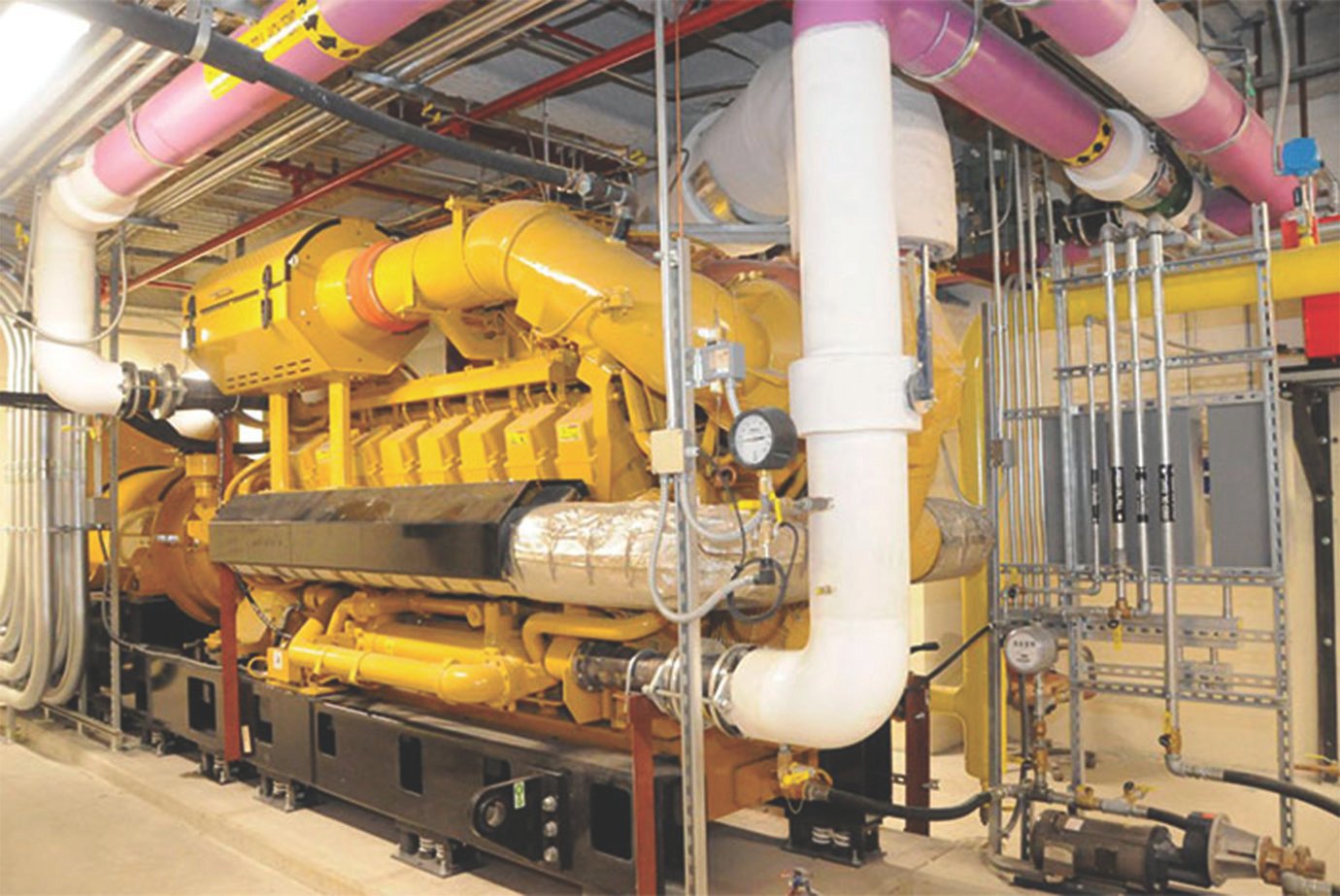
The CHP system in the plant, a steam turbine fueled with natural gas for electricity generation, and the waste heat is used for heating purposes. The system, one of the most suitable technologies for integration, is used for adjusting peak power loads, and reducing electricity costs. It is important for households, hospitals, super-malls, industries, cities, also in all sectors, helps to reduce pressure on grid loads.
Our neighboring countries – India, Pakistan, Nepal, Sri Lanka, Thailand, and other Asian countries – are widely using CHP for the last two decades, and they have their own cogeneration policies, Act, Tariff Regulations. At present, Japan is using 14,000MW CHP electricity in industrial and commercial purposes, and aims to increase 22,000 MW by 2030, while reducing nuclear power generation from 11% to 4%. Cogeneration makes sense from both macro and micro perspectives. At macro level, the load pressure to be shared by private sector industries and natural energy sources are conserved. At micro level, the users’ energy bill can be reduced, for using both power and heat at the site, and a rational cogeneration tariff is practiced.
Cogeneration in Industrial Sector
Cogeneration is important for industry sector development. Presently the global industrial sector is moving fast to adapting CHP technology, with a trend to power market participation. CHP is suitable and encouraged in small to large scale industries, to buildings, hospitals, city/district and malls, where heat demand is appropriate, and the electricity market is favorable for good economic returns. In the industrial sector of most developed countries, a high level of political recognition is present (e.g. Germany). As a result, the radical changes are seen in the economy, where comprehensive assessment of heating and cooling system developed among the communities (e.g. France, Spain, Greece). There are also best practices with various government supports, i.e. tax incentives, capital grants, quota certificates, and feed-in tariff/premium in the most CHP adapted countries (e.g. Belgium, Finland, France, UK, the Netherlands).
The industrial sector, including sugar, pulp and paper mills of most countries are rapidly adapting CHP units, and getting various benefits. In the industries, the waste materials (e.g. bagasse, black-liquor, biomass, and biogas) are used as an input to produce more power. Cogeneration is the backbone of integrated energy for a sustainable development, linking with power at the local level, when and where needed with a multiple-benefit return.
Cogeneration: A Key Solution Towards Net-zero
The steam-based cogeneration reduces the use of fossil fuel, and lower emissions of particles, CO2 and other greenhouse gases compared to carbon-intensive fuel. For example, if the bagasse (waste from sugarcane) is decomposed, it would release Methane gas, a GHG which is 27 times more powerful than CO2, but CHP reduces emissions about 0.55 tonnes CO2 equivalent from per tonne bagasse. The GHG reduction qualifies the Carbon Credits (Certified Emission Reduction) within the term of Clean Development Mechanism (CDM) established by the Kyoto Protocol. The CDM provides industrialized countries with various incentives to invest in CO2 emission reduction projects in developing countries to promote sustainable development.
The world is on track to reaching 2022 and 2030 milestones, the pathway to a carbon neutral (net-zero) economy by 2050, with cogeneration as a key solution. The efficient CHP can produce additional power by savings of energy, reducing power cost and GHG that is why it is also termed as the “footprint” to the environment that can change the world for a safer planet.
Most developed countries (with COP leaders) promised to deliver a net-zero carbon neutral energy system by 2050, through higher ambition on energy efficiency, cost effectiveness, system integration and renewables, and found that cogeneration is a key solution. Cogeneration is an enabler of a net-zero economy. For example, Europe optimized a system cost-reduction of 4.1-8.2 billion Euro, reduced 140 Mt of CO2 (2021), would ensure more 350 Mt CO2 cuts by 2030; and will continue reducing 5.5 Mt annually by 2050. In Germany, cogeneration reduced CO2 emissions in 2015 by more than 4% (170 Mt/year), while in 2030 this saving will increase to 10% (950 Mt/year), equivalent to 200% of India’s total annual CO2 emissions. The emission reduction is even larger in those countries where electricity generation, transmission and distribution systems are older and inefficient.
Contribution to International Energy Efficiency Policy Reform
Cogeneration is a key mechanism to develop energy efficiency, and plays a key role in the international energy policy reform, as part of the efforts to achieve climate targets. The 20 leading economies of the world (G20) recently launched an Energy Efficiency Action Plan. The objective is to encourage greater uptake of efficiencies in the housing and industrial sector, with participating G20 countries promoting energy management best practices. The G20 Energy Efficiency Action Plan (G20-EEAP) establishes a plan to strengthen energy efficiency collaboration between its members and partners on a voluntary basis. The International Partnership for Energy Efficiency Cooperation (IPEEC) has been established to perform an implementing function and supports collaboration under the G20 EEAP.
One of the G20’s priority areas for energy efficiency is the use of high-efficient equipment to improve energy efficiency in the industrial sector, contributing to a lowering of greenhouse gas emissions. This demonstrates that the importance of promoting cogeneration technology for a wider range of applications has already been recognized.
Contribution to International Development Goals
Cogeneration technology is perfectly suited to contributing to international development goals, in particular the Sustainable Development Goals (SDGs). One objective of the SDGs is to ‘double the global rate of improvement in energy efficiency by 2030’ relative to the reference year 2010 (SDG-7.3). Cogeneration serves this objective perfectly, also in relation to the overall ‘energy related SDG’ (SDG-7) to ensure access to affordable, reliable, sustainable and modern energy for all. The contributions are: (a) the use of cogeneration instead of conventional boilers, for instance in factories. Excess electricity can be used to supply households and small and medium-sized enterprises; (b) cogeneration can be used to refrigerate food and temperature-sensitive goods, in cold stores in rural areas based on biomass, e.g. agro-waste; (c) cogeneration can also be used as a substitute for diesel generators in the education and health sectors, providing heat, steam and cooling energy for operations, hygiene and medication. In all such cases, cogeneration generates added value by providing economic and financial benefits.
The important example is the ‘Sustainable Energy for All Initiative’ put forward by the United Nations to introduce precise goals into the SDG process, the ‘Copenhagen Centre on Energy Efficiency’ is the thematic hub for energy efficiency of the initiative and is dedicated to accelerating the uptake of energy efficiency policies and programs at a global scale. This is the UN global platform for cogeneration networks to accelerate improvements to global energy systems and in industry sectors. The net-work is also a potential for all emerging and developing countries.
Contribution to National Goals in Developing Countries
Cogeneration helps to increase electricity generation and its capacity. Most developing and emerging countries suffer bottlenecks in electricity supply. Many countries face loadshedding or black-outs. Industrial production and the development of industry are hampered by a lack of generating capacity. Energy consumers need to invest heavily in standby diesel generators.
The effect of cogeneration on capacity depends of course on the respective load pattern of the power system and the energy consumer operating the cogeneration equipment. Cogeneration units are increasingly made moveable, a feature that greatly depends on the flexibility of the electricity system and market.
The bottleneck in generation (as well as transmission and distribution) capacity is partially due to the fact that politicians do not want to agree to unpopular tariff increases which are in many cases necessary in order to undertake the investments needed. Cogeneration can alleviate these bottlenecks, as the investments are primarily undertaken by the private sectors, be it in the energy consumers in the industrial sector (e.g. Bangladesh has the opportunity to use natural gas for getting more power, energy savings, and increasing efficiency by adapting cogeneration). As a result the country can achieve its national goal and vision (e.g. for Bangladesh, 8th FYP, SDG-2030, Energy Targets-2030, and Vision-2041).
Most power generation plant and other industrial plant are based on fossil fuels, in some cases import fuels, subsidize in energy and power (electricity, oil, gas, LNG, LPG, etc.), a significant burden on their energy balance and energy security, cogeneration is a solution, to be adapted for achieving national goals.
Cogeneration Potential in Bangladesh
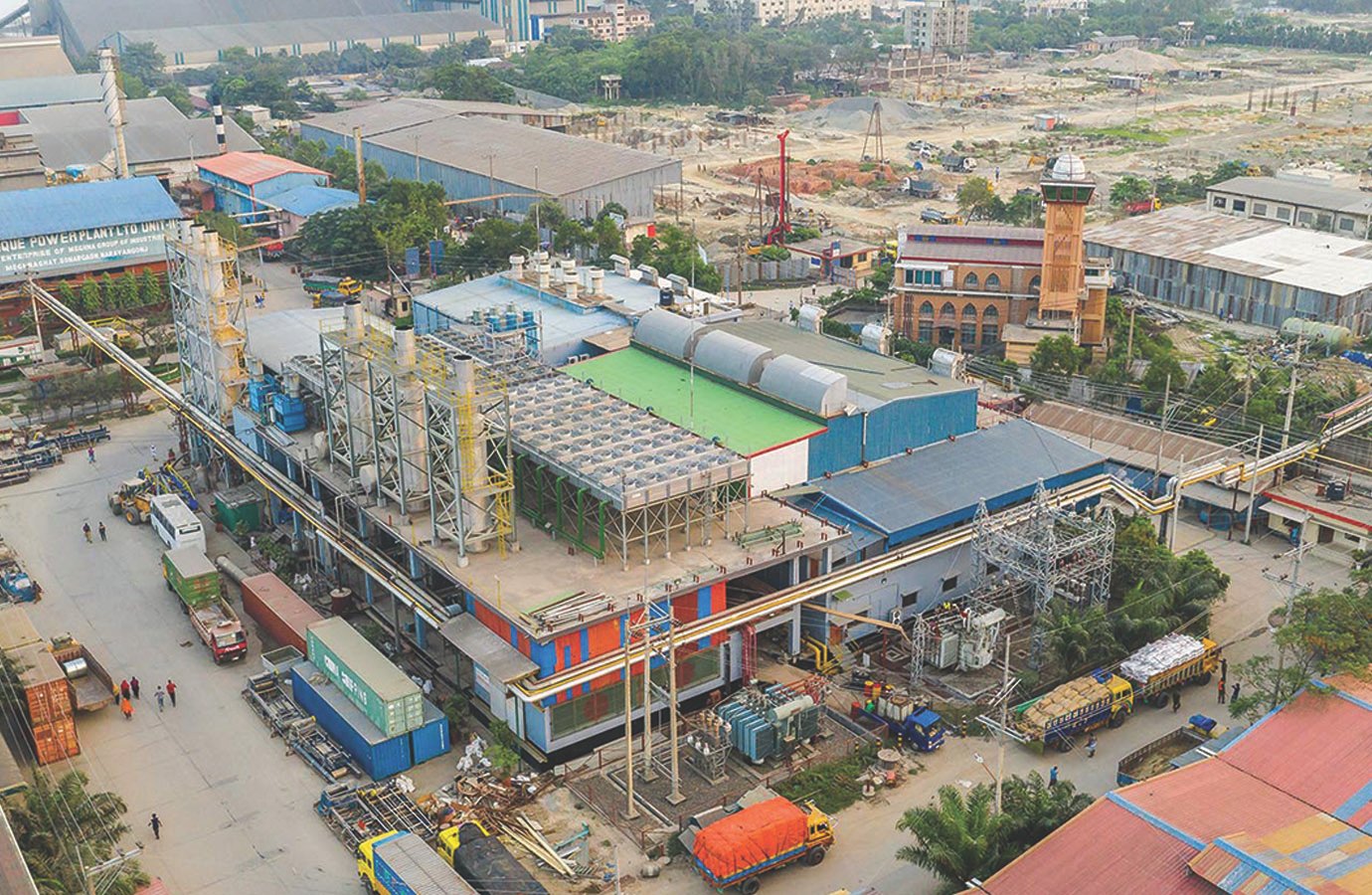
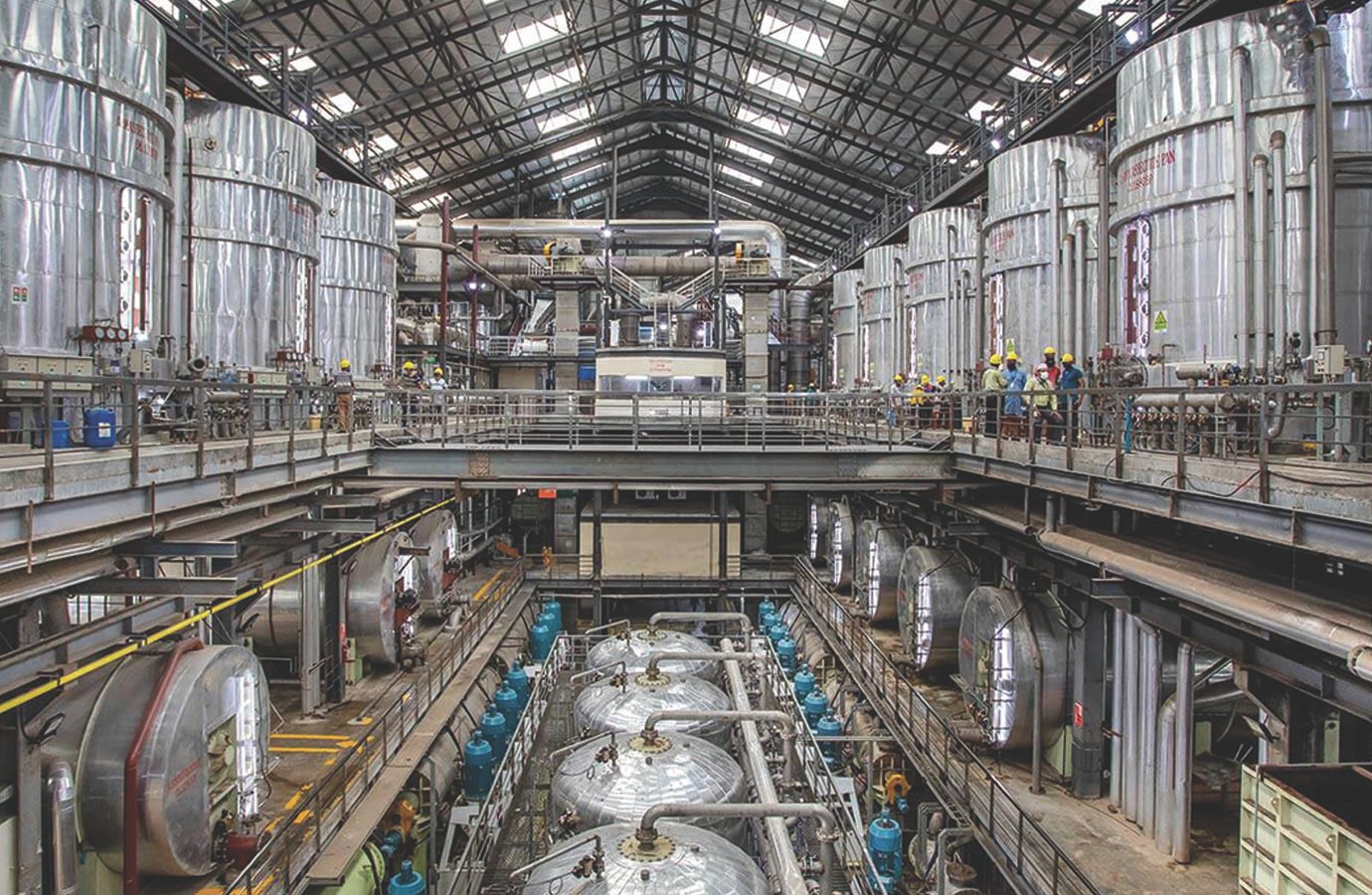
The cogeneration system has already been introduced and using in Bangladesh with a very small scale, mainly in sugar industries (e.g. Meghna Sugar Refinery, Deshbandhu Sugar, and City Sugar). The potential of CHP has a wide-scope to use in most industries as well, most investors are interested for a tariff system with classified policy and regulations. The system can be adapted in most industries, and other sectors where natural gas is the main source of fuel for power production. The CHP potential sectors are (gas uses in percentage): power plant (42.99%), captive (15.64%), fertilizer (5.50%), industry (15.76%) and tea-garden (0.09%).
If adapting CHP system to approximately 60% of gas-based power plants by phases, it is estimated to save at-least 664.86 MMCFD gas (out of 2639.34 MMCFD of total production 3300 MMCFD), possible to produce additional 24,607.5 MW power (gas savings calculated @42%, if considered @35% savings, it would be 20,000 MW power), to be implemented by 2041. To achieve these visionary targets, they need government initiatives and support (e.g. policy, classified tariffs and regulations, incentives, etc.). The other potential sectors are: sugar industry, pulp and paper, textile, pharmaceuticals, leather and tannery, and renewables. In that case, more power would be generated, achieving energy targets and more are surpluses. The government may find other potentials to adapt cogeneration for the national interest.
There are some big industrial investors are concerned for achieving energy targets and sustainable industrialization in Bangladesh, and already introduced cogeneration in their industrial sectors (the pioneer one is the Meghna Sugar Refinery of Meghna Group of Industries, who initiated a proposal in 2018 to the government, the Power and Energy Ministry, cogeneration to be included in the regulations as tariff classification). The government support, encouragement and expediting the implementation of the cogeneration system in Bangladesh, would promote more domestic and foreign investment in the country.
Conclusions
Cogeneration can contribute to Bangladesh’s ‘Nationally Determined Contributions (NDCs)’, a key solution to implement the Paris goal of ‘Net-zero’ by 2050. The power from CHP is renewable, environment-friendly, clean and less emissions than other fossil fuels. That is why cogeneration is important and needs to be widely introduced in Bangladesh. As a result, cogeneration would be a better opportunity in the energy and power sector, a pathway for achieving the power target of 40% from renewables by 2041.
Cogeneration is still seen as embedded generation which poses a threat to the national utilities in many countries. The benefits for the security of energy supply are still not appreciated by many policy-makers and still facing regulatory barriers in the developing countries (e.g. Bangladesh). The issue should be taken seriously in Bangladesh, and addressed properly to overcome the issues immediately for the national interest.
Cogeneration can play a vital role for producing more power and savings of natural resources achieving the energy targets, and the Paris goals on emissions, is relevant to all sectors, Bangladesh - to be expected a developed country by 2041.Government to develop a favorable regulatory framework with a roadmap on cogeneration, specifying the use of fuel is expected and recommended.(Sources: Cogeneration-Global Practices-2020; CHP-EU-27 Roadmap-2019; Bangladesh 2nd Perspective Plan-Vision-2041).
AKM Monowar Hossain Akhand, Former Additional Secretary (Director), Bangladesh Energy Regulatory Commission-BERC, & Ministry of Public Administration-MOPA, Email: makhand14@yahoo.com