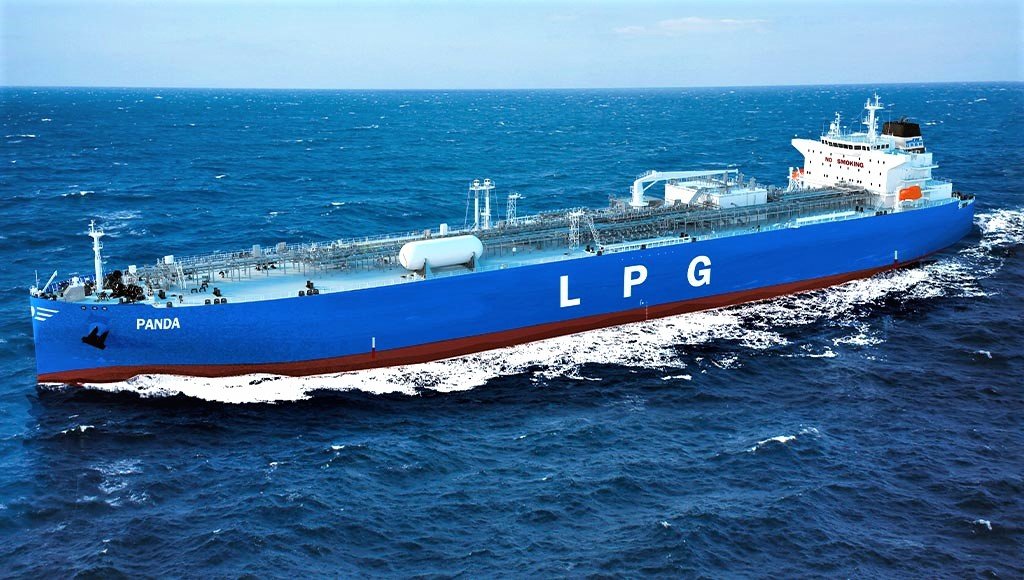
The energy consumers are increasing gradually in Bangladesh. The key energy source is natural gas, but the supply is less than the demand. The country has an average daily natural gas production of 2794 MMCFD that is insufficient to meet the 3614 MMCFD demand for commercial and household purposes, including gas-based power plants. The pipeline supply of gas is not accessible in all parts of the country. Therefore, Liquefied Petroleum Gas (LPG) can be an alternative solution for the deficit. Bangladesh has liberal policies for using unlimited natural gas with a price of BDT 975 for double-burner stoves, while metered-gas price is BDT 7.0 per CF. But due to depleting the reserves, the natural gas demand will outstrip supply by 2030. For this reason, the LPG has already taken its place in the market as an alternative cooking fuel and commercial purposes, to meet the gas demand.
The LPG is clean burning, cost-effective and has easy transportation facilities. As a clean fuel, the LPG is globally recommended for cooking fuel to reduce household air pollution and the adverse health consequences of the traditional fuel, the LPG market is growing fast in the country. The LPG is considered as the alternative energy for cooking fuel and commercial purposes with a greater prospect in Bangladesh. LPG contains 48% propane, 50% butane and 2% pentane, but most operators use a mixture of 30:70 for marginal interest. LPG is most environment friendly fuel and safe. It is pollution free, about 5 times more efficient than traditional fuels, produces less greenhouse gases and CO2 production from LPG is 15% lower than diesel/kerosene, 36% lower than coal and 67% lower than fuel wood.
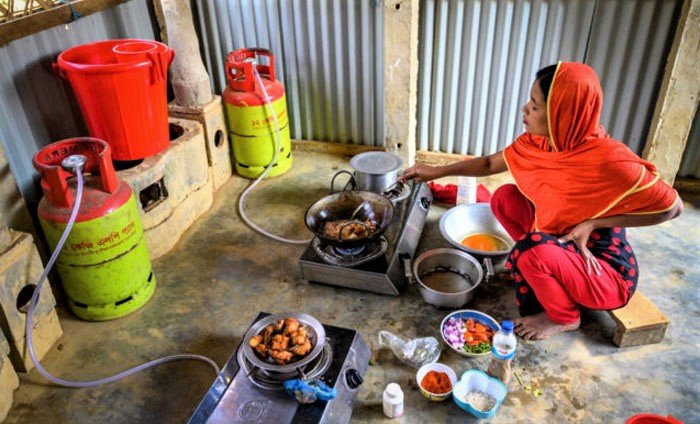
LPG Growth Trends in Bangladesh
The LPG production in the country started in 1978 when the LPG unit was set-up at ERL in Chattogram by the state-owned BPC. According to the energy policy 1996, a few private investors came-forward to install LPG plants to meet the gas demand in 1997. Laugfs Gas Bangladesh (formerly Petredec-Elpiji), was the first private company which started importing and distribution of LPG in 1997. Later, Bashundhara Group entered in 1999, Jamuna in 2000. During 2014-2016, the LPG market expanded with Omera, BM and Beximco. Now the LPG market is led by Bashundhara (24%), Omera (20%), Jamuna (17%) and BM (11%).
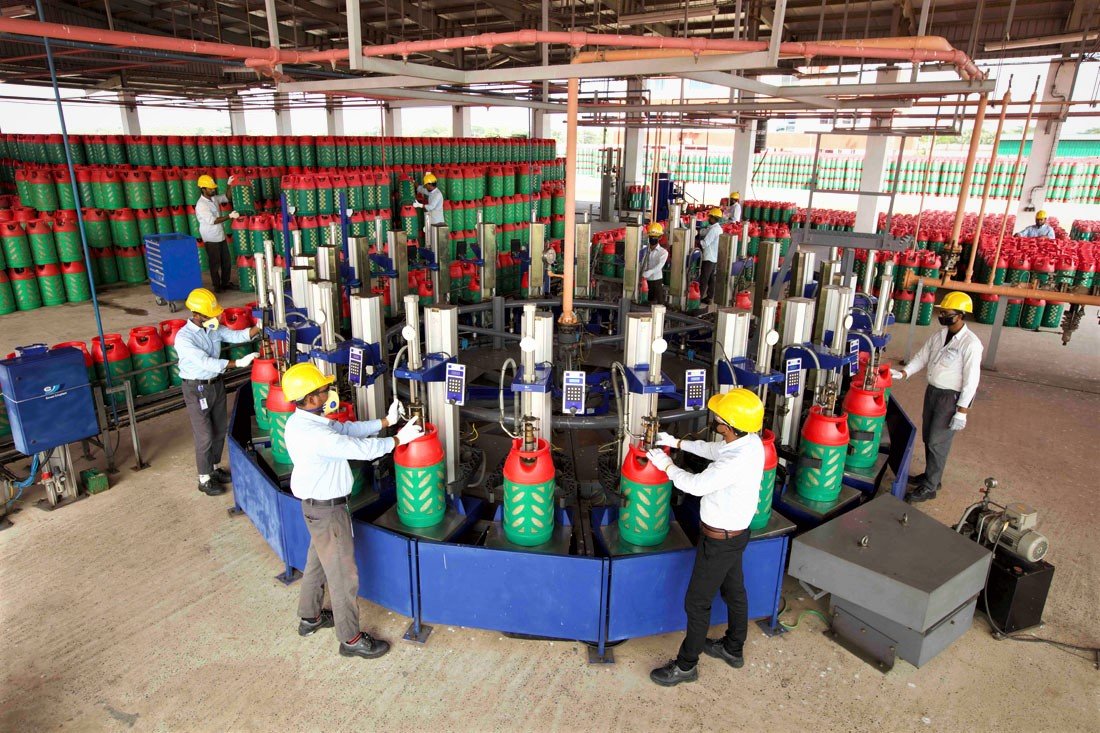
Some LPG plants have larger tanks (5000 MT) and production capacity (250000 MT): e.g. Banshundhara, BM, Meghna, JMI, Omera, Beximco, Unitex and Petromax. Others are smaller: Orion, Petromax, Energypac, Navana, Teledata, Meghna, Total, Premier, Universal, Padma and Unitex. Among 40 plants, 12 are located in Mongla, 12 in Sitakundu, and 16 in greater Dhaka.
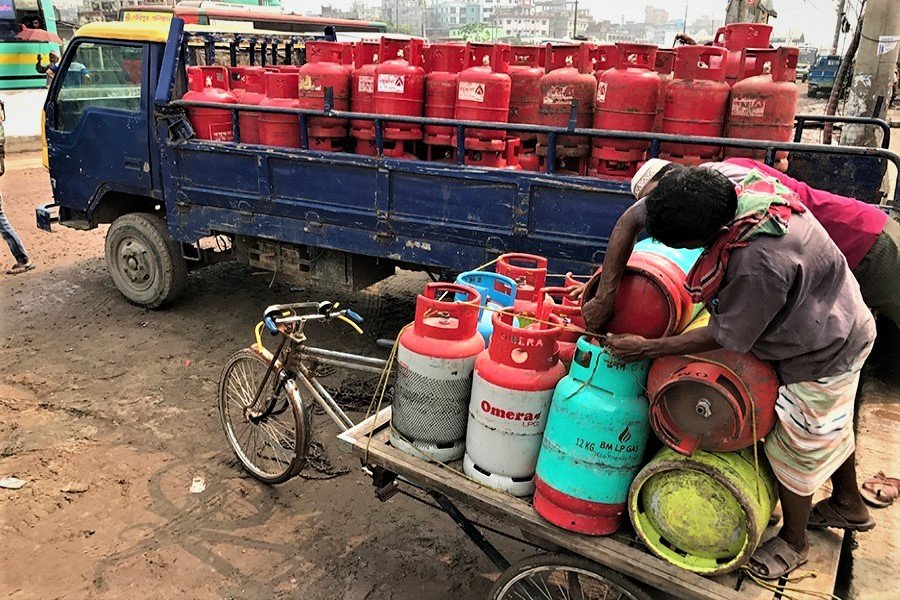
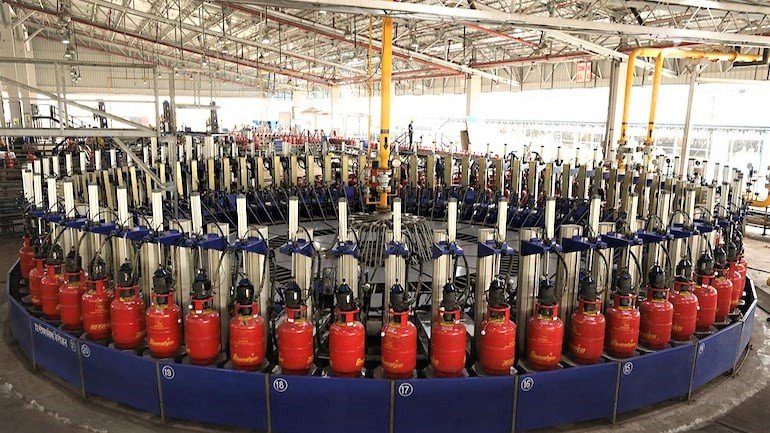
Presently, a total of 40 LPG plants (with 8 satellite) producing 2.56 MMT of LPG with 88,000 MT storage capacity, and supply it through 3000 dealers and 38,000 retailers to the end-users. The LPG demand in Bangladesh is almost 10,00,000 MT per year. Kailashtila gas-field at Sylhet is supplying 5% of current demand through ERL and the remaining 95% is being imported by the private operators. In 2020, a total of 10,20,000 MT LPG was used. This demand will increase to 18,00,000 MT in 2025, and 25,00,000 MT in 2030.
LPG Pricing Features
Complying with an order issued by the High Court, the Bangladesh Energy Regulatory Commission (BERC) held a hearing on 14-17 January 2021 and fixed the LPG prices on 12 April 2021 with immediate effect for the first time ever at consumers’ level. The BERC is committed to re-fix the LPG prices in every month based on the rate of the international market, mainly on CP price. Consumers were expecting rational pricing to keep their monthly costs within budget while LPG Operators were looking for a good margin on sales, considering the global price. BERC would ensure a unified price at retail level to reduce public sufferings.
LPG Contract Price (CP), commonly called the ‘Saudi CP’ is the primary driver of LPG pricing in the Asian and Far-East countries, including Bangladesh. It is the international price-benchmark set at the beginning of each month by Saudi Arabia’s state-owned oil company Saudi-Aramco. Aramco's CPs, which set the price of LPG lifted from the Saudi-ports, are closely watched by the market as they tend to set a base-level for LPG pricing for most markets of the region. For fluctuating the CP price, domestic LPG prices also vary every first day of the month, but constant throughout the whole month. BERC fixes price on monthly-basis in accordance with the Saudi-CP price and make adjustment accordingly.
In Bangladesh, BERC fixes the LPG prices at consumers’ (retail-price) end based on the Saudi-Aramco CP price, on the basis of Propane and Butane mixture ratio: 35:65. The price includes ship fair, traders premium charge, import parity price, landing charge, toll-duty charge, river dues, custom survey, LC charge, insurance charge, C&F commission, disport inspection charge, port charge, and vat. Although the BERC fixed the price, most private LPG retails each 12.5 kg cylinder at BDT 1,050-1150 in the local markets.
Private Companies 12 kg LPG Price at Retail Level
|
Month-Year |
Per-Kg Price
(BDT) |
12 Kg Price
(BDT) |
Adjustment Per-Kg (+increase,
-decrease) |
Auto-gas
Per liter
(BDT) |
CP-Price
(US-$/per MT) |
|
August 2021 |
82.72 |
993.00 |
+ 1.42 |
48.71 |
620.00 |
|
July 2021 |
74.24 |
891.00 |
- 7.06 |
44.00 |
526.75 |
|
June 2021 |
70.17 |
842.00 |
- 11.13 |
41.74 |
482.00 |
|
May 2021 |
75.49 |
906.00 |
- 5.81 |
44.70 |
540.50 |
|
April 2021 |
81.30 |
975.00 |
0 |
47.92 |
605.00 |
The BERC is following the ‘Import Parity’ formula for LPG pricing in Bangladesh. In this approach, the price is regulated through a direct-linkage to the international CP price of the products, and adds the relevant build-up logistics cost. The consumers pay only the actual cost of LPG (a subsidy mechanism of different tax exemption packages). The import parity approach is complex for the development of LPG market, as it balances the needs and concerns of the consumers, while offering market participants of investors on the existence of their investments.
Import Parity Price
Saudi CP+ freight charges and traders’ premium+ other charges (landing-charge, river-dues, custom-charge, LC-charge, insurance, C&F commission, port-charge).
BERC calculates the LPG prices with the following formula:
LPG Price at Consumers’ Level
Import parity price (IPP)+ storage and bottling cost+ VAT at storage and bottling stage+ VAT at marketing stage+ distribution cost with transportation cost+ dealer/retailer cost.
BERC fixes the price according to the (draft) BERC Petroleum Products (Retail) Tariff Regulations-2012; BERC Petroleum Products Storage, Marketing, and Distribution Tariff Regulations-2012; and BERC Petroleum Products Transportation Tariff Regulations-2012.
BERC Fixes Revenue and Net-productions Cost with the formula
Manufacturing manpower (overhead) expenditure, sales and distribution expenditure (with manpower), general and administrative expenditure (with manpower), depreciation, return on rate-base, corporate income-tax, adding all as Total/Net Revenue demand, divided (÷) by Total LPG sales amount = Net-production (storage and bottling) cost (Revenue).
LPG Operators’ Proposed Pricing Formula at Retail Level
LPG Price at Retail Level (Ex-Factory Price) = A+ B+ C+ Dx9%+ Vat; where;
A= Saudi Aramco CP (Propane 30%, Butane 70%) + Freight charge.
B= Import cost Ax4% (including: river-dues, landing-charge, customs survey, port-charges, bank charges, insurance, disport inspection charge and C&F commission.
C= Production cost (including: storage, bottling, administrative, financial charge, sales, marketing, and distribution (with transportation) cost.
D= Total expenditure. (Operators margin Dx9%+ Vat 5%+ distribution cost+ margin+ vat 5%+ retailer-cost+ margin+ vat 5%).
According to the formula, the proposed retail price for 12 kg is primarily calculated at BDT 1373 (based on CP January 2021), whereas BERC finally fixed BDT 975 for April 2021 (CP March 2021). The difference is about BDT 398 as per CP March, 2021. But, BERC not mentioning any source of this subsidy, which ultimately is being paid by the operators. As a result, the operators termed the BERC price not justified, and became dissatisfied.
The opinions are: the LC premium cost increased from $90 to $120; vessel chartering cost has gone higher; freight-rate also increased due to using smaller vessels and add an extra cost of BDT 60-70 for each 12 kg LPG; dollar rate fluctuates frequently which is an important variable; cylinder importing cost is about BDT 2500-3000 per piece, and manufacturing cost in Bangladesh is about BDT 1800-1900, but these are sold at only BDT 800-900 with a subsidy due to market competition and increased quality; 5% vat is being paid two times at retail level, NBR has also increased 2% vat; each cylinder transportation cost is about BDT 70-80 which was not considered; BERC fixed Operators’ margin is only BDT 143, whereas the operation cost is BDT 275 (differences BDT 132); fixed retailer’s margin BDT 27 (a retailer sells about 200-300 per month, which is challenging for him to run the LPG business at local level, without a reasonable profit).
Challenges
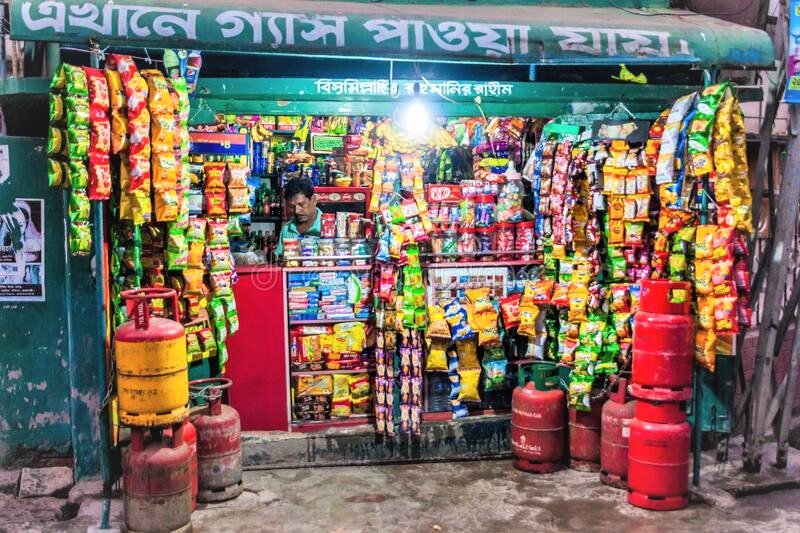
1. The main challenge is illegal gas piped-lines in many urban and rural areas of the country and its safety issue. The illegal gas connections are evading a big amount of government revenues, misusing the natural resources and creating a death threat for sudden explosion. These illegal activities are obstructing the expansion of LPG market in the country.
2. The over-supplied LPG in the market, producing by a greater number of un-planned LPG plants that created the market imbalanced and over-flooded. This is a big-challenge for the LPG operators for their existences, market growing and threat for investment. Although the surpluses of the LPG production, brings the export opportunity to the neighboring countries through CBET.
3. The LPG sector is not strictly controlled or monitored by the government. The departments concerned are only engaged for issuing NOC, licenses or renewals, which created the market imbalanced.
4. Absence of deep sea-port, and shallow-draft in the Mongla and Chattogram port channels, need to pay additional freight-charges for hiring small vessels, which impact on pricing.
5. The safety issue of LPG explosion threat among the consumers, create a dissatisfaction for extensive uses and an interruption for market expansion.
6. Getting a LPG license, renewal or regulatory support need to move to 28 different government departments, cost an additional expense, fees, time consuming, and hassles. These should be minimized.
Recommendations
1. Government should take strict actions to remove all illegal gas connection immediately.
2. Government should take appropriate measures ensuring LPG a safe-fuel, using quality cylinder parts (regulator, rubber hose-pipe, O-ring, clips, etc.) by the operators on internationally accepted codes and standards; also to arrange awareness program/campaign to educate the consumers on safety matters and strengthen their confidence level.
3. Government to monitor and control LPG sector strictly at every stages of the production-supply chain and introduce a better “LPG Management System” with inclusive policies and rules-regulations. Policy to include for the option of “Exporting LPG” to neighboring countries.
4. There is need for preparing a “LPG Master Plan”, and a comprehensive “Guide Lines” with detail actions of programs to achieve energy security and vision 2041.
5. Need to take immediate actions to import LPG jointly using medium-size vessels in the Mongla and Sandwip Channels. The Operators are to introduce “High Sea Sales Operating System” in the ports.
6. Need to formulate an “Appropriate Pricing Formula” based on market study and stakeholder consultations, considering all variables to facilitate the best affordable price to reach all types of consumers, and to be justified by the Operators.
7. Need to set-up a “One Stop Service” under a single regulator, who will issue license, and regulatory supports in an easy way to avoid extra hassles. All the offices are to be “Transparent”, “Accountable” and act as “Energy-friendly”.
8. There should be a common “Data Center” to collect information, statistics, license data and plant activities. The data to be used for LPG pricing and future plan of actions.
9. Government may introduce a common “LPG Security Fund”, charging a nominal amount while pricing LPG. Government to contribute a budget for cross-subsidy and price-adjustment.
10. Government to provide “Financial Packages” (e.g. exemptions on tax, vat, charges, fees) time to time. These will help yield a positive impact on lowering the LPG price.
Conclusions
The present world would encourage rapid consumption of LPG and its growth in the replacement of fossil fuels. Bangladesh has already undertaken the LPG option as a future energy (cooking, and commercial purposes) to meet the natural gas demand. Private investors are playing a vital role to develop the LPG sector in Bangladesh. Favorable government policies, duty exemptions packages with financial support, would promote the LPG sector across the country.
A medium size family uses unlimited piped natural gas with a fixed price of BDT 975 throughout the month, while using metered gas pays much less than the fixed price, but using LPG cost about BDT 2000-2500 per month. Rural villagers are struggling for cooking with traditional fuel keeping with health and environmental hazards. These unfair different prices need to be resolved, to a unified mechanism. An effective strategic-plan with actions and various awareness programs could expedite popularizing the LPG consumption and its growth instead of piped-gas to cope with the fast-depleting natural gas reserves in Bangladesh.
Former Additional Secretary (Director), Bangladesh Energy Regulatory Commission (BERC) Email: makhand14@yahoo.com