In the fall of 2018, Bangladesh’s first LNG facility - the Moheshkhali Floating LNG terminal - was brought online, and Bangladesh became the 40th country to enter the prestigious LNG importers club. Two years have since passed, and today Bangladesh finds itself as an established and significant player in the global LNG marketplace. During this time, the country has made tremendous progress towards expanding its LNG importing capabilities – having delivered over 130 cargoes sourced from 10 countries while doubling the nation’s aggregate import capacity to 1.0 billion cubic feet per day. Most importantly, Petrobangla has successfully distributed this vital fuel to customers across the eastern and central parts of Bangladesh.
Excelerate Energy L.P. (Excelerate), the US energy firm which led the development of Bangladesh’s first LNG project and currently owns and operates the two Floating Storage and Regasification Units (FSRUs) in Moheshkhali, has long believed in the important role of having access to clean, abundant, and reliable fuel supply to meet Bangladesh’s long term development goals.
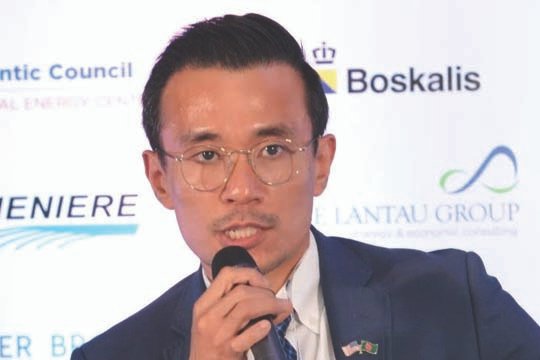
Ramon Wangdi, Managing Director of Excelerate Energy Bangladesh Ltd. (Excelerate’s local subsidiary), made the observation in an exclusive interview with Energy & Power Editor Mollah Amzad Hossain. He also elaborated on Excelerate’s existing activities and his views on the vital role that LNG will play in shaping Bangladesh’s future energy system.
With Excelerate Energy having just completed its 4th year in Bangladesh and two years of LNG operations at Moheshkhali under its belt, could you give us an overview of your experience in Bangladesh and an update on the existing state of LNG adoption in the country?
We first began investing in developing LNG solutions for Bangladesh in 2012, and it’s been quite a journey since then. Internationally, Bangladesh has established quite a stellar reputation of having a friendly business climate for foreign investment, and our experience has absolutely reflected this reality. From the incorporation of Excelerate’s local company in 2016 to the construction and commissioning of the country’s first LNG import terminal, Excelerate has continued to work lockstep alongside its partners in Petrobangla and the government to implement LNG imports in the country successfully.
Today the FSRU terminals in Moheshkhali make considerable contributions to the total gas supply in Bangladesh. These reliable operations have played a vital role in stabilizing the country’s energy supply, especially within the southeastern regions of Chattogram and surrounding markets.
LNG adoption has not been without its challenges – from overcoming cyclonic weather events (such as cyclone Fani in 2019) to the challenges of the global pandemic – but Bangladesh’s resilience in the face of this adversity has allowed for the continuous growth of LNG adoption, and we are incredibly pleased with the results.
You mentioned about the pandemic. Could you explain how COVID-19 has affected Excelerate’s business and your thoughts on the recovery efforts in Bangladesh?
COVID-19 and the resulting lockdown around the world have left no individual, business or country untouched. On the one hand, the pandemic resulted in the temporary but widespread reduction of energy demand across the globe – something that all markets and businesses in the sector have had to adjust to. However, the opposite effect from this same event has been the further exacerbation of an already favorable price environment for fuel imports such as LNG – a trend that we believe will remain for some time and heavily favors rapidly growing energy markets such as Bangladesh.
For a global business like Excelerate, the early months of COVID-19 created enormous disruptions to our typical operational supply chains. The ability to freely transport goods and personnel across borders became extremely prohibitive, and we had to think “outside of the box” to provide continuous operations. These events in 2020 truly drove home the benefits of engaging with international companies with a large-scale operational foundation while at the same time having a local operational presence – our Bangladeshi cadets, pilots, and personnel were critical throughout the year.
Now that we have been navigating in these unprecedented conditions for many months, we are happy to conclude the year having continuously operated our FSRUs in Moheshkhali throughout 2020 without any disruption. Much of this credit belongs to our friends at Petrobangla and RPGCL – these achievements quite simply would not have been possible without their strong support, flexibility, and resiliency throughout the year. These strong interpersonal working relationships have also proven themselves invaluable during the pandemic.
Looking ahead, as Bangladesh continues its recovery efforts along with the rest of the world, it is worth highlighting that this same resilience has allowed Bangladesh’s economy to fare relatively well (still posting GDP growth) in comparison to other economies in the region. In our view, at the conclusion of the auspicious Mujib Year, 2021 is posed to be one unlike any other for Bangladesh – a year marked by unprecedented growth, as the country’s economic engine fully restarts to reach levels above what it saw before the pandemic.
Bangladesh is the 40th country in the world to become an LNG importer. With Excelerate having operated in 13 other countries, how would you compare the adoption of LNG in Bangladesh versus other markets?
Prior to LNG, the government had a long-standing track record of project execution – especially in the field of energy infrastructure. This approach has allowed Bangladesh to achieve feats in a short period of time, seldom seen in other emerging markets – from doubling the country’s installed power generation capacity to expanding the percentage of its population with access to electricity from 45% in 2009 to over 98% today. This same inclusive philosophy and goal-oriented mentality were directly applied towards the implementation and adoption of LNG, and it allowed Bangladesh to rapidly ramp up natural gas distribution far faster than other countries in the region.
For example, deliveries into other major LNG importing nations in South Asia have historically been restricted due to poor planning and bottlenecks in the countries’ gas infrastructure. This has been where Bangladesh’s extensive history in the usage of natural gas has been an enormous benefit for the quick adoption of LNG, as a substantial portion of the country’s gas infrastructure – from pipelines to power plants – is already well built. Furthermore, any gap in infrastructure which needs to be built, such as connecting transmission infrastructure, has been planned in concurrence with LNG terminals themselves. As a result, in the span of 2 years, Bangladesh is already able to import about 4.5 million tonnes of LNG per annum, and we fully expect this number to grow shortly to nearly 7 million tonnes as Petrobangla expands its LNG purchases from the spot market and the economic recovery from the pandemic continues. This growth is remarkably steep when compared to other new markets in the region and is a testament to the thousands of skilled Bangladeshis in the country who have collectively developed the ability to handle this new fuel.
As we look towards the future and Bangladesh’s Vision 2041 goals, what are your views on the long-term prospects of LNG in Bangladesh, and what policies are necessary to drive further investment in the space?
Since the turn of this century, Bangladesh has continuously surpassed the ambitious targets which it has set for itself. This was absolutely the case with the government’s Vision 2021 goals, and we fully expect the roadmap for Vision 2041 to follow a similar path. However, the private and public sectors will need to collaborate closely to achieve the ultimate goal of this program – for Bangladesh to become a middle-income and developed country.
As a part of this effort, the continued expansion of Bangladesh’s energy ecosystem will be necessary across all aspects of the value chain – from fuel supply, power generation, transmission and distribution solutions to ensure all communities enjoy equally the benefits which unfettered reliable access to the sustainable clean energy brings. We strongly believe LNG will play a pivotal role in making this future a reality.
Given the abundant supply, LNG allows for gas-dependent industries and communities downstream to flourish and grow, which in turn creates an environment for increased investment towards exploration and production of domestic resources. Furthermore, the recent announcements by the government to reconsider its plans for expanding its coal power program in favor of renewables and LNG has been commended by many around the world as it reaffirms Bangladesh’s leadership on the international stage in our joint global push towards decarbonization and taking action on climate change.
On the policy front, I believe that in addition to the environmentally-conscious decisions stated above, initiatives such as “LNG Import Policy for Private Sector,” which was passed in 2019, will be crucial to ensure the right balance between investment and innovation from the private sector is unlocked in conjunction with the continued close partnership and transfer of technical knowledge with the public sector. A great example of this in practice is what I am seeing take shape in Bangladesh’s LNG to power programs, such as the LNG-based power plant in Payra being led by North West Power Generating Company Ltd., in partnership with Siemens Gas and Power, Germany.
So, what’s next for Excelerate Bangladesh?
Well, our experience from the moment we first began business has been nothing short of remarkable, and I couldn’t be more excited about what the future has in store for Excelerate in Bangladesh.
Apart from the continued improvement in our operations to ensure that our FSRUs in Moheshkhali continues to provide essential fuel supply to Petrobangla and its customers seamlessly, Excelerate’s engineers have been diligently working on developing a full suite of technology solutions which we believe will complement the growing needs of Bangladesh’s energy industry. I strongly believe these innovative solutions, combined with proven operators, will be essential to building on the historical success of Bangladesh in expanding energy access to the country in a prudent, environmentally conscious, and sustainable way.
One example of such an initiative is the LNG terminal we have been developing off the coast of Payra Port in the Patuakhali district of southwestern Bangladesh. As a part of this effort, Excelerate is currently completing a technoeconomic feasibility study for an offshore LNG terminal delivering into Payra and has expressed its interest provide this fuel solution as a partner to the aforementioned LNG power plant based in Payra, led by North West Power and Siemens.
One might ask – why Payra? When looking at how our facilities at Moheshkhali successfully addressed the need for providing reliable gas supply to southeastern Bangladesh, Excelerate identified early on that the western half of the country – from Khulna to Rajshahi to Rangpur and areas in between – was also facing a similar dynamic of needing reliable gas supply solutions so these communities could keep enjoying the same growth and prosperity experienced across the rest of the country. This portion of the country was located farther from existing sources of gas – whether it be domestic gas from the northeast or LNG from Moheshkhali – and any plans for piped gas imports from neighboring countries was not economically practical, as this gas was ultimately also being sourced from LNG but having to be transported much longer distances (and higher costs) into Bangladesh through Khulna. The government also has ambitious plans to develop the Payra into an electricity-generating hub, which included plans for LNG-based power plants.
Payra’s coastline has some unique characteristics and technical challenges - due to its shallow draft, conventional shore or land-based LNG solutions were not feasible. For these reasons, Excelerate began in 2018 to invest towards the development of a bespoke offshore LNG solution located off the coast of Patuakhali which could make landfall in Payra and would require minimal dredging work, through a specialized construction methodology that allows for the laying of subsea pipeline in very shallow water depths. Along with detailed studies of the weather conditions coupled with Excelerate’s decades long experience operating FSRUs in offshore conditions, we have concluded that a reliable offshore LNG terminal in Payra is absolutely viable when implemented by companies with the right experience. This facility could act as a gateway for delivering regasified LNG to power plants in Payra, customers in Khulna and be distributed further downstream from Khulna throughout the entire south western region of the country through Petrobangla’s existing gas grid.
Over the long run, we believe an LNG access point at Payra will be valuable to Bangladesh as it provides the security of energy supply (by diversifying its gas sources to all corners of the country) and act as a foundation from which to distribute LNG to customers across the western half of the country, whether they are connected to the existing gas grid or are off-grid and need to be accessed through smaller-scale LNG solutions – such as LNG trucks.
Outside of LNG, we continue to invest in the communities in which we work actively and to support Bangladesh’s push in meeting its UN sustainable development goals– whether that be through working with local schools in Moheshkhali Island to key sponsorships of new infectious disease centers (as a part of the pandemic recovery effort) in the Rohingya refugee camps, to the training of local cadets to operate onboard our vessels. One project which we are particularly excited about is the Solar Health Clinic – a solar-powered maternity clinic which will be deployed in Moheshkhali and be operated by a local NGO called the Hope Foundation, which is already quite active in the area. This project was delayed due to COVID-19, but we expect to have it operational by the end of 2021 to create a substantial positive impact on that community. Also, given that the clinic is fully powered by state-of-the-art renewable technologies, it will do so in a clean and sustainable manner.