All kinds of techno-economic studies for mining domestic coal have been conducted. We have jewel like discovered coalfield at Phulbari. It is possible mining domestic coal ensuring environmental protection and water management, relocation and rehabilitation, rehabilitation of agriculture and farming lands. Finally, local expertise for mining is also growing. Imported coal based power generation without commencing mining own coal through taking required political decision cannot ensure affordable power supply.
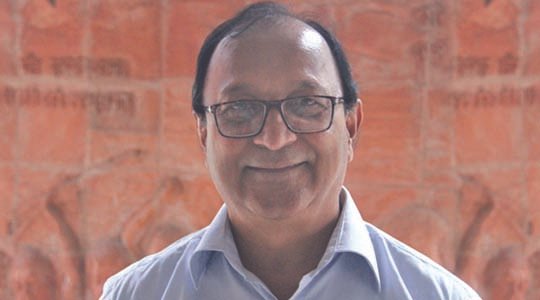
Prof Dr. Chowdhury Quamruzzaman of the Department of Geology, Dhaka University, said the above in an exclusive interview with Energy & Power Editor Mollah Amzad Hossain.
One of the main challenges in Bangladesh now is supplying primary fuel at affordable cost. The policy of the present government is going for imported primary fuel – coal and LNG. This will definitely increase price of fuel. Why the government cannot explore and exploit own fuel resources in a planned manner?
Please note that coal and gas are our own primary fuel. Being a professional mining engineer, I will confine my discussion to coal only. Six coal fields have been discovered till now. But apart from Barapukuria and Phulbari, extensive studies are not available about other fields. Reserves have been estimated through drilling 5-6 wells only. But according to UNFC and JORC, you are required to drill at least 10-15 holes respectively. In that consideration, detail studies have been conducted in Barapukuria and Phulbari only. At discovery stage, 10 wells were drilled at Barapukuria, 6 wells at Khalashpir and 4 wells at Dighipara. Later on 40-50 wells have been drilled at Barapukuria.
An estimated reserve of 220 million tonnes of coal is believed to be available at the central region of Barapukuria mine. Starting from 2006, only 12 tonnes of coal has been extracted so far adopting underground mining method. Recovery would remain below 10% in this method. There is opportunity for going to open pit mining here. It is possible extracting 80-90% of the 120 million tonnes of recoverable coal still there. At the annual extraction rate of 3 million tones, it is possible continuing mining for 30 years from here. Using this as primary fuel, it is possible to generate 1,500-2,000 MW of electricity.
Following discovery of coal at Khalashpir, Hosaf China Joint Venture has drilled 20 more wells. More wells are required to drill here. But from information at hand, it is possible to develop an underground mine here. It is possible extracting at the rate of 1.5 million tonnes annually from here. The government on its own or granting lease to Hosaf group can initiate mining from here.
After the initial 5 wells, 60 more wells have been drilled at Dighipara. The information available now indicates that the geophysical condition here is better than that of Barapukuria. Rock mechanics and hydrology support for mining from here, it is possible extracting at the rate of 2.5 million tonnes annually adopting underground mining method.
There appears no prospect for extracting coal bed methane (CBM) from Jamalganj field. Underground mining in a limited way is also possible there.
Since discovery the most comprehensive study has only been done at Phulbari. Following that a scheme of development has been submitted to the government. It is the CROWN JEWEL MINE of Bangladesh. If approved now, it is possible extracting coal from here in 48 months. It is possible extracting coal at an annual rate of 6 million tonnes.
One particular aspect needs to be discussed here. Some 10-15 years from now, Bangladesh did not posses any mining professional. Now four universities are producing mining engineers. If mining starts in right earnest now, a major portion of required manpower can be available from local source. That would be a great relief for Bangladesh.
Extensive plan is under implementation for significant amount of power generation using imported coal. But the country does not have deep sea port required for coal import. Hence this would create a huge challenge in power generation using imported coal.
There is no doubt that coal still remains the cheapest and the most affordable fuel for power generation in the global context. But for Bangladesh imported coal cannot be the most affordable option for supply chain management and developing import enabling facilities. For these, mining own coal and setting up mine mouth power generation would be much more affordable option. Coal fields are also ready for mining after techno economic studies. The government only needs taking political decision. In my opinion, the government should take required decision without further delay and give green signal to mining.
Though you are an academic now, but you have hands on experience in mining. You also have worked with foreign experts that conducted feasibility studies of 5 coal fields under UNDP financing. What recommendations you provided in that report? Why the government did not take those into consideration?
I worked with just deceased Prof Ajoy Ghosh in that study. Our terms of reference (TOR) were reviewing the available data and information of 5 discovered fields and based on these recommend the most appropriate mining method for extracting coal. We recommended for open pit mining at Barapukuria and Phulbari. For the other three fields, we suggested for underground mining. We submitted our report on time to the UNDP. But it is not known whether it reached the government or whether it attained any attention at all.
It is known to all that after Barapukuria the maximum extent of study has been conducted at Phulbari. On completion of all the studies and drilling required number of wells, Asia Energy submitted Scheme of Development (SOD) as per requirement of their contract with the government. It is kept in Suspended Animation now. What do you think the government should do with this now?
Please note that Phulbari is a CROWN JEWEL coal field for Bangladesh. The required studies for environmental and social, water management, relocation and rehabilitation of mine affected community, rehabilitation of farming land have followed applicable international standards. On completion of all these studies by accredited mining consultants, Asia Energy as per condition of their contract submitted to Bangladesh government Scheme of Development (SOD). It is possible to conduct mining from here observing all safeguards against possible and probable impacts. It is now a big question why the government did not approve the SOD based on all scientific studies? If the government wanted, it could audit and validate SOD engaging independent consultants. But without wasting time and sitting on these documents, the government must take decision and give green signal to mining.
Another Scheme of Development (SOD) prepared and submitted by Hosaf group for Khalashpir is lying unattended with the government. During the tenure of past interim government, there was a recommendation for carrying out further study before taking decision. What should be done?
This proposal was reviewed by international experts. I also worked with them. We submitted our recommendation. Based on these, the work should start we believe.
Though the government took no decision about Phulbari and Khalashpir yet Barapukuria Coal Mining Company Limited (BCMCL) is now implementing a feasibility study for Dighipara field. Study for open pit mining at Barapukuria was completed earlier. Do you think that it is possible for BCMCL on stand alone basis can manage mining at Barapukuria and Dighipara?
Look mining sector is now at stand still situation for not taking required political decision for mining. The required foreign investment could not be achieved for failure in approving SOD of Phulbari and Khalashpir. Again BCMCL from its own fund conducted feasibility studies at Barapukuria and Dighipara. Based on these studies, there are no impediments now for commencing mine development at northern flank of Barapukuria and Dighipara. But it needs government decision.
But BCMCL does not have the capacity for developing a new mine. It needs to be restructured and reorganized. Some competent manpower for field works are of course available now and growing.
Mining is in progress at Barapukuria since 2009. But unfortunately as per international standard, it is an abandoned mine. The underground temperature is 40 degree Celsius whereas the international threshold limit is 32 degrees. What are your views?
Proper mine environment is an essential pre-condition for keeping the mining operation going. It is advisable that for proper and safe mining the underground temperature remain between 26-30 degrees. But it is much higher at Barapukuria now. The outdated ventilation system must be replaced with modern system now. This would control temperature. Of course additional investment is required for this. In my opinion for ensuing proper mining environment, this investment must be made on priority basis.
Anti Corruption Commission (ACC) has sued 23 officials of BCMCL for alleged theft of 1,44,000 tonnes of coal from mine site. On the other hand, you are in a committee that worked on a request of Petrobangla to examine the allegation and opine whether it was theft or system loss? What were your findings? Why you have considered this as system loss?
The committee was tasked to find out whether or not it was a system loss? We visited the mine, collected all information and data, examined and assessed and submitted our report with findings and recommendations. Water is extensively used in coal mining. Mined coal contains up to 14% moisture. 1-3% is acceptable system loss at Barapukuria in coal value chain from mining, coal processing transportation and storage. The 1,44,000 tonnes of coal allegedly missing is 1.34% of the total coal mined. It is very simple that this is not a case of theft at all.
There are allegations that Petrobangla has failed in setting up a competent mine operation organization equipped with required expertise in one and a half decade. What are your views? What should be done?
It surprises me that the officials of two mining companies have been trained abroad over the past 10/12 years. It must be investigated why the required expertise could not be developed. There is no denial that there exists serious lack of competence. But it requires intensive monitoring why after so much of training the capacity did not develop to required level.
According to mining rule, there is a provision for a mining inspector in BMD. But none has been appointed so far. Bangladesh has two operating mines now. Even then, there is no mine inspector here. What is your view about this?
It is really a matter of surprise. Mine inspector must be engaged without further delay. They can work for ensuring proper work environment in the mine. They can make mining companies follow the required health, safety and environment guidelines.
Plan is under implementation for 22,000 MW power generation using imported coal. This would increase cost of generation. What are your suggestions for mining own coal and using it for mine mouth power generation instead?
No deep sea port facilities now exist in Bangladesh that could have facilitated coal import. Hence importing coal has a great challenge. I have genuine doubt how Bangladesh can confront and overcome this challenge.
Do you believe that open pit mining is feasible in Bangladesh addressing the challenges of environmental and social impacts, water management, relocation and rehabilitation of mine affected community and agriculture? How economic it would be for Bangladesh?
Please note that mining would have some impacts. There is no option completely avoiding these. Environment and water are issues everywhere in the world. It is not unique in Bangladesh alone. Still mining is ongoing in many different countries managing and minimizing impacts. It is definitely possible in Bangladesh. Various study reports also evidence this. Taking all these on board, mining own coal for long term economic benefit is feasible for Bangladesh.