Bangladesh is passing through one of the most critical periods in its fuel and energy supply chain. An acute shortage of 1,200–1,300 MMCFD of natural gas, against coincident peak demand of around 4,000 MMCFD, has put power generation, fertilizer production, industrial operations, CNG supplies and household gas use under severe pressure. The crisis was dramatically exposed when a fire at an FSRU sharply reduced RLNG supplies, while the simultaneous disruption of two FSRUs pushed the energy system close to the edge.
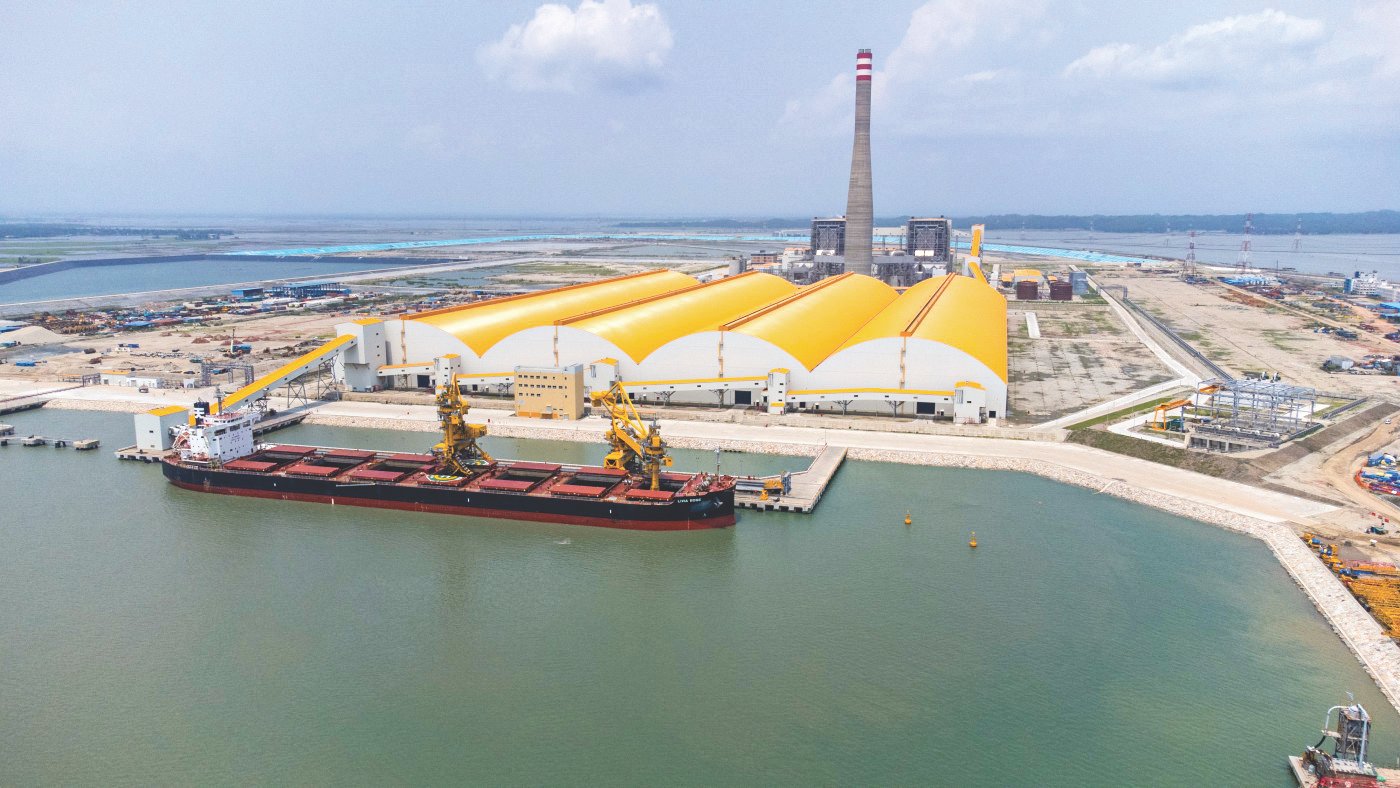
The shortage has widened since 2000 as the country's proven gas resources have been depleted. The government sought to manage the deficit by setting up large imported-coal-based power plants at Payra, Patuakhali; Rampal, Bagerhat; Matarbari, Cox's Bazar; and Anwara, Chattogram. The government also allowed private-sector companies to set up two Floating Storage and Regasification Units (FSRUs) at Maheshkhali.
The two FSRUs, operating in tandem, supplied 1,000–1,050 MMCFD of RLNG to the national gas grid operated by GTCL and Petrobangla. On July 21, 2026, a reported accident-causing fire at the FSRU operated by US company Excelerate led to a reduction in RLNG supply from 1,050 MMCFD to about 450 MMCFD.
The consequent massive impact on gas supplies caused an alarming power supply crunch, virtual suspension of gas supplies to CNG stations, domestic gas burners going dry, and severe disruption to industries and factories relying on gas supplies. Despite all-out efforts to repair the damage, it took at least three weeks to bring the FSRU back into operation.
The situation suffered a further blow when an LNG-laden vessel failed to supply LNG to the Summit Energy-operated FSRU. The simultaneous suspension of operations of two FSRUs took the situation beyond control.
The country experienced its worst-ever power load-shedding, exceeding 3,775 MW across the power supply network. Districts outside Dhaka and rural areas were plunged into darkness, with 10–12 hours of major load-shedding in some areas. Long queues were observed in front of CNG filling stations. Industries, including export-oriented industries, were forced to reduce operations from three shifts to a single shift, while many industries pulled down their shutters. People who could afford it started buying food from restaurants or using other fuels for cooking.
The BNP alliance-led government, inheriting a crisis-prone energy and power sector, almost ran out of options. There were no other alternatives but to manage demand by limiting power use, including enforcing the closure of shopping malls and restricting extravagant lighting after 8 p.m.
Visiting the gas system SCADA and Power System NLDC, this writer observed the gas and electricity load curves during the crunch period. Questions remained unanswered: What led to the fire incident? Did Excelerate address the emergency promptly and efficiently? People also asked why the LNG supplied in a standard vessel by Saudi Aramco was not accepted.
Through investigation, it appeared that, for reasons best known to the authorities, the Director (Operations and Mines) was made an Officer on Special Duty after objecting to an alleged syndicate demanding LNG supplies from the spot market.
We are aware that Qatar Gas, due to war and conflict in the Persian Gulf and Arab countries, announced force majeure on long-term LNG supplies. With the closure of the critical Strait of Hormuz, LNG supplies from another source, Oman, were also disrupted.
The government had no option but to import LNG from the spot market. RPGCL usually imports LNG from a short-listed group of reputed suppliers. There existed a process for purchasing some cargoes from the spot market by evaluating unsolicited offers in urgent situations, provided the supply met quality and other specified requirements.
The trade contract concluded between Bangladesh and the United States also restricted Bangladesh from procuring LNG from countries and sources considered unfriendly to the United States.
It has been reported that the government failed to secure the required minimum LNG cargoes for the next couple of months. In such a situation, an FSRU may run out of LNG supplies for certain periods. In summary, it would not be wrong to say that Petrobangla is not managing LNG procurement and supply professionally.
We are aware that power and energy demand reaches its peak during the summer, from the end of May through October. Power demand reaches 17,500–18,000 MW. But because of gas supply constraints, Petrobangla cannot supply more than 950–1,000 MMCFD for power generation.
The Awami League-led government, while diversifying the fuel supply, set up half a dozen large imported-coal-fired power plants with a combined capacity of 6,927 MW and started importing power from India and Nepal. Several liquid-fuel-based power plants with a total capacity of about 7,000 MW were also established.
Because of challenges arising from fluctuations in the dollar exchange rate and volatility in global fuel prices, successive governments could not fully utilize the fuel capacity of coal-fired and liquid-fuel-based power plants.
The present challenge is sustainable fuel supply. The success of the 50- and 100-well drilling programs may not provide much comfort in the short term, even after they are completed.
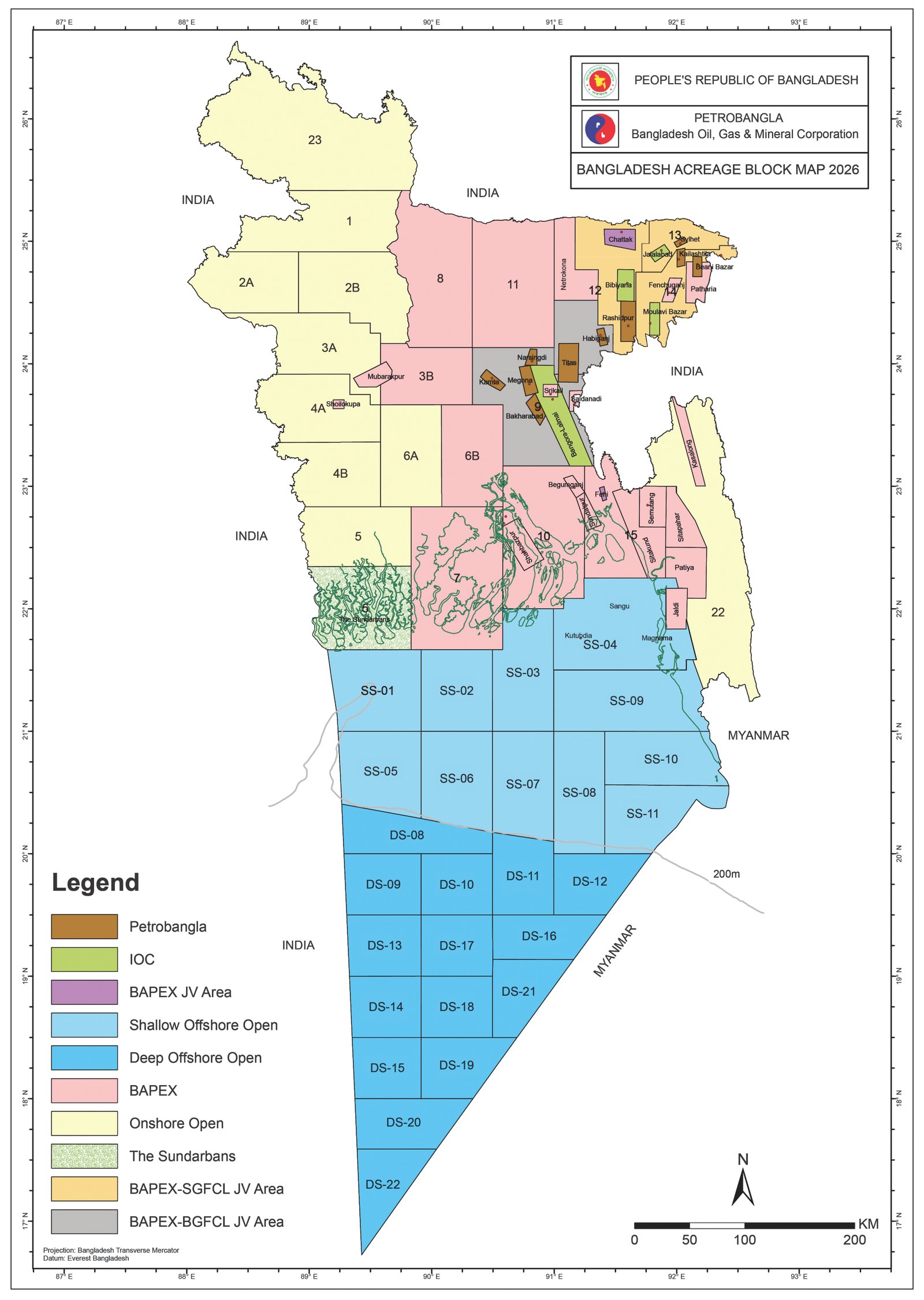
The only possibility of adding significant gas resources may be through deeper drilling at the Titas, Bakhrabad and Srikail gas fields. These fields are adjacent to the gas grid and require little or no additional gas evacuation infrastructure.
Experts have suggested expediting construction of a gas transmission pipeline from the stranded gas fields at Bhola to the nearest gas transmission grid. Experts have also suggested drilling wells at Chhatak and Tengratila and at five prospective gas structures—Potiya, Kashalong, Sitapahar, Jhaldi and Sitakunda.
On the other hand, experts have suggested reviewing the contract with Summit Energy for construction of a third FSRU and finalizing the contract for a fourth FSRU. Work on the land-based terminal at Matarbari must also be expedited.
Third Parallel Gas Transmission Pipeline From Maheshkhali to the Gas Transmission Hub
Construction of a third FSRU in phases will be essential to evacuate additional imported LNG from Matarbari and Maheshkhali. GTCL has worked out the requirements for constructing the Feni–Bakhrabad segment of the third parallel pipeline on a top-priority basis.
The provisions of the Gas Safety Act necessitate separation of the two transmission pipelines by a safe distance. As such, expeditious action is essential for acquisition of a new right of way (ROW), followed by procurement of line pipes and other materials.
It will take at least three years to complete the pipeline. We have heard of ridiculous suggestions for constructing the pipeline within the existing ROW. It is a strange idea even to consider installing a 42-inch outside-diameter, heavy-wall pipeline—and, in some places, a concrete-coated pipeline—within the existing ROW alongside a high-pressure pipeline already in operation.
The idea of entrusting construction of the pipeline to the armed forces should also not be entertained. GTCL must remain the sole specialized company responsible for managing gas pipeline construction.
Short-Term Contingency Action and Mid-Term Plans
The government must ensure that coal-fired and liquid-fuel-based power plants can operate at or near full capacity. It may be possible to generate up to 13,000 MW from these power plants. Another 2,000 MW may also be imported from India and Nepal.
If this can be done consistently through the end of October, pressure on gas resources can be reduced significantly. The gas saved in the process can be diverted to industries.
The government must also scrutinize the gas used for domestic cooking and CNG. There are options for using alternative fuels, including LPG for cooking and Autogas for automobiles. We would suggest limiting the price of LPG to keep it competitive with pipeline gas for domestic consumers.
Phasing out pipeline gas supplies to domestic consumers would assist in diverting about 13–15% of gas to industries. This would also eliminate the massive gas losses from dilapidated gas distribution pipelines.
However, extensive safety alerts and stakeholder engagement must be undertaken to ensure the safe use of LPG.
The supply of gas to automobiles as CNG must also be phased out. The primary transportation fuel may be Autogas. But appropriate incentives must be provided for electric vehicles (EVs) and green EV charging stations.
The two units of the Rooppur Nuclear Power Plant must also be commissioned in phases by the end of 2027. A visit to NLDC and PGCB has indicated that the power grid is now ready to safely evacuate the first 1,200 MW of nuclear power from the first unit in phases.
However, as spinning reserve, the gas saved as a consequence of full utilization of coal-fired and liquid-fuel-based generation may be used during the winter period (November to February). Once evacuated and stabilized, at least 600 MW of nuclear power may be available by March 2027.
Long-Term Planning
We have noticed less-than-required engagement with major potential international oil companies for investment in offshore exploration. The hue and cry over gas and electricity shortages and poor management in the concerned ministries are acting as negative incentives.
There may even be a situation in which there is no response to a PSC bidding round. The government must be ready to negotiate PSCs with one or more leading IOCs based on unsolicited offers.
Gas from offshore exploration may take until 2035 to become available. We would also suggest launching a PSC bidding round for land blocks outside areas reserved within the BAPEX ring-fenced area.
The government may work toward having 10 exploration rigs, including BAPEX and IOC-operated rigs, working onshore from 2028. At the same time, a vigorous drive must be launched for 2D and 3D seismic surveys across the entire land surface for resource identification.
We would also suggest taking a political decision to exploit discovered coal resources. If coal exploration and construction of 7,000–10,000 MW of domestic coal-based power plants are initiated simultaneously by 2031–32, Bangladesh will be in a more comfortable position in terms of power and energy.
Bangladesh must also engage proactively with India, Nepal and Bhutan to establish the BBIN power grid for regional power trading.
We have observed that power demand during winter declines from about 18,000 MW to 10,000 MW. The development of a regional power grid would facilitate power trading through win-win power sharing among the countries.
Reforms and Restructuring
We would strongly recommend essential reforms and restructuring of Petrobangla and its companies. The status of Petrobangla should also be upgraded to the top category.
The post of chairman should be upgraded to the rank of full secretary. Line professionals with the required hands-on experience should be engaged as chairman and in other senior positions.
The boards of directors of Petrobangla and its companies must also be reconstituted with professionals and researchers. Recruitment of fresh, qualified executives and appropriate training for capacity building must also be undertaken.
Modern energy industries need experts educated in artificial intelligence, blockchain and cybersecurity to embrace automation and modern technologies.
Recommendations
1. Launch planned demand-side management measures to save gas used for power generation and divert the gas saved to industries.
2. Phase out gas supplies for domestic cooking and CNG and replace them with safe and affordable supplies of LPG and Autogas.
3. Consider the utilization of SNG (synthetic natural gas) for industries.
4. Promote extensive use of battery-backed rooftop solar for industries to reduce reliance on grid power.
5. Expedite action to evacuate stranded gas from Bhola to the national grid.
6. Take stronger action to aggressively engage potential IOCs for offshore exploration. Launch a PSC bidding round for additional onshore blocks and undertake more intensive 2D and 3D seismic surveys across the land surface.
7. Launch initiatives for institutional reform and capacity building to develop a smarter energy sector.
Download Cover Article As PDF/userfiles/EP_24_06_Cover_Article.pdf