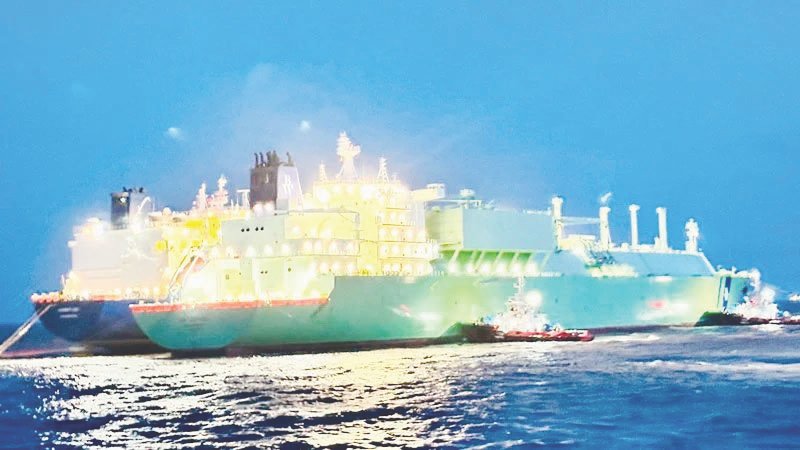
The recent unprecedented energy crisis, triggered by a technical failure at a floating LNG terminal, has starkly exposed the fragility of Bangladesh's energy security. A sudden loss of 450–500 MMCFD of gas sent shock waves through the country, disrupting the power supply chain, intensifying load-shedding during the hot, humid summer, crippling gas-dependent industries, bringing CNG-fueled vehicular traffic close to a standstill, and causing immense hardship for households dependent on natural gas for cooking.
According to Petrobangla, gas supply fell from 2,550 MMCFD to around 2,050–2,100 MMCFD as RLNG supplies dropped from approximately 1,050 MMCFD to only 450 MMCFD. The gas supply chain was already suffering from a deficit of more than 1,000 MMCFD even with both FSRUs operating. The severity of the crisis when one FSRU was forced offline demonstrated just how vulnerable the system has become.
With the Excelerate Energy-operated FSRU now back in service, Petrobangla must undertake a comprehensive risk assessment of the fragile gas supply chain and develop effective risk-management options. There is no guarantee that a similar disruption will not occur again sooner or later.
The latest crisis should serve as a lesson. Bangladesh urgently needs appropriate contingency plans and short-, medium-, and long-term measures to achieve sustainable energy security. A nation cannot remain hostage to the consequences of flawed planning and strategies shaped by vested interests under previous regimes.
The present government, inheriting a troubled power and energy supply system, has announced several contingency measures and short- and long-term initiatives. These include a plan to achieve 10,500 MW of renewable energy by 2030, exploring LNG imports using ISO tankers from Malaysia, and revisiting the possibility of importing gas from Myanmar. These initiatives are in addition to efforts to accelerate petroleum exploration both onshore and offshore and review gas-utilization priorities.
The government has also announced plans to add another FSRU and expedite implementation of a land-based LNG terminal at Matarbari. This article examines the prospects and opportunities while also considering energy conservation, efficiency, and the optimization of fuel use.
Rational Utilization of Gas
We must recognize that the gas supply situation cannot be transformed in the shortest possible time. Regardless of what measures are taken, there is unlikely to be any significant improvement before 2030. Until then, the situation must be managed through smarter fuel utilization and some difficult but necessary decisions.
Despite a gas supply shortage exceeding 1,000 MMCFD, Petrobangla, through rationing gas supplies to fertilizer plants and CNG stations, attempted to maintain 950–1,000 MMCFD for power generation. However, the FSRU technical failure forced Petrobangla to reduce supplies to the power sector to 690–700 MMCFD.
The power system managed to keep the supply chain functioning through demand-side management and enforced load-shedding. Gas-based power generation fell to around 5,500–6,000 MW. For a short period, people endured the hardship. But to avoid a recurrence, the government must ensure that the power system addresses such disruptions through appropriate diversification of its fuel mix.
Coal, nuclear power, imported electricity, and renewable energy must be developed so that by 2030, the contribution of gas to power generation can be reduced to a manageable level. We may also suggest reviewing the possibility of phasing out gas supplies for CNG and household cooking over three to four years and replacing them with alternative fuels. Around 13 percent of gas is consumed for cooking and about 5 percent for CNG. Households can shift to LPG and electric cookers, while CNG vehicles can gradually be converted to autogas or other suitable alternatives.
The energy supply system must recognize how gas shortages have affected gas-intensive industries, particularly export-oriented manufacturers. The government should do everything possible to ensure a reliable supply of quality electricity from the national grid to industries. This would reduce their dependence on captive gas-fired generation, allowing gas saved in the process to be redirected to industrial users.
An Affordable Fuel Mix
As a way forward, Bangladesh urgently needs to develop a feasible and affordable fuel mix for energy generation.
We must recognize that Bangladesh possesses significant untapped reserves of high-quality coal—high in calorific value and low in ash and sulfur—at mineable depths. Proven, commercially available technologies exist for mining these resources and using them for power generation and other purposes while addressing environmental and social concerns.
Exploration and exploitation of domestic coal resources should not be restricted in the name of energy transition. Given Bangladesh's present circumstances and the global energy environment, domestic coal should be considered a priority fuel for the medium to long term, particularly as proven natural gas reserves continue to decline at an alarming rate.
Regardless of how sophisticated the plans may be, it is highly unlikely that Bangladesh can add significant new domestic gas reserves or substantial additional LNG import capacity before 2030.
On the other hand, if the present government makes the necessary political decision to develop coal mining using appropriate technology, Bangladesh could have up to 5,000 MW of mine-mouth coal-fired generation by 2031. Meanwhile, through an accelerated and well-coordinated petroleum exploration campaign and simultaneous development of LNG import infrastructure—including FSRUs and a land-based terminal—Bangladesh could establish a more feasible, reliable, and affordable fuel mix by 2032.
An appropriate fuel mix from 2032 should be:
· Domestic and imported coal: 40%
· Domestic gas and imported LNG: 30%
· Imported electricity: 10%
· Clean energy (renewables and nuclear): 20%
Contingency Action Plans
Bangladesh must immediately launch the necessary initiatives to unlock the stranded gas reserves of Bhola Island. If appropriate action begins by early 2027, a gas transmission system connecting the Bhola gas fields to the national gas grid at Khulna via Barishal could be operational by 2032.
This would not only help revive the gas-starved economy of the southern region, particularly Greater Barishal and Khulna, but also facilitate the revival of many distressed and suspended industries in Khulna and Jessore. Significant anchor loads already exist to support such a gas transmission system. The discovered gas reserves in Bhola justify construction of the pipeline. Its presence would also encourage investors to explore potential gas resources in adjacent onshore and offshore areas.
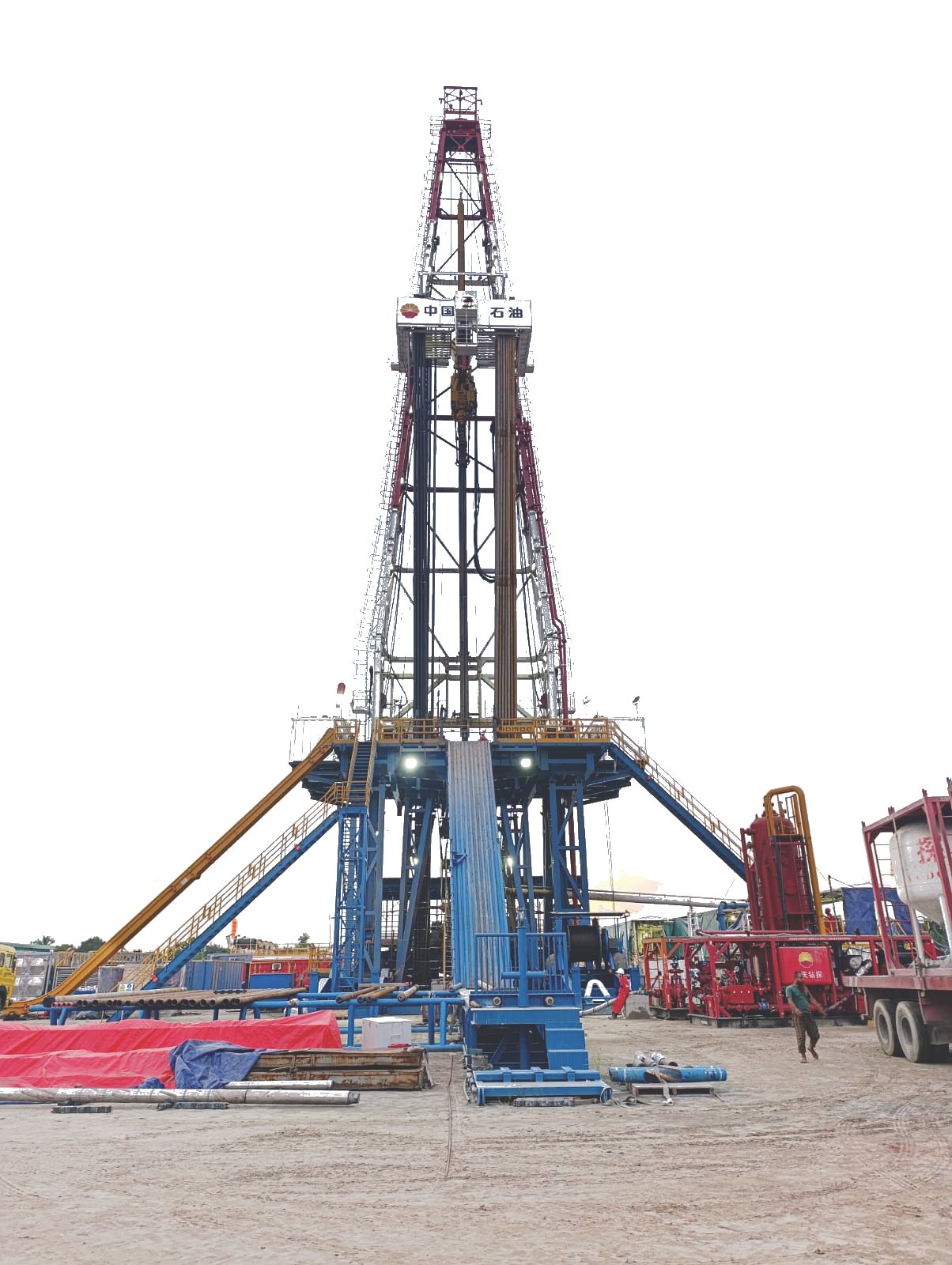
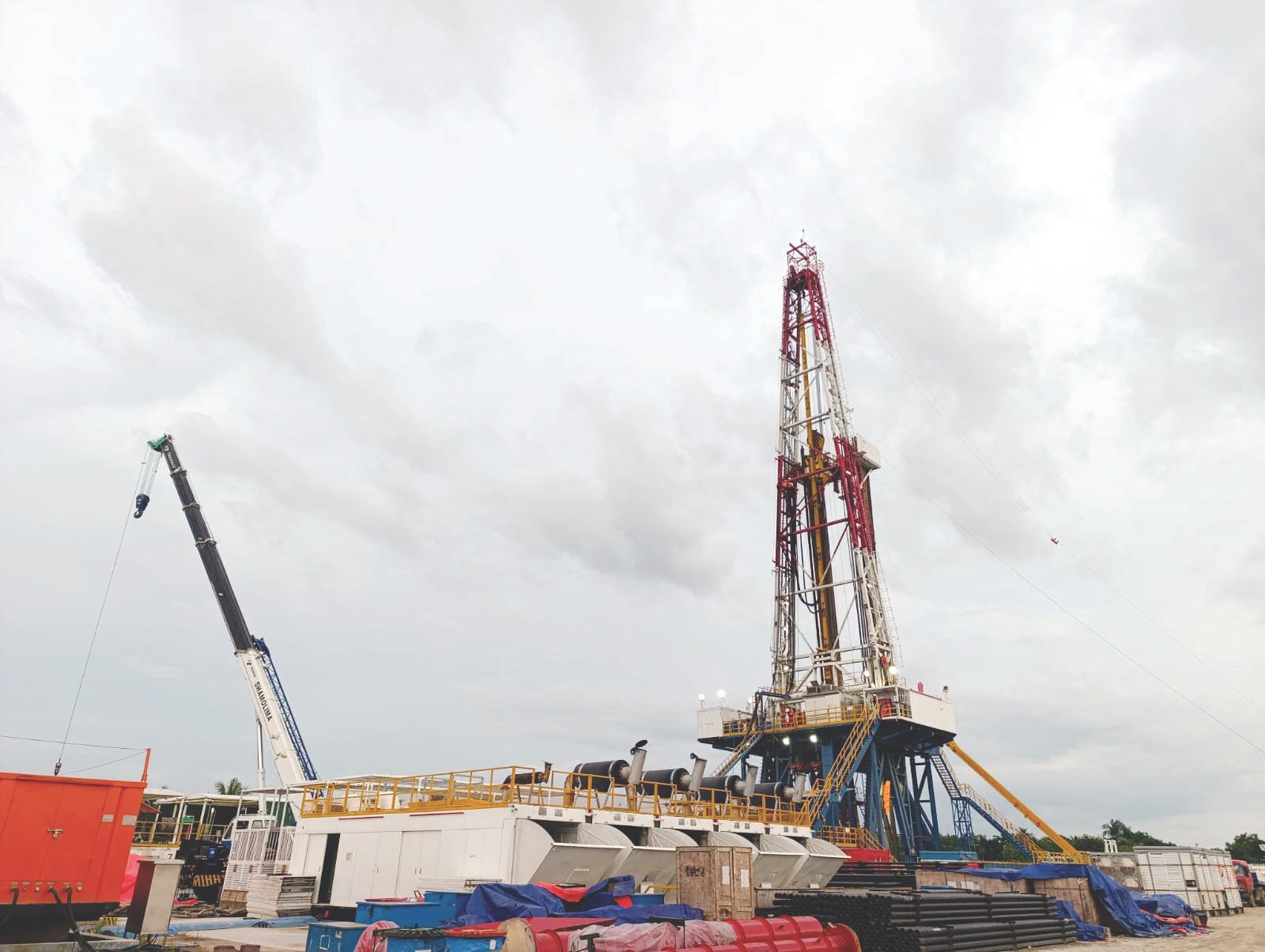
Another priority should be relocating drilling rigs to Chattak and Tengratilla and launching further exploration at identified petroleum structures in Potiya, Jholdi, Kashalong, and Sitapahar. There is a reasonable prospect of discovering gas and possibly oil in these structures. Another advantage is that any discoveries could be evacuated relatively easily because the national gas grid is nearby.
Alongside vigorous offshore exploration, Bangladesh should launch a new PSC bidding round for onshore exploration to engage international oil companies alongside BAPEX.
We also recommend extensive 2D and 3D seismic surveys across onshore areas to identify new petroleum resources. Most of the easily accessible resources may already have been identified, but the world's largest river delta could still contain significant unexplored petroleum resources, including in onshore frontier areas.
Bangladesh should leave no stone unturned in surveying areas that remain unexplored by 2032. There is no justification for concluding that the country has run out of gas without making a professional and comprehensive effort to find it.
LNG Import Initiatives
Bangladesh must also recognize that it will need to continue and expand LNG imports to keep its economy functioning. FSRUs are essentially contingency measures for addressing immediate supply requirements. Bangladesh should engage competent investors and experienced LNG terminal operators to develop at least two additional FSRUs and bring them into operation by 2030.
At the same time, gas transmission infrastructure must be expanded to evacuate additional RLNG to major demand centers across the gas supply chain. Work on the land-based LNG terminal at Matarbari should also be expedited with the aim of bringing it into operation by 2032.
We have noted proposals to import LNG using ISO tankers. Such an initiative should undergo a proper feasibility study. In the present context of Bangladesh's fuel supply chain, importing LNG through ISO tankers appears unrealistic on a large scale. However, Bangladesh could eventually consider a mother-daughter LNG distribution model for supplying areas outside the national gas transmission network.
Bangladesh must also diversify its sources of LNG. Wars and conflicts in major LNG-producing regions have disrupted global supply chains. Bangladesh is already dependent on LNG imports from the United States, but it should diversify its sources to include other regions.
By 2035, Bangladesh may need to import as much as 5,000 MMCFD of LNG to fuel its economy. Long-term government-to-government agreements with Malaysia, Indonesia, Australia, and Canada could be considered. Bangladesh could also engage major LNG-importing countries such as Japan, China, South Korea, and India in developing a consortium or cooperative platform among LNG-importing nations.
We would recommend sourcing around 80 percent of LNG imports through long-term contracts and the remaining 20 percent from the spot market. Bangladesh should also develop LNG storage facilities alongside land-based terminals.
Gas Import Possibility from Myanmar
In 2005, importing gas through a proposed tri-nation gas pipeline from Myanmar to India, with Bangladesh serving as a transit country, appeared to be a feasible and mutually beneficial option for all three countries.
This writer, as an integral member of the negotiating team, helped develop a draft memorandum of understanding for an open-access pipeline originating in Myanmar, entering Bangladesh at Teknaf, and traversing the country to India. The proposal included provision for Bangladesh to import up to 500 MMCFD of natural gas at a highly competitive price of around $2.00 per MMBtu.
In addition, Bangladesh would have earned revenue from leasing land for the pipeline right-of-way, while GTCL would have earned wheeling charges for every unit of gas transported through the system.
However, the initiative did not bear fruit because the relevant governments failed to reach an agreement. The available gas was subsequently exported to China.
We are uncertain whether a renewed initiative would be feasible today. The region continues to suffer from war and conflict, while the Myanmar government has lost control over large areas of the country. Nevertheless, the possibility deserves a fresh assessment.
Energy Transition
Everywhere in Bangladesh today, one hears discussion of energy transition, renewable energy, and solar power. Bangladesh, as a developing country, does not face the same emissions-reduction obligations as many advanced economies. Yet, as a nation highly vulnerable to climate disasters, it must remain smart and efficient in how it generates and consumes energy.
That does not mean ignoring or abandoning domestic fossil fuels. At the same time, Bangladesh must do everything possible to exploit its renewable and clean energy potential.
The country is on the brink of entering the nuclear power era. By the end of 2027 or early 2028, the planned 2,400 MW of nuclear generation is expected to be integrated into the national grid as baseload power. We hope all necessary work will be completed to ensure a reliable and sustainable supply of nuclear electricity.
Based on operational experience and growing institutional capacity, Bangladesh should also consider initiating plans for a second nuclear power plant adjacent to the existing Rooppur facility.
The present government has announced a program and is developing a roadmap to add 10,500 MW of renewable energy by 2030. At present, this appears somewhat ambitious. However, the target could become achievable if the government effectively integrates private-sector companies with state-owned enterprises through appropriate policy and regulatory reforms.
For this to happen, SREDA must be strengthened with skilled technical and managerial personnel, while extensive fiscal and financial incentives must be introduced. The power transmission grid must also be given sufficient flexibility to absorb variable renewable energy.
The government must avoid opening a Pandora's box. This opportunity should not be exploited in the manner of past rental power plant controversies or excessive and poorly planned procurement. Even solar projects with battery storage could become vulnerable to manipulation if the government is not vigilant and careful.
Conclusion
The nation must have experienced a profound shock from the recent gas crisis. Bangladesh's fragile energy security is now balanced on the sharp edge of a two-sided sword.
Unless the government remains focused on implementing essential reforms in state-owned enterprises and placing skilled, dedicated, and committed professionals in key positions, the country will struggle to escape the legacy of vested interests and weak management that has poisoned the power and energy supply chain.
The latest crisis should be treated as a warning—and an opportunity. Bangladesh must learn from the shock, diversify its fuel mix, strengthen its supply infrastructure, manage demand intelligently, and pursue every viable domestic and international source of energy.
Only then can the country move from managing one crisis to building genuine, sustainable energy security.
Download Cover Article As PDF/userfiles/EP_24_05_Cover_Article.pdf