Civil society plays an important role in shaping public opinion on climate action and energy transition. But their advocacy must also reflect global and domestic realities. Otherwise, well-intentioned pressure could harm the country’s industrialization and employment prospects. Given current technological and financial constraints, the idea of Bangladesh reaching 100% renewable energy by 2050 is unrealistic.
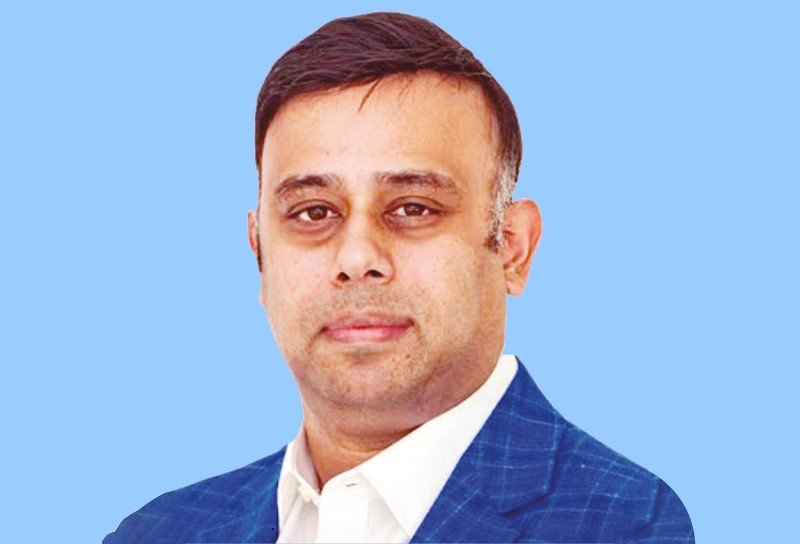
In an interview with Energy & Power Editor Mollah Amzad Hossain, economist and Policy Exchange Bangladesh Founder-Chairman Dr. M. Masrur Reaz shared his insights.
Opportunities for global financing for climate impacts are shrinking. Developed and emerging economies are showing little interest in climate finance. The absence of concrete finance decisions at COP30 reflects this. How do you interpret it?
COP Belém was described as an “action COP.” Yet, even there, no concrete decision was made to ensure financing for previously agreed commitments. This isn't very reassuring. While developed countries show some interest in mitigation investments, they remain largely unwilling to finance adaptation or loss and damage payments.
The main reason is the current trajectory of global politics. This lack of commitment is not unique to climate summits—almost all major global forums are now ending without concrete outcomes. The United States once played a strong leadership role in strengthening climate action, but that has reversed. After the recent change in administration, climate change and net-zero goals no longer hold priority.
When the U.S. stops emphasizing climate action, the global community also loses enthusiasm for fulfilling commitments.
Another geopolitical factor is the stance of oil-rich countries—not only in the Middle East but also in the United States and Russia. Russia, despite sanctions, remains a major oil producer. If a peace deal between Russia and Ukraine emerges, Russian oil could re-enter the global market. Thus, maintaining the current fossil fuel dependency aligns with the interests of Middle Eastern countries, the U.S., and Russia.
Industrial lobbies also play a role, such as the automobile industries of the U.S. and Japan, and the industrial equipment sectors. Achieving net zero would require them to overhaul production systems completely, which is a massive challenge. They prefer technological upgrades that reduce pollution rather than reducing fossil fuel use itself.
Countries of the Global South, like Bangladesh, will face the most severe climate impacts. So developing nations must stand united. But in global forums, climate-vulnerable countries have not been able to form a unified platform.
Bangladesh has announced in NDC 3.0 that it will reduce 85 million tonnes of carbon emissions by 2035, although it is not legally obligated. This requires USD 116 billion—USD 90 billion from global support and USD 26 billion domestic investment. Your assessment?
Undoubtedly, this is a strong commitment from Bangladesh. But raising USD 26 billion domestically over 10 years, about USD 2.6 billion per year, is extremely difficult.
Our public finances are under significant strain. Revenue collection is weak. Internal borrowing keeps rising. In hindsight, heavy reliance on foreign loans for mega projects was unwise. Even now, the government is compelled to borrow from banks and external lenders because revenue generation is insufficient. Bangladesh’s GDP-to-revenue ratio is below 8%, one of the lowest in the world.
In that context, allocating USD 2.6 billion annually, about 4–5% of the national budget, for emission reduction will be very challenging. Therefore, Bangladesh must rely on global concessional financing and grants.
Secondly, both mitigation and adaptation require boosting private capital investment. This would reduce pressure on the government. But global financial flows are tightening. So Bangladesh must prepare transparent and efficient project designs and implementation strategies to attract funding. This will not be easy.
The World Bank recently published a report on climate risks for Bangladesh and other Asian countries. It says 90% of people in this region will face extreme heat risks. In 250 coastal villages of Bangladesh, 57% of households face disaster vulnerability. Investment is essential to overcome this. But where will the money come from?
Such studies by international institutions are crucial for us because Bangladesh lacks the capacity to conduct these assessments effectively, whereas the World Bank does not. In the future, we must also rely on the expertise of the World Bank, ADB, and other global organizations. Their data will help Bangladesh design effective strategies for addressing climate risks.
The government of Bangladesh is quite active on climate issues. However, there remains a question about how systematic this approach truly is.
In Bangladesh, awareness is being raised, and pressure is being exerted on the government to take initiatives to manage climate impacts and drive energy transition. How do you view this?
Such efforts by civil society are certainly commendable. Continuous dialogue between civil society and the government is essential for formulating policies and strategies on climate resilience and energy transition. However, environmental groups and civil society must remember that their pressure should not push the government into adopting policies that could hinder economic growth. Government decisions must consider global and domestic politics, the economy, and social realities.
Bangladesh aims to become a high-income country. For that, an affordable and secure energy supply is crucial. But transitioning away from fossil fuels will likely increase costs and require new investment. Civil society argues that if Bangladesh becomes 100% renewable by 2050, energy costs will drop significantly. What is your view?
Look, Bangladesh is not in a position to transition entirely to renewable energy, especially 100%, by 2050. If we try to do that hastily, energy costs will rise, and supply shortages may occur. Every year, 2.2 million people enter the job market. Unemployment and underemployment are high. We are also an import-dependent country. So industrialization and job creation are essential for the future. Development must continue through employment generation.
For industrialization, manufacturing, and exports, electricity and energy are indispensable. Without energy security, not only will expansion be impossible, but even retaining current progress will be difficult. Of course, it would be great if we could fully shift to renewables quickly –but is that realistic?
The second issue is feasibility. Many countries have done it; maybe we can too. But do we have the time, technology, and finance required? Considering Bangladesh’s current condition, I see no possibility of reaching 15% renewable energy in the next 10 years. Currently, only 2% of our energy comes from renewables. Our renewable resource base is limited. For solar, land scarcity is a major constraint. In this context, expecting a 100% renewable transition by 2050 is not realistic.
Bangladesh has limited fossil fuel reserves, but further exploration is needed. For affordable energy, maximum use of domestic coal and gas is necessary. Environmental groups oppose new fossil fuel investments. What is your position?
Our coal and gas resources are not infinite. Yet even the resources we have were not properly explored or extracted. As a result, the country is now 55% dependent on imported energy and electricity, which has led to higher prices. So, maximizing the use of domestic coal and gas is essential. For that, alongside domestic investments, the right policies and strategies must be adopted to attract foreign investment.
Investment in oil, gas, and coal is risky. Advanced technologies are also beyond our reach. Therefore, for developing and utilizing our own energy resources, domestic and foreign investment must move forward together.
Bangladesh’s largest export sector is textiles and ready-made garments. Buyers are putting increasing pressure to reduce carbon footprints. Over 200 LEED-certified factories already exist, and many industries are investing in energy transition and efficiency. But they are not getting higher prices. What steps could secure better pricing from global buyers?
I’ve discussed this with buyers. They argue that environmental and sustainable production must include human rights compliance. That is basic—it should already be part of production. So why pay extra for what is fundamental? Extra payment is justified for quality or value addition. Their reasoning may be an excuse or might be genuine.
The problem is that the export sector is very sensitive. Export-oriented industries, particularly garments—which make up about 84% of exports—are extremely labor-intensive. Each factory employs thousands. Overhead costs and monthly payroll are heavy. Non-payment leads to unrest and many issues. So entrepreneurs are under constant pressure to keep factories running at any cost. This weakens their negotiating power. Business operating costs are also high.
Exporters could unite under BGMEA or BKMEA to collectively present their value-added case. Prices are ultimately determined by value addition.
Second, they must remain united and develop a common industry position.
Third, the government should take diplomatic initiatives. Although this is a private-to-private matter, governments can still engage in strategic dialogue.
How do you assess Bangladesh’s domestic investment capacity for energy transition, especially renewable expansion and energy efficiency? Can we meet the demand without foreign investment?
Bangladesh, either through the government or the domestic private sector, does not have the sole financial capacity to transition from the conventional energy system. To move forward, we must attract global multilateral and bilateral investment. The government should actively seek foreign private investment. For ensuring energy transition, there is no alternative.
However, we have not yet been able to create a strong environment of investor confidence.
Download Interview As PDF/userfiles/EP_23_12_Interview.pdf